Panhala Fort: A Historic Hill Fort in Maharashtra, India
Site at a Glance
- Rating
- 4.7
- Popularity
- Low
- Country
- India
- Primary era
- Early Modern
- Eras represented
- Medieval, Early Modern
- Civilizations
- Unclassified
- Site type
- Military
- Remains
- Fort
On this page20 sections
History
Panhala Fort is a hill fort in India, near Panhala in Maharashtra, built between 1178 and 1209 under Bhoja II of the Shilahara dynasty. It overlooked a major route between Bijapur and the coastal regions and later became an important military center in the Deccan. A copper plate found at Satara records that Bhoja held court at Panhala in 1191 and 1192.
Shilahara and Yadava rule
Around 1209 or 1210, Singhana of the Devagiri Yadava dynasty defeated Bhoja, and Panhala passed to the Yadavas. The fort was later poorly maintained and changed hands among several local chiefs. Inscriptions from 1376 refer to the settlement of Nabhapur southeast of the fort, showing that the surrounding area remained connected with the stronghold.
Bahmani and Bijapur control
Panhala later served as an outpost of the Bahmani Kingdom, a Deccan power that controlled territory across parts of peninsular India. The Bahmani minister Mahmud Gawan spent the rainy season of 1469 encamped there. After the Bijapur Sultanate was established in 1489, Panhala came under Bijapur control and underwent extensive fortification.
Tradition attributes the construction of the fort’s strong walls and gateways to a process lasting a century. Numerous inscriptions refer to Ibrahim Adil Shah I, who ruled from 1534 to 1557. One gateway inscription dates the construction of the main entrance to 1534 and names Malik Daud Aki, son of the minister Ahmed, as the builder during Ibrahim’s reign.
Shivaji and the siege of 1660
After the Bijapur general Afzal Khan died in 1659, Shivaji captured Panhala from Bijapur. In May 1660, Adil Shah II of Bijapur sent an army led by Siddi Johar to besiege the fort. The siege lasted five months, exhausting the defenders’ provisions and leaving Shivaji close to capture.
On the night of 13 July 1660, Shivaji escaped toward Vishalgad with a small force and his commander Baji Prabhu Deshpande. The barber Shiva Kashid, who resembled Shivaji, allowed himself to be mistaken for the Maratha leader and helped delay the pursuing army. In the ensuing Battle of Pavan Khind, almost three-quarters of the force of about 1,000 men died, including Baji Prabhu. Bijapur regained Panhala, but Shivaji permanently reoccupied it in 1673.
At the height of Shivaji’s power in 1678, Panhala housed 15,000 horses and 20,000 soldiers. After Shivaji’s death, his son Sambhaji persuaded the garrison to support his overthrow of his stepbrother Rajaram I, allowing Sambhaji to become Chhatrapati of the Maratha Empire.
Mughal and Maratha struggles
In 1689, after the Mughal general Mukarrab Khan imprisoned Sambhaji at Sangameshwar, Mughal forces took Panhala. Maratha troops recaptured it in 1692 under Kashi Ranganath Sarpotdar, acting under the guidance of Parshuram Pant Pratinidhi, the Maratha commander of Vishalgad.
In 1701, Panhala surrendered to the Mughal emperor Aurangzeb, who came to the fort in person. Aurangzeb had received the English ambassador Sir William Norris there on 28 April 1692. Norris spent 300 pounds in unsuccessful negotiations, although their subject was not disclosed. Within several months, Maratha forces under Ramchandra Pant Amatya recaptured the fort.
Aurangzeb attacked again in 1693. During the siege, Rajaram I escaped in disguise as a beggar to Gingee Fort, leaving his fourteen-year-old wife Tarabai at Panhala. She remained there for almost five years, administering the fort and settling disputes while winning the respect and support of its officers. After Rajaram sent reinforcements from Gingee, Panhala returned to Maratha control in October 1693.
After Rajaram died in 1700, Tarabai ruled as regent for their twelve-year-old son, Shivaji II. In 1705 she established an independent dynasty in his name, with Panhala as her headquarters. Shahu I captured the fort in 1708 during his conflict with Tarabai, forcing her to flee to Malvan. She recaptured Panhala in 1709 and established the separate state of Kolhapur.
Kolhapur rule and British occupation
After Rajaram, who had succeeded Rajasbai, died without issue in 1760, Jijabai became regent for her adopted minor son. She came to believe that the Mahakali shrine required periodic human sacrifice to protect Panhala, and the reported practice continued until her death in 1772. A tower associated with these alleged sacrifices is still known as the Kali Tower. Tradition also says that Jijabai granted land to an oilman in exchange for the burial alive of his daughter-in-law, Gangubai. A shrine dedicated to Gangubai later became a pilgrimage site for members of the Teli community.
The seat of the Kolhapur government moved from Panhala to Kolhapur in 1782. In 1827, during the rule of Shahaji II, Panhala and the neighboring fort of Pavangad were transferred to the British Raj.
In 1844, rebels seized Panhala and Pavangad and imprisoned Colonel Ovans, the Resident of Satara, at Panhala. A British force commanded by General Delamotte breached the fort wall on 1 December 1844, captured the fort by storm, and dismantled its fortifications. A British garrison was then maintained there, while Kolhapur retained administrative control until 1947.
Panhala forms part of the serial UNESCO World Heritage property Maratha Military Landscapes of India, inscribed in 2025 under cultural criteria (iv) and (vi). The fort is also protected as a government-designated monument.
Remains
Panhala stands in the Western Ghats at about 845 metres above sea level and more than 400 metres above the surrounding plain. Its zigzagging outline gave rise to the traditional name “Fort of Snakes,” while Panhalgad is another name for the site. The fort has a perimeter of approximately 14 kilometres, around 110 lookout posts, and numerous underground tunnels, including one almost 1 kilometre long. Stone and lead are among the recorded construction materials.
Fortifications and entrances
Tatabandi and bastions
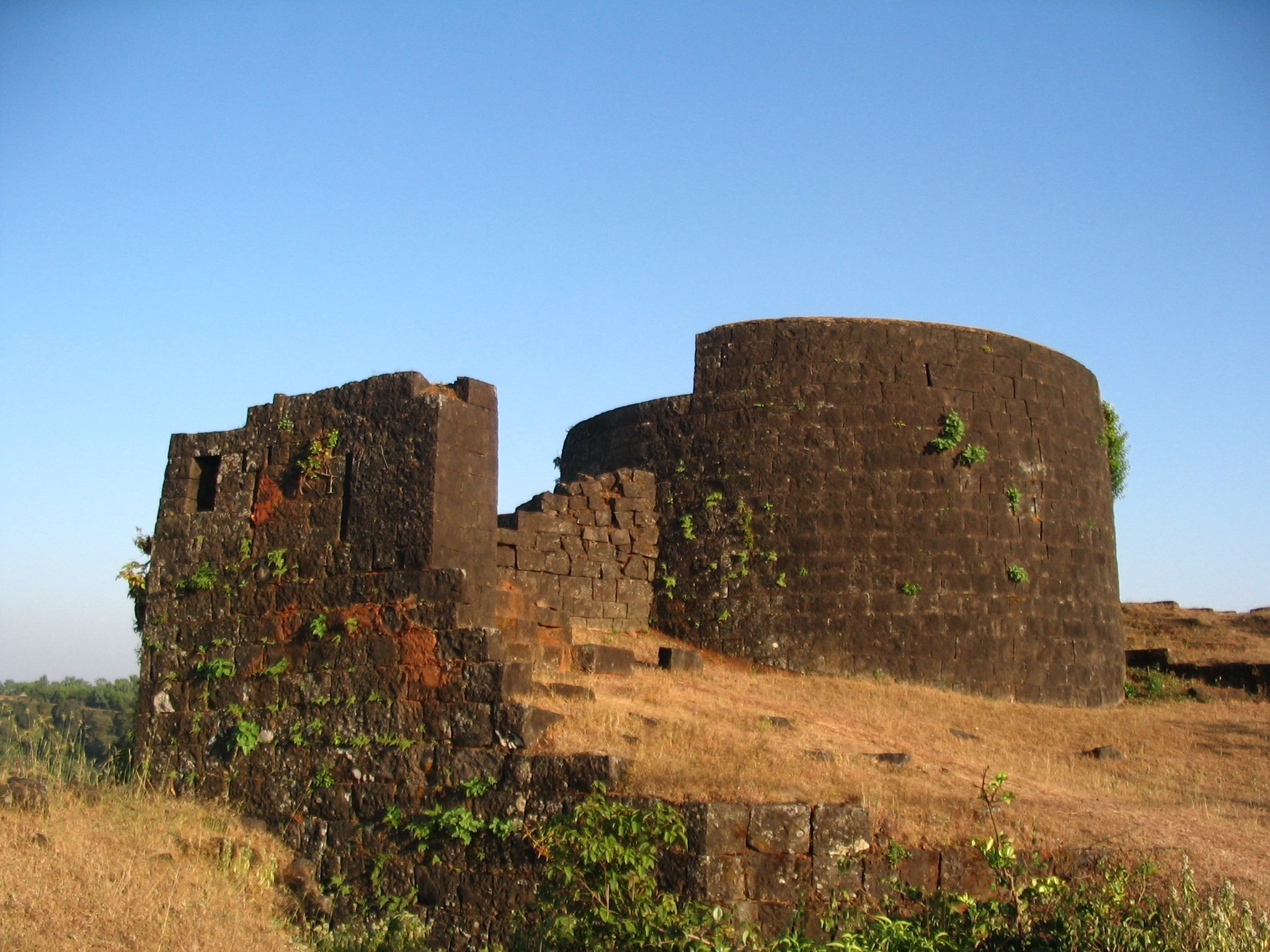
More than 7 kilometres of fortifications, known as Tatabandi, enclose an approximately triangular area. Long stretches are protected by steep escarpments and parapets with slit holes, narrow openings through which defenders could fire. Other sections have ramparts between 5 and 9 metres high without parapets and are strengthened by round bastions, particularly Rajdindi Bastion. Some older bastions carry a lotus motif associated with Bhoja II.
Andhar Bavadi
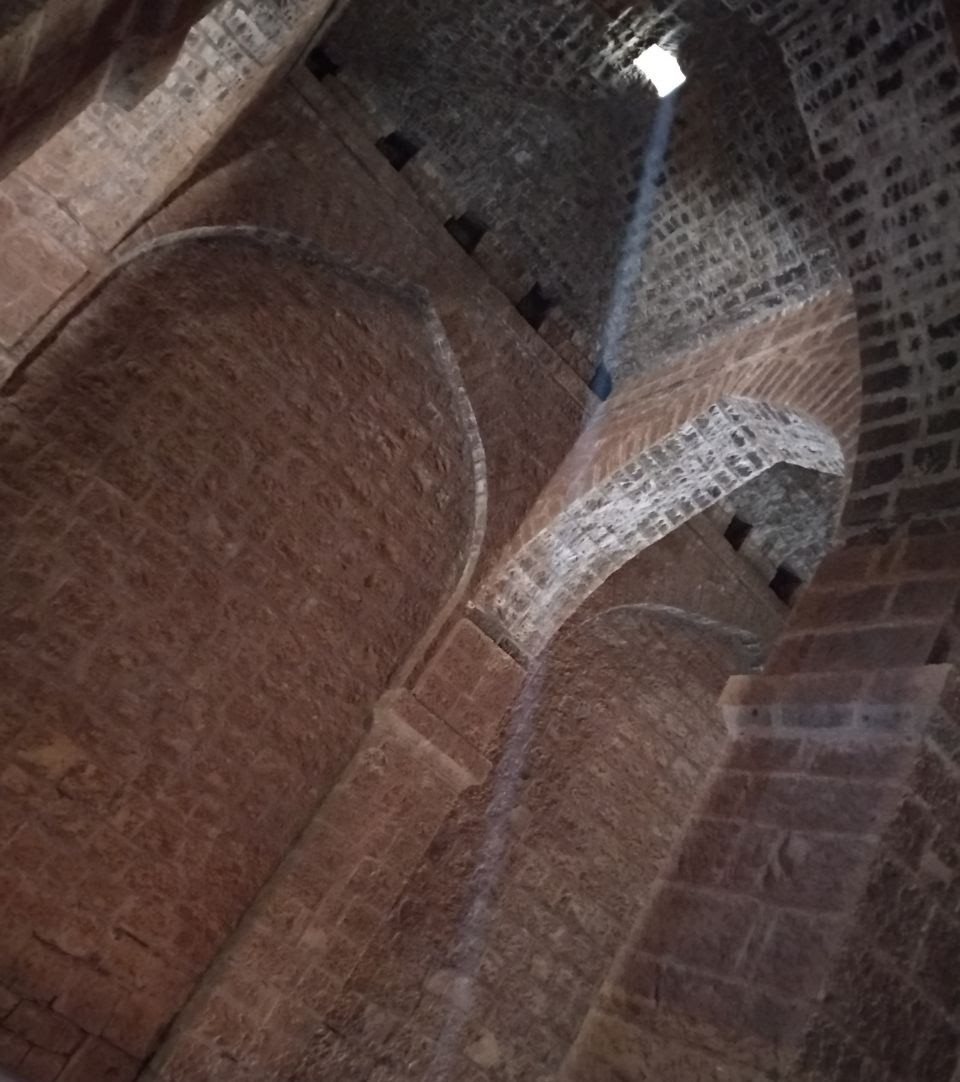
Andhar Bavadi, meaning Hidden Well, is a three-storey structure commissioned by Adil Shah. Winding staircases conceal its well, which served as the fort’s principal water source. Recesses in the walls provided positions for permanently stationed soldiers, while concealed routes led beyond the fort. The combination of water supply, living quarters, and escape passages made Andhar Bavadi an emergency refuge within the larger fort.
Teen Darwaza and Wagh Darwaza
Teen Darwaza is the main entrance and one of three double gateways, together with Char Darwaza and Wagh Darwaza. It lies west of the fort and north of Andhar Bavadi. Two gates are separated by a courtyard with arcades. The outer gate has a decorated upper chamber and ornamental eaves, while the inner gate has a finely carved lintel bearing motifs that include Ganesha, added during the Maratha occupation. Three Persian inscriptions date the gateway to 1534, during the reign of Ibrahim Adil Shah I.
Wagh Darwaza has an entrance bearing an elaborate Ganesha motif. Its design directed attackers into a small courtyard where they could be neutralized. Char Darwaza was destroyed during the British siege. Rajdindi Bastion contains a concealed emergency exit used by Shivaji during his escape toward Vishalgad in 1660, and the bastion remains intact.
Granaries and court buildings
Ambarkhana
The central Ambarkhana contains three Bijapuri-style granaries named Ganga Kothi, Yamuna Kothi, and Saraswati Kothi. Their stores helped Shivaji withstand Siddi Johar’s five-month siege. Ganga Kothi, the largest, held 25,000 khandis, with one khandi equal to approximately 295 kilograms. The building covers about 950 square metres and rises 10.5 metres. Rice, finger millet, and warai grain were stored there.
Stairs on both sides lead to the tops of the granaries. Ganga Kothi contains sixteen bays, each with a flat vault and an opening through which grain was passed. Its eastern entrance has a domed chamber, a balcony, and Bijapuri-style plasterwork.
Dharma Kothi
Dharma Kothi is a separate stone granary beside the Ambarkhana. It measures approximately 16.7 by 14.6 metres and is about 10.6 metres high. An entrance and staircase lead to its terrace, from which grain was distributed to people in need.
Sajja Kothi
Sajja Kothi is a one-storey Bijapuri-style pavilion built by Ibrahim Adil Shah in 1500. Designed as a viewing pavilion over the valley, it has domed upper chambers with faceted supports and balconies projecting over the fort ramparts.
Kalavanticha Mahal
Kalavanticha Mahal, also called Nayakini Sajja, stands near the eastern rampart. Its name means Courtesans’ Terrace Room. During the Bahmani occupation, it served as a Rang Mahal, or residence for women of the court. By 1886, it was a complete ruin, retaining traces of ornamental ceiling work.
Temples, tombs, and later buildings
Temples and shrines
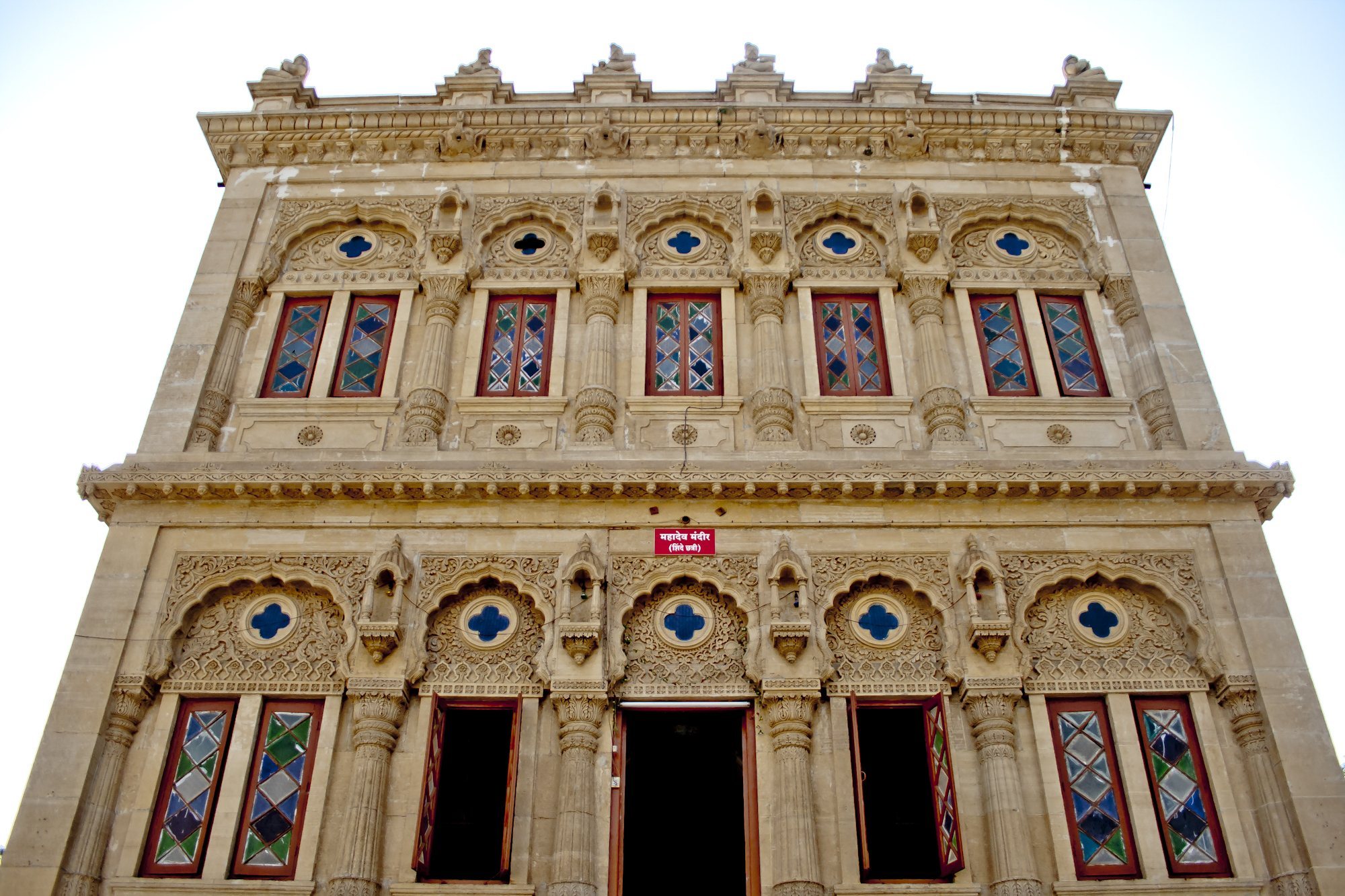
Panhala contains temples dedicated to Sambhaji II, Someshwar, Ambabai, and Mahakali. The ancient Ambabai Temple was associated with offerings made by Shivaji before major military expeditions. The site also includes a shrine to the Muslim saint Sadhoba and a shrine dedicated to Gangubai, which became a pilgrimage site for members of the Teli community.
Mausoleums
The mausoleum of Jijabai stands opposite the mausoleum of her husband, Sambhaji II. Ramchandra Pant Amatya, author of Adnyapatra, a treatise on Maratha policy, died at Panhala, where mausoleums were erected for him and his wife. These tombs were covered with rubble until 1941 and had not undergone restoration by 1999. A mausoleum for the eighteenth-century Marathi poet Moropant is also present.
Tarabai’s palace
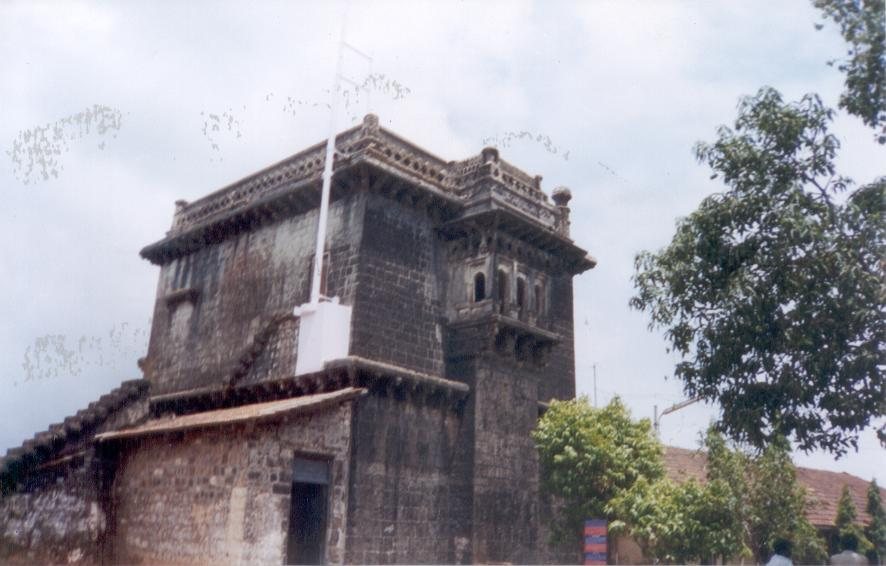
Tarabai’s palace remains intact and is used for a school, government offices, and a boys’ hostel. Many other structures within Panhala survive in ruined form, preserving parts of the fort’s military, administrative, religious, and residential history.