Beauchief Abbey: A Premonstratensian Monastery in Sheffield
Site at a Glance
- Rating
- 4.7
- Popularity
- Very Low
- Country
- United Kingdom
- Primary era
- Medieval
- External website
- Open
- Eras represented
- Medieval, Early Modern
- Civilizations
- English
- Site type
- Religious
- Remains
- Monastery
On this page10 sections
History
Foundation and monastic economy
Beauchief Abbey is a former Premonstratensian monastery in Sheffield, United Kingdom, founded before 1176 by Robert FitzRanulph de Alfreton. The Premonstratensians were a religious order established by Saint Norbert at Prémontré in France, and their members were commonly known as White Canons. A foundation date of 1183 was recorded by Thomas Tanner, but Albinas, abbot of Derby and a witness to the foundation charter, had died by 1176. The earlier date therefore places the abbey’s foundation before that year.
The monastery was dedicated to Saint Mary and Thomas Becket, the archbishop of Canterbury murdered in 1170 and canonised in 1173. Tanner claimed that FitzRanulph had taken part in Becket’s murder and founded the abbey as penance. Samuel Pegge later rejected that attribution, finding no connection between FitzRanulph and the killing. The community consisted of about 12 to 15 canons and lay brothers, whose religious life operated alongside the economic activities of the Beauchief estate and its outlying manors.
The abbey controlled iron smelting, mineral extraction, woodland industries, and mills on the River Sheaf. Farming was also important. A stream supplied the monastic complex and its fishponds, supporting the practical organisation of the estate as well as the community’s religious foundation.
Dissolution and the later estate
Beauchief Abbey was dissolved in 1537, when the English Crown ended its monastic communities. The estate then passed to Sir Nicholas Strelley. It later descended to the Pegge family after Edward Pegge of Ashbourne married Gertrude Strelley, the Strelley heiress, at Norton on 17 July 1648.
In 1671 Edward Pegge built Beauchief Hall using stone taken from the ruined abbey. Frank Crawshaw purchased the estate in 1923. Some land was subsequently sold for housing, while much of the remainder was given to Sheffield Corporation. The former monastic site is now a parish church, and its surviving tower and associated ruins are protected as a Scheduled Ancient Monument, a legally protected archaeological or historic monument in England.
Much of the wider estate is occupied by Abbeydale Golf Club and Beauchief Golf Club, while other areas remain as ancient woodland and parkland. Public footpaths cross the estate, including the Sheffield Round Walk. A former alabaster altarpiece from the abbey depicted the death of Thomas Becket. By 1879 it was in the possession of Mr Foljambe of Osberton, near Worksop.
Remains
Monastic complex
Beauchief was a small Premonstratensian complex with an abbey church, cloisters, chapter house, dormitory, and refectory. Its surviving remains lie within a wider landscape of water features, woodland, and former cultivation. The arrangement of the surviving structures and foundations reflects the scale of the medieval religious community and its supporting estate.
Western tower and later church
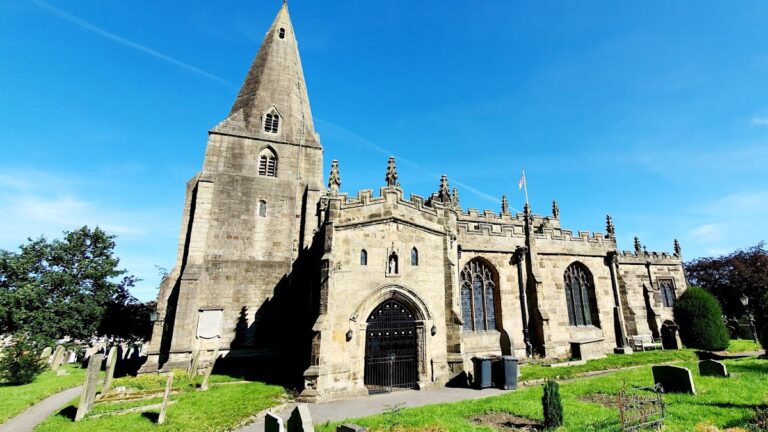
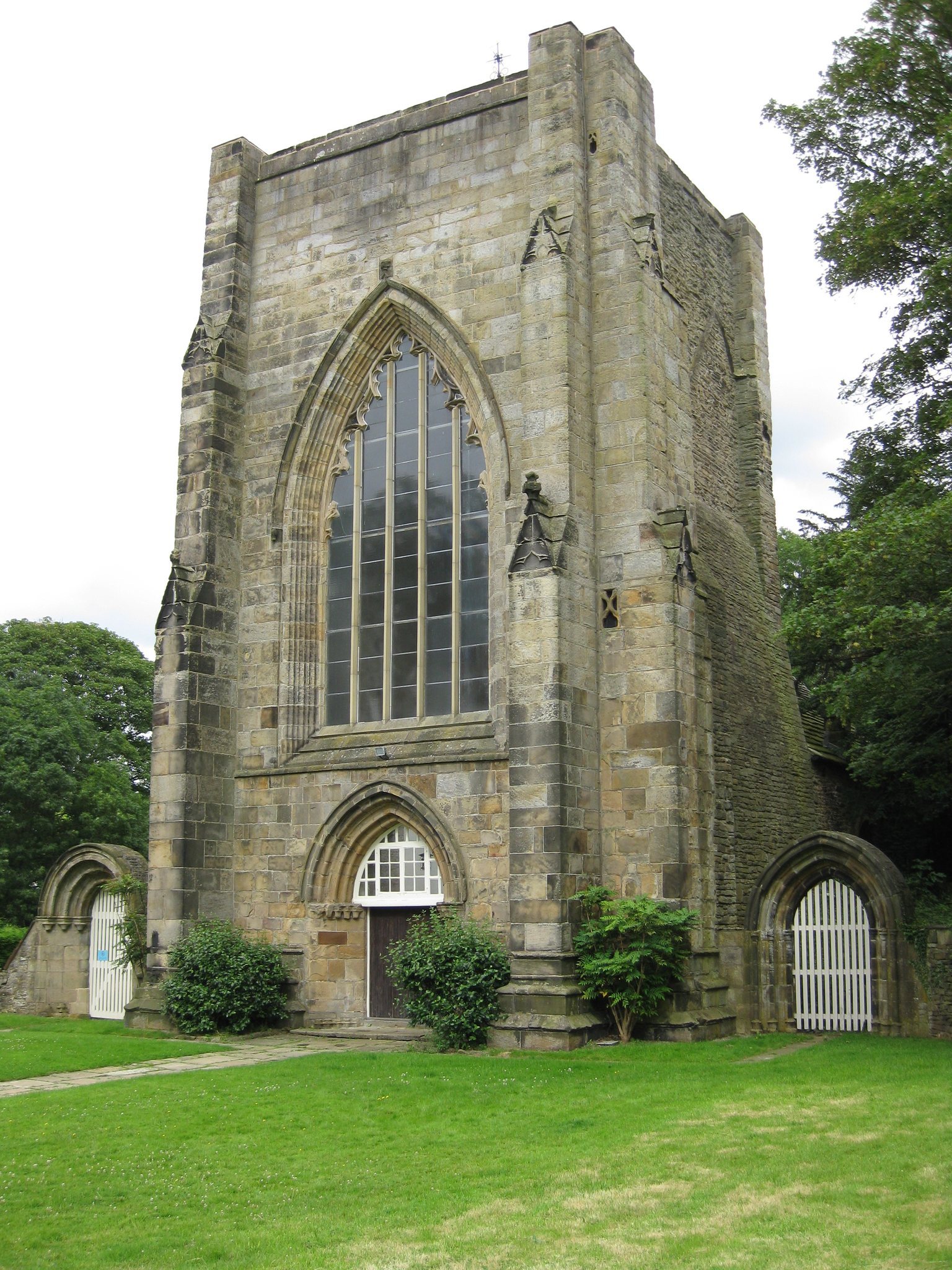
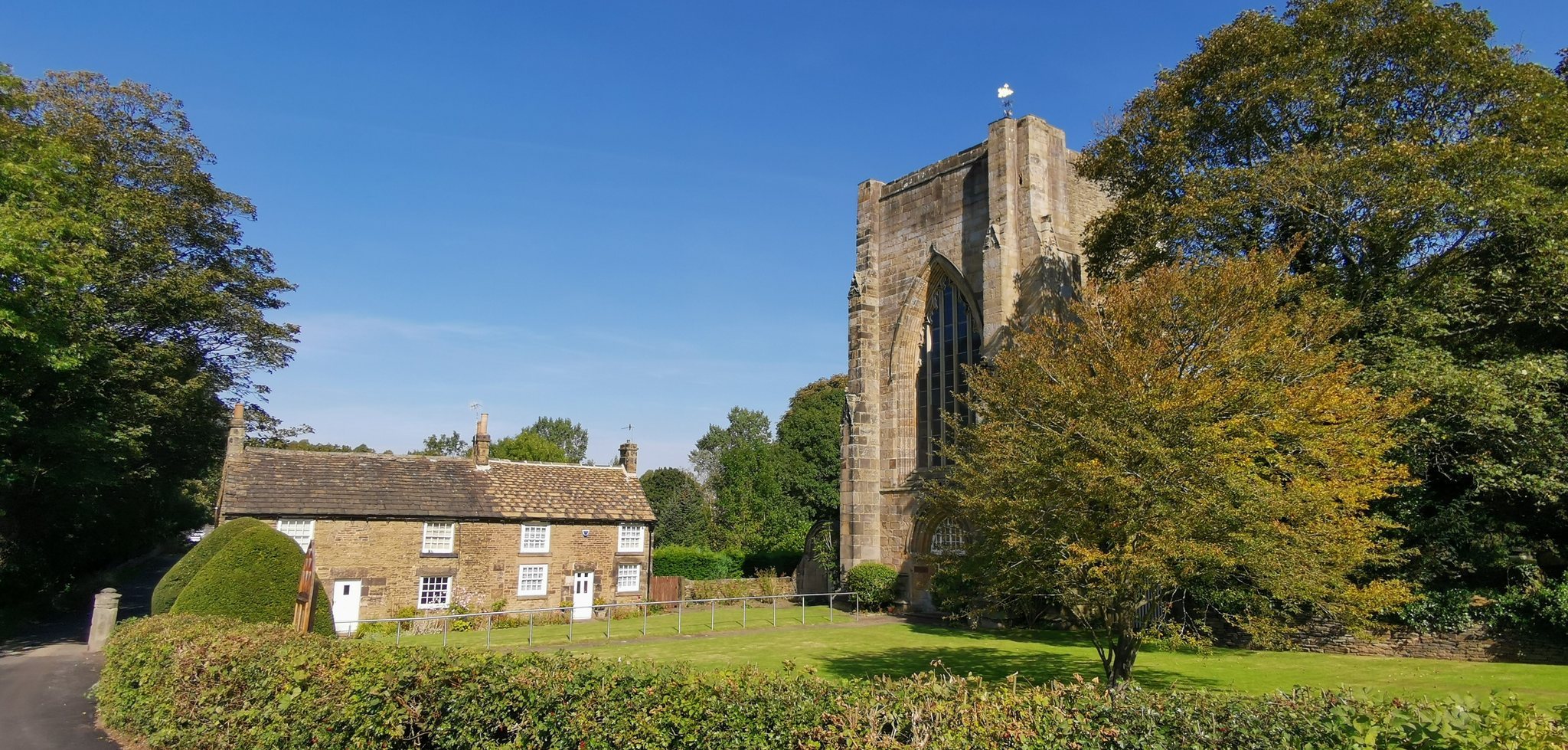
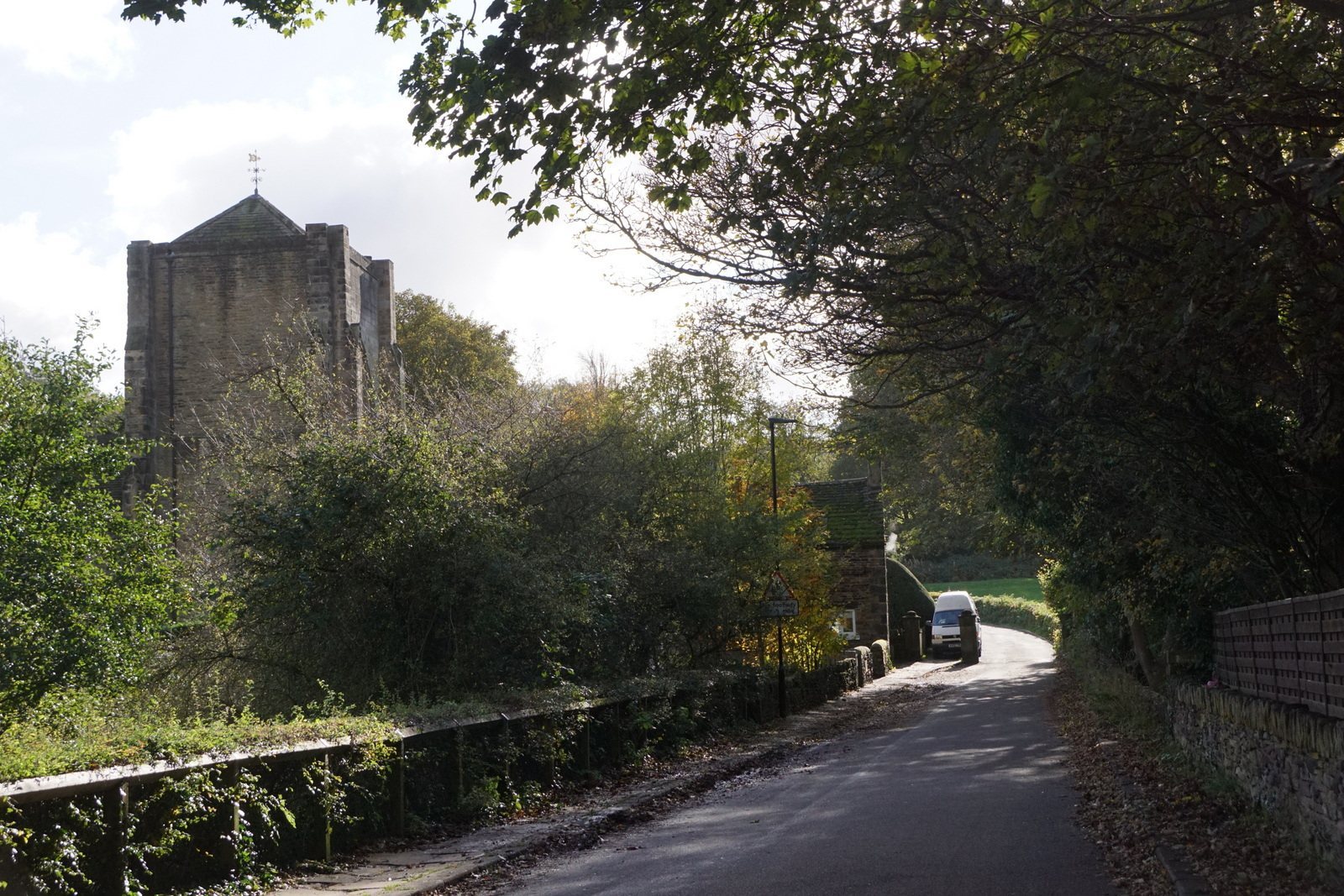
The western tower is the only surviving medieval part of the abbey. It is attached to a chapel built in the seventeenth century, which now functions as a church. The tower and chapel together preserve the connection between the medieval monastery and the later use of the site as a parish church.
Ruins, foundations, and fishponds
A wall survives immediately south-east of the tower, while foundations of other monastic buildings remain visible. Medieval fishponds also survive, linked to the stream that supplied the complex and its water system. These features preserve parts of the abbey’s working landscape alongside the architectural remains.
Woodland and parkland
The former estate includes Parkbank Wood east of the abbey, Old Park Wood and Little Wood Bank to the south, Gulleys Wood in the central park, and Ladies Spring Wood, also known as Totley Wood, to the west. The surrounding parkland retains evidence of medieval ridge-and-furrow cultivation, the pattern of raised plough ridges and intervening furrows formed by medieval farming. Its topography has since been altered for golf courses.
Ladies Spring Wood
Ladies Spring Wood is an arc-shaped tract of mature deciduous woodland on a steep bank facing the River Sheaf to the west. It was formerly managed by coppicing with standards, a system that repeatedly cuts trees for regrowth while retaining selected mature trees. Charcoal platforms and Q-pits remain within the wood. Q-pits are shallow earthworks or platforms associated with charcoal production.
Sessile oak dominates the woodland, with birch and rowan on the upper slopes and ash and alder on the lower slopes and river terrace. Rhododendrons dominate the upper terrace. The woodland supports white-throated dippers, nuthatches, green woodpeckers, great spotted woodpeckers, and lesser spotted woodpeckers.
The wood’s ancient character is reflected in its boundary shape, whose bends and zigzags are associated with prolonged land clearance. Its position beside the River Sheaf is also notable because the river historically formed several political, parish, and county boundaries. The name “Spring” is identified as Anglo-Saxon in origin and associated with coppicing. The woodland is designated as a Site of Special Scientific Interest under the name Totley Wood, a formal designation protecting places for important wildlife, geological, or ecological interest.
Parkbank Wood and the parkland
Parkbank Wood is another mature woodland, composed mainly of sessile oak. Its past use was more intensive, and its status as primary ancient woodland is less certain. Charcoal hearths, Q-pits, former quarrying, and boundary ditches survive within it, with the ditches possibly indicating earlier agricultural clearance. Together with the ridge-and-furrow in the surrounding parkland, these features preserve evidence of changing land use across the former estate.