La Clarté-Dieu: A Cistercian Abbey in France
Site at a Glance
- Rating
- 4.8
- Popularity
- Medium
- Country
- France
- Primary era
- Medieval
- External website
- Open
- Eras represented
- Medieval, Early Modern
- Civilizations
- French
- Site type
- Religious
- Remains
- Monastery
On this page13 sections
History
La Clarté-Dieu is a former Cistercian abbey in France, founded in 1239–1240 as the order’s twenty-fifth and last direct daughter house. The Cistercians were a reforming Catholic monastic order established at Cîteaux in Burgundy. The first monks arrived on 22 July 1240, and the abbey was dedicated to Notre-Dame.
Foundation and Cistercian affiliation
The foundation was financed by Peter des Roches, the medieval bishop of Winchester, who left 3,000 gold écus to the Cistercian order for the project. He entrusted Guillaume IV de Montaigu, abbot of Cîteaux, with putting the foundation into effect. La Clarté-Dieu formed one of a pair with Netley Abbey in Hampshire.
In accordance with Cistercian custom, twelve monks established the community, symbolically representing the twelve apostles. The abbey remained within the institutional lineage of Cîteaux and founded no daughter houses of its own. Its abbots numbered 32 between 1240 and 1790. The first 17 were regular abbots, while the later 15 were commendatory abbots, who held the office while often entrusting daily religious administration to another cleric.
War, rebuilding, and decline
La Clarté-Dieu suffered severe damage during the Hundred Years’ War, a prolonged series of conflicts fought chiefly between the English and French crowns from the fourteenth into the fifteenth century. On 11 February 1364, Amaury de Trôo plundered and burned the abbey. During another attack in 1383, the monks were forced to seek refuge with the owner of a neighboring château.
Parts of the abbey were rebuilt during the seventeenth and eighteenth centuries, although the monastic community continued to decline. Seven monks lived there in 1704, and only four remained shortly before the French Revolution.
Dissolution and later protection
The abbey was dissolved during the French Revolution in 1790–1791 and sold as national property on 3 June 1791. Jean-Baptiste Chicoyneau de Lavalette, a tax farmer, acquired it first. He resold it to Pierre-Jacques Hachin in 1793, and Hachin’s son transferred it to Louis-François de Sarcé in 1822.
Under these successive owners, much of the abbey was dismantled and its materials were reused in nearby houses. Buildings that escaped destruction served agricultural purposes, while the cellars were converted into a mushroom farm. The foreigners’ chapel was registered as a historic monument in 2006, and the monastic enclosure was classified in 2011.
Remains
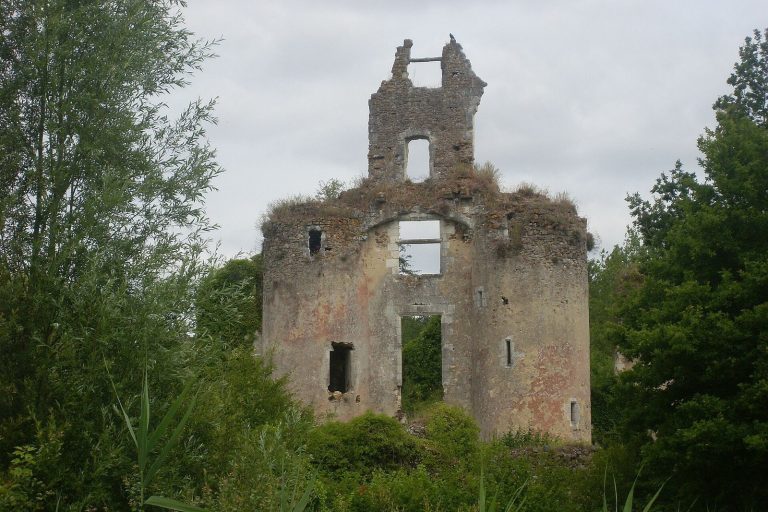
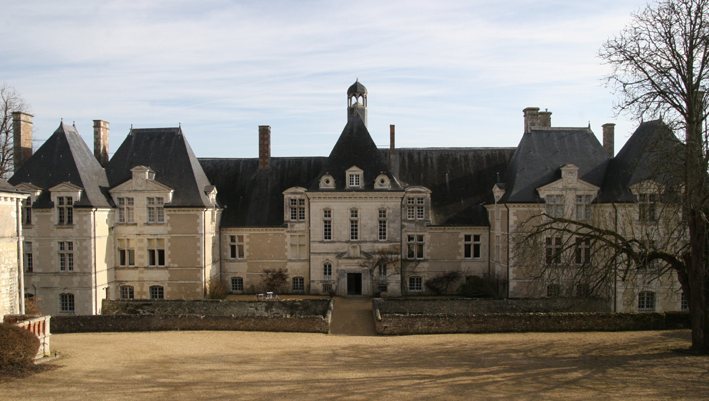
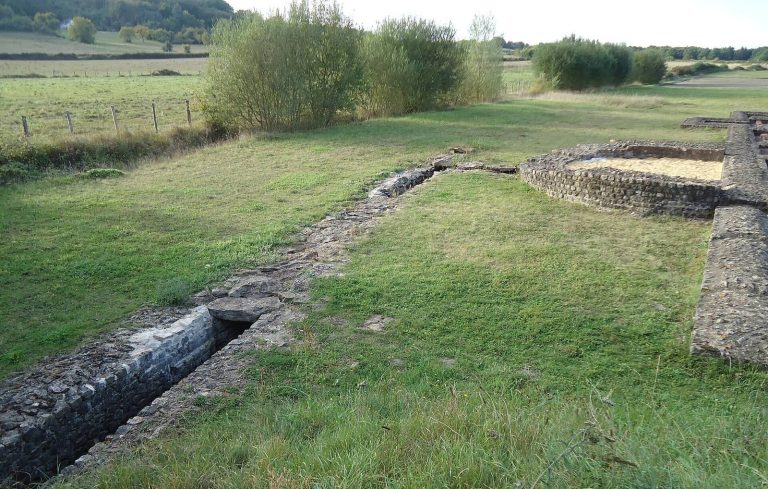
La Clarté-Dieu occupied a narrow, rocky valley. The church stood north of the cloister and faced east, while the cloistered complex extended to the south. Much of the medieval and later fabric has been destroyed or altered, but the convers building, refectory, foreigners’ chapel, and prior’s lodging survive alongside parts of other buildings.
Church and medieval buildings
Abbey church
The abbey church was built on a large scale, measuring about 57 metres in length and 20 metres in width. It had a semicircular apse. The church is now almost entirely destroyed, and its furnishings were transferred to the parish church of Saint-Paterne.
Convers building
The surviving convers building contains a wine press, two vaulted halls, and the lay brothers’ dormitory on the upper floor. Convers were lay brothers responsible for practical and manual work within a monastery. The building’s roof framework dates to 1274.
Later monastic structures
Foreigners’ chapel
The foreigners’ chapel dates from the fourteenth century and survives in a ruined condition.
Refectory
The fifteenth-century refectory has two aisles covered by cross-ribbed vaults, masonry vaults supported by intersecting structural ribs.
West wing
The west wing contained communal facilities, including the kitchen and storage rooms. It was remodelled in 1693, and part of it was later reused as a dovecote, a building or room for domesticated pigeons.
Prior’s lodging
The prior’s lodging was rebuilt in 1733. An inscription giving the date 1714 is considered erroneous.