Saint John the Baptist Church in Feodosia: An Armenian Church and Orthodox Parish
Site at a Glance
- Rating
- 5
- Popularity
- Very Low
- Country
- Russia
- Primary era
- Medieval
- Eras represented
- Medieval
- Civilizations
- Armenian
- Site type
- Religious
- Remains
- Church
On this page9 sections
History
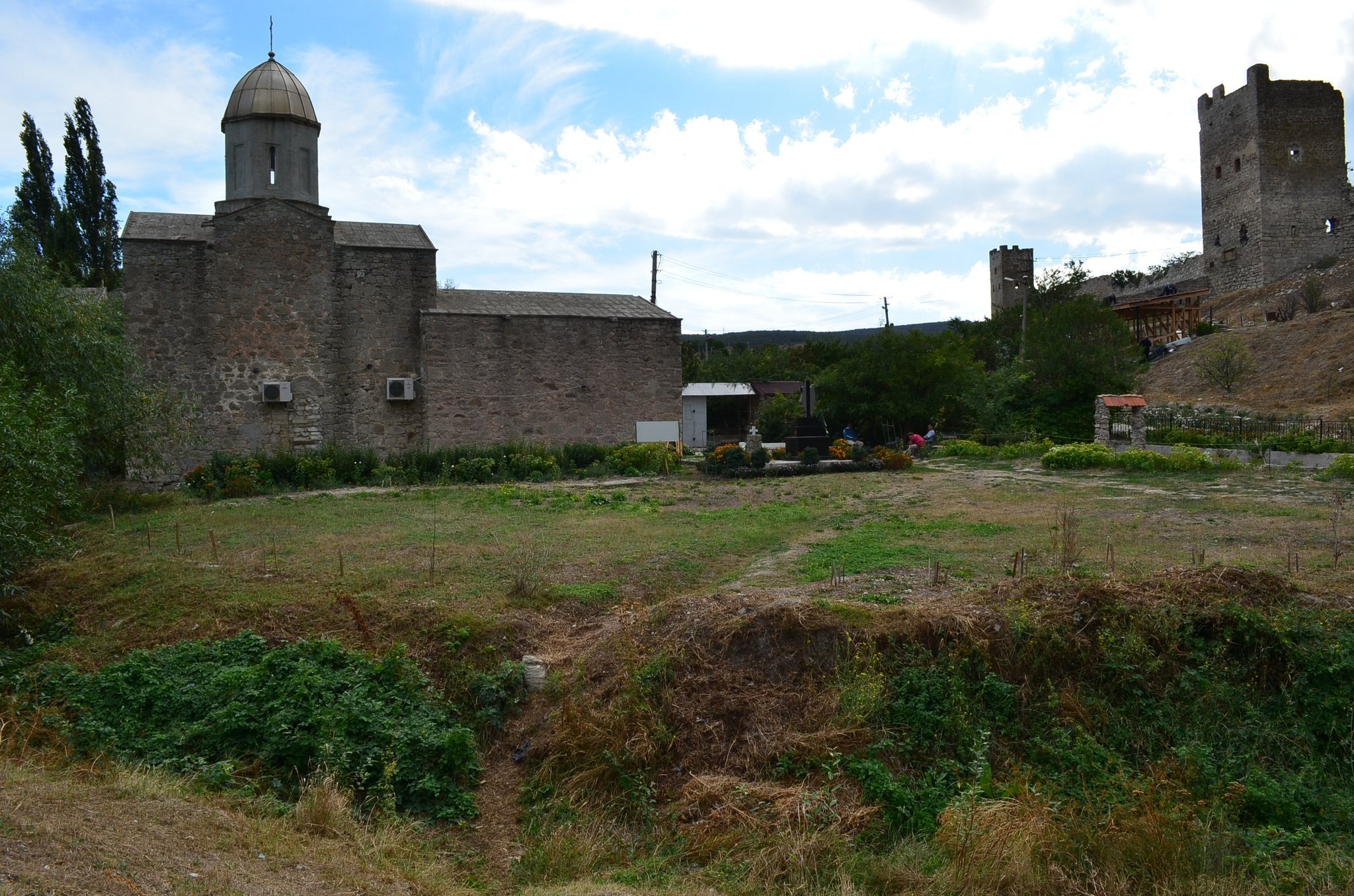
Saint John the Baptist Church in Feodosia, Russia, is a medieval Armenian church built in the thirteenth or fourteenth century by the city’s Armenian community. First mentioned in 1348, it served the religious life of the local Crimean Armenians and stood beside the eastern wall of the Genoese fortress.
The Armenian quarter
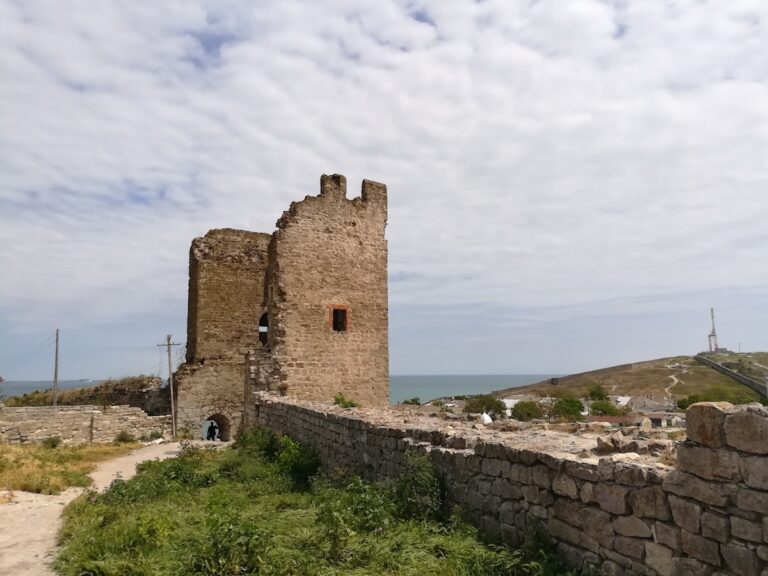
The church formed part of an Armenian settlement that developed in Feodosia during the thirteenth and fourteenth centuries. In the mid-fourteenth century, the Armenians enclosed the settlement with defensive walls against the Tatars. The fortified quarter became known as Hayots Berd, meaning “Armenian Fortress.”
By the fourteenth century, Armenians made up most of the population on Crimea’s southern coast and about two-thirds of the population of Kaffa, the medieval name of Feodosia. Their quarter contained five churches, including Saint John the Baptist.
Relocation and religious transformation
In 1778, Empress Catherine ordered the relocation of the Armenians to the Azov region, and the Russian field marshal Alexander Suvorov directed the resettlement. Some Armenians returned after Crimea was annexed by the Russian Empire in 1783, but the community did not regain its former population. The Armenian quarter subsequently declined.
During the mid-nineteenth century, the former Armenian Fortress became a sanitary quarantine area for crews arriving from plague-affected Turkey and for Crimean Muslims returning from the Hajj, the pilgrimage to Mecca. The area consequently became known as the Quarantine.
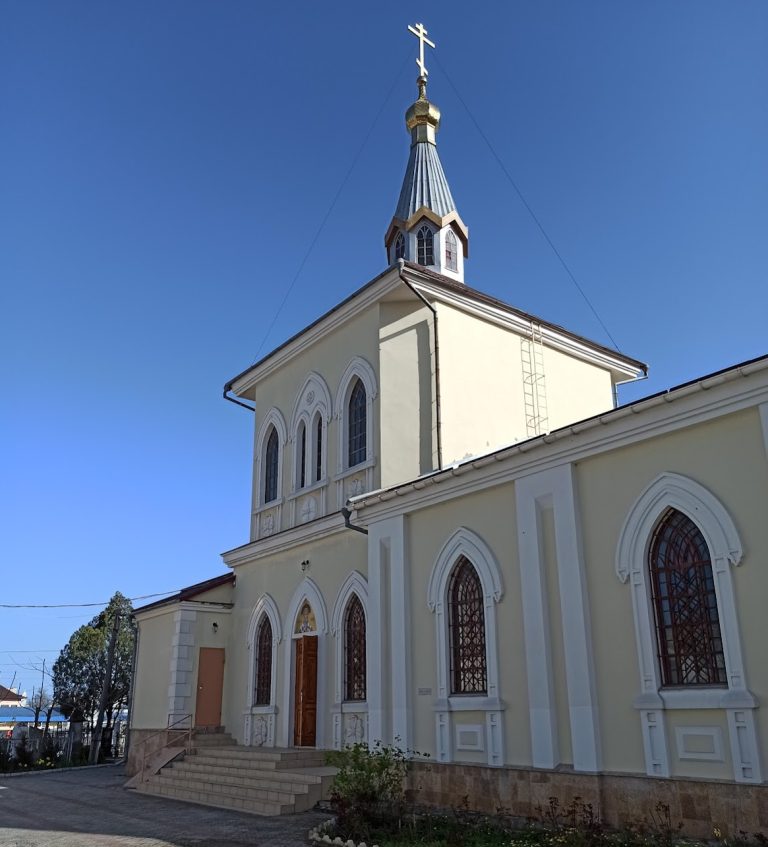
In 1875, the church was removed from the jurisdiction of Etchmiadzin and consecrated by the Russian authorities as a Russian Orthodox church dedicated to the Iveron Icon of the Mother of God. This Orthodox icon is traditionally associated with Iveron Monastery on Mount Athos. The building is now an active Orthodox parish connected with the Feodosia Diocese and the Russian Orthodox Church.
Soviet damage and restoration
The church was closed during the Soviet period. Its frescoes were damaged, and its sculpture disappeared. The area beside the church was also used for mass executions during the Bolshevik terror.
Restoration was completed in 1996 under the direction of the architect and sculptor Valery Zamekhovsky. The church was then transferred to an Orthodox jurisdiction and returned to religious use. It is recognized as a cultural-heritage monument of federal significance in Russia and as an architectural monument of national significance in Ukraine.
Remains
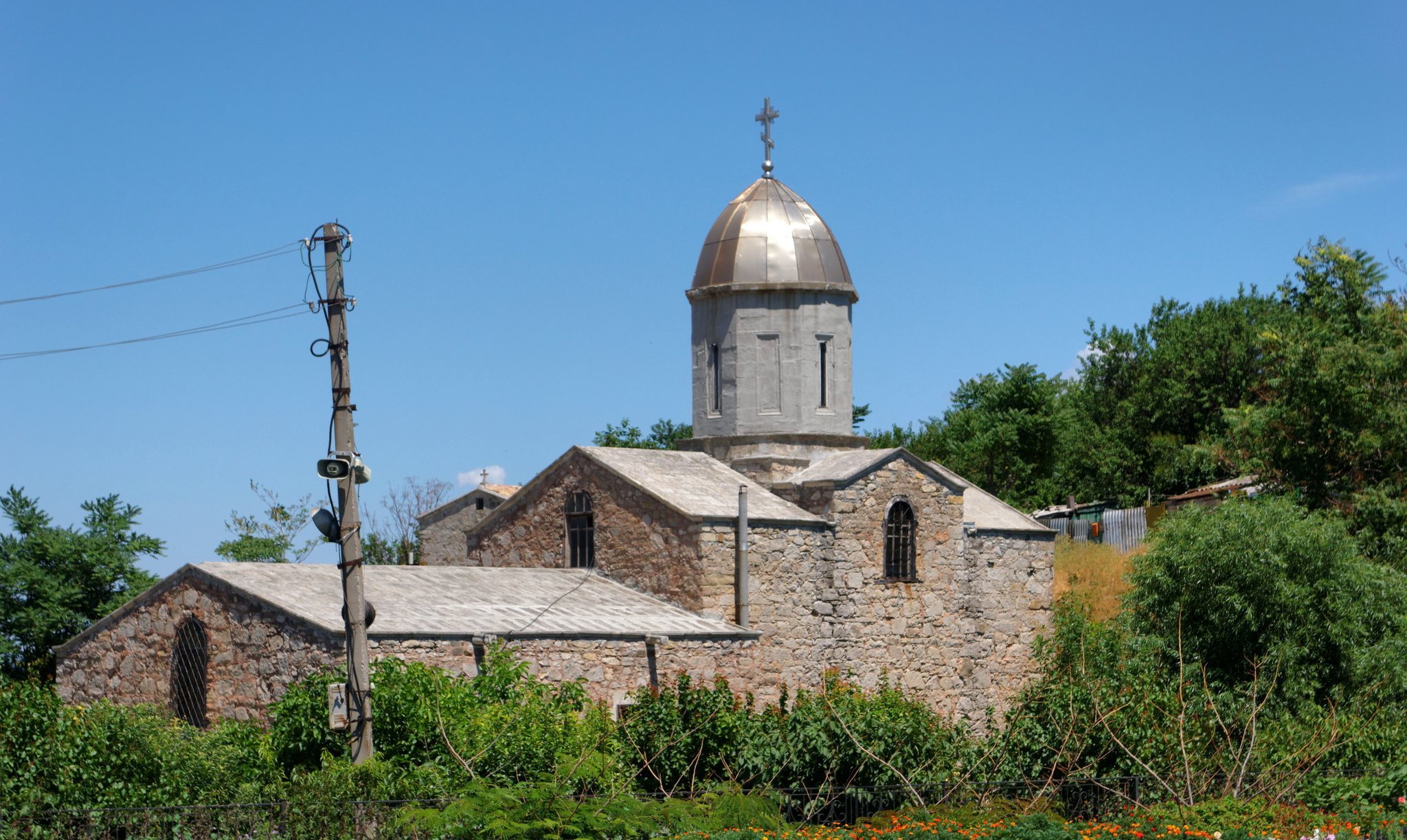
The small brick church consists of two volumes built at different times. The older square room is crowned by an octagonal drum with windows that functioned as loopholes and by a dome. A later rectangular addition extends from the side of the main entrance. Columns divide this section into three naves, each covered by a semicircular vault.
Building and entrance
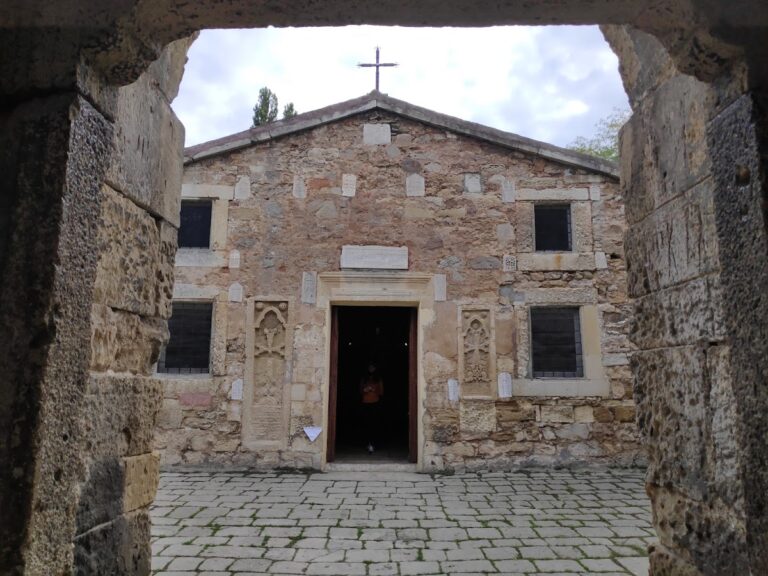
The church measures approximately 5.0 by 3.5 metres externally. Its western entrance opens toward a gavit, an entrance hall or attached forecourt in Armenian church architecture. The entrance has a relatively elaborate rectangular surround. Its upper part was partly cut away when the opening was raised and finished with a semicircular arch.
Khachkars, carved Armenian stone cross-stelae used as religious monuments or memorials, and several old Armenian gravestones stand near the entrance. These stones are remnants of a cemetery associated with the church.
Decoration and sculpture
Frescoes
The nave, or main hall, was decorated with frescoes. Only fragments of this painted decoration survive.
Medieval reliefs
Medieval reliefs were recorded in the altar area during the 1920s. They showed Saint John the Baptist, other saints, and the Eucharist. The eastern program included standing saints flanking the altar apse, a row of twelve half-length apostles above it, and a half-length image of Christ above the window. The reliefs also represented Eucharistic and Gospel scenes.
The sculpture later disappeared during the Soviet period. The relief program was regarded as an exceptional use of Eucharistic imagery in relief within Byzantine, Old Russian, and Crimean architecture. Its style was associated with Armenian relief traditions of the thirteenth and early fourteenth centuries and considered close to the reliefs of an Armenian church in Kaffa.