Syrian Monastery: A Coptic and Syriac Monastic Centre in Egypt
Site at a Glance
- Rating
- 4.9
- Popularity
- Medium
- Country
- Egypt
- Primary era
- Medieval
- External website
- Open
- Eras represented
- Medieval
- Civilizations
- Abbasid, Fatimid
- Site type
- Religious
- Remains
- Fortified Monastery
On this page14 sections
History
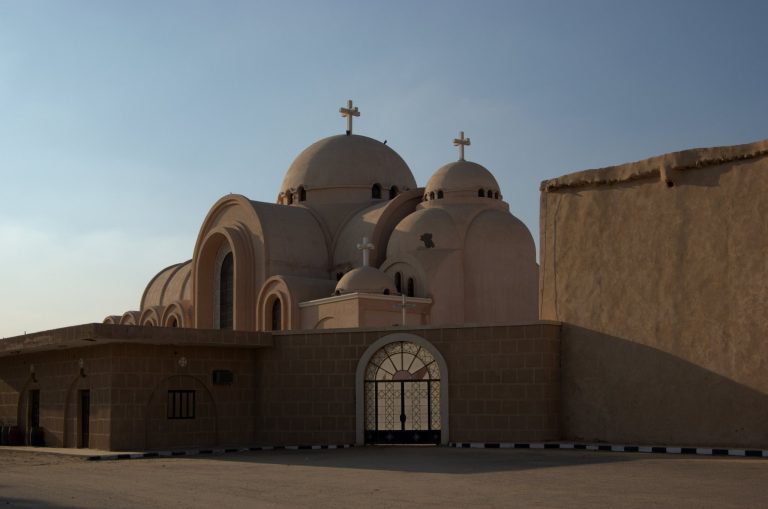
The Syrian Monastery is a Coptic Orthodox monastery in Egypt, located in Wadi El Natrun, the ancient Scetis, and dedicated to the Virgin Mary. Founded in the sixth century by Christian monks associated with the Monastery of Saint Pishoy, it became an important centre of Coptic and Syriac religious life, manuscript production, and literary culture. It is also known as the Monastery of Saint Mary Deipara, the Syriac Monastery, and the Monastery of the Syriacs.
A foundation shaped by theological conflict
The monastery’s exact foundation circumstances are uncertain, although its establishment is generally placed in the sixth century. Monks from the Monastery of Saint Pishoy founded it after rejecting Julianism, a Christian theological position associated with Julian of Halicarnassus that emphasized the incorruptibility of Christ’s body. Their view differed from Orthodox teaching that Christ had assumed human flesh. The monastery’s original name was the Monastery of the Holy Virgin Theotokos, a Greek title for the Virgin Mary meaning “God-bearer.” One tradition names three founding monks.
Julianism spread in Egypt during the papacy of Pope Timothy III of Alexandria. The non-Julianist monks of Scetis received permission from the governor Aristomachus to establish separate churches and monasteries, creating the institutional setting from which the Syrian Monastery emerged.
The Syriac monastic period
At the beginning of the eighth century, after Julianism had been overcome and the monks had reunited, the monastery was sold for 12,000 dinars to wealthy Syriac merchants from Tikrit who had settled in Cairo. They invited Syriac monks to occupy the community and rededicated it as the Monastery of the Holy Virgin of the Syrians. Another tradition places Syriac monks at the monastery as early as the fourth century, a belief that helps explain its later name.
From the eighth through the fourteenth century, the monastery was inhabited mainly by monks of the West Syriac tradition, a Christian tradition historically centred in the Middle East. Syriac and Egyptian monks continued to be associated with the community afterward. In 1516, eighteen of its forty-three monks were Syriac.
The monastery endured repeated raids by Bedouins and Berbers. A particularly destructive attack in 817 was followed by rebuilding in 850 under the direction of the monks Matthew and Abraham. A plague in the fourteenth century caused further decline. When Moses of the Monastery of Mar Gabriel in Tur Abdin visited in 1413, only one Syriac monk remained.
Manuscripts and intellectual importance
The monastery grew into an important centre of Syriac learning through the work of Moses of Nisibis. In 927, he travelled to Baghdad to request tax exemptions for the monasteries from the Abbasid caliph Al-Muqtadir. He then spent three years travelling through Syria and Mesopotamia in search of manuscripts, returning with 250 Syriac manuscripts. This collection helped make the monastery prosperous and supported a major library and a scriptorium, a workshop where manuscripts were copied, repaired, decorated, and bound.
A census of 1088 counted approximately sixty monks, making the monastery the third-largest in the Nitrian Desert after the Monastery of Saint Macarius the Great and the Monastery of Saint John the Dwarf. An inscription dated 1285 to 1286 records building or related activity at the monastery and may reflect the arrival of Syriac refugees during the Mongol invasions of the Middle East.
Near the end of the fifteenth century, the Patriarch of Antioch visited the monastery and granted privileges and donations intended to restore its former importance. Under Pope Gabriel VII of Alexandria, who had previously been a monk there, the monastery sent ten monks to the Monastery of Saint Paul the Anchorite and twenty to the Monastery of Saint Anthony after those communities had suffered Bedouin raids.
Later history and conservation
Seventeenth-century visitors described separate churches for Syriac and Egyptian monks. By the visits of Peter Heyling and Yusuf Simaan Assemani in the seventeenth and eighteenth centuries, Syriac monks were no longer living at the monastery. Assemani obtained manuscripts from its library, and these are now held in the Vatican Library.
The library became an important centre of Coptic literary culture. Between 1839 and 1851, approximately 500 Syriac manuscripts were acquired from the monastery by the British Museum. They stimulated research into Syriac language and culture and included some of the oldest surviving copies of important Greek classical texts, with some dating to the fifth century. In 1847, the Nitrian Codex was found in the library. It contains almost the complete Greek Gospel of Luke, with a Syriac treatise by Severus of Antioch written over it.
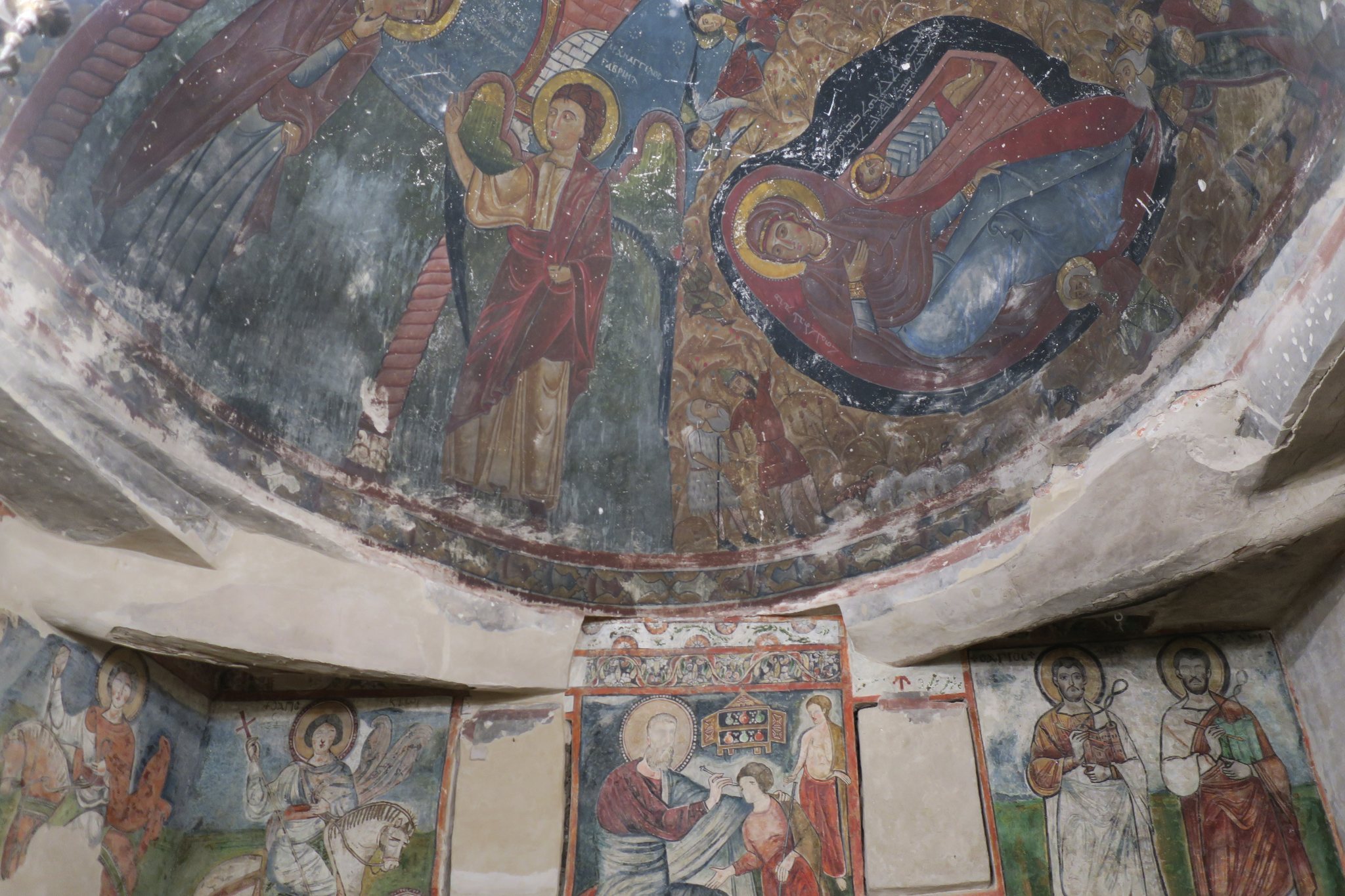
The Syrian Monastery was one of the ancient monasteries of Scetis to survive into the modern period. Shenouda III, who became Coptic Orthodox Pope in 1971 and served until 2012, took monastic vows and studied theology there. Restoration and conservation work carried out from 1991 to 1999 revealed several superimposed layers of wall paintings dating from the seventh to the thirteenth centuries. The paintings continue to be uncovered, restored, and conserved, alongside the cataloguing and preservation of the library.
Remains
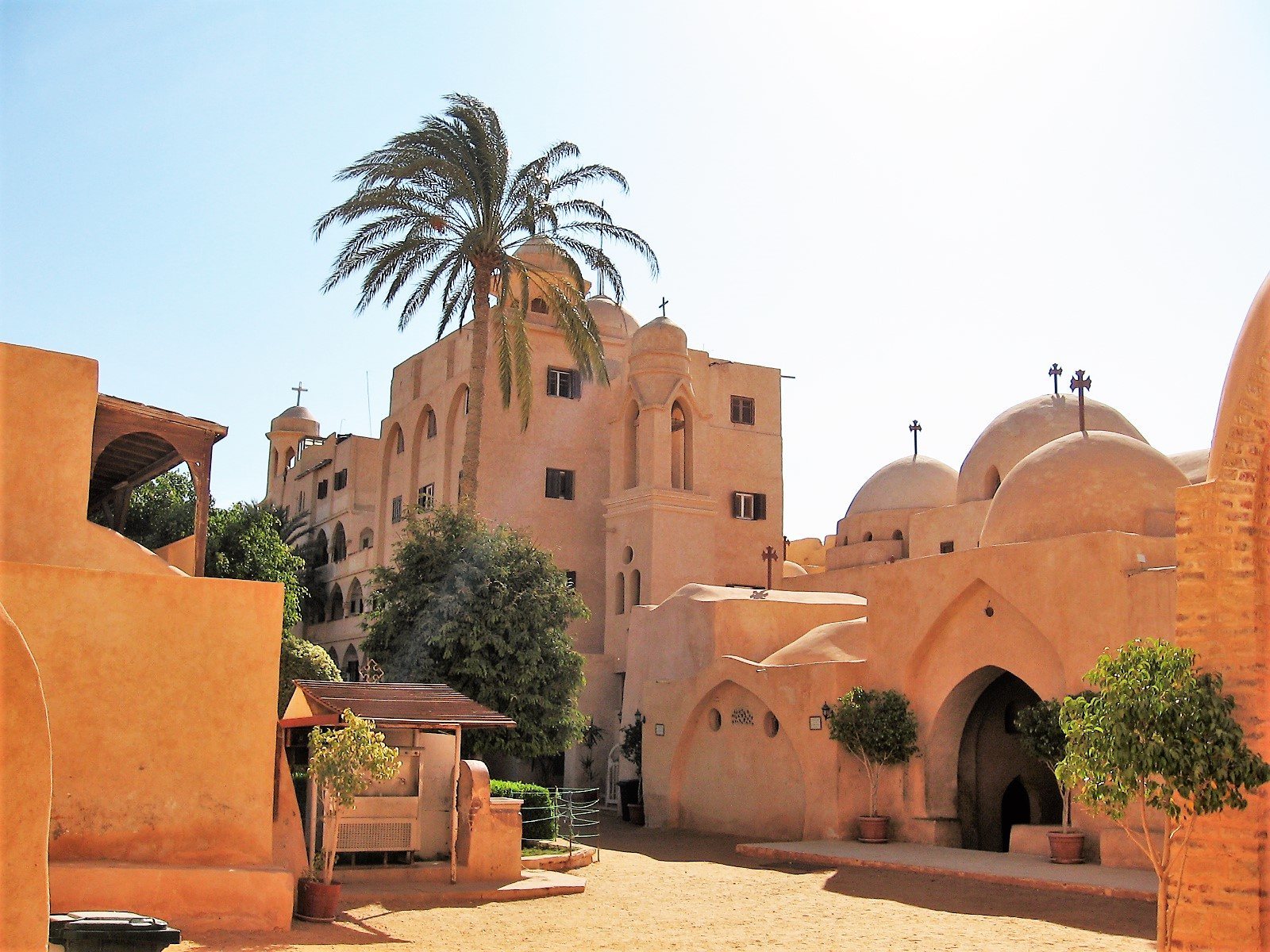
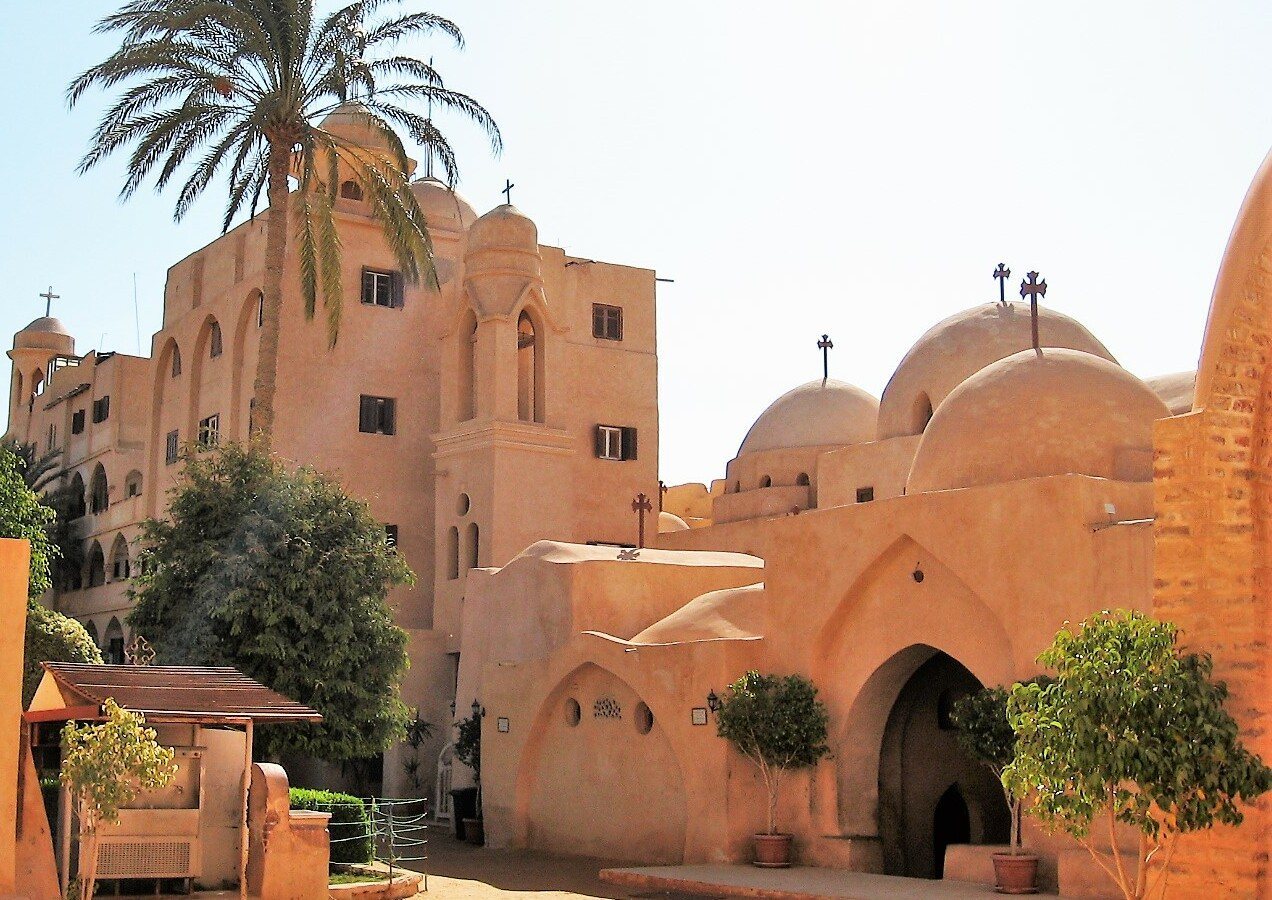
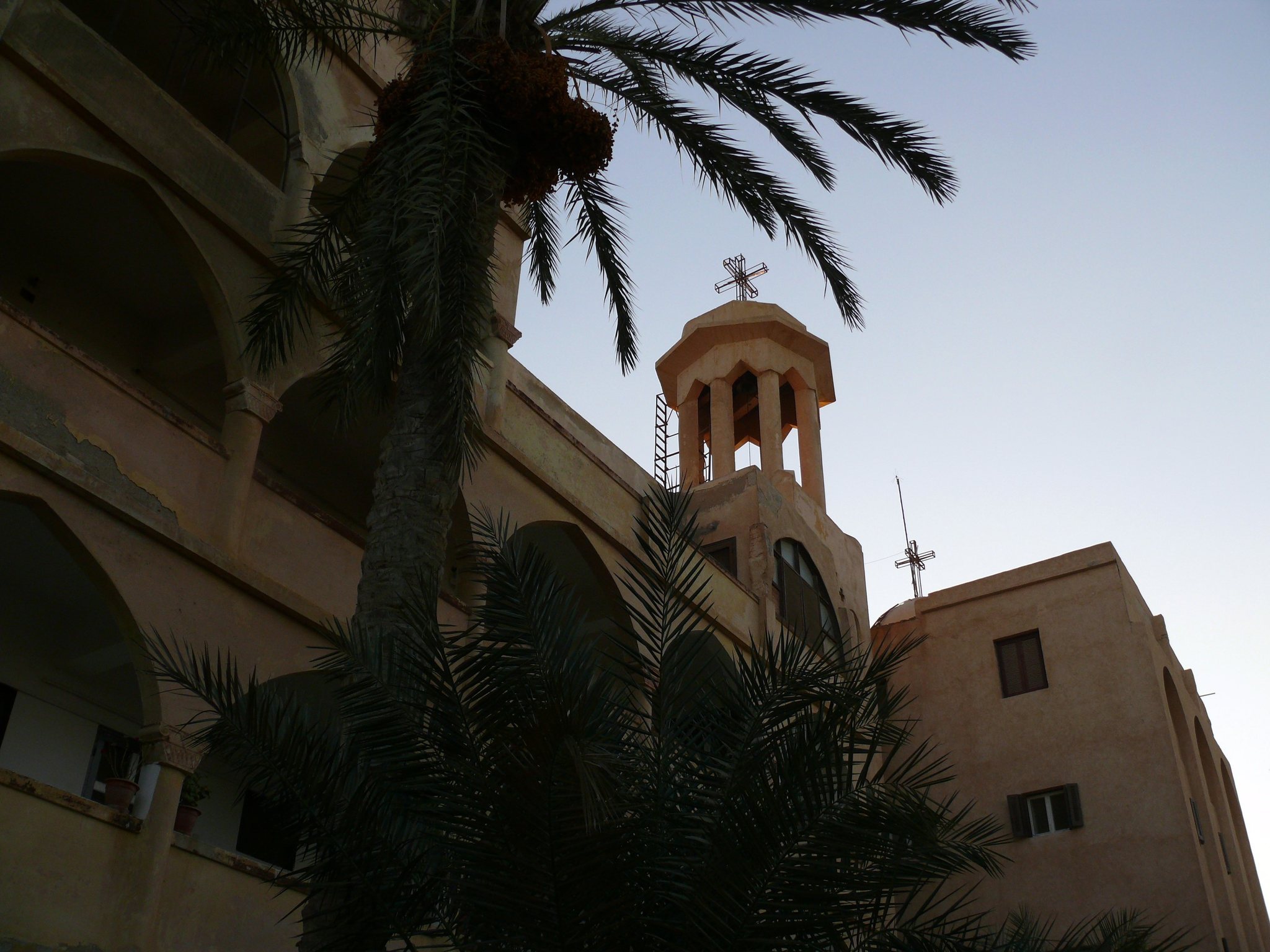
The monastery is enclosed by a large defensive wall built toward the end of the ninth century, with a height ranging from approximately 9.5 to 11.5 metres. Within this enclosure are a fortified keep, a refectory, five churches, a grotto dedicated to Saint Mary, and a library housed in the large square tower. The buildings and surviving decoration preserve evidence of Coptic, Egyptian, and Syriac monastic activity across many centuries.
Fortifications and religious buildings
The keep and defensive enclosure
The keep is a fortified tower that served defensive and residential functions. It has four levels. An entrance on the second level was connected to the monastery by a wooden drawbridge, and that level also contained a chapel. A second chapel occupied the third level, while the highest level contained another chapel and cells for monks. The keep forms part of the defensive complex enclosed by the high ninth-century wall.
The churches and wall paintings
Five churches are identified within the monastery. Two are dedicated to the Virgin Mary, while the others are dedicated to the Forty-Nine Martyrs, Saints Honnos and Marutha, and Saint John the Dwarf. A grotto dedicated to Saint Mary is also included in the monastery’s architectural inventory. The churches preserve relics associated with the Forty-Nine Martyrs and with Saints Honnos and Marutha.
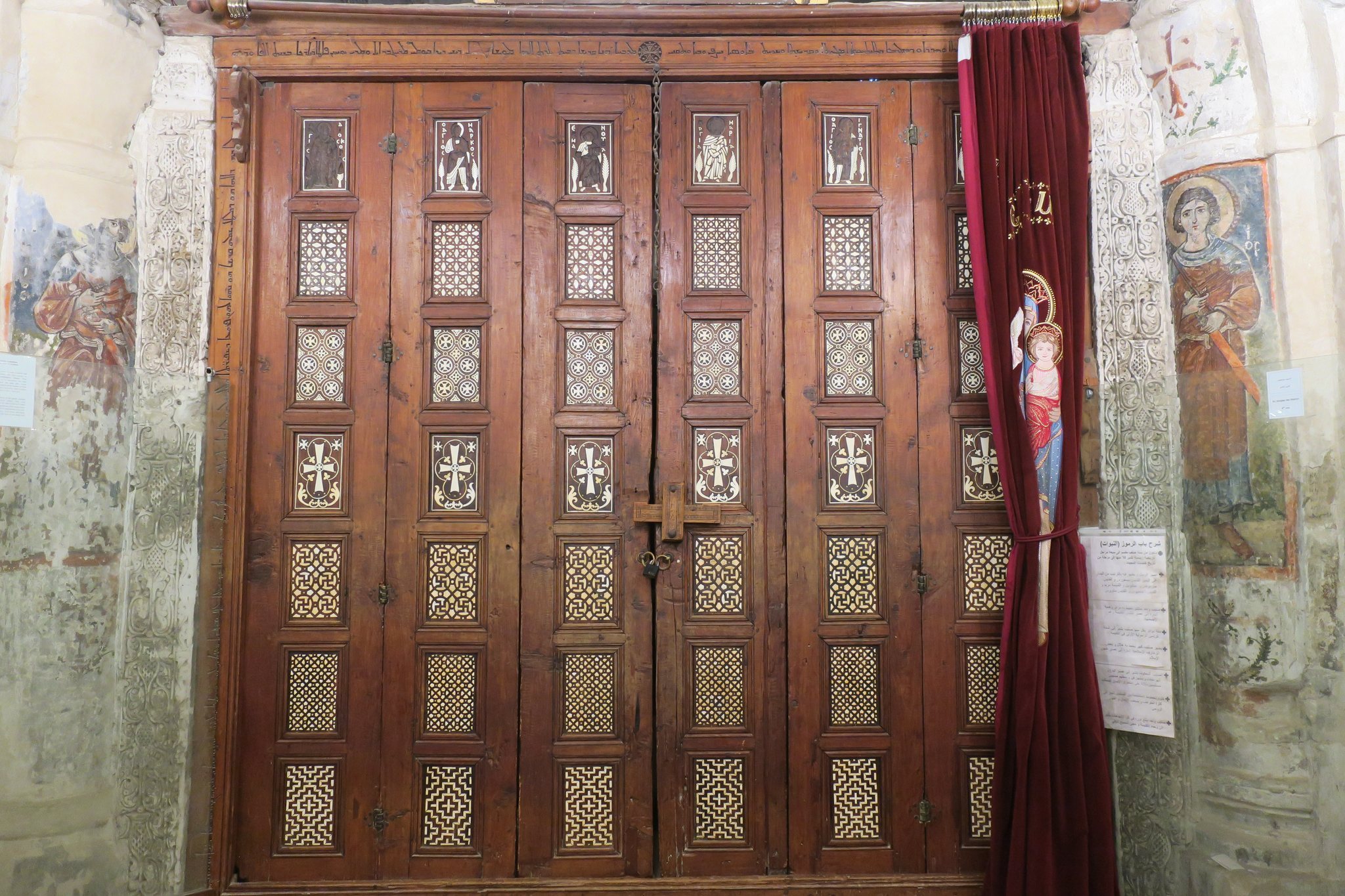
The principal church is the Church of the Holy Virgin. Its construction has been dated variously to about 645 or about 980. A tenth-century wall painting in the church has been identified either as the Ascension or as the Annunciation, and its subject remains uncertain. The church also contains a large tenth-century painting, further paintings on the altar semi-domes, and a carved ivory iconostasis from the same century. The iconostasis depicts religious scenes, portraits, and geometric designs.
Wall paintings in the Church of the Holy Virgin and the Chapel of the Forty-Nine Martyrs form superimposed layers dating from the seventh through the thirteenth centuries. Together they preserve successive phases in the development of Coptic wall painting at the monastery.
The Gate of Prophecies and Tree of Saint Ephrem
A large entrance known as the Door or Gate of Prophecies contains symbolic diagrams presenting the past and future of the Christian faith as understood by tenth-century Christian monks. Near the Church of the Holy Virgin stands a tamarind traditionally identified as the Tree of Saint Ephrem. According to the tradition, it grew from the staff of Ephrem the Syrian after his meeting with Saint Pishoy, an early Egyptian Christian monk associated with the communities of Scetis.
The library and manuscript workshops
The manuscript room
The library occupies a small upper room in the large square tower. Manuscripts were kept in wall niches, and the collection includes approximately 1,500 old codices and many fragments. A codex is a bound manuscript made from separate leaves rather than a scroll. The holdings are divided into Coptic-Arabic, Syriac, and Ethiopian collections.
The scriptorium and book workshop
The library complex included a scriptorium and a book workshop where books were sewn, decorated, repaired, and sometimes overwritten with new texts. A thirteenth-century Gospel donated by the monk Lazarus was restored, rebound, decorated with gold and silver, and placed in a specially prepared case. In the late twelfth century, another monk reportedly repaired and rebound about 100 books.
The manuscript collections
The Coptic-Arabic collection preserves the transition from Coptic to Arabic literacy through marginal notes, bilingual codices, and later Arabic-only manuscripts. The small Ethiopian collection contains books in Ethiopic, Amharic, and Tigrinya. Analysis of their production techniques indicates that some were made at the monastery rather than imported from Ethiopia, suggesting the former presence of an Ethiopian community.
Manuscripts from the monastery are now divided between its own library and external collections. The British Museum holds approximately 500 Syriac manuscripts acquired between 1839 and 1851, while manuscripts obtained by Assemani are in the Vatican Library. The monastery itself continues to preserve hundreds of old manuscripts and fragments.