Prince of Wales Fort: Hudson’s Bay Company Trading and Defensive Post
Site at a Glance
- Rating
- 4.8
- Popularity
- Very Low
- Country
- Canada
- Primary era
- Early Modern
- External website
- Open
- Eras represented
- Early Modern
- Civilizations
- British
- Site type
- Military
- Remains
- Fort
On this page9 sections
History
Prince of Wales Fort is a former Hudson’s Bay Company trading and defensive post in Canada, across the Churchill River from Churchill, Manitoba. The Hudson’s Bay Company developed the site from a 1717 trading post into an eighteenth-century stone bastion fort, a defensive enclosure with projecting corner positions for covering its walls with gunfire.
European interest and the Churchill River Post
European interest in the region followed Henry Hudson’s entry into Hudson Bay in 1610. Jens Munk overwintered at the mouth of the Churchill River in 1619 and 1620, but his expedition ended with the deaths of all but two of its members. The Hudson’s Bay Company, an English trading corporation chartered in 1670, renewed British commercial interest in the area after an earlier fur-trading expedition in 1669.
A first fort was built in 1689 but was destroyed by fire. After the Treaty of Utrecht in 1713, England was the only European power claiming the area. The surrounding region remained shaped by Indigenous movement and diplomacy. Swampy Cree, Ojibwa or Anishinaabe, and Inuit groups used the lands between the taiga and tundra according to different seasonal patterns. During 1715 and 1716, Thanadelthur, also known as Slave Woman, helped mediate peace between the Ojibwa and Cree during an expedition from York Factory.
James Knight established the original log fort in 1717 as the Churchill River Post. It protected the Hudson’s Bay Company’s commercial interests on the river and served as a trading station for Indigenous merchants from a wide area. The post was renamed Prince of Wales Fort in 1719 and was administered independently of York Factory from 1725.
Construction of the stone fort
In 1730, the Hudson’s Bay Company decided to make the post its principal defensive position on Hudson Bay. The wooden structure was replaced with a stone fort, with construction beginning in 1731 and the cornerstone laid on 3 June 1732. The work was initially expected to take six or seven years, but it continued for about four decades and was never fully completed.
From 1731 to 1782, Prince of Wales Fort supported whaling, hunting, and fur-trading expeditions. Samuel Hearne and Matonabbee departed from the fort for the Coppermine River in 1770 and 1771. Swampy Cree traders supplied furs, particularly beaver, in exchange for firearms, ammunition, gunpowder, glass beads, and metal goods. Their control of access to the regional trade made commerce irregular, while Inuit groups farther north resisted British efforts to use them as interpreters or compel them into trade.
The fort’s operation also depended on the Swampy Cree, who protected and supplied it. They provided warm clothing, snowshoes, caribou meat, and other necessities. The Company distributed gifts and weapons, recognized successful hunters with titles such as Captain or Chief, and supplied flour and other provisions when caribou herds were unavailable.
French attack and decline
In 1782, Jean-François de La Pérouse led three French warships against the fort during a Hudson Bay expedition. Samuel Hearne, then the fort’s governor, recognized the French military superiority and surrendered without a battle. La Pérouse removed the fort’s weapons, undermined and breached its walls, and set fire to its buildings.
The Hudson’s Bay Company regained the fort in 1783, but its importance declined rapidly as the regional fur trade weakened and competing posts expanded. York Factory became the Company’s principal post. By about 1850, only one post employee remained stationed at Prince of Wales Fort.
Preservation and interpretation
The completion of the Hudson Bay Railway to Churchill in 1929 helped prevent the abandoned fort from being forgotten. Railway workers and construction equipment were used to restore its walls after the railway connection was completed, and further restoration took place in the late 1950s. Archaeological investigations at and around the fort began in 1958. Since 2005, Parks Canada archaeologists have worked alongside major wall-stabilization and interpretation programs.
The site was designated Prince of Wales Fort National Historic Site of Canada by the federal government on 30 January 1920 under the Historic Sites and Monuments Act. This designation recognizes places judged to have nationally important historical value in Canada. Parks Canada now administers the site.
Remains
The stone enclosure
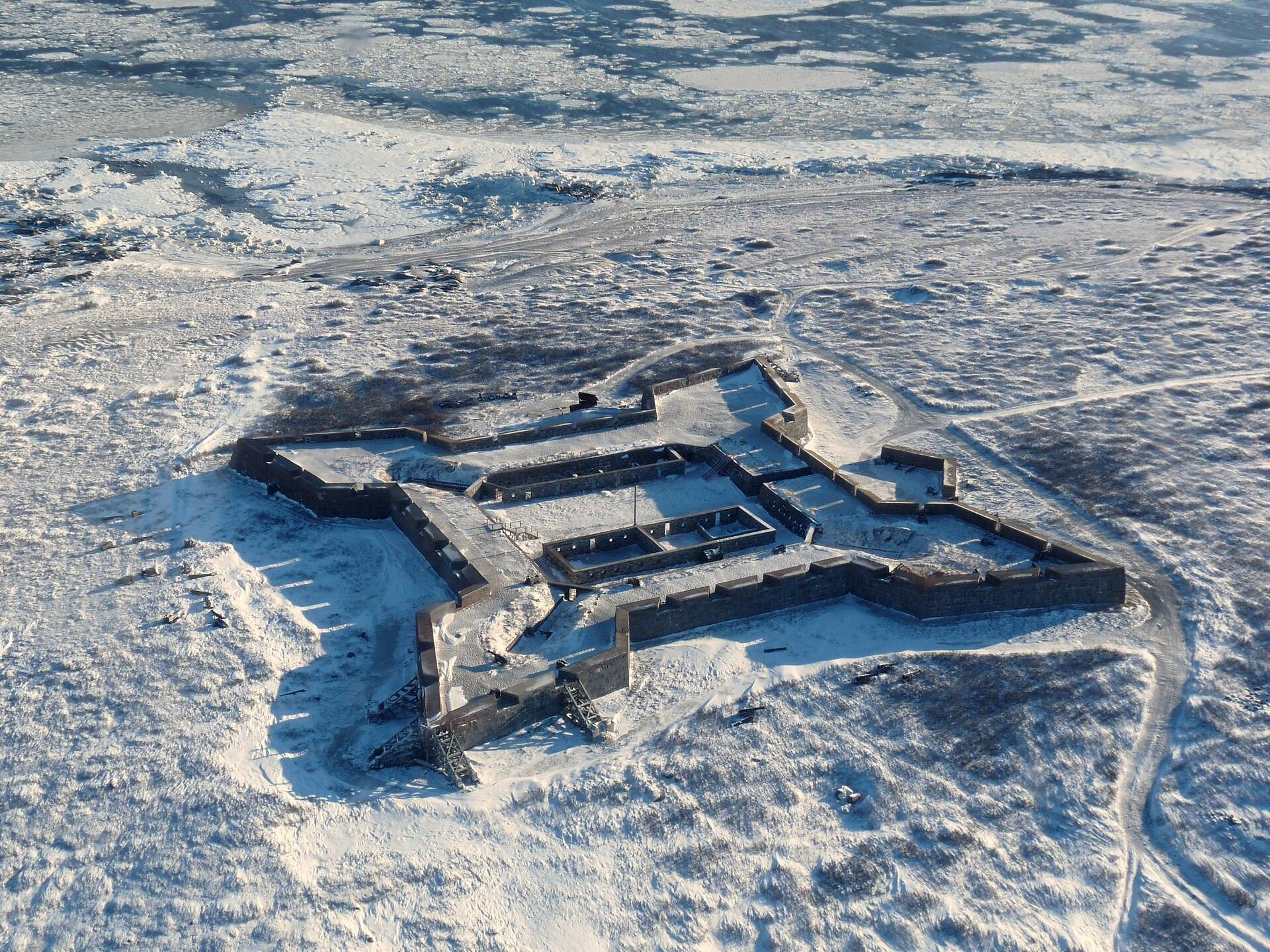
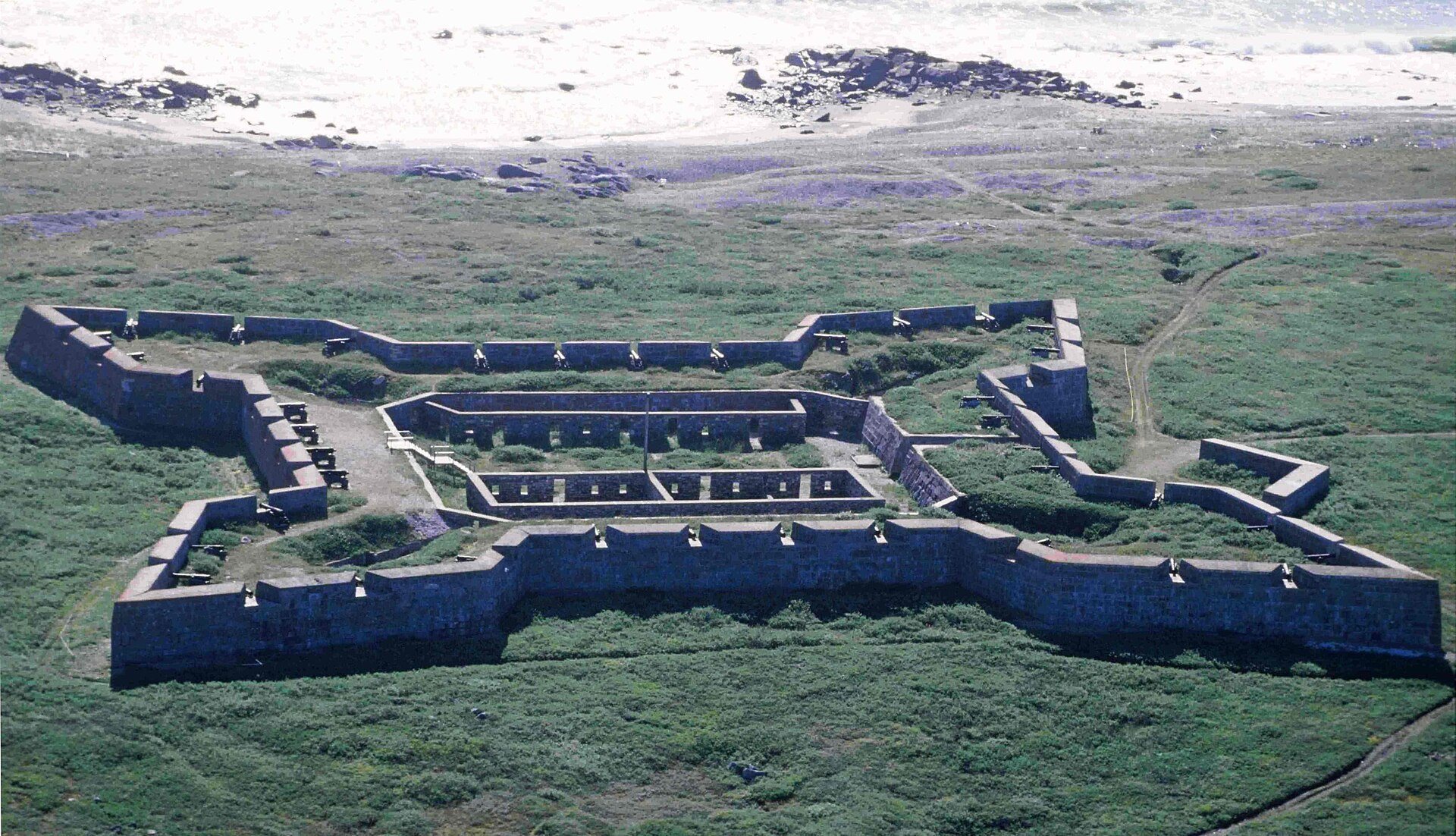
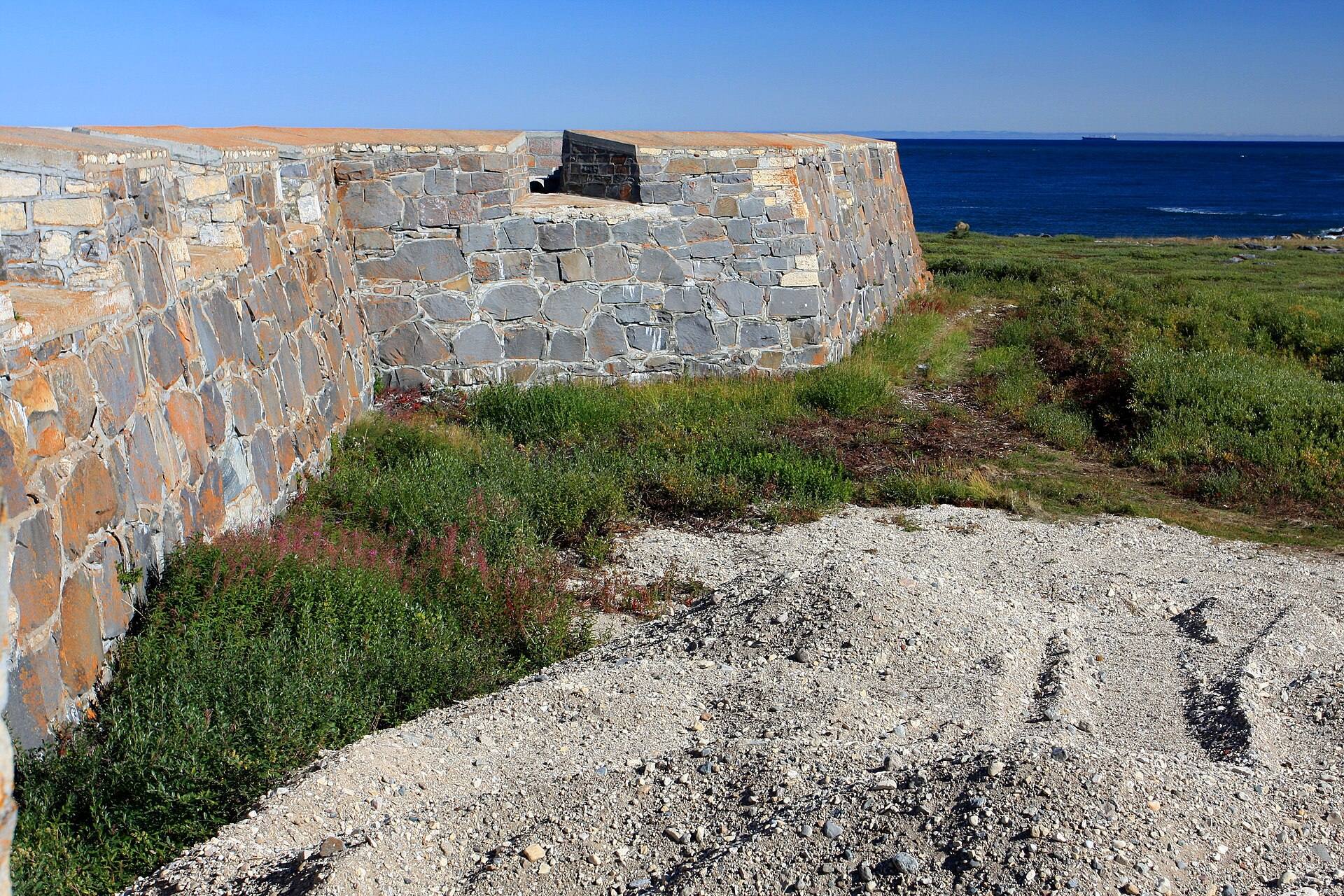
Prince of Wales Fort occupies its original position on the west bank of the Churchill River, across from Churchill and near the area formerly called Eskimo Point. The fort is a square or star-shaped enclosure with four corner bastions and sides approximately 90 metres long. Its stone walls rise about 6 metres and are approximately 10 metres thick at the base. An earthen ramp between the inner and outer faces allowed movement within the fort.
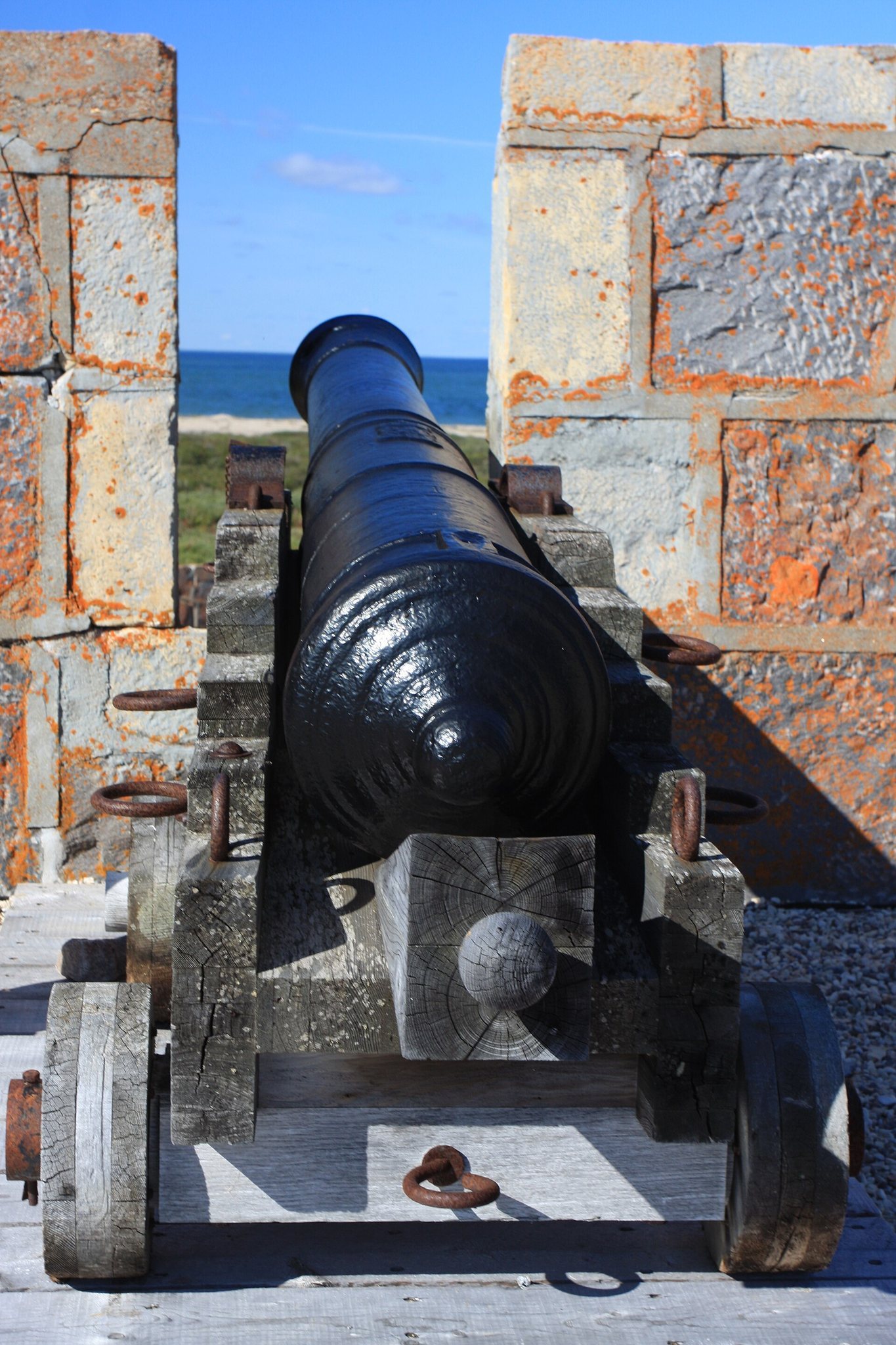
Forty-two cannons were mounted on the walls. Some weighed as much as 2,500 kilograms and fired 9-, 18-, or 24-pound shot. A separate battery at Cape Merry, on the opposite side of the river, was intended to carry six additional cannons.
Courtyard and interior buildings
The courtyard remains substantially intact, with exposed ground covered by grass. Around it are the ruined or incomplete remains of the principal buildings that supported the post’s military and commercial functions. These include the former stone dwelling house, governor’s quarters, storehouse, men’s quarters and barracks, stonemason’s workshop, cooper’s and carpenters’ workshops, tailor’s room, and blacksmith’s shop.
The visible masonry is partly reconstructed and restored rather than consisting entirely of original fabric. Wall restoration began after the railway reached Churchill, continued during the late 1950s, and has been followed by later stabilization work. The surviving courtyard and structural remains therefore preserve both the eighteenth-century layout and the effects of subsequent conservation.
Cape Merry Battery
Across the mouth of the Churchill River, Cape Merry Battery was built three times. The first battery was constructed sometime after 1718, with a cannon-protected wall and a powder magazine. Remains of this position include part of the wall and the magazine doorway.
A second battery was built farther south in 1747 because the original position might have been used against Prince of Wales Fort. This later battery was reconstructed in 1959 and 1960, and the battery now contains a single cannon.