Fort of the Conception and of the Triumph: A Spanish Coastal Fortress in Ozamiz, Philippines
Site at a Glance
- Rating
- 4.4
- Popularity
- Very Low
- Country
- Philippines
- Primary era
- Early Modern
- Eras represented
- Early Modern, Modern
- Civilizations
- Spanish
- Site type
- Military
- Remains
- Fort
On this page8 sections
History
Fort of the Conception and of the Triumph, also known as Fort of Our Lady of the Conception of the Triumph, Fort of Misamis, and Triunfo Fort, is an eighteenth-century Spanish fortress in Ozamiz, Philippines. Built by the Spanish colonial government in a square bastioned style, construction began in 1756 at the mouth of Panguil Bay. The fort protected the former town of Misamis, sheltered Spanish naval vessels, and helped establish the settlement as the leading town in northern Mindanao during the eighteenth and early nineteenth centuries.
Foundation and Spanish Misamis
The fortress arose during a period of severe piracy in the southern Philippines. In 1754, attacks affected coastal communities in southern Luzon, the Visayas, and Mindanao. Pirates burned houses and crops and abducted inhabitants, who were sold as slaves in Maguindanao, Sulu, Borneo, or Indonesia. In response, the Spanish government organized a flotilla commanded by José Ducos, a Jesuit priest. The Jesuits were a Catholic religious order whose members served as missionaries, educators, and administrators across many Spanish territories. After the flotilla achieved several victories, the government ordered a stone fort at Panguil Bay to defend the surrounding region.
Work began in 1756, but restricted funds for labor and the movement of building materials slowed construction. The completed fortress also provided shelter for ships belonging to the Spanish fleet. Its defensive role strengthened Misamis, which became the capital of the District of Misamis. The district retained that administrative importance until the seat of government moved to Cagayan de Oro during the 1870s.
Religious Patronage and the Name Triumph
The fort and the town were placed under the patronage of the Immaculate Conception, a Catholic title for Mary referring to her conception free from original sin. This dedication reflected José Ducos’s devotion to the Virgin Mary. The name “Triumph” had two associations. It referred to the leading vessel involved in clearing Misamis Harbor and Panguil Bay of pirates, and it recalled the Christian victory at the Battle of Las Navas de Tolosa in 1212. That battle was a major Christian defeat of the Almohad army during the reconquest of the Iberian Peninsula and was also associated with the Triumph of the Cross.
During or after the fort’s construction, an image called Our Lady of the Immaculate Conception and of the Triumph of the Cross of Migpangi arrived in Misamis. Ducos placed the fortress under its patronage and enshrined the image in a chapel within the walls. The wooden image remained there until the late nineteenth century, when the Spanish priest Jorge Carcabilla transferred it to the nearby parish church, now the Metropolitan Cathedral of the Immaculate Conception. The move followed concerns that the chapel and image were not receiving proper care.
War, Earthquake, and Preservation
During the Japanese occupation in World War II, the American engineer Wendell Fertig used the fort as the headquarters of the growing guerrilla resistance from October 1942. The headquarters was abandoned on June 26, 1943, as a major Japanese attack approached. Japanese forces then captured and garrisoned the fortress, digging foxholes near and beneath its walls. This undermining contributed to the collapse of the southwest bastion during the magnitude-7.4 earthquake of 1955.
Religious damage also affected the site’s surviving associations. In the late 1950s, a mentally ill man destroyed the original Marian bas-relief, which was more than two centuries old, with a bolo. A devotee replaced it with a plaster replica, which continues to be venerated. The fort was renovated and restored to its original design in 2002. On March 13 of that year, the National Historical Commission of the Philippines declared it a National Historical Landmark. The commission is the national government body responsible for protecting and interpreting important Philippine historical sites, structures, and events. An Archdiocesan Marian Shrine outside the southern wall remains dedicated to the city’s patroness and serves as a pilgrimage site.
Remains
Fortress Layout and Construction
Fort of the Conception and of the Triumph has a square plan, with one side facing Panguil Bay and the opposite side facing the city. Four bastions project from its walls: San Fernando, San José, Santiago, and San Ignacio. A bastion is a projecting section of a fortification that allows defenders to fire along the wall face and protect adjoining sections. The walls were built mainly from coral and sandstone blocks joined with lime mortar. These materials were readily available in Panguil Bay and its islands.
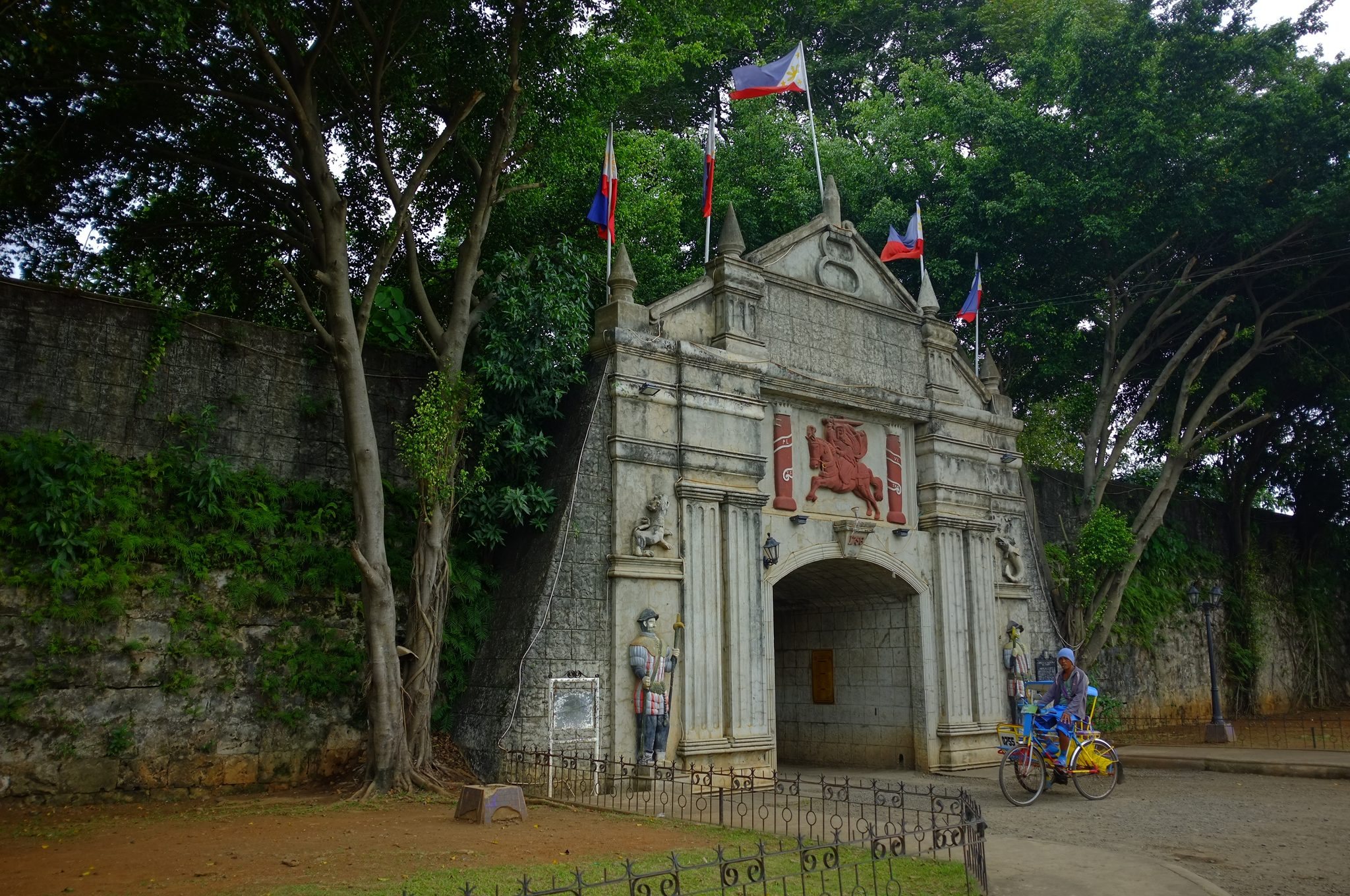
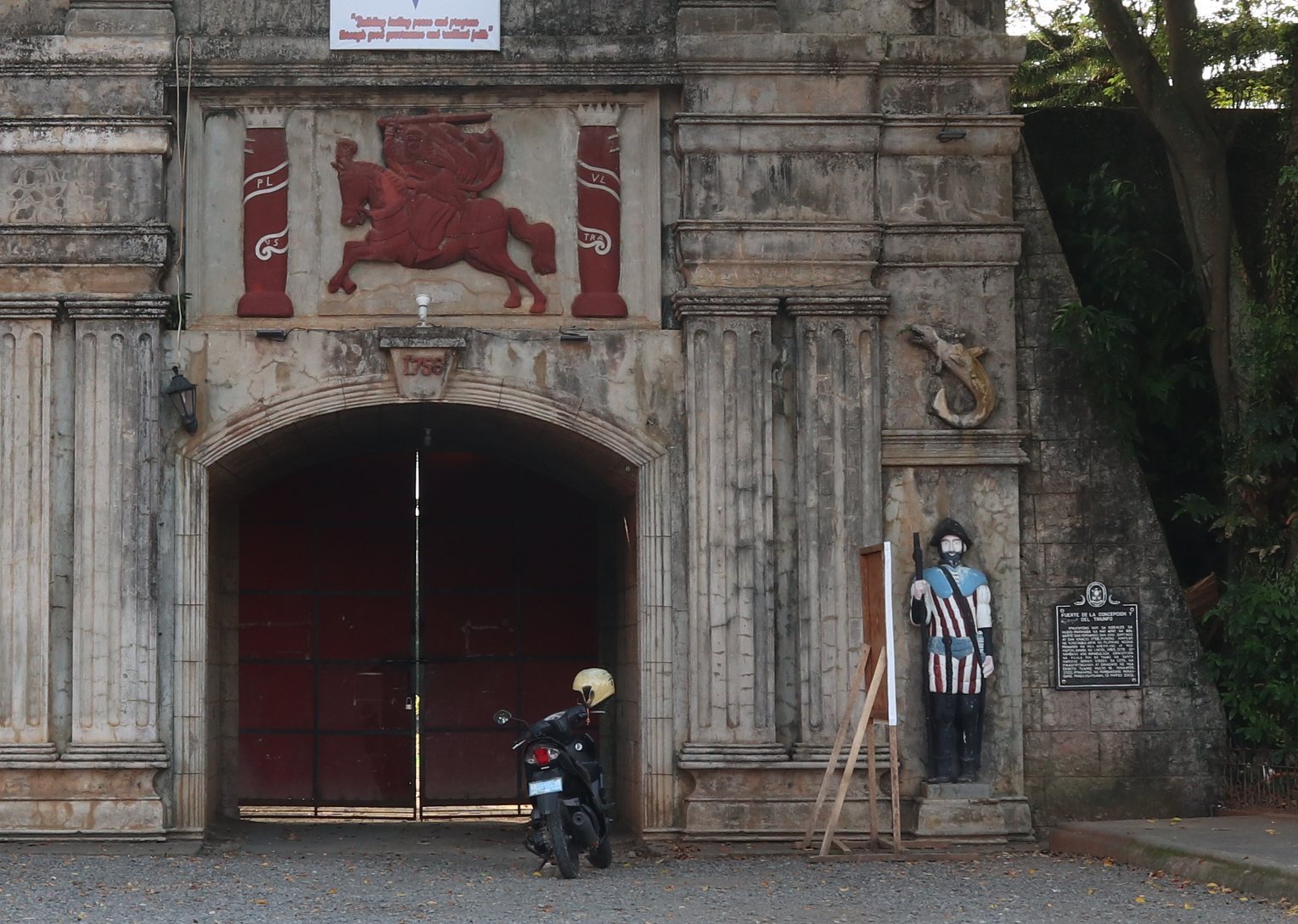
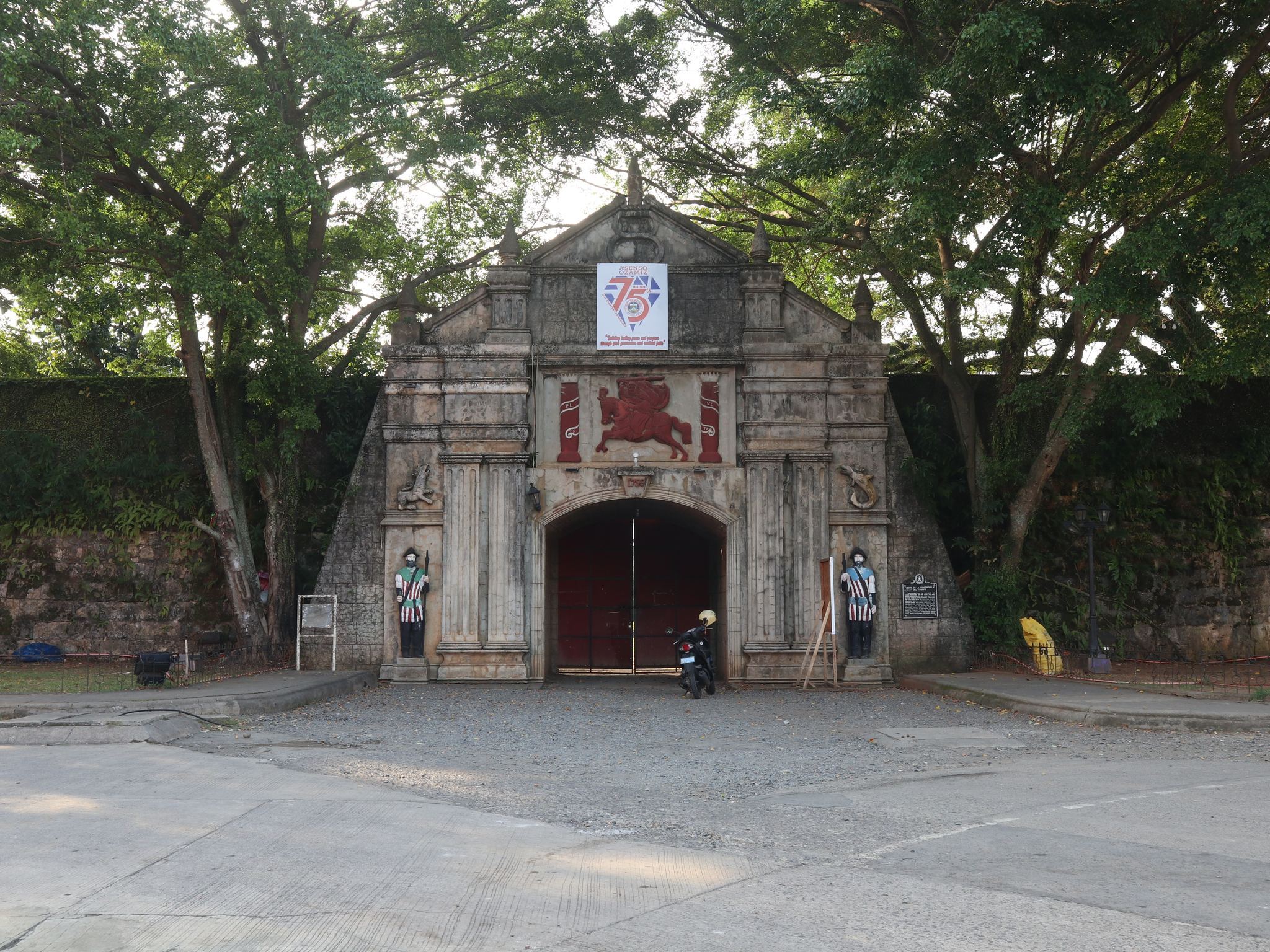
The principal entrance now has a large gate added during the 2002 renovation. Its decoration includes a bas-relief of Santiago Matamoros, or Saint James the Moor-slayer, a Spanish depiction of Saint James as a Christian warrior associated with the Reconquista. Heraldic representations of the Pillars of Hercules flank the relief. The restored entrance forms part of the fort’s present architectural expression while retaining the defensive enclosure established during the Spanish period.
Shrines and Interior Grounds
A Marian bas-relief stands outside the southern wall facing the bay. The original relief was destroyed in the late 1950s and replaced by a plaster replica. Nearby, the outdoor Cotta Shrine occupies the site of a former gate that contained the Marian icon. The shrine was later enclosed by walls, giving it a distinct position beside the fortified structure.
The fort is organized into the Cotta Shrine, the interior Cotta Garden, and the seaside Plaza de los Jesuitas. The Cotta Garden contains a small museum with artifacts associated with the fort and the city. Together, these spaces preserve the site’s military enclosure, religious associations, and local historical interpretation within the restored complex.
Southeast Bastion Lighthouse
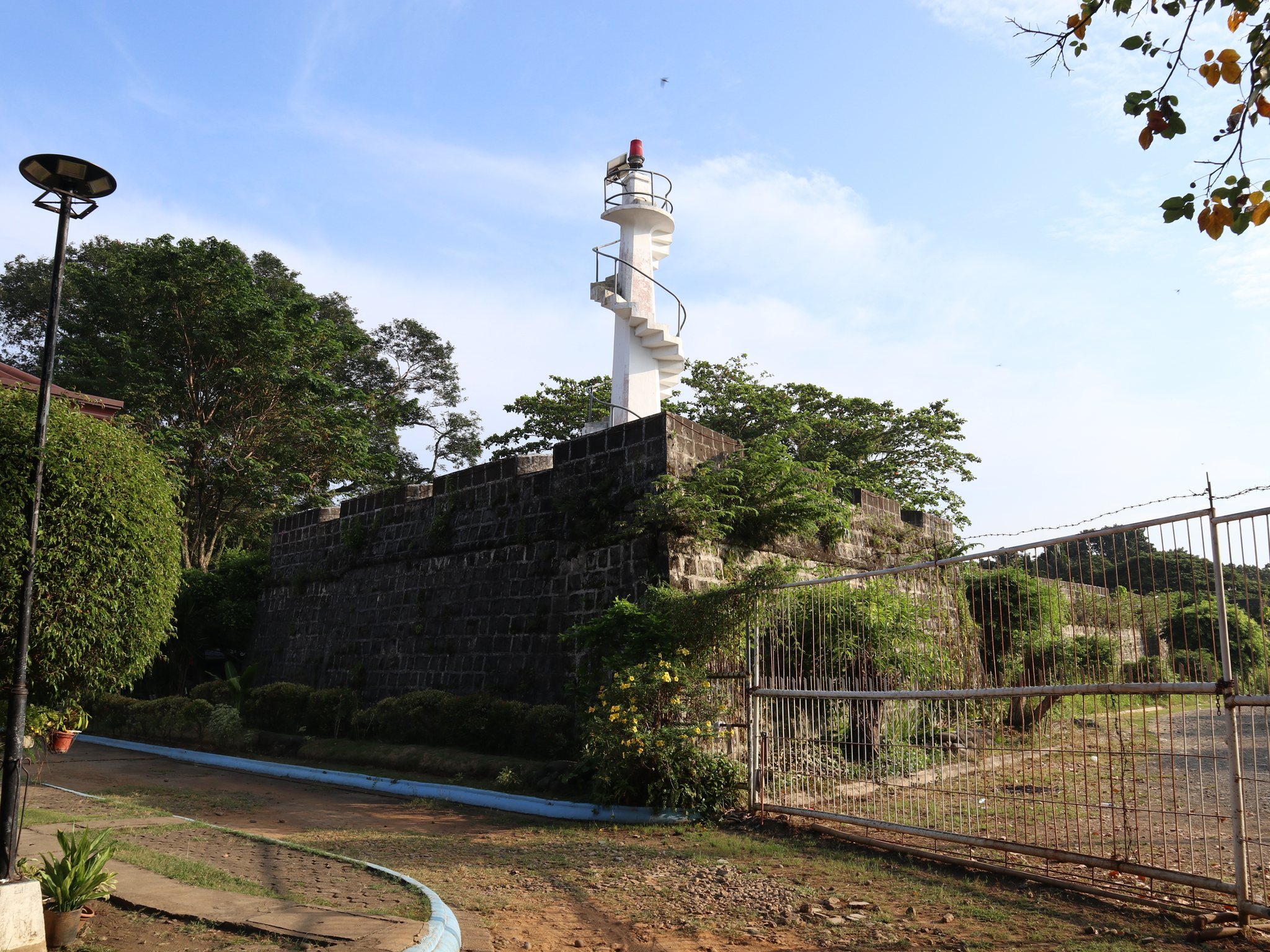
A concrete lighthouse stands on the southeast bastion. Built around 1917, it rises 9 meters and has a focal plane 17 meters above the relevant reference level. Its signal consists of two red flashes at ten-second intervals. The lighthouse adds a later maritime function to the fort’s defensive setting beside Panguil Bay.