Acqua Felice: Rome’s Renaissance Aqueduct
Site at a Glance
- Rating
- 4.7
- Popularity
- Low
- Country
- Italy
- Primary era
- Early Modern
- Eras represented
- Classical, Early Modern
- Civilizations
- Papal States, Roman
- Site type
- Infrastructure
- Remains
- Aqueduct
On this page9 sections
History
Acqua Felice is a Renaissance aqueduct in Rome, Italy, constructed between 1585 and 1587 by order of Pope Sixtus V. It was the first new aqueduct built in Rome after the fall of the Western Roman Empire. The pope, born Felice Peretti, named the project after himself and used it to restore water to the Viminal and Quirinal hills, which had remained largely waterless and sparsely inhabited since the destruction of the ancient aqueducts in the sixth century.
Sixtus V’s water project
Sixtus V resolved to provide water for these districts on the day he took possession of the Lateran Basilica, Rome’s cathedral and one of its principal Christian basilicas. The aqueduct was intended to serve the communities around the two hills, the new public fountain that would mark its endpoint, and the pope’s extensive Villa Montalto, which occupied both hills. It also carried water from the countryside near Zagarolo and Palestrina into central Rome.
Construction began under Matteo Bartolini, but serious design errors threatened to prevent the water from flowing toward the city. Giovanni Fontana, an engineer, was then appointed to complete the work. The project took approximately eighteen months and proceeded alongside Sixtus V’s reorganization of Rome’s street plan. Building the new route required the destruction of sections of the ancient Aqua Marcia, Aqua Tepula, and Aqua Julia aqueducts.
Water reached Villa Montalto by October 1586. By 1589, Acqua Felice supplied at least twenty-seven public fountains, including the Fountain of the Triton, the Fountain of the Bees, the fountain in Piazza Santa Maria Maggiore, and the Fountain of the Goddess Roma in Piazza del Campidoglio. A proposed branch to Trastevere was later abandoned after a flood on 24 December 1598 destroyed Ponte Rotto, the bridge intended to carry the branch across the Tiber. The bridge was never rebuilt.
Later physical traces
During the 1960s and 1970s, a shantytown developed between the aqueduct’s arches in the Appio Claudio area. Tiles attached to the aqueduct walls preserve sporadic physical traces of this settlement.
Remains
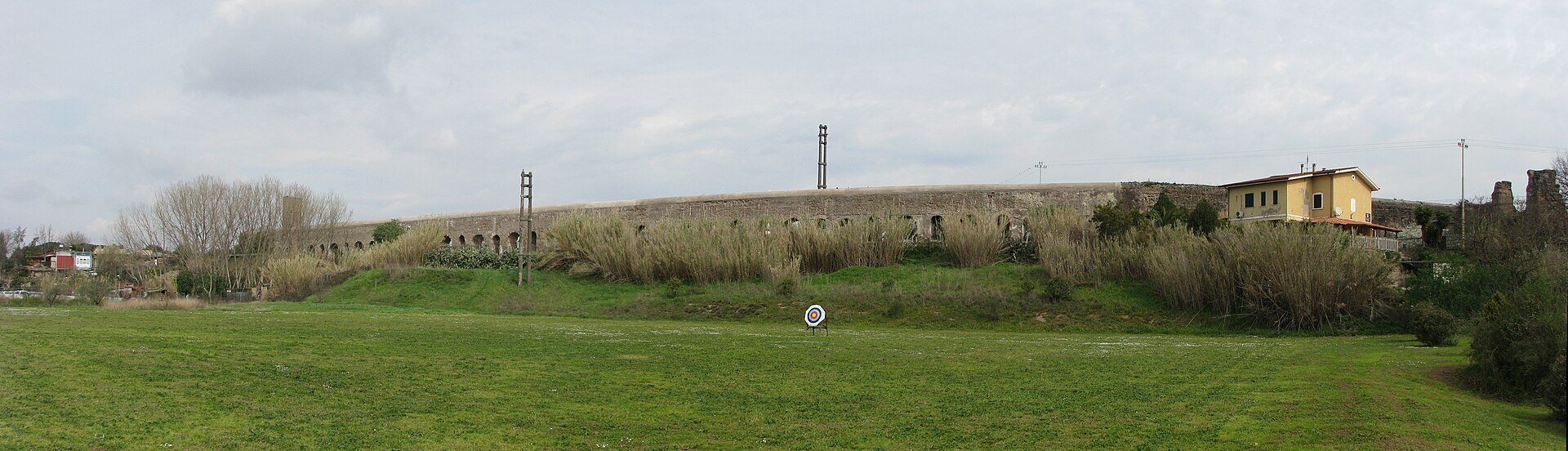
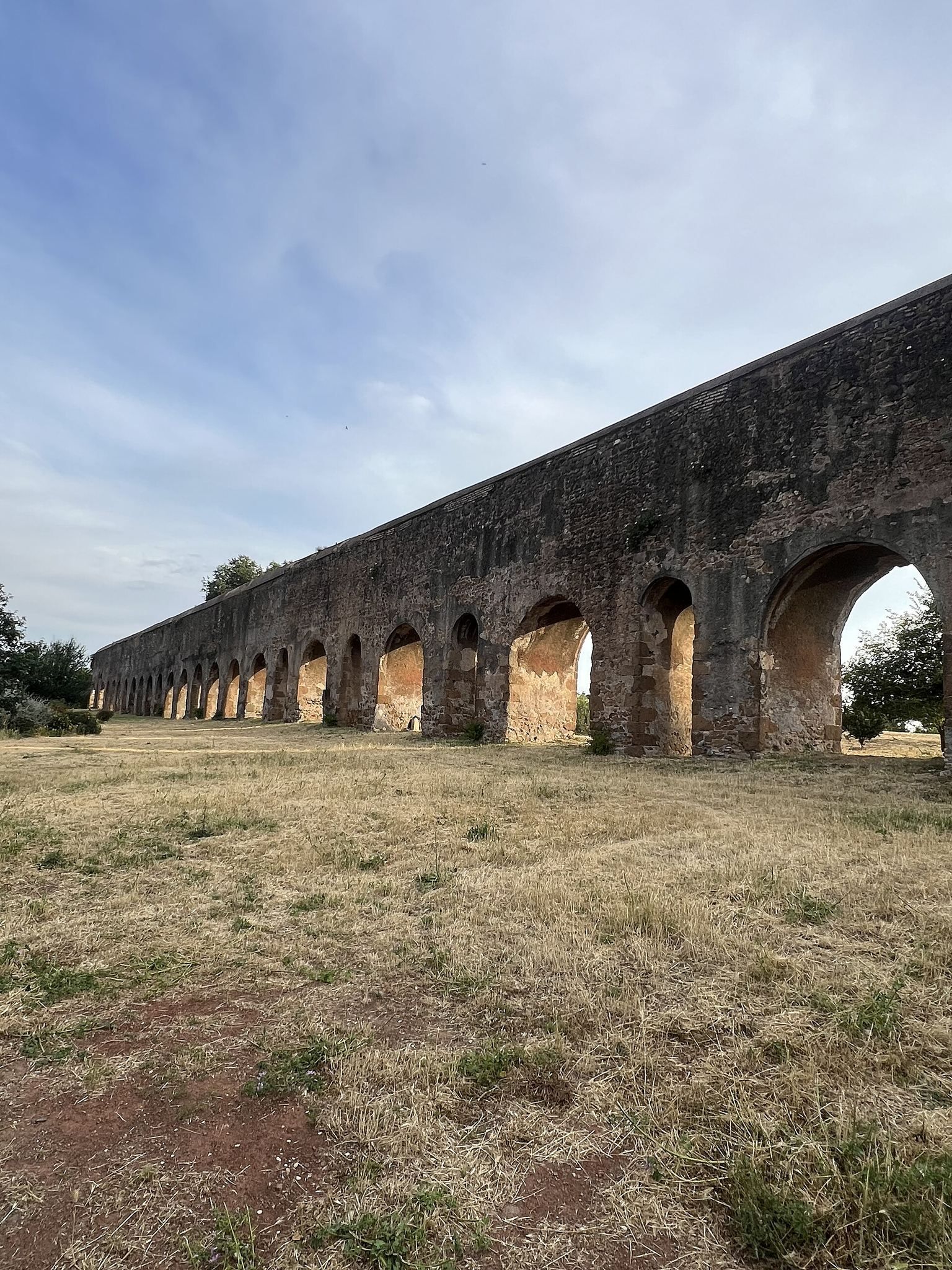
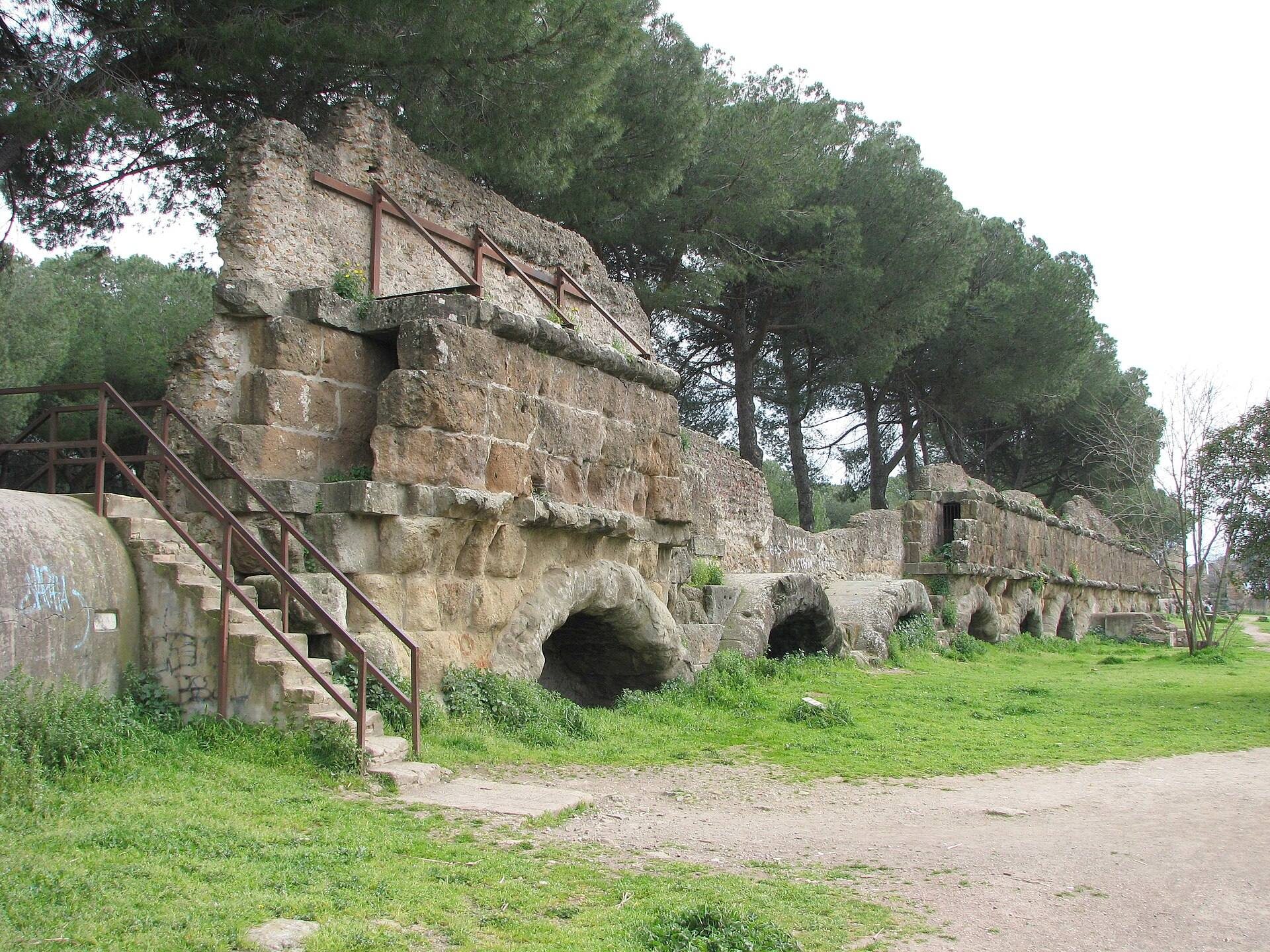
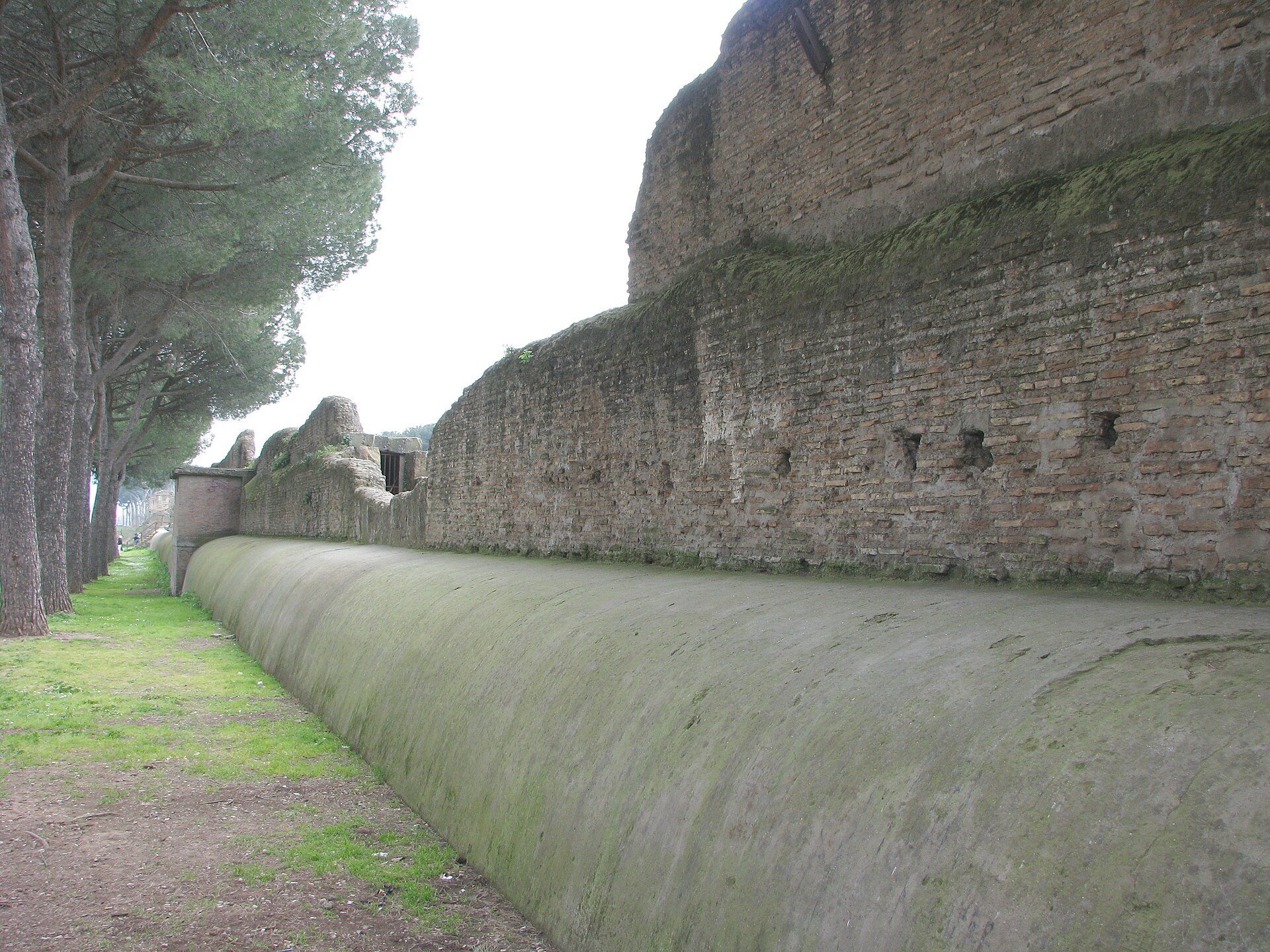
Acqua Felice extends for approximately 24 kilometers between its source near the Via Casilina and the three-arched Fontana dell’Acqua Felice on the Quirinal Hill. Its route combines an underground conduit with elevated sections carried on arches, a form required by the source’s slight natural fall. The aqueduct’s course reused earlier Roman infrastructure while also crossing roads and passing beside the remains of an ancient arena.
Source and elevated route
Source and underground conduit
The source was at Pantano de’ Grifi, later called Pantano Borghese after the Pantano estate was sold to Cardinal Scipione Borghese. It lay near the twentieth kilometer of the Via Casilina, close to the boundaries of Monte Compatri and Finocchio. From there, approximately 13 kilometers of the aqueduct ran underground, initially using the channel of the ancient Aqua Alexandrina.
Arches and road crossings
The route then alternated for approximately 11 kilometers between the arches of the Aqua Claudia and Aqua Marcia. At monumental arched crossings, Acqua Felice intersected major consular roads, which were important routes built or administered under ancient Roman authority. At Porta Furba, it crossed the Via Tuscolana, where a fountain associated with Clement XII was also built.
Circus Varianus
In its final section, the aqueduct was supported along the northern side of the Circus Varianus, an ancient venue for gladiatorial contests and chariot races. The circus was later incorporated into the Aurelian Walls, the late Roman defenses that enclosed much of Rome.
Fontana dell’Acqua Felice
Designed by Domenico Fontana in 1587, the Fontana dell’Acqua Felice formed the aqueduct’s monumental public terminus beside the Strada Pia, now the Via del Quirinale. Its three arches created a piazza in this developing part of Rome. As a mostra, or public fountain marking an aqueduct’s endpoint, it both commemorated the new water supply and provided water for local residents.
The fountain’s large attic was dominated by a monumental inscription, while its three-arched composition presented biblical allegories rather than the pagan subjects commonly associated with classical Roman imagery. Marble basins stood beside Egyptian lions that discharged water, and marble barriers protected the water from animals. A separate basin was provided for them. The design was criticized in the seventeenth century as being in very poor style.
Sixtus V also installed two long basins beside the fountain for washing laundry. A covered washhouse accompanied them, providing women with privacy while using the facility.