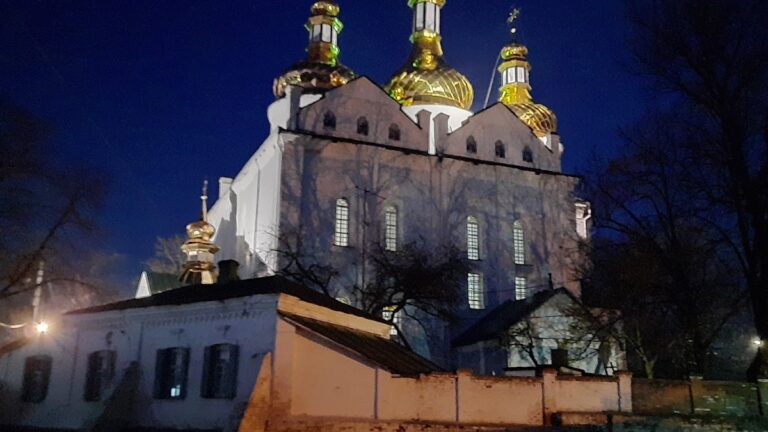
Hustynia Monastery: A Ukrainian Baroque Female Monastery in Ukraine
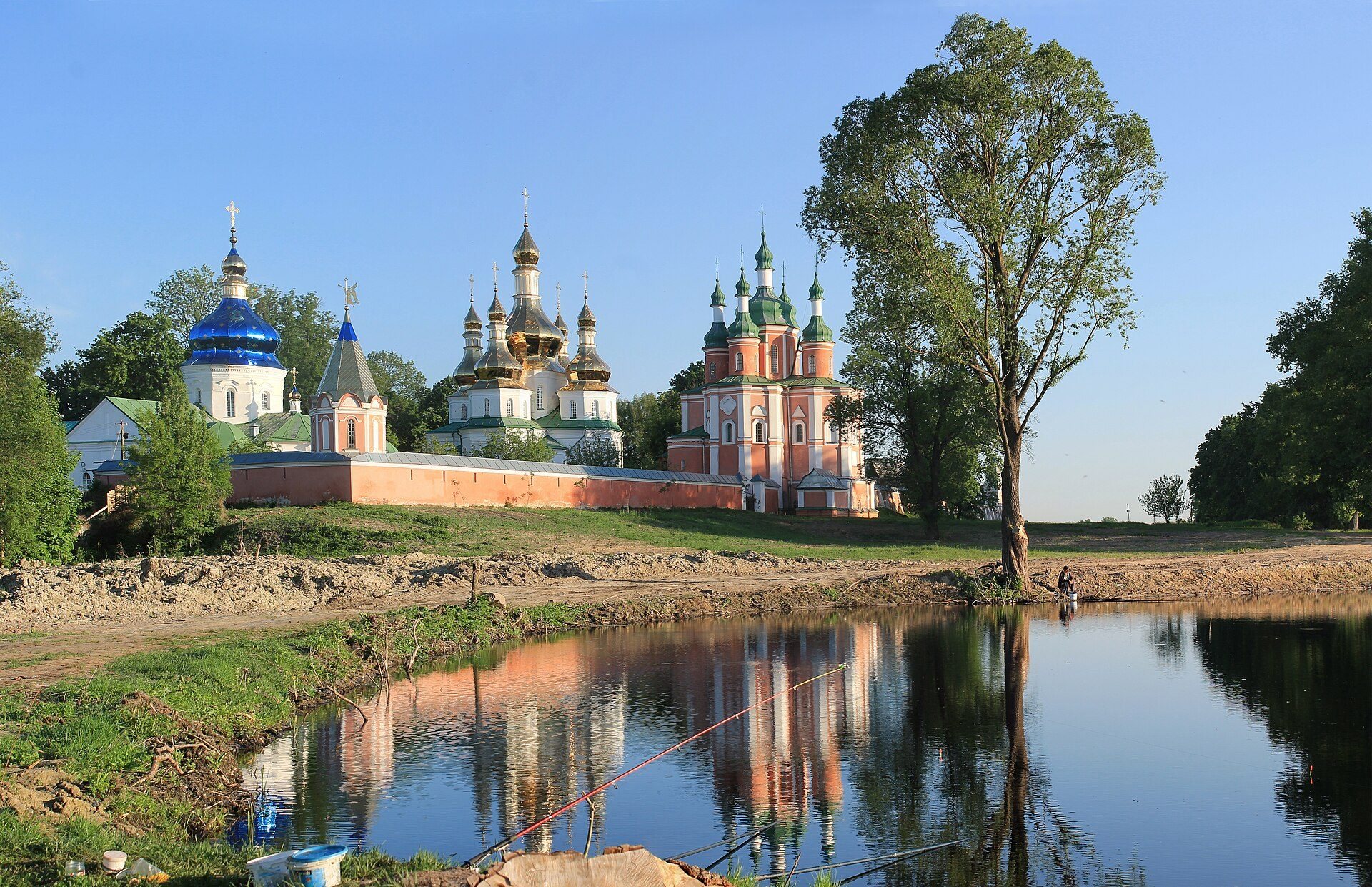
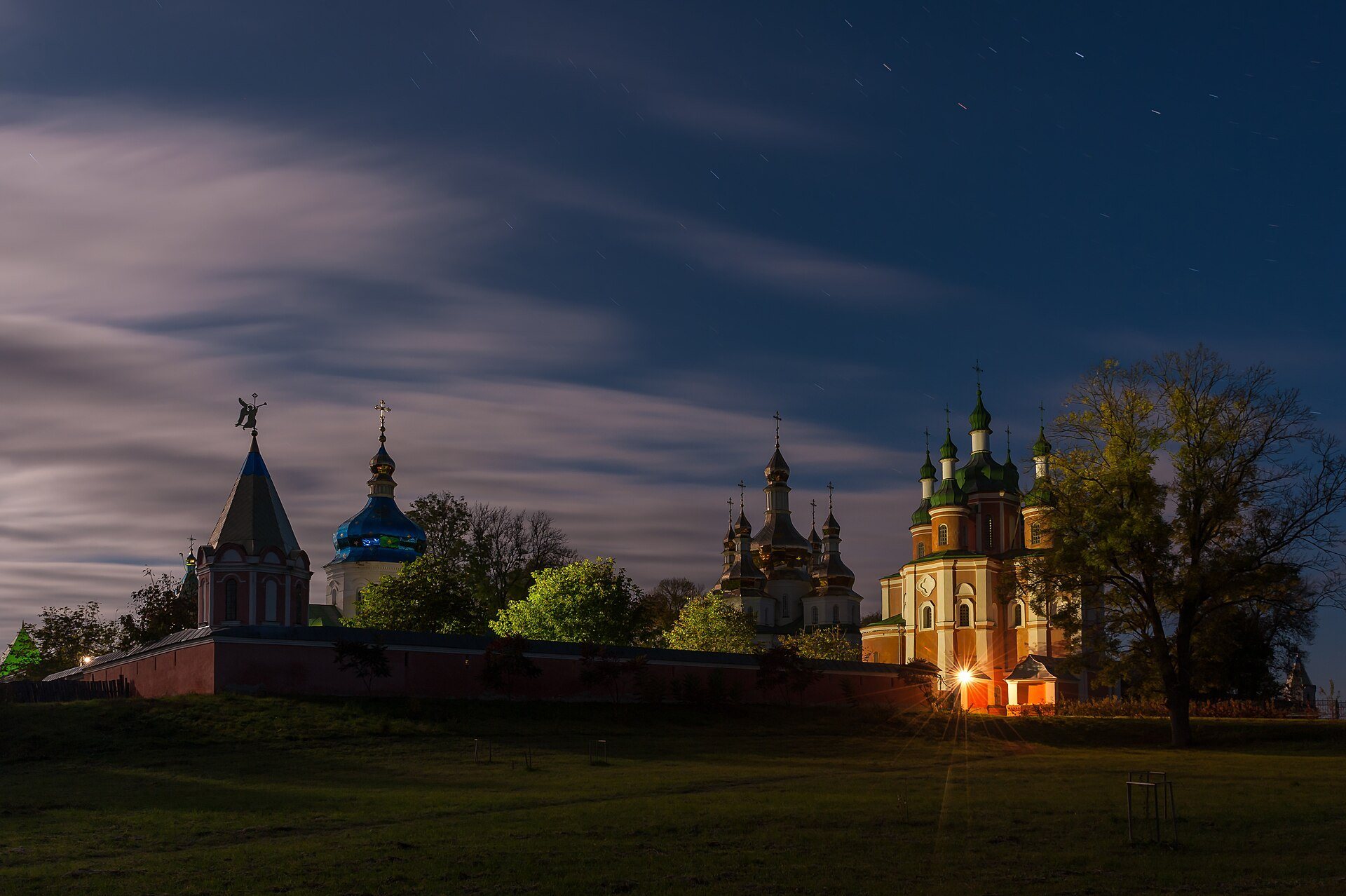
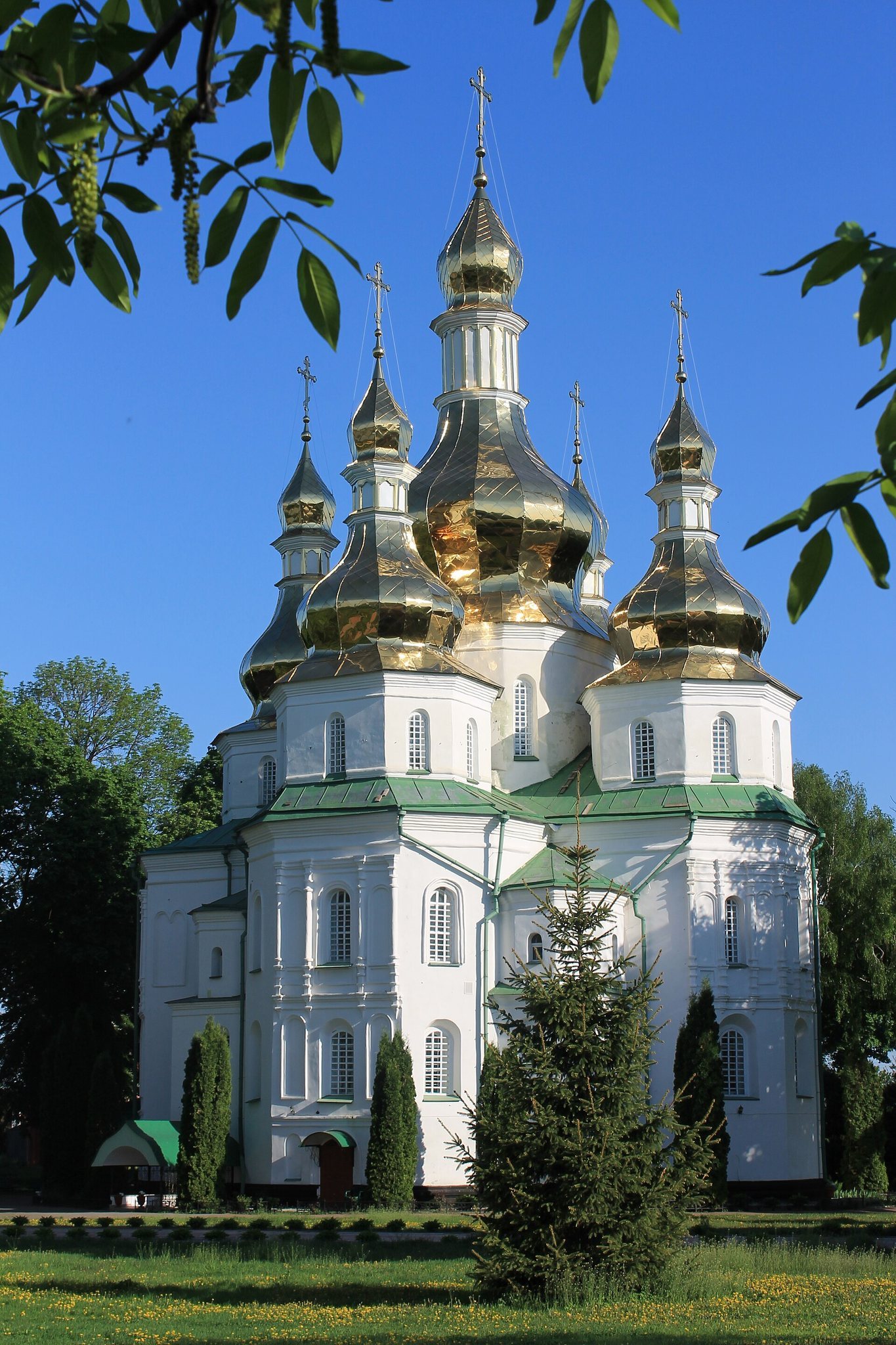
Site at a Glance
- Rating
- 4.8
- Popularity
- Low
- Country
- Ukraine
- Primary era
- Early Modern
- External website
- Open
- Eras represented
- Early Modern, Modern
- Civilizations
- Cossack Hetmanate, Russian
- Site type
- Religious
- Remains
- Fortified Monastery
On this page21 sections
History
Hustynia Monastery is a female Orthodox monastery in Hustynia near Pryluky, Ukraine, founded in 1600 and developed as a major Ukrainian Baroque ensemble. The monastery belongs to the Ukrainian Orthodox Church and the Nizhyn diocese. Its origins lie on a forested island in the Udai River, where the hieroschimonk Ioasaph came from Mount Athos with the hieromonk Athanasius and settled with disciples after receiving the blessing of the abbot of the Kyiv Pechersk Lavra. The name Hustynia is associated with the thick ancient forest that covered the island.
Foundation and early development
In 1612, Prince Mykhailo Korybut Wiśniowiecki agreed to assist Athanasius and Isaiah Pechersky in establishing a monastery on his estates. A charter issued in 1615 granted the community the island of Hustyn, surrounding forests, meadows, and arable land. Regina Mohyla, Wiśniowiecki’s wife, is also associated with these grants.
A small wooden Trinity Church was built in 1614, and Ioasaph became the monastery’s first abbot. From about 1615, Isaiah Kopynsky, abbot of the Near Caves of the Kyiv Pechersk Lavra, directed the monastery’s development and effectively governed it for roughly two decades, while other abbots largely acted as his deputies. The community attracted monks, Cossacks, and pilgrims. Local people supplied food, money, and building materials, and some Cossacks who entered the monastery while expecting to die remained after recovering.
In 1620, Theophanes III, Patriarch of Jerusalem, visited Hustynia while travelling through Ukraine at the invitation of Hetman Petro Sahaidachny. During this journey, Theophanes consecrated Job Boretsky as Metropolitan of Kyiv and ordained several bishops, including Isaiah Kopynsky. In 1624, Isaiah transferred the original Trinity Church to Ladan and built a larger replacement at Hustynia. Monastic cells and a refectory with a Dormition church were constructed during the same phase.
Fires, relocation, and seventeenth-century rebuilding
Fires in 1625 and 1636 destroyed nearly all the buildings. The second fire destroyed the monastery completely, and the monks moved the complex to a new site near the dam across the Udai, on the road to Romny. In 1636 and 1637 they built the Dormition Church with its refectory, brotherhood cells, an enclosure, and a moat, and transferred the old bell tower.
During the repression of Cossack and popular uprisings by Ieremia Wiśniowiecki, Abbot Vasily and the monks fled to Putyvl in the Tsardom of Moscow with the monastery’s most valuable possessions. Metropolitan Petro Mohyla visited Hustynia in 1639, appointed Elijah Torsky as abbot, and ordered a large new church. Financial assistance came in 1641 from the Moldavian ruler Vasile Lupu and Tsar Michael Fyodorovich. The monastery was restored over the next five years, and a new Trinity Church was consecrated in 1644.
The monastery chronicle preserves a tradition that three martyred infants were buried beneath the Trinity Church altar. According to this tradition, their bodies were discovered in 1640 after a dream experienced by Abbot Elijah. They were ceremonially reburied in a shrine at the centre of the monastery, and the Trinity altar was then built over their grave.
Rebels destroyed the monastery in 1648. Bohdan Khmelnytsky placed it under his protection and confirmed its landholdings through grants issued between 1648 and 1655. In 1654, Patriarch Macarios of Antioch and his son Paul of Aleppo visited Hustynia. Paul’s description particularly praised the beauty of the Trinity Church iconostasis, the screen of icons separating the sanctuary from the main body of an Orthodox church.
Expansion under the Cossack hetmans
A fire in 1671 destroyed the Trinity Church, bell tower, cells, and domestic buildings. The Dormition Refectory Church and the Church of Saints Peter and Paul survived. Replacement buildings were erected by 1672, followed by a large stone, five-domed Trinity Church built with the support of Hetman Ivan Samoilovych in 1674 and 1676. It was consecrated on 23 May 1675 by Lazar Baranovych, Archbishop of Chernihiv.
During this period, the future Metropolitan Demetrius of Rostov was ordained at Hustynia, and Joasaph of Belgorod lived there. Hetmans Ivan Samoilovych and Ivan Mazepa, Pryluky Colonel Lazar Horlenko, and, during the 1690s, his son Dmytro Lazarovych Horlenko supported the monastery. Their patronage brought major expansion, increased landholdings, and architectural embellishment.
By the mid-eighteenth century, the monastery owned more than 3,000 desiatinas of land in Chernihiv Governorate and more than 3,000 serfs. A desiatina was a historical Russian and Ukrainian land measure whose exact size varied by period and locality. During this period, Ivan Mazepa built the stone Dormition Church.
Secularization, closure, and revival
In 1786, the Russian government secularized the monastery’s estates, confiscating monastic lands and property and transferring them to state administration. By decree of Catherine II, Hustynia became an “extra-staff” monastery. It closed in 1793 and remained inactive for more than fifty years, while its enclosure, buildings, and churches became damaged and partly ruined.
Revival began in 1841 with funds collected among the population of Poltava region, through an initiative associated with Gideon and Princess Varvara Repnina-Volkonska. A Synodal decree assigned the monastery third-class status in 1843, and it reopened ceremonially on 15 May 1844, the feast of the Holy Trinity. The Synod appointed Varsonofy as abbot.
Restoration altered the appearance and furnishings of the complex. Portraits of Wiśniowiecki and Ivan Mazepa were removed from the Trinity Church, the Horlenko family crypt was filled in, and precious icon coverings bearing the Horlenko and Samoilovych arms were melted down. Older iconostases and Cossack icons were replaced by works ordered from Saint Petersburg. Varsonofy also restored damaged churches and built a bell tower, a hotel, two monastic wings, and a service yard with storerooms and stables.
Taras Shevchenko visited the Pryluky region on 28 June 1845 intending to draw the architectural and historical monuments of ancient Hustynia. That year, Governor-General of Little Russia Prince Nikolai Repnin was buried at the monastery, and a Repnin-Volkonsky family crypt was later established beneath the refectory church. In the late nineteenth century, Archimandrite Nectarius completed much of the renewal, restored a dam with five bridges, developed a garden and decorative park, and helped make Hustynia a pilgrimage centre again. Fairs were held outside the walls, and the Hustynia Icon of the Mother of God was carried from the Trinity Church to a chapel in the fairground.
Closures and twentieth-century survival
After the 1917 Revolution, the monastery’s lands, property, tools, harvests, and food supplies were confiscated. From 14 August 1920, Pryluky education authorities administered the complex and established a children’s colony, which continued until the beginning of 1941. A liquidation commission was particularly active from 1923. The churches were closed, and the last archimandrite, Sergius Lubentsov, and 48 monks were assigned only a bell-tower building and a shed.
The monastery closed again in March 1924. Its seventeenth-century carved iconostasis and icons were chopped up for firewood. During the 1930s, a decision was made to demolish the complex completely, but Mykola Makarenko and other defenders prevented its destruction.
During the German occupation in 1943, nuns from the closed Ladan Pokrovsky Monastery were permitted to settle at Hustynia. The monastery again became a female community under Abbess Eustolia, followed after her death in 1958 by Abbess Rafaela. Services were held in the Resurrection Church, while the nuns lived in the two-storey Varva building.
A neuropsychiatric dispensary was established on the grounds in the 1940s. The nuns were expelled on 12 July 1959, after another closure. In the postwar period, the complex housed elderly people, people with disabilities, and psychiatric patients. An institutional home for elderly and disabled residents operated until 1978, followed by a neuropsychiatric boarding institution that closed in 1993. Some icons were transferred to Pryluky Sretensky Cathedral, while others went to a church in Riashky village, which later burned with the icons inside. Restoration by Pryluky specialists during the 1980s and early 1990s was limited by inadequate state funding.
Renewal since 1993
The nuns returned in 1993, beginning a new revival of the monastery. The first Divine Liturgy was celebrated on 17 December 1993, when the altar in the Resurrection Church was consecrated. Abbess Vera Taran directed the subsequent restoration and reconstruction of the churches and monastic buildings. The Resurrection Church was restored in 1994, the Trinity Church in 1997, Saint Nicholas Church in 1999, and the Church of Saints Peter and Paul in 2000. The bell tower and parts of the enclosure were also repaired.
A large icon was painted in 2000 for the monastery’s four-hundredth anniversary, based on a small, darkened icon brought from the Yelets Dormition Monastery. Restoration of the Hustynia, or Cossack, dam began in 2020 through the efforts of the local community. In March 2021, local historians accused the monastery’s clergy of damaging the historic Trinity Cathedral by installing polystyrene cladding and demanded its removal and the restoration of the building’s original Ukrainian Baroque appearance.
The complex received national architectural-monument status under a 1963 Ukrainian SSR resolution and is protected as a cultural-heritage site under protection number 859. The protected group comprises seven nationally significant monuments: the Trinity Cathedral, the Church of Saints Peter and Paul, the Resurrection Church, the Saint Nicholas gate church and bell tower, the abbot’s building, the hotel, and the walls and gates. Hustynia continues to function as a female monastic community with agriculture, animal husbandry, beekeeping, food production, a Sunday school, a pilgrims’ hotel, and a monastic pharmacy.
Remains
Churches and sacred buildings
Trinity Cathedral
The principal surviving church is the stone Trinity Cathedral, a large five-domed Ukrainian Baroque building begun after the fire of 1671 and constructed in 1674 and 1676. It was consecrated in 1675 and restored in 1997. The church traditionally stands over the burial place of three martyred infants, whose remains were said to have been placed in a shrine beneath the altar. Its crypts also contain the burials of the Horlenko and Markovych families. The miraculous Hustynia Icon of the Mother of God is located on the left side of the iconostasis.
Church of Saints Peter and Paul
The Church of Saints Peter and Paul survived the fire of 1671. It is generally dated to the period from 1693 to 1708 and was restored in 2000. It is associated with the eastern gate of the monastery and forms part of the protected architectural complex.
Resurrection Church
The former Dormition Refectory Church is now dedicated to the Resurrection of Christ. It belongs to the eighteenth-century phase of the ensemble and was rebuilt in the nineteenth century. Its altar was consecrated when the monastic community returned in 1993, and the church was restored in 1994.
Saint Nicholas Church and bell tower
Saint Nicholas Church is a western gate church associated with a bell tower. It was built during the 1693 to 1708 period and restored in 1999. The church and tower are included among the nationally significant monuments of the protected complex.
Saint Barbara Church and the abbot’s building
The Church of Saint Barbara is associated with the abbot’s cells and belongs to the seventeenth-century complex. It was renewed in 1844 and 1845. The abbot’s, or Varvarin, building contained cells, a gate, and a bell tower during the rebuilding after 1671. The later complex also included a hotel, two monastic wings, a service yard, storerooms, and stables.
Walls, gates, and approach
Defensive enclosure
The monastery was enclosed by high brick defensive walls with gates and towers. The walls contained two-level arcades, internal passageways, and narrow loopholes, which were openings through which weapons could be used. The eastern section facing the Udai was rebuilt in 1734 and decorated internally with figured arches. Major rebuilding in 1754 and 1756 brought the walls to approximately 558 metres. They were restored in the 1850s, but are now almost entirely lost and are being rebuilt.
Hustynia dam
The Hustynia, or Cossack, dam was formerly the principal route across the Udai toward the monastery’s central entrance and also served people attending the monastery fairs. Its restoration began in 2020. The historically island-based site now stands near the river and the former dam route.
Gardens and service grounds
The nineteenth-century grounds included a garden, decorative park, planted avenues, flowerbeds, gazebos, benches, a fence with wickets, and a water feature with five bridges. A sundial with zodiac symbols stood in front of the monastery. The grounds also contain agricultural and service facilities, including a farm, poultry buildings, a bakery, greenhouses, a garden, a refectory, and other agricultural installations. A healing spring is situated beside the monastery enclosure.
Manuscripts and sacred objects
Chronicles
Hustynia is associated with the Hustyn Chronicle and the Hustynia Monastery Chronicle. The Hustyn Chronicle presents a history of Ukraine to 1597 and discusses relations with Lithuania, Poland, the Crimean Khanate, and Turkey, the Union of Brest, the emergence of the Cossacks, and the introduction of the new calendar. It survives in a copy made in 1670 by the Hustynia hieromonk M. Losytsky and is probably linked with Zacharias Kopystensky. The Hustynia Monastery Chronicle covers the local history of the community from 1600 to 1641.
Icons and relics
The monastery’s sacred objects include the Hustynia Icon of the Mother of God and a reliquary containing particles of relics associated with Theodosius of Chernihiv, Joasaph of Belgorod, Demetrius of Rostov, Lawrence of Chernihiv, Kuksha of Odesa, Saint Barbara, and other saints. A reliquary is a container for relics or portions of relics. The earlier iconographic furnishings were substantially altered during the nineteenth-century remodelling and twentieth-century closures. The seventeenth-century carved iconostasis was destroyed for firewood in the 1920s, while older iconostases and Cossack icons in the Trinity Church had previously been replaced by works ordered from Saint Petersburg.