Fuerte Casamata: A Historic Fortification in Matamoros, Mexico
Site at a Glance
- Rating
- 4.7
- Popularity
- Low
- Country
- Mexico
- Primary era
- Modern
- Eras represented
- Modern
- Civilizations
- Unclassified
- Site type
- Military
- Remains
- Fort
On this page9 sections
History
Fuerte Casamata is a nineteenth-century Mexican fortification in Matamoros, Mexico, whose construction began in 1845 and was completed in 1865. Its name refers to a casamata, a fortified military chamber, and the fort formed part of Matamoros’s defensive system during a period of conflict along Mexico’s northern frontier.
Origins and construction
In 1830, General Manuel Mier y Terán, the Mexican military official responsible for inspecting the northern frontier, recommended building a defensive fort at Matamoros in response to the Texan rebellion. Construction began in 1845 under General Manuel Rodríguez de Cela, but Mexico’s economic difficulties after independence delayed the work.
General Juan N. Cortina advanced construction in 1864, and the Otomí general Tomás Mejía completed the fort in 1865. From its foundation, Fuerte Casamata served both as a military defensive installation and as a storehouse for ammunition, weapons, and other supplies.
Defense of Matamoros
Fuerte Casamata belonged to a larger nineteenth-century system that included the Paredes, Guerrero, Puertas Verdes, Monterrey, Bravo, Laredo, Matamoros, and Independencia forts. After the system lost its military usefulness, the other eight fortifications were destroyed, leaving Casamata as the sole survivor of the group.
Between 20 and 30 October 1851, troops led by José María Carbajal attacked Matamoros with the support of foreign adventurers involved in unauthorized military expeditions and former Texan leaders. The assault failed after a ten-day blockade. In its aftermath, Casamata became an important element in the town’s defense, and Matamoros received the titles “Heroic,” “Unvanquished,” and “Loyal.”
The fort also figured in the Mexican Revolution during the Villista attack on Matamoros in 1913. The Villistas were forces associated with the revolutionary movement led by Pancho Villa.
Civilian use and museum history
After the Revolution, Fuerte Casamata was converted into a civilian warehouse. Neglect led to structural collapses, and by the beginning of the 1960s the building was unstable. Treasure seekers searching for supposedly existing tunnels caused additional damage. During this period, the fort housed the Federal Board of Material Improvements.
Residents of Matamoros took possession of the fort in December 1969. The Casamata Museum was founded there in 1970 through the work of Eliseo Paredes Manzano, Matamoros’s first chronicler, who became its founder and first director. In 1992, Filemón Garza donated the María del Pilar Room and a premises north of the museum. The latter first housed the Historical Archive of Matamoros and now serves as a temporary-exhibition room.
In 2006, the museum complex was altered and restored during the administration of Matamoros mayor Baltazar Hinojosa Ochoa. The fort is designated a historical monument and continues to serve as the Casamata Museum.
Remains
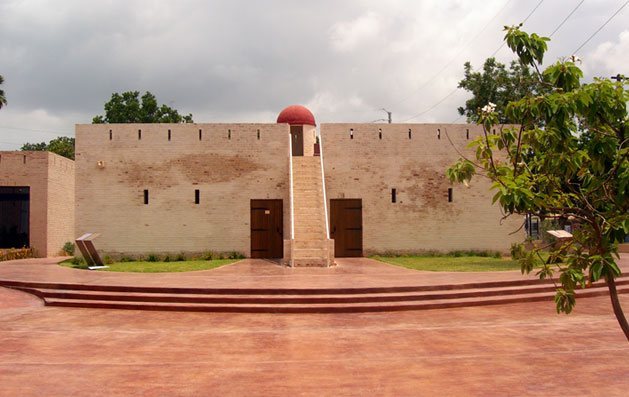
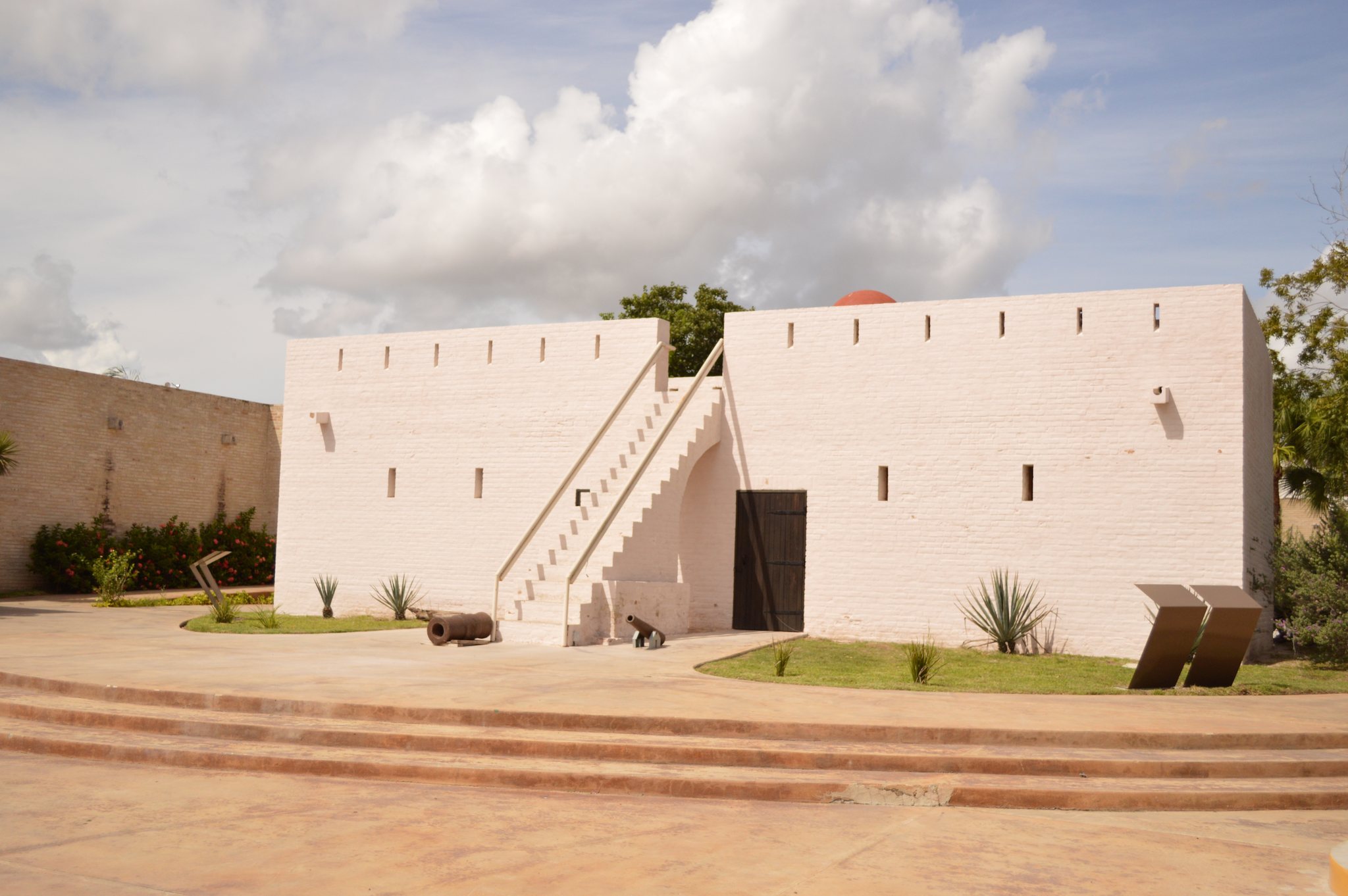
The surviving complex combines the historic fortification with later museum buildings and adjoining spaces. Its physical fabric reflects the fort’s original defensive and storage functions, the damage caused during its period of neglect, and the restoration and expansion work carried out for its present museum use.
Fortification and restored fabric
Main fort
Fuerte Casamata is the remaining fortification from Matamoros’s nineteenth-century defensive network. Its original military purpose included protecting the town and storing ammunition, weapons, and other military supplies. Civilian warehousing and neglect caused collapses, while treasure seekers searching for supposed tunnels inflicted further damage. The original roof was restored in 2006, when the doors and windows were also changed and adjoining areas were added.
María del Pilar Room and exhibition space
The museum complex includes the María del Pilar Room, donated by Filemón Garza in 1992. A premises to the north, also donated at that time, formerly housed the Historical Archive of Matamoros and now functions as a temporary-exhibition room.
Nineteenth-century development building
A separate building constructed during the 2006 works is devoted mainly to the economic and social development of Matamoros, with particular attention to the nineteenth century. Work carried out during the same project also affected the Historical Archive.