Gimmeldingen Mithraeum: A Roman Temple Dedicated to Mithras in Germany
Site at a Glance
- Rating
- 4.1
- Popularity
- Very Low
- Country
- Germany
- Primary era
- Classical
- External website
- Open
- Eras represented
- Classical
- Civilizations
- Roman
- Site type
- Religious
- Remains
- Mithraeum
On this page6 sections
History
The Gimmeldingen Mithraeum is a Roman temple dedicated to Mithras in Neustadt an der Weinstraße, Germany. An inscription dates its consecration to 23 January 325, when the Roman builder Materninius Faustinus established the sanctuary. It is the latest dated Mithraeum known from the Roman Empire and is identified by the Historical Museum of the Palatinate as the youngest Mithraic sanctuary discovered there.
Roman sanctuary
Mithras was worshipped in the Roman Mithraic mystery cult, and a Mithraeum was a sanctuary used for this religion. The Gimmeldingen temple was consecrated during the later Roman period, but its subsequent history is unknown. It may have gradually fallen into ruin or been deliberately destroyed.
Medieval and modern transformations
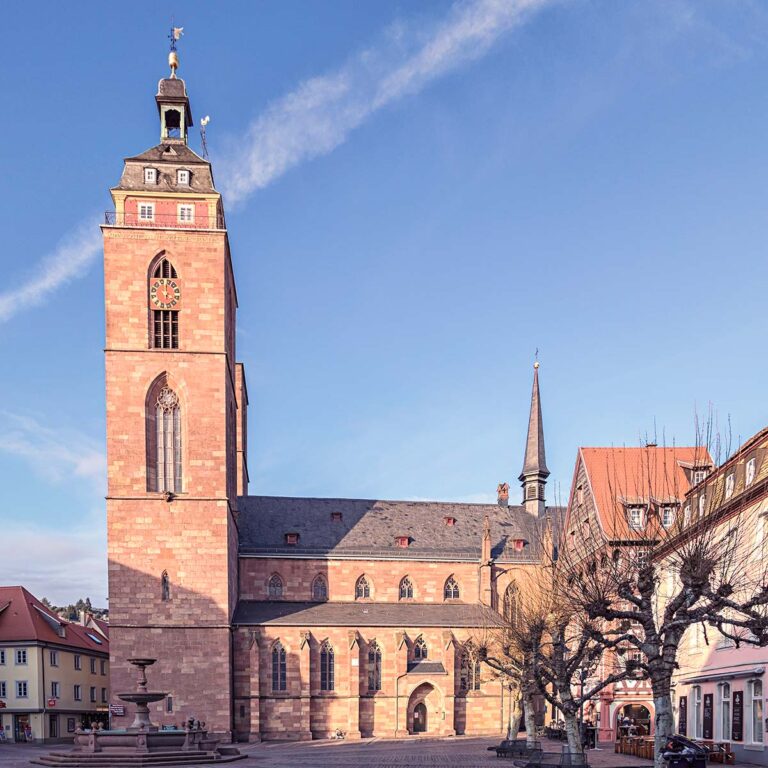
After the sanctuary ceased to function, a predecessor of the present Saint Nicholas Church was built over its ruins during the Romanesque period. The current church was constructed in the High Gothic period shortly after 1400. The temple stood in the area of the former village of Lobloch, which was incorporated into neighboring Gimmeldingen in 1751. Gimmeldingen became part of Neustadt an der Weinstraße in 1969.
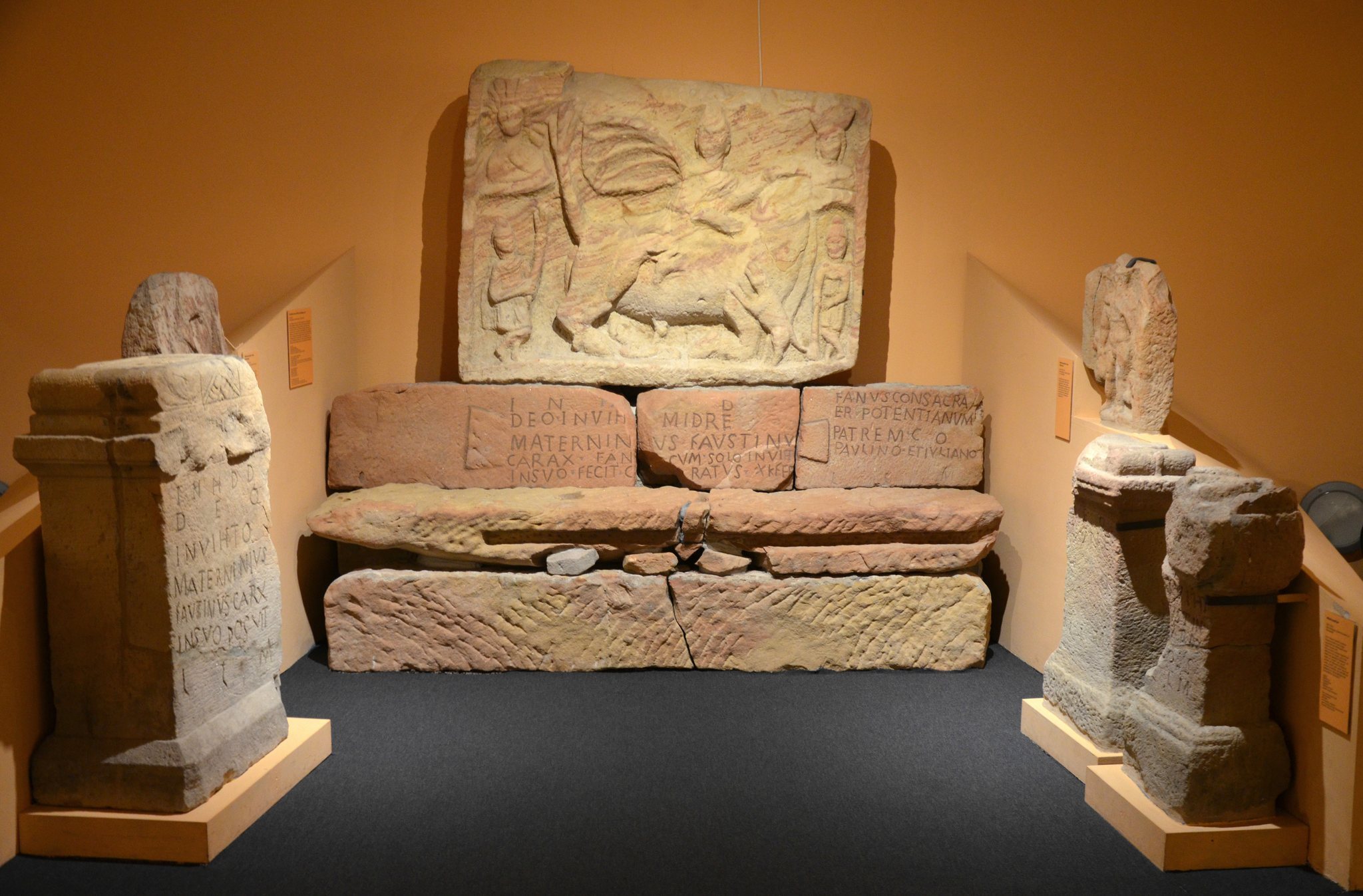
Building work west of Saint Nicholas Church in 1926 revealed the Mithraeum’s foundation walls, a stone relief of the tauroctony, and four votive altars. The tauroctony is the characteristic image of Mithras killing a bull, while votive altars were religious offerings connected with prayers, vows, or ritual acts. The original monuments and other finds are preserved at the Historical Museum of the Palatinate in Speyer.
Remains
Site setting
The temple occupied a south-facing slope at about 166 metres above sea level, north of the Mußbach floodplain. The area is now bounded by parallel streets, Loblocher Straße below and Kurpfalzstraße above. Their elevations differ by about 10 metres, rising from approximately 161 to 171 metres, and a pedestrian staircase connects them at the eastern edge.
Foundations and cult monuments
Only scant physical remains survive because the medieval church was built across the temple area. The 1926 work exposed the Mithraeum’s foundation walls and recovered the stone cult relief showing the tauroctony, together with four votive altars. These objects are now held at the Historical Museum of the Palatinate in Speyer.
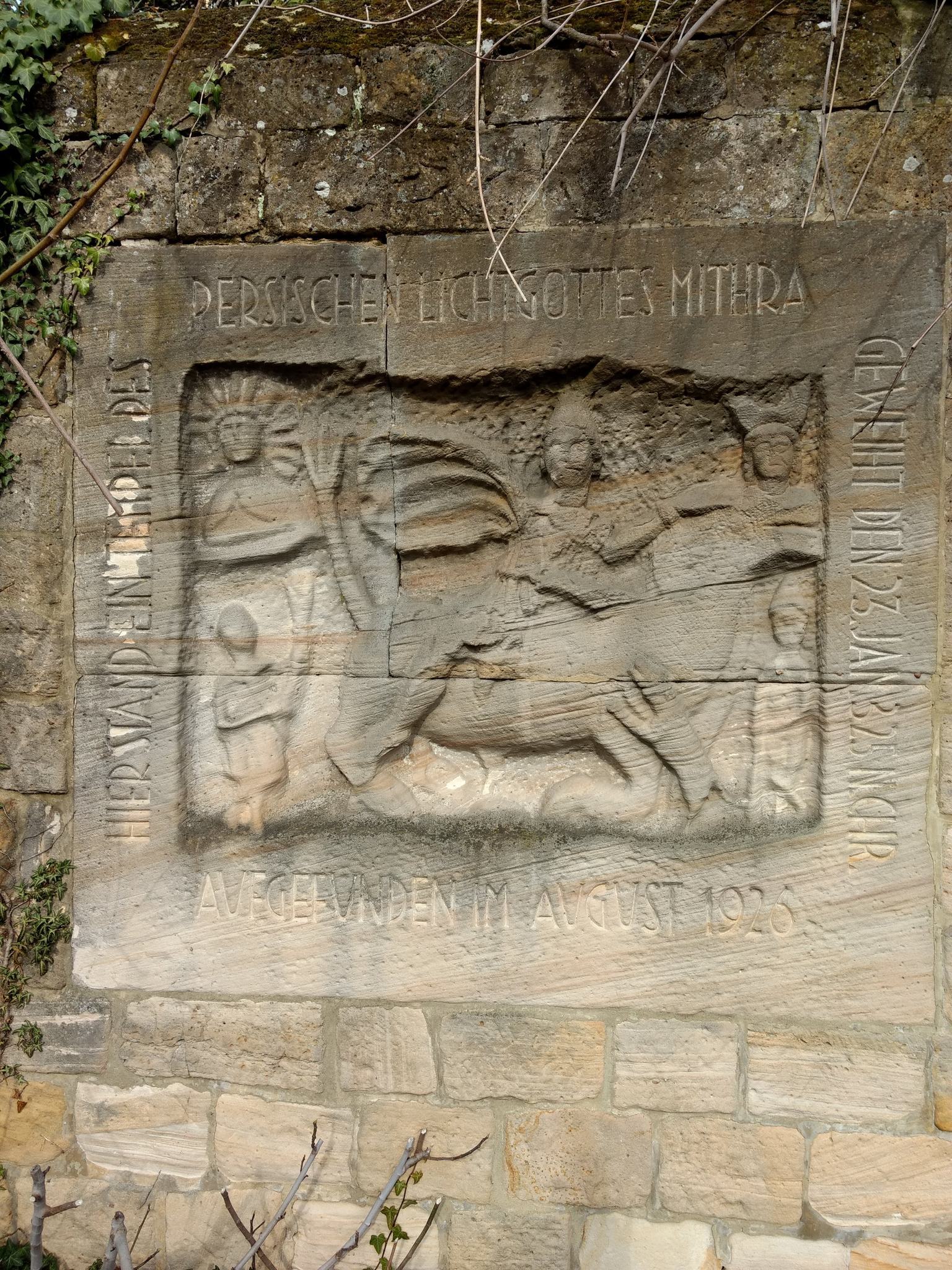
A replica of the cult relief, made from light sandstone from the nearby low mountain range, is set into a boundary wall on Loblocher Straße a few metres to the left of the church entrance.