Abbaye Notre-Dame de Carnoët: A Cistercian Abbey in France
Site at a Glance
- Rating
- 4.5
- Popularity
- Low
- Country
- France
- Primary era
- Medieval
- External website
- Open
- Eras represented
- Iron Age, Medieval, Early Modern
- Civilizations
- Duchy of Brittany, French
- Site type
- Religious
- Remains
- Monastery
On this page14 sections
History
Abbaye Notre-Dame de Carnoët is a former Cistercian abbey in Clohars-Carnoët, France, founded beside the Laïta in 1177 during the medieval period. The Cistercians were a reform branch of Western Christian monasticism that emphasized disciplined communal life, manual work, and relatively austere monasteries. The abbey became a long-lived religious and estate centre in the forest of Carnoët, close to the navigable river and an important Roman road.
Foundation beside the Laïta
Around 1170, Duke Conan IV, in the presence of Geoffroy, Bishop of Cornouaille, granted several nearby villages to monks from Langonnet Abbey. The charter allowed them to take timber from the forest for their needs. Maurice Duault of Croixanvec, then abbot of Langonnet, established the new community near the Laïta, and its existence as a Cistercian house is recorded from 1177.
Notre-Dame de Carnoët was a daughter house of Langonnet within the Cistercian filiation of Cîteaux. Cîteaux was the founding abbey and principal mother house of the order, while a filiation linked monasteries through mother-and-daughter-house relationships. Maurice Duault became Carnoët’s first abbot and led the community until his death on 29 September 1191, aged 76. He was buried in the abbey church two years later, and the institution later became known as Saint-Maurice de Carnoët in his memory.
Maurice Duault was regarded as a holy man. Stories of miracles involving children, sailors, and people with epilepsy circulated during his lifetime and in the decades after his death. An anonymous contemporary biography and a later Vita secunda, written by Abbot Guillaume of Carnoët between 1323 and 1382, preserve accounts of his life.
A riverine monastic estate
The abbey’s location differed from the isolated “desert” often associated with Cistercian foundations. It stood beside the navigable Laïta, where boats of roughly 10 to 60 tons travelling towards Quimperlé waited for the tide to turn. The site also lay about 200 metres from the Roman road between Hennebont and Bannalec, placing the community beside established routes of movement.
For approximately six centuries, the monks organized the estate to achieve a high degree of self-sufficiency. The abbey was rebuilt in the seventeenth century, probably during the abbacy of Guillaume Riou. In 1566, the monks felled a large quantity of timber, apparently for export, beyond the use permitted by the foundation charter. Royal justice ordered the abbot to pay 2,600 livres in damages.
Revolution, destruction, and changing ownership
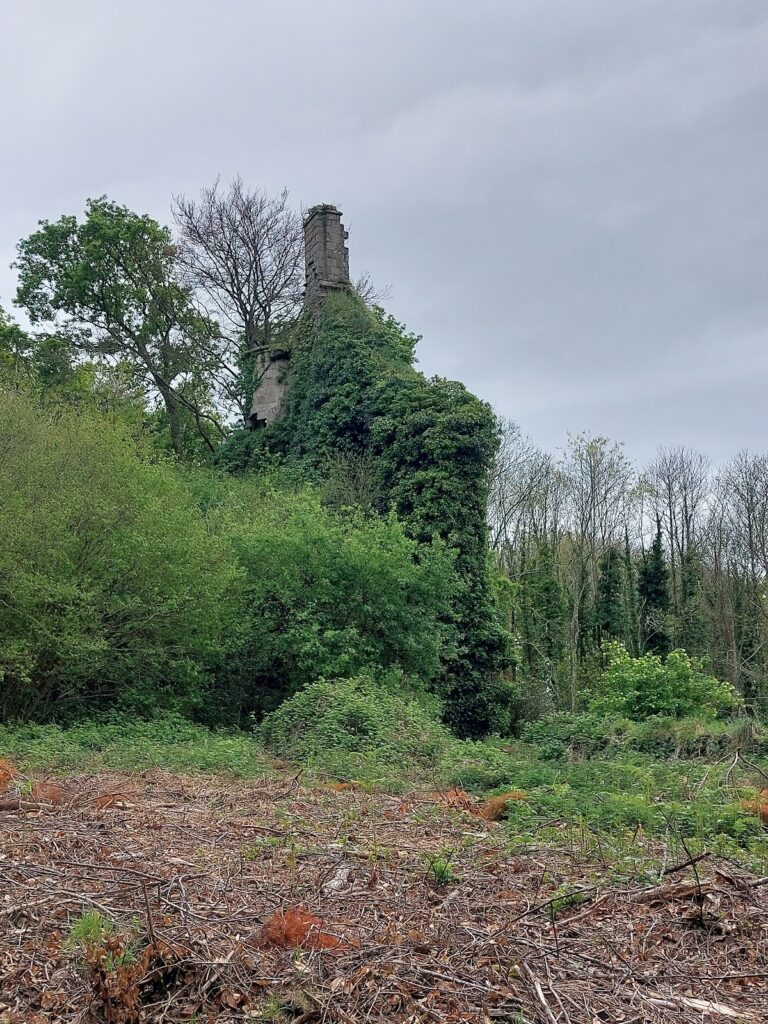
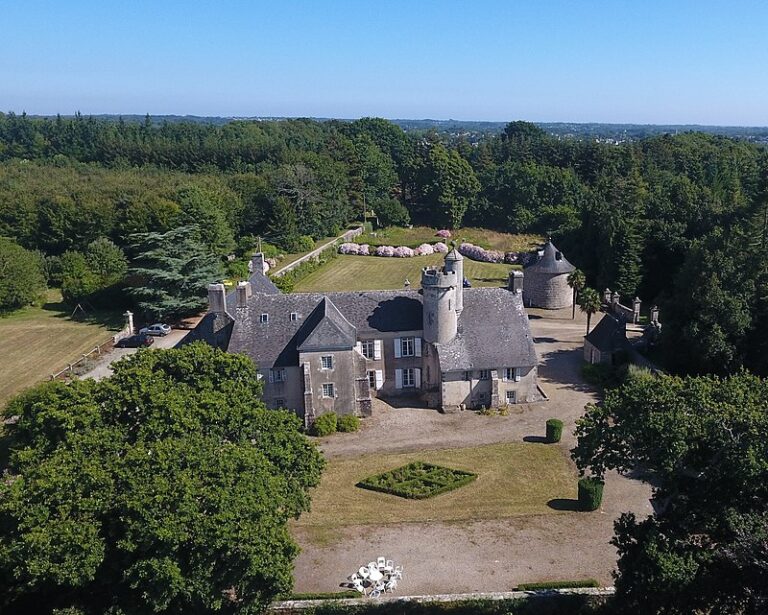
The abbey was dissolved in 1791 during the French Revolution, abandoned, and devastated. It was sold as national property and passed into private ownership. Parts of the complex were used as a stone quarry, while another section was converted into a château during the nineteenth century.
On 10 January 1799, a band of Chouans commanded by Jean François Edme Le Paige de Bar entered the abandoned abbey. The group mistreated Julien Launay, a former Cistercian religious who had been hiding in the woods, and an abbey servant.
The abbey possessed a 5-centimetre section of the right humerus of Saint Maurice, a Christian martyr traditionally associated with the Roman Theban Legion. As the site deteriorated, the relic was transferred to Langonnet Abbey during ceremonies held on 7 and 8 August 1880. The event was attended by the bishops of Quimper and Vannes, 150 priests, and approximately 20,000 faithful.
German troops occupied the complex during the Second World War and used the château as a resting place for the army. A fire severely damaged the château on 20 April 1945, and its owners demolished it in 1953. The chapter house and chartrier remained from the former monastic complex.
Protection and conservation
The Conservatoire du littoral, a French public body that protects coastal areas and their natural and cultural heritage, acquired the abbey and its estate in 1991. The property covered 118 hectares at the time and extends across approximately 123 hectares today. The Conservatoire and the commune of Clohars-Carnoët undertook restoration of the built and wooded heritage.
The thirteenth-century chapter house entered the register of historic monuments in 1956. Protection was extended to the remaining buildings and the wider site in 1995. The estate is also a protected natural area, where the history of the Cistercian community is interpreted alongside the ecological value of the woodland, including notable old trees and bat habitat.
Remains
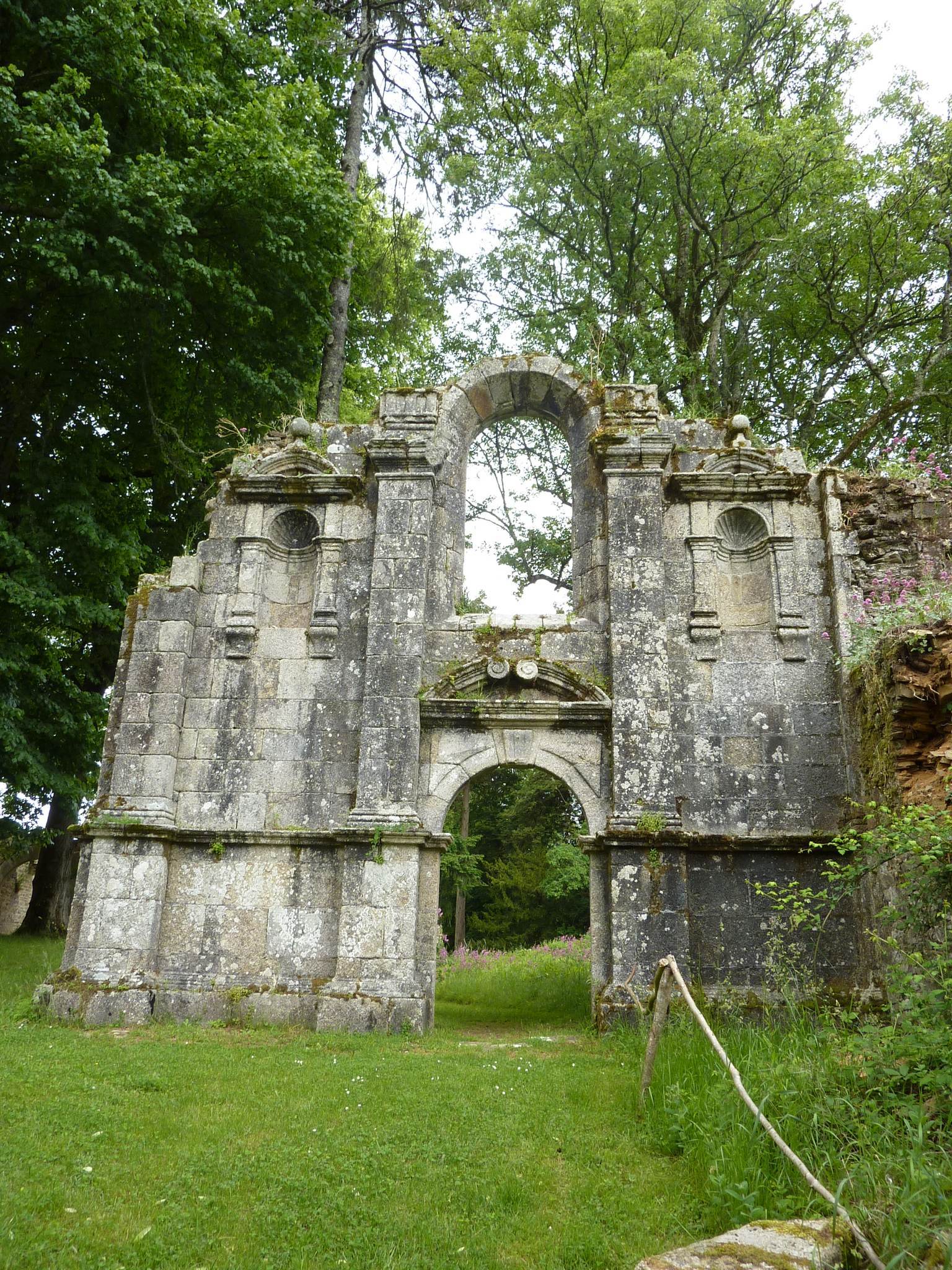
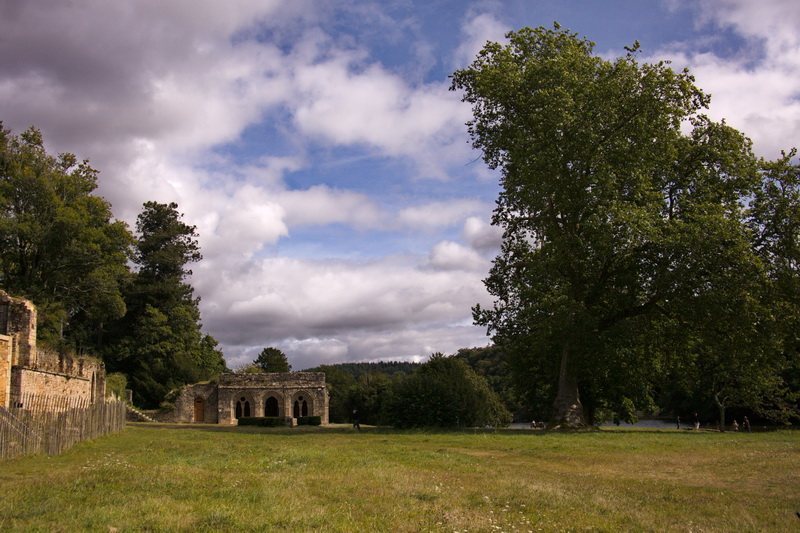
Abbaye Notre-Dame de Carnoët stands on the right bank of the Laïta estuary, within the forest of Carnoët and near the former Roman road between Hennebont and Bannalec. The surviving remains include the thirteenth-century chapter house, the chartrier, the barn, the abbey farm, the ruined seventeenth-century facade of the abbey church, and an eighteenth-century orangery. Two dikes protect the site from the waters of the Laïta.
Monastic buildings
Chapter house
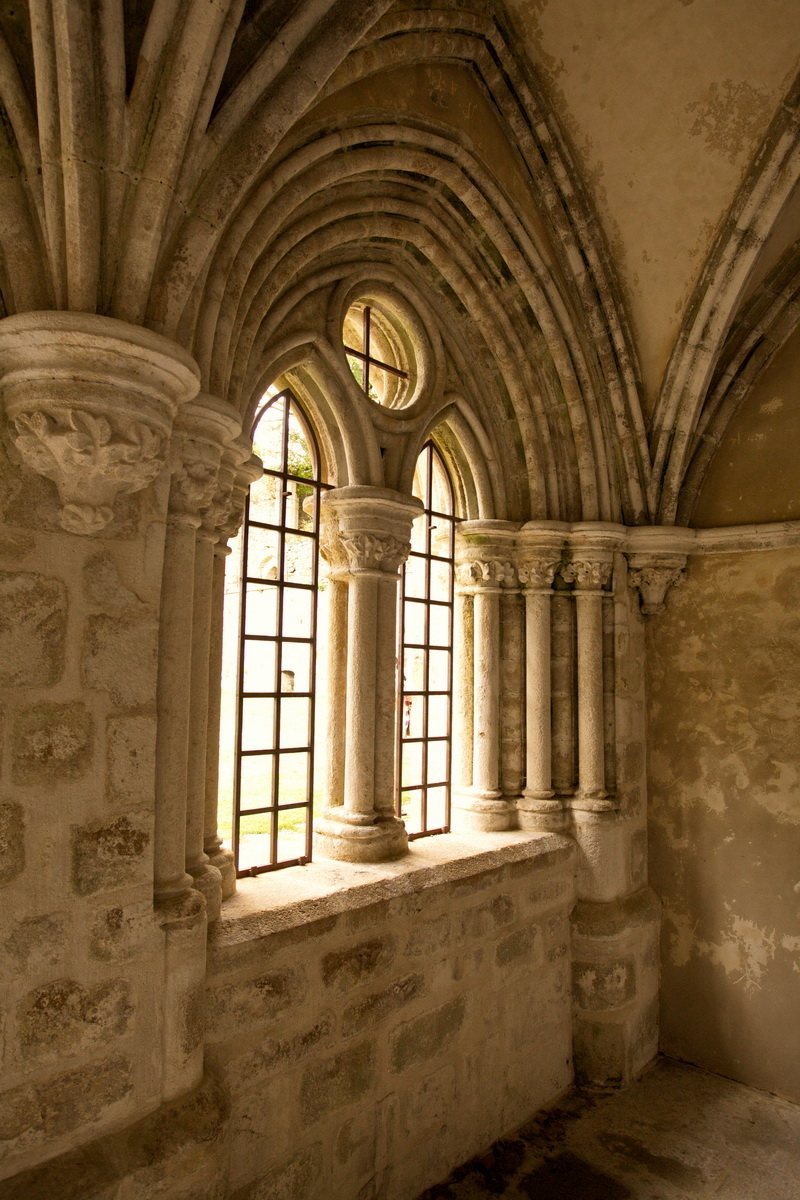
The chapter house is a thirteenth-century remnant of the monastery. A chapter house was the room where a monastic community gathered for readings, administrative business, and disciplinary matters. It remains one of the principal architectural elements of the former abbey and was incorporated into the protected historic fabric of the site.
Chartrier
The chartrier survived alongside the chapter house. A chartrier was a room or building used to preserve charters, deeds, and other legal documents belonging to an institution. Its survival reflects the administrative side of the abbey, whose landholdings and privileges were maintained through written records.
Abbey church facade
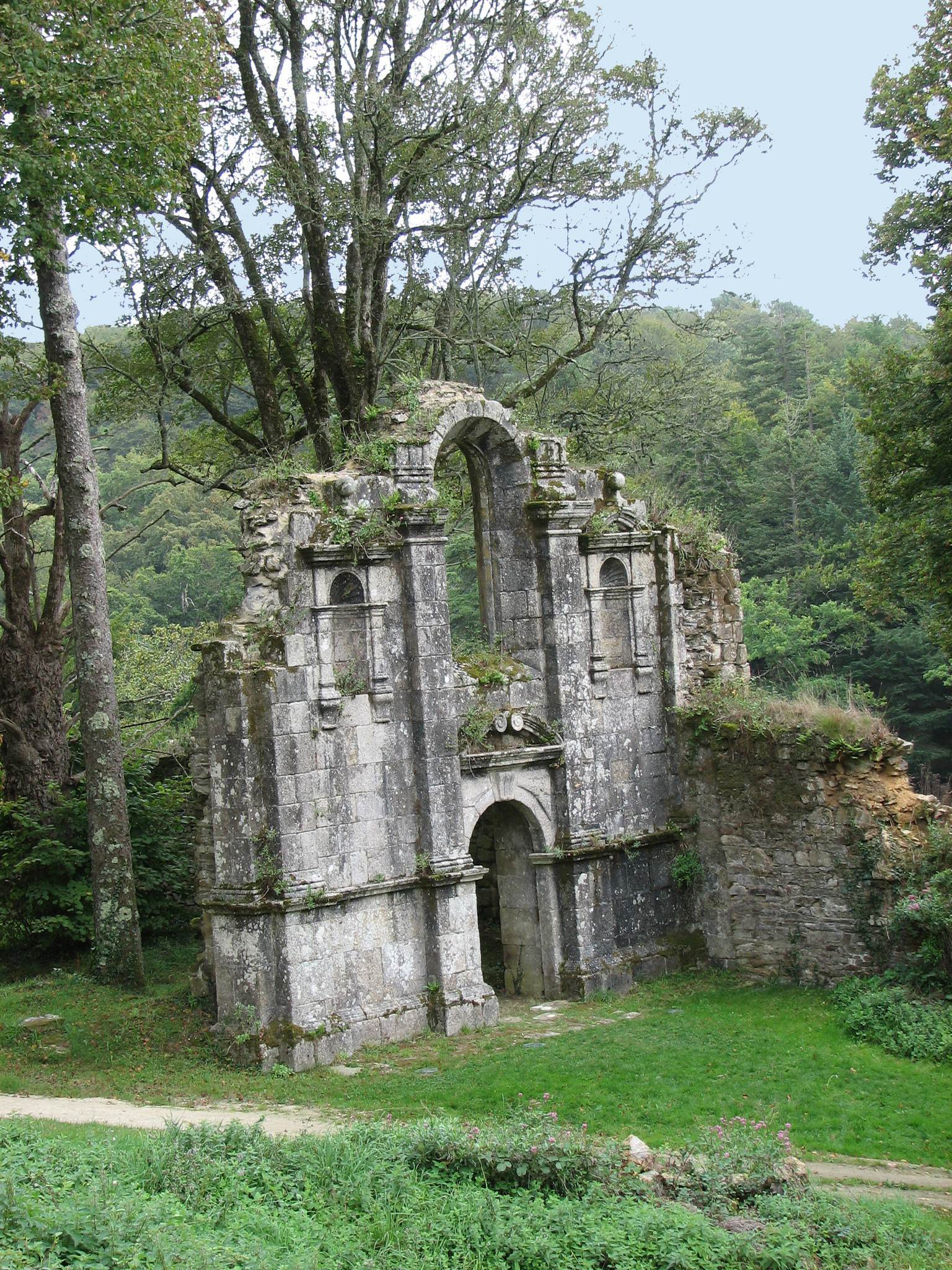
The facade of the abbey church dates from the seventeenth-century rebuilding of the monastery. It now survives as a ruin, providing a visible architectural trace of the period when the abbey was reconstructed, probably under Abbot Guillaume Riou.
Farm and orangery
The abbey farm forms part of the surviving estate and contains an exhibition on Cistercian life and the history of Carnoët. Its attic shelters a colony of bats, including greater horseshoe bats, whose activity can be observed through an infrared camera. The eighteenth-century orangery and the barn also remain within the group of buildings associated with the former monastic estate.
Forest and water management
Iron Age fortifications
Remains of Iron Age fortifications are visible in the surrounding forest. They place the medieval abbey within a landscape that had been occupied and defended before the Cistercian foundation.
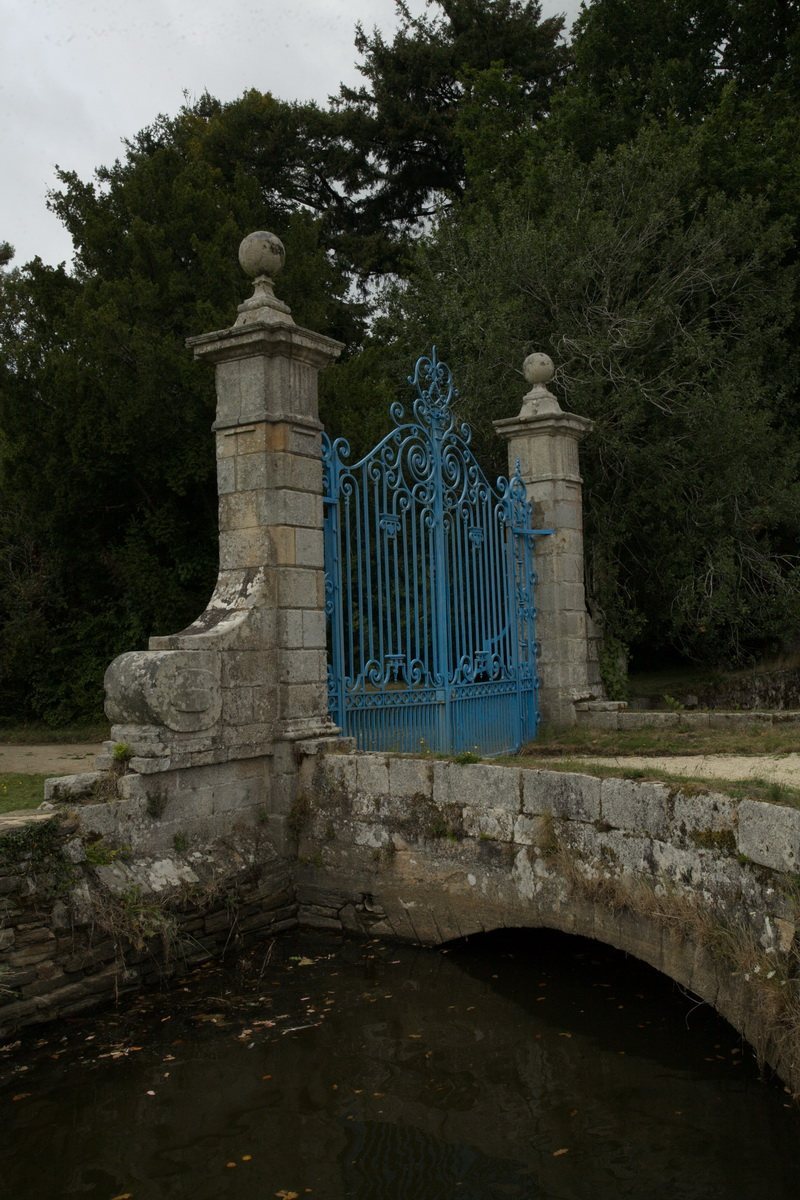
Dikes along the Laïta
Two dikes were raised to protect the abbey from the waters of the Laïta. Rising water associated with climate change threatens the site, and an increase of approximately one metre could temporarily submerge the chapter house.