Fort Zeelandia: A Historic Fortress and Museum in Suriname
Site at a Glance
- Rating
- 4.3
- Popularity
- Low
- Country
- Suriname
- Primary era
- Early Modern
- External website
- Open
- Eras represented
- Early Modern, Modern
- Civilizations
- Unclassified
- Site type
- Military
- Remains
- Fort
On this page14 sections
History
Fort Zeelandia is a seventeenth-century fortress in Paramaribo, Suriname, whose origins lie in an English colonial defense post on the left bank of the Suriname River. A wooden fort stood here by the first half of the seventeenth century, although its precise foundation date is uncertain. By 1651, it was associated with English colonization and was known as Fort Willoughby.
English origins and Dutch capture
The English fort took its name from Francis Willoughby, governor of Barbados, who supported the English settlement of Suriname. The nearby settlement developed close to the Indigenous village of Parmurbo, whose name later became Paramaribo.
On 25 February 1667, a Dutch Zeelandic squadron under Abraham Crijnssen reached the fort. After a brief battle, the English surrendered, and Dutch forces controlled the fort and colony by 6 March. Crijnssen renamed the fort Fort Zeelandia and gave the settlement the name Nieuw Middelburg.
England briefly recaptured Fort Zeelandia on 13 October 1667. The Treaty of Breda, the peace settlement that ended the Second Anglo-Dutch War, had been concluded on 31 July and confirmed Suriname as a Dutch possession. Dutch forces retook the colony by 28 April 1668.
Decline as a military position
French attacks on Paramaribo and the surrounding plantations in 1712 encouraged the construction of Fort Nieuw-Amsterdam on the opposite bank of the Suriname River in 1747. Fort Zeelandia then lost strategic importance. It became a barracks and was later used as a prison. By 1772, its military obsolescence had led to plans for demolition.
Wartime internment and political violence
During the Second World War, Governor Johannes Kielstra ordered the detention at the fort of about 50 German men over the age of 15 who lived in Suriname. They included missionaries and teachers connected with the Moravian Church, a Protestant denomination with roots in Central Europe, as well as German Jews. About a week later, the detainees were transferred to Huize Melati, a former Catholic mission boarding school outside Paramaribo.
In November 1942, four German prisoners, L. K. A. Raedt van Oldenbarneveldt, L. A. J. van Poelje, Stulemeyer, and Kraak, escaped after refusing forced cleaning work and being confined in wooden cells. They intended to reach French Guiana but were recaptured, beaten, and taken to Paramaribo. Raedt van Oldenbarneveldt and Van Poelje were sentenced to death and shot. Although the deaths were officially presented as shootings during an escape, postwar findings established that the two men had been shot from behind while handcuffed. Hendrik Jan van der Molen was ordered to investigate, while Colonel Jan Meyer was not prosecuted.
The fort was restored in 1967 and converted into a museum. The Surinamese Museum was housed there again from 1995, with collections covering archaeology, ethnography, visual art, colonial furniture, textiles, and historical photographs.
On 24 November 1975, immediately before Suriname became independent, a statue of Queen Wilhelmina was moved from Independence Square to the fort. Wilhelmina was monarch of the Netherlands from 1890 to 1948. After the 1980 military coup led by Desi Bouterse, Fort Zeelandia became a prison again and served as the headquarters of the military government. Political opponents, including Soerinder Rambocus and Jiwansingh Sheombar after the failed countercoup of 11 March 1982, were detained there.
On 8 December 1982, soldiers tortured and shot fifteen political opponents of Bouterse at the fort in the event known as the December Murders. The victims included scholars, journalists, lawyers, trade-union leaders, and military personnel, one of them a Dutch citizen. After democracy was restored, the fort again housed a historical museum. In 2009, the national memorial at Bastion Veere was unveiled in remembrance of the December Murders.
Remains
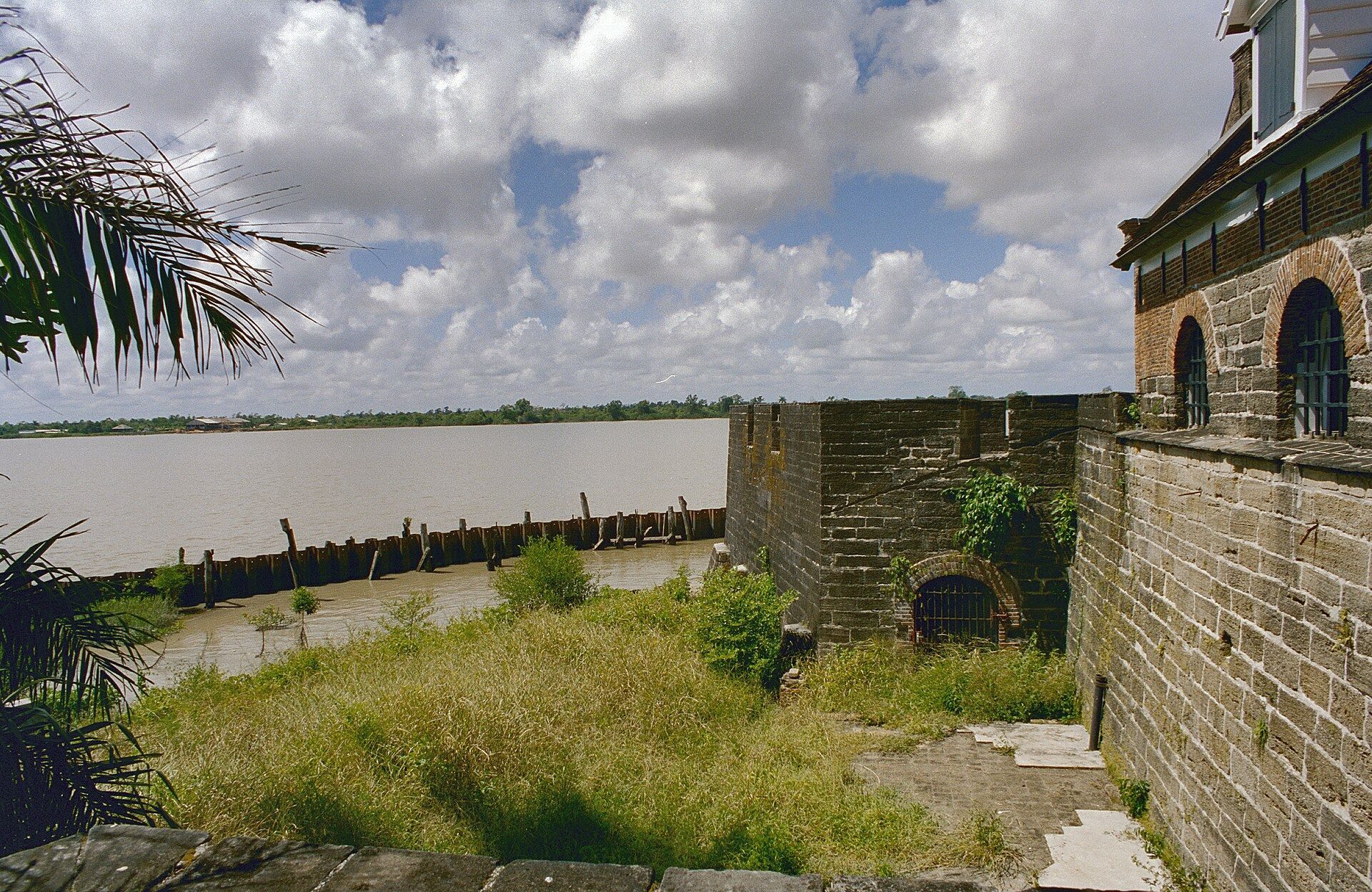
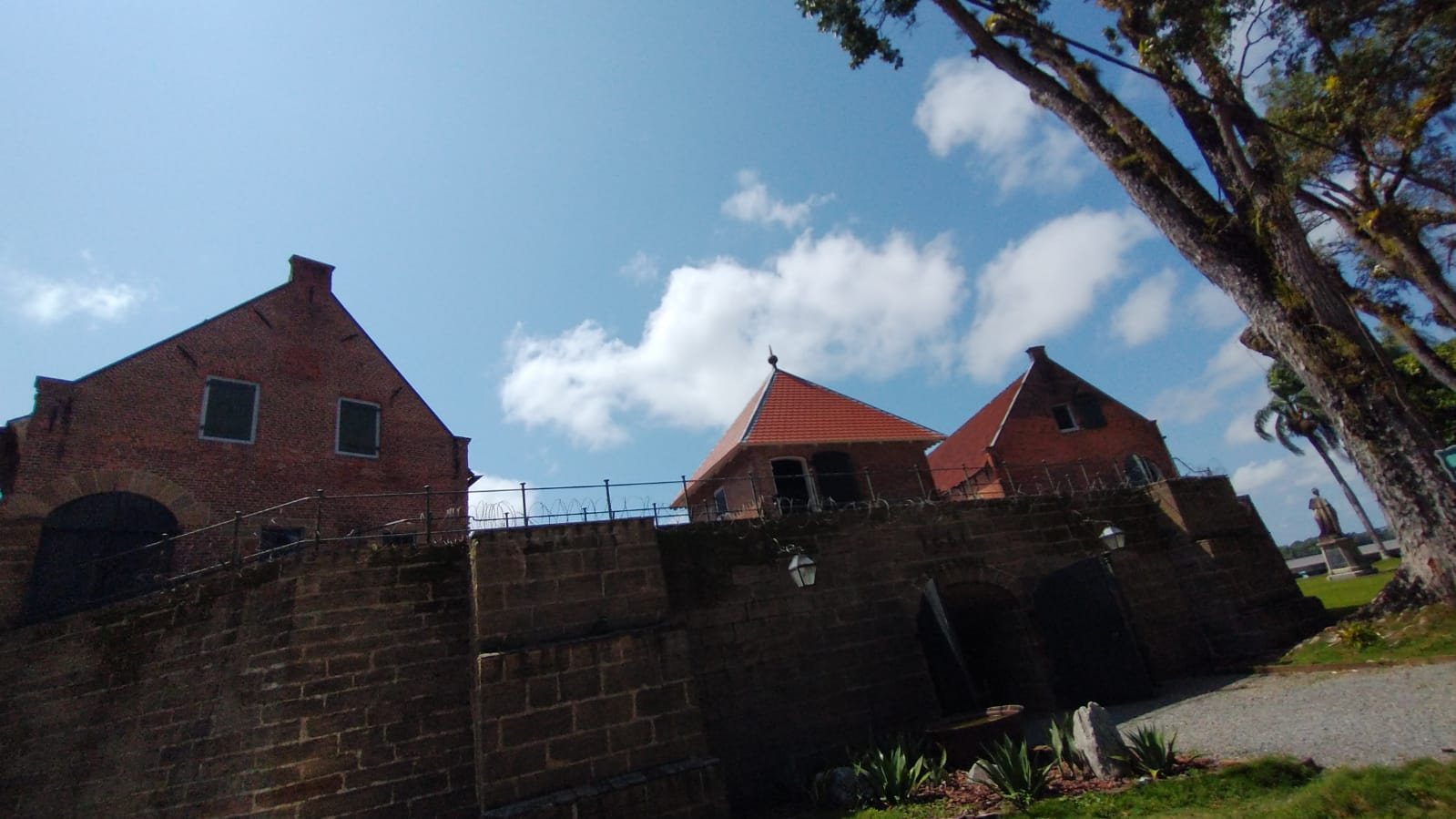
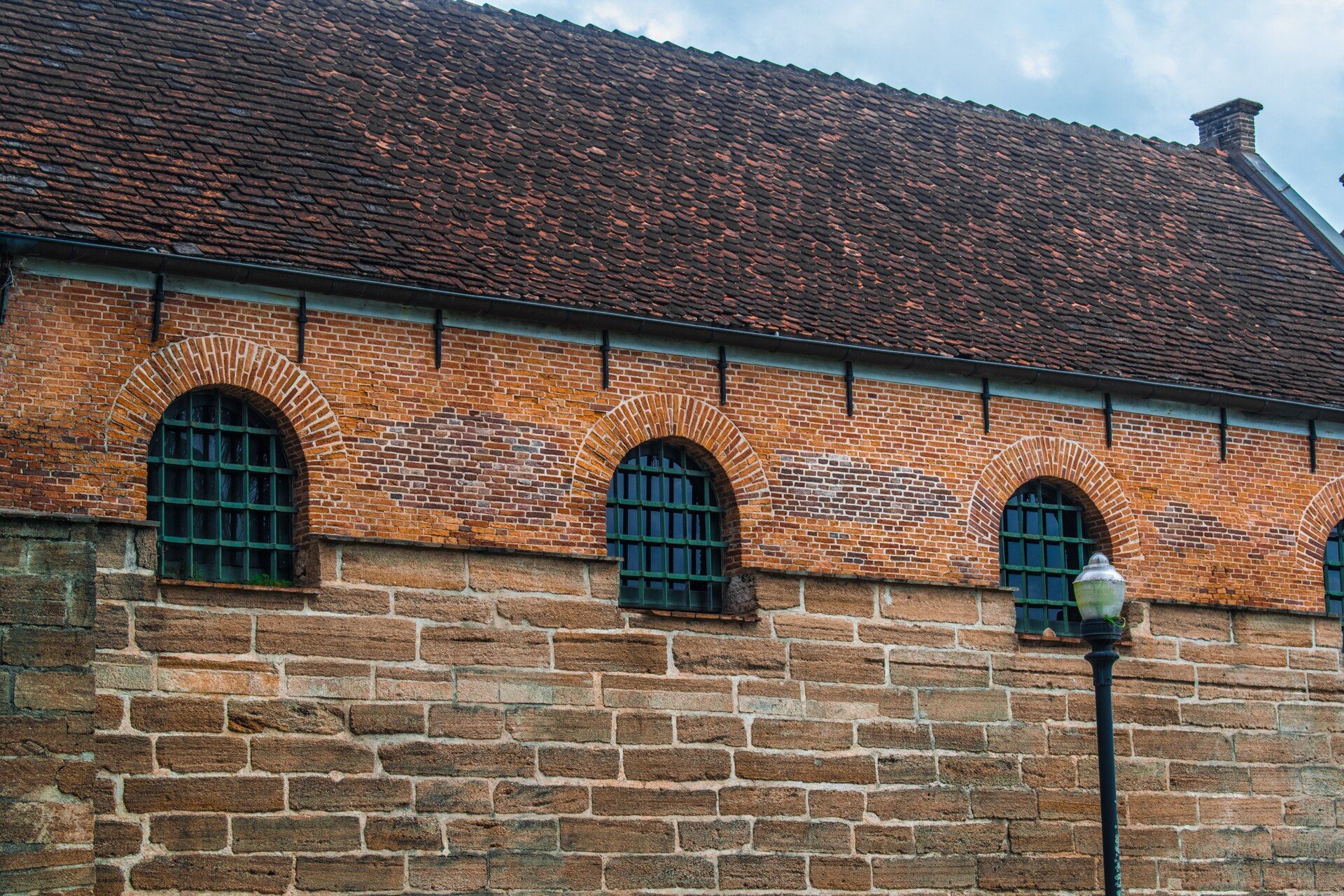
Fort Zeelandia is a pentagonal former battery fort on the Suriname River. Its defenses were expanded with five bastions, projecting defensive platforms that allowed defenders to cover the walls and approaches with overlapping fire. Three bastions survive, while the two on the landward side were removed when Fort Nieuw-Amsterdam was built.
Defensive structures
Surviving bastions
The surviving bastions are Middelburgh, Veere, and Zierikzee. Bastion Veere also contains the national memorial unveiled in 2009 in remembrance of the December Murders.
River-facing ring wall
The ring wall on the river-facing side is associated with the executions of 8 December 1982. It forms part of the surviving defensive enclosure and carries the physical memory of the political violence that took place at the fort.
Buildings and objects
Powder house
A surviving powder house bears the Zeeland coat of arms. The building was later converted into a pharmacy.
Officers’ houses
Officers’ houses were built outside the fort. Some of these buildings are now used as offices.
Commander’s house
The former commander’s house now accommodates the Nola Hatterman Art Academy, an art school in Suriname.
Queen Wilhelmina statue
The statue of Queen Wilhelmina stands within the fort after its relocation from Independence Square in 1975.
Dutch mailbox
A Dutch mailbox stands against the outer wall to the right of the entrance. It formerly stood on Nassauplein in The Hague.