Rot an der Rot Abbey: A Premonstratensian Monastery and Imperial Abbey in Germany
Site at a Glance
- Rating
- 4.6
- Popularity
- Low
- Country
- Germany
- Primary era
- Early Modern
- Eras represented
- Medieval, Early Modern
- Civilizations
- Holy Roman Empire
- Site type
- Religious
- Remains
- Monastery
On this page12 sections
History
Rot an der Rot Abbey in Germany was a Premonstratensian monastery founded in 1126, and it became one of the earliest foundations of the order in Upper Swabia, traditionally regarded as the first Premonstratensian monastery in Swabia. The Premonstratensians are a Roman Catholic order founded by Norbert of Xanten whose communities combined religious life with pastoral service. The surviving complex reflects later Baroque rebuilding and the early Neoclassical design of its church.
Foundation and early expansion
The settlement was known as Rota in a donation made by Adelbert of Wolfertschwenden around 1100. Together with its church and inn, it probably formed the centre of a manor. Tradition places the foundation of the monastery at Rota near Biberach in 1126, when Hemma von Wildenberg established it as a double monastery, a foundation in which communities of men and women lived in close association. Norbert of Xanten was traditionally connected with the foundation, although his personal participation remains uncertain. The first monks came from Prémontré in northern France, the order’s mother house, under the first prior, Burkhard, who arrived with twelve monks.
The institution became an abbey around 1140, and a nearby women’s convent was established soon afterwards. Under Abbot Ottino, who governed from 1140 to 1181 or 1182, the community grew to about 200 monks and entered its first period of prosperity. Rot founded or helped establish daughter institutions at Wilten in 1137 and at Weissenau, Schussenried, Steingaden, Kaiserslautern, and Marchtal between 1145 and 1171. The women’s convent continued until about 1380 or the later fourteenth century.
Territory and ecclesiastical independence
By 1182 the abbey held property around Rot, in the Iller valley, on the Swabian Jura, near Lindau, and around Hüttisheim, Steinbach, Untermoorweiler, and nearby settlements. Through acquisitions, donations, and the incorporation of parishes, it formed a consolidated territory around Rot and Haslach. The village of Rot was then entirely under monastic control and served as the abbey’s administrative and pastoral centre.
The abbey was probably directly subordinate to the pope from its foundation and enjoyed exemption from secular advocacy. In 1179 Emperor Frederick Barbarossa declared himself its Vogt, a secular protector who defended an ecclesiastical institution and represented its legal interests. This created an important basis for the abbey’s later territorial independence. A fire in 1182 destroyed the original foundation documents and imperial privileges. They were replaced that year by a papal bull from Pope Lucius III, which attributed the foundation to Hemma von Wildenberg and two male relatives.
Crisis and recovery
In 1338 the abbey was exempted from the jurisdiction of secular courts. Its fortunes declined after the plague of 1348, as reduced land acquisition, crop failures, fires, wars, and a prolonged economic crisis weakened the institution. By 1391 only three monks remained. The women’s convent was dissolved around 1380, and its site was later occupied by a cemetery church.
The abbot of Weissenau eventually took control of Rot, and in 1407 King Rupert installed John II of Waldburg as governor. Abbot Heinrich Merk began restoring the institution between 1417 and 1420. His successor, Martin Hesser of Marchtal, governed from 1420 to 1457 and continued the recovery of monastic life, reclaimed mortgaged and sold property, and rebuilt the monastery. He is traditionally remembered as the abbey’s second founder. In 1425 he joined other Swabian abbots in an alliance at Constance to defend monastic rights. From 1458 Rot could appoint priests from its own community to the parishes under its control.
Imperial status and wartime damage
A fire in 1481 destroyed almost the entire monastery. Reconstruction continued until 1509, when the new church was consecrated. In 1497 Emperor Maximilian I granted the abbey imperial immediacy, meaning that it answered directly to the emperor rather than to an intervening territorial prince. Rot thereby became an Imperial Abbey, and its abbot entered the Swabian College of Imperial Prelates and represented the institution in the Imperial Diet.
The abbey was plundered repeatedly during the German Peasants’ War in 1525 and the Schmalkaldic War in 1546. Reforms introduced by Abbot Martin Ehrmann, who governed from 1560 to 1589, halted the following decline. Rot was represented in the Swabian Imperial Circle and the Swabian Imperial Prelates’ College, while its abbot had been entitled to wear the mitre from about 1585.
In 1604 the abbey acquired the lordship of Kirchdorf to enlarge its territory. In 1619 Leopold of Austria-Tyrol mortgaged high-justice rights to Rot, although the privilege was effectively exercised only during the War of the Austrian Succession from 1740 to 1748. During the Thirty Years’ War, the abbey and its territory were looted more than 200 times, despite a visitation in 1601 having judged the institution to be in excellent condition.
Baroque rebuilding and the final abbots
After the Thirty Years’ War, Abbot Martin Ertle, who governed from 1672 to 1711, worked to restore religious discipline, clerical learning, and the abbey’s finances. On 6 May 1681, arson destroyed most of the monastery complex after earlier wartime damage had already affected parts of the institution. The monastery was rebuilt in the Baroque style. The Premonstratensians also cared for the pilgrimage to Maria Steinbach, established in 1734. After the French Revolution, the convent housed exiles from France.
A new abbey church was begun under Abbot Mauritius Moritz, who ordered the demolition of the older church despite opposition from the convent. Its eastern section was built by Johann Baptist Laub between 1777 and 1779. After the foundation stone was laid in 1783, construction of the principal new church continued under Abbot Willebold Held, and the building was completed and furnished between 1777 and 1786.
Nikolaus Betscher, the last abbot, served from 1789 until the secularization of 1803. He was also a composer whose church music has been compared with that of Joseph Haydn, Michael Haydn, and Wolfgang Amadeus Mozart. His compositions were rediscovered around 1980 and subsequently performed more often, supported by the research and editorial centre for Upper Swabian monastic music at the University of Tübingen and the Rot an der Rot Cultural Forum.
Secularization and later religious use
Rot’s library had been established in 1502 and was greatly expanded from 1725. By 1796 it contained more than 7,000 books, but the collection was dispersed after the abbey was dissolved. Much of the written archive is preserved in the Main State Archive in Stuttgart, while additional records transferred to the archives of the Counts of Erbach-Erbach and Wartenberg-Roth were added there in 1980.
In 1803 the abbey and its Imperial territory were secularized under the Imperial Deputation Act. Secularization transferred ecclesiastical institutions, property, and territories into secular ownership or administration. The canons were forced to leave, the monastery became a house of extinction that could accept no new novices, and its territory of thirteen villages and hamlets, with 2,871 inhabitants, initially passed to the Counts of Wartenberg as compensation for territories lost west of the Rhine. A provisional Protestant place of worship was established in the former refectory.
The territory became part of the Kingdom of Württemberg in 1806 and passed by inheritance to the Counts of Erbach-Erbach during the early nineteenth century. In that century two monastery wings and the library were demolished. The former Imperial territory, which had covered approximately 1.5 square miles, had bordered the Imperial Abbey of Ochsenhausen, the Cistercian women’s foundation of Gutenzell, the Imperial Charterhouse of Buxheim, the Imperial City of Memmingen, and the secular territory of Waldburg-Zeil-Wurzach.
Premonstratensian canons returned from Windberg in 1947, followed by a newly founded community of Norbertine sisters in 1950. The canons left in 1959 because of a lack of pastoral duties and moved to the present Abbey of Hamborn in Duisburg. The sisters remained until 2007, when they moved to Aulendorf. The Diocese of Rottenburg acquired the monastery buildings in 1959 and established the St Norbert youth and educational centre there in 1960.
Remains
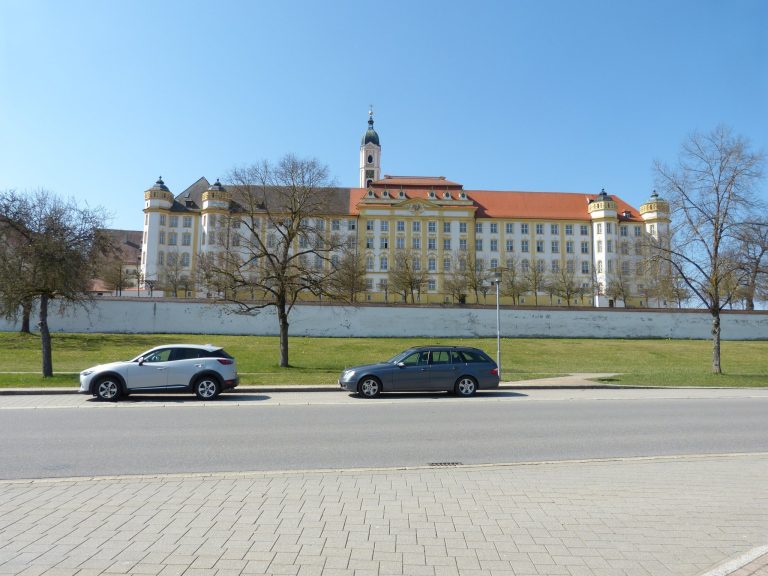
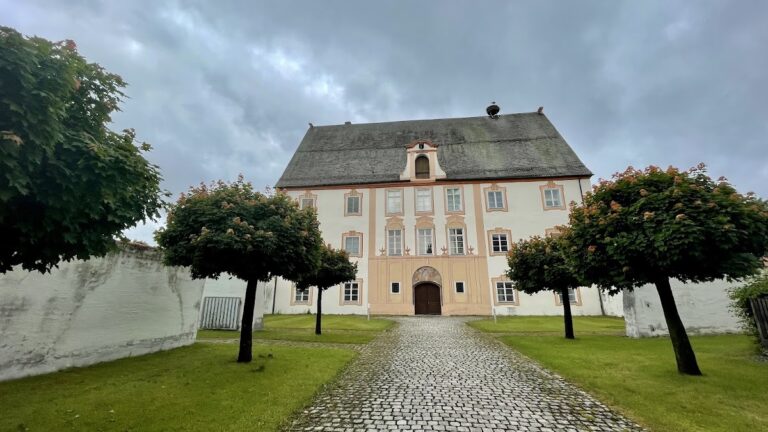
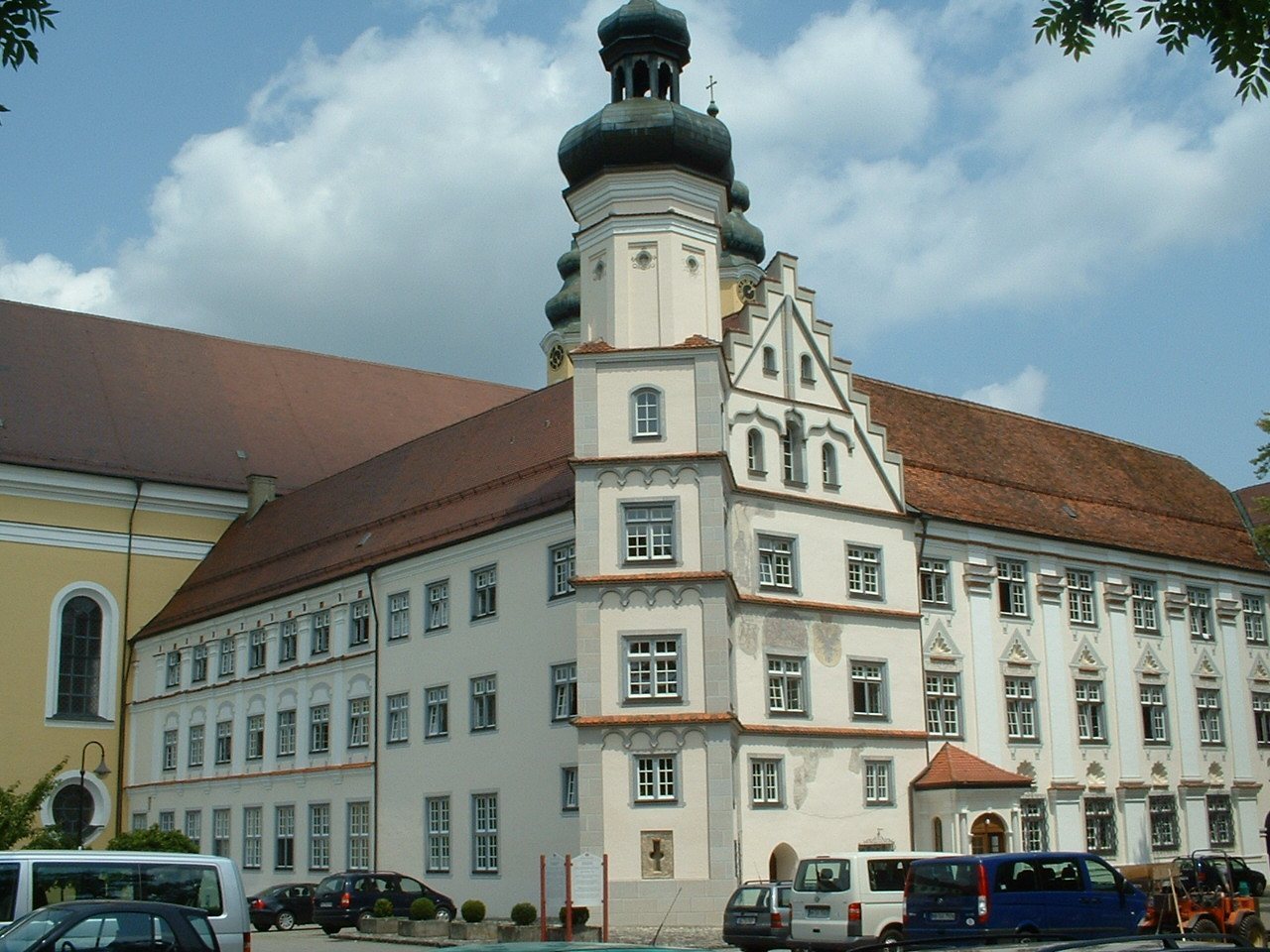
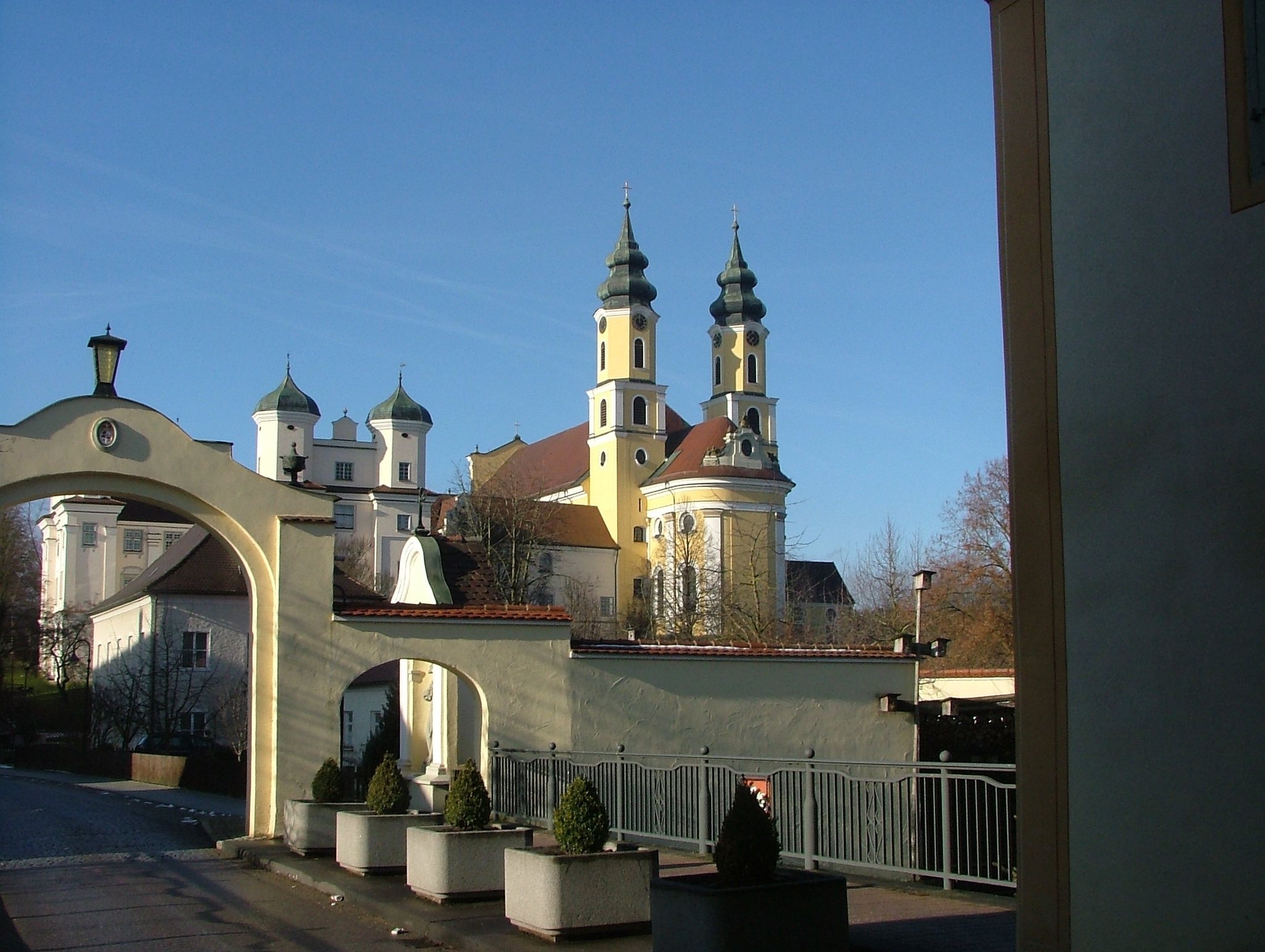
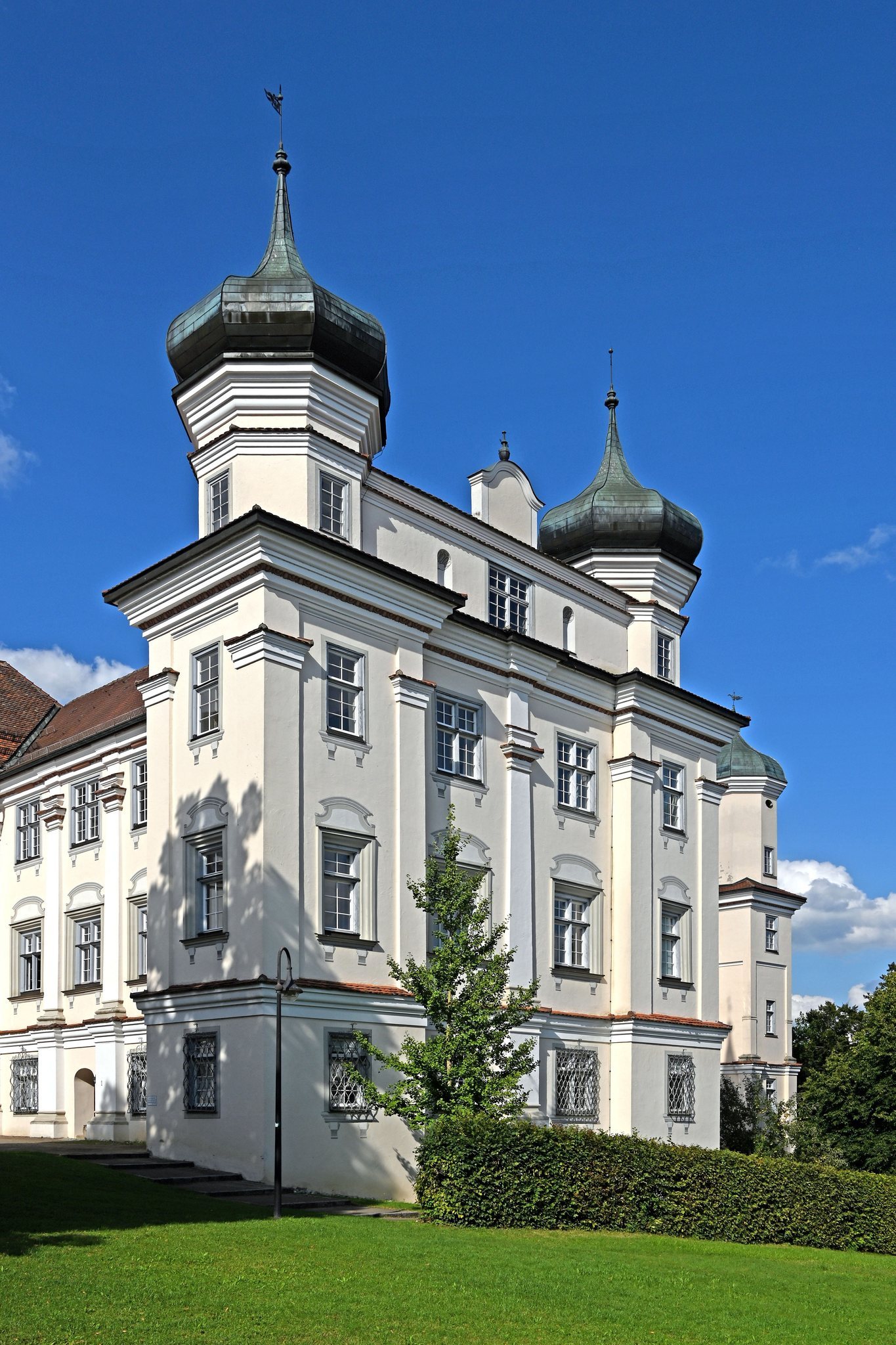
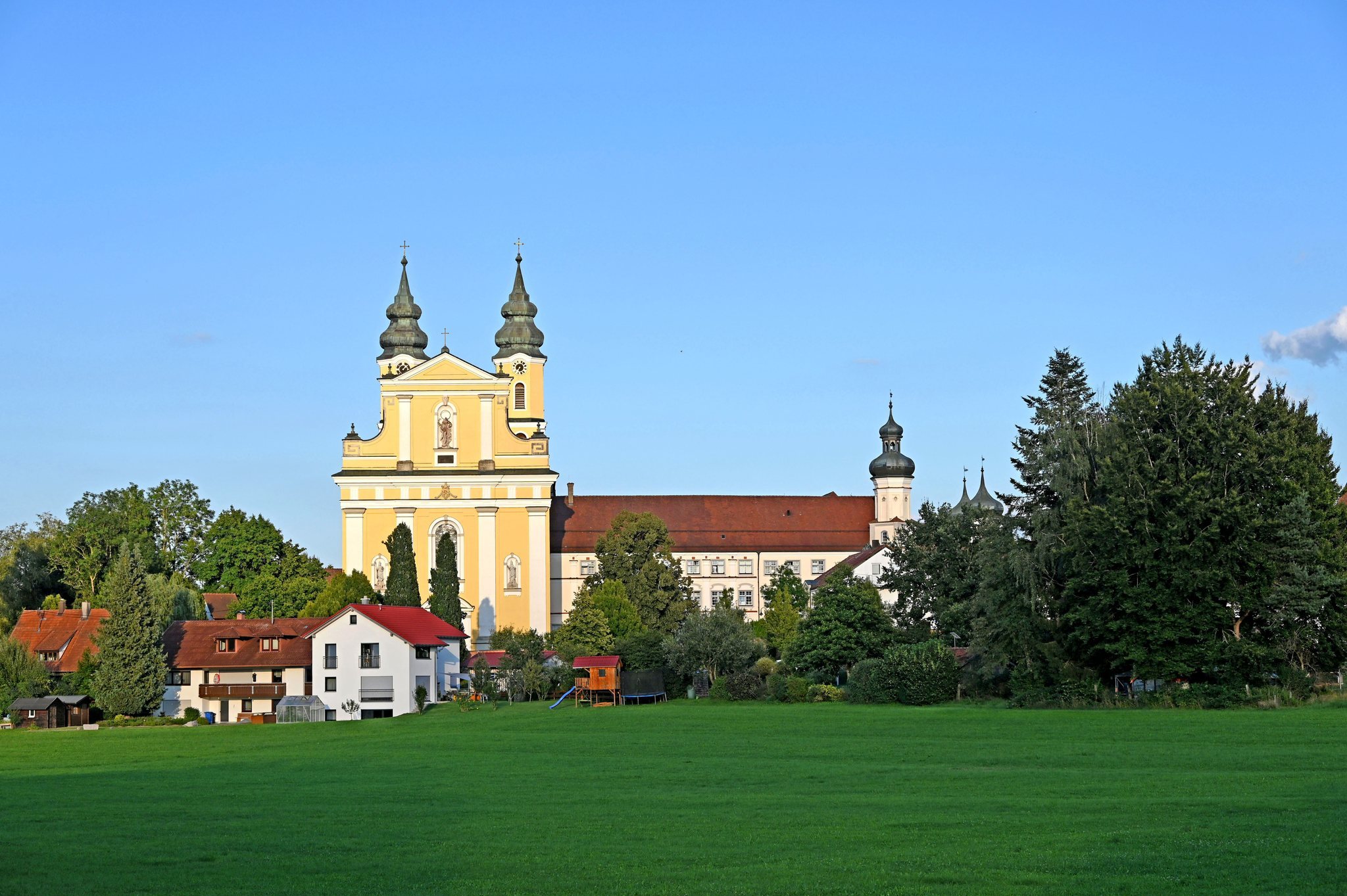
The former monastery stands on a hill between the valleys of the Rot and Haslach rivers. Its surviving layout includes the church, convent buildings, gates, farm structures, and cellar buildings. The complex is predominantly Baroque, while the church is an early Neoclassical building. Numerous small towers gave the monastery the nickname Upper Swabian Kremlin. The monastery buildings adjoin the church, and the surviving structures preserve parts of the institution’s religious, administrative, and economic organization.
Monastery buildings and gates
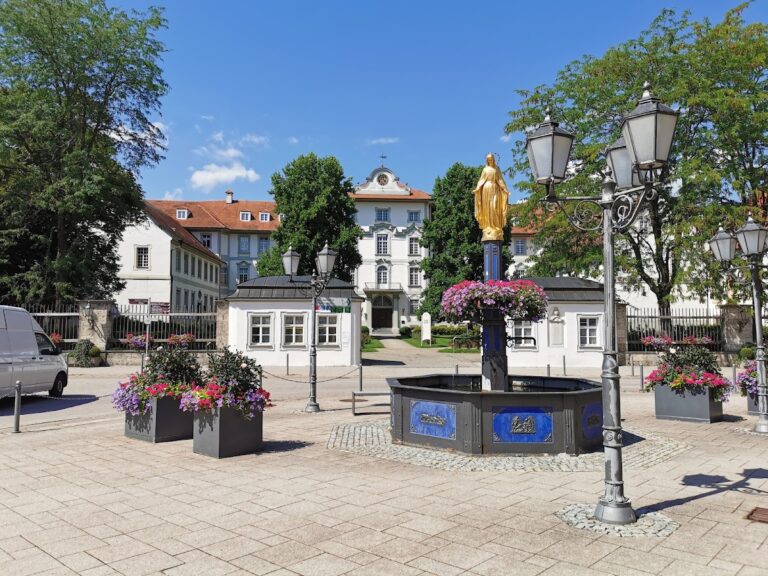
The surviving complex includes a main gate and a lower eastern gate, together with remaining convent buildings and parts of the farm complex. These structures belong to the monastery rebuilt after the fires of 1481 and 1681. Later nineteenth-century demolition removed two wings and the library, while the church, the remaining convent buildings, the gates, and parts of the agricultural buildings survived.
St Verena Church
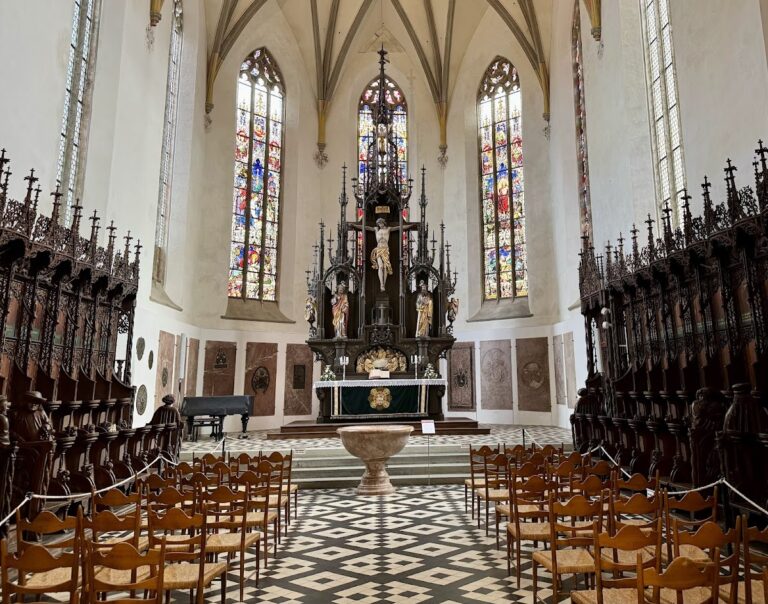
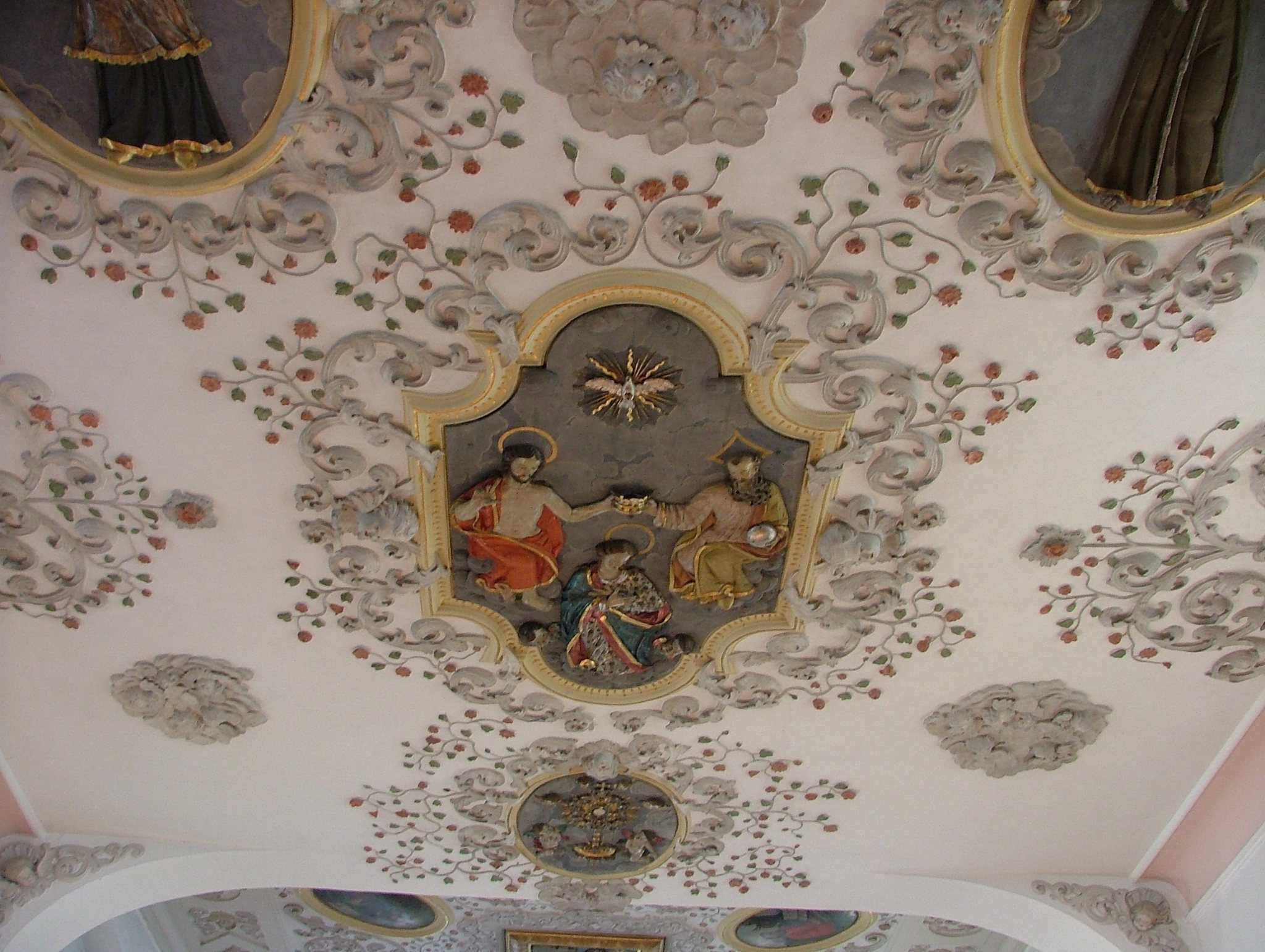
St Verena is a broad-spatial early Neoclassical church built and furnished between 1777 and 1786 according to a Vorarlberg architectural scheme. This tradition is associated with broad, unified interiors developed by builders from the Vorarlberg region. Johann Baptist Laub constructed the eastern section, while Andreas Meinrad von Ow and Januarius Zick produced the interior paintings and Franz Xaver Feichtmayer II created the stucco work. The church contains fresco decoration by Zick, a pulpit, and richly carved choir stalls made between 1691 and 1693.
Johann Nepomuk Holzhey built the choir organ between 1785 and 1787 and the principal organ on the west gallery between 1789 and 1793. The main organ was made during Nikolaus Betscher’s abbacy, and his coat of arms is attached to the organ case. The earlier abbey church had been a substantial building with 36 altars before it was demolished in 1506. Paintings by Bernhard Strigel from that church are now held in the State Art Gallery in Karlsruhe. Betscher’s mortal remains were transferred in 1964 from the cemetery at St John to the former abbey church of St Verena.
Former women’s convent and cemetery church
St John the Baptist Cemetery Church stands on the site of the former women’s convent, which was dissolved around 1380. The church is an oval late-Rococo building constructed between 1738 and 1745. Its design is attributed to the later Abbot Benedikt Stadelhofer, who also designed the pilgrimage church at Maria Steinbach. The cemetery church occupies the former convent site, while the later building preserves the location’s continuing religious use.
Farm buildings
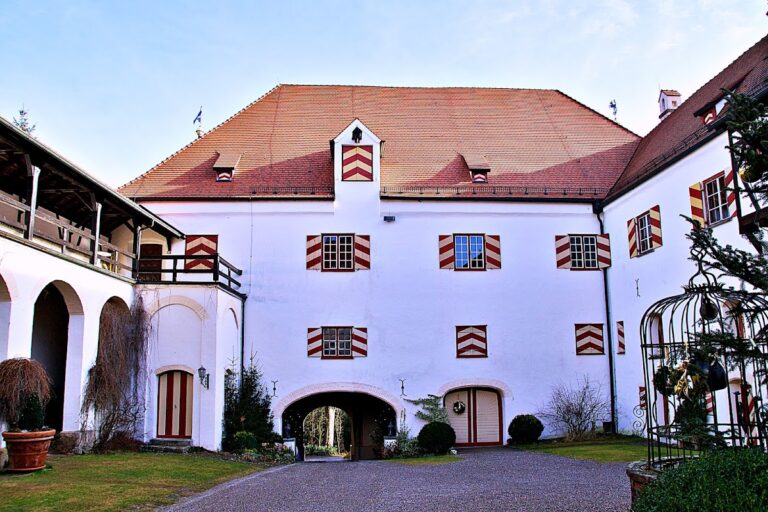
A rectangular farm building stands at the foot of the monastery hill and is now used as the town hall. The farm courtyard built under Abbot Hermann Vogler in 1726 originally formed a four-wing complex measuring approximately 110 by 160 metres. Only the northwestern corner with original fabric survives, together with other parts of the farm and cellar buildings that supported the abbey’s economic operations.