Purandar Fort: A Maratha Mountain Stronghold in India
Site at a Glance
- Rating
- 4.6
- Popularity
- Medium
- Country
- India
- Primary era
- Medieval
- Eras represented
- Medieval, Early Modern
- Civilizations
- Unclassified
- Site type
- Military
- Remains
- Fort
On this page12 sections
History
Purandar Fort is a mountain fort in Maharashtra, India, whose earliest known reference dates to the eleventh-century Yadava dynasty. The fort later became a contested stronghold under Deccan sultanates, the Marathas, the Mughals, and the British, and its position above the surrounding countryside gave it an important military role.
Yadava Origins and Deccan Sultanates
The Yadavas were a medieval dynasty based in the Deccan. After their power ended, invading states took control of the surrounding territory and strengthened Purandar in 1350. During the early rule of the Bijapur and Ahmadnagar sultanates, successor states that governed parts of the Deccan, the fort was administered directly by the government rather than being assigned to jagirdars, holders of revenue rights over a territory.
Purandar was besieged several times under the Bahamani Sultanate, a major medieval Muslim kingdom in the Deccan. A tradition associated with the fort tells of a man and a woman being buried alive beneath a bastion as a sacrifice to its patron deity. The same tradition relates that a minister’s first-born son and the child’s mother were later buried beneath the foundations, together with gold and bricks. The minister, Yesaji Naik, was then granted possession of the fort, while the child’s father received two villages.
In 1596, Bahadur Shah of the Ahmadnagar Sultanate granted the territories of Pune and Supa to Malojiraje Bhosale, the grandfather of Chhatrapati Shivaji Maharaj. Purandar was included within that grant.
Shivaji and the Mughal Siege
In 1649, Chhatrapati Shivaji Maharaj temporarily took control of Purandar from Raje Mahadaji Neelkanthrao Sarnaik. Mahadaji’s family had commanded the fort for four generations, and he had been a friend of Shivaji’s father. After Mahadaji died, Shivaji captured the fort during Diwali in 1656 by taking advantage of disputes among Mahadaji’s four sons.
In 1665, Mughal forces led by Jai Singh, with assistance from Diler Khan, besieged Purandar. Murar Baji Deshpande of Mahad, the fort’s killedar, or military governor, resisted and was killed while defending it. Shivaji then concluded the First Treaty of Purandar with Aurangzeb, the Mughal emperor who campaigned against the Marathas. Under the agreement, Shivaji surrendered twenty-three forts, including Purandar, and territory producing four lakh hons in revenue. He became the jagirdar of that territory, holding its revenue rights rather than ownership of the fort’s physical fabric.
Maratha Recovery and Peshwa Rule
Neelakanth Sondev Bhadanekar, an Amatya and Mazumdar serving Shivaji, recaptured Purandar on 8 March 1670. In 1674, the fort’s Ramoshi and Mahadev Koli guardians rebelled against Neelkanth Mahadev, also known as Aba Purandare, and seized it. They returned Purandar to the Peshwa after Aba Purandare and Shankar Ganesh, also known as Baba Sarnaik, were deposed.
During the tenure of Chhatrapati Rajaram Maharaj from 1689 to 1700, Mughal forces captured Purandar again. Maratha forces soon recovered it under Shankaraji Narayan Gandekar, who held the offices of Sachiv and Suranvis. Later, Balaji Vishwanath’s family took refuge at the fort when Krishnarav Khatavkar attacked Balajipant. Peshwa Nanasaheb subsequently took Purandar from the descendants of Shankarajipant and granted it to Madahev Ambaji, also known as Baba Purandare.
Under Peshwa rule, Purandar served as a stronghold when Pune, the Peshwa capital, was threatened. The Second Treaty of Purandar was signed in 1776 between the British Raj and the Maratha states, but its provisions were never implemented. The agreement was superseded by the 1782 Treaty of Salbai, concluded between the Bombay Government and Raghunathrao after the First Anglo-Maratha War.
British Capture and Later Use
Kuroji Naik, a Koli chief, conquered Purandar in 1790 and erected a Victory Bastion. British forces under General Pritzler invaded the fort in 1818. British troops entered the smaller fort of Vajragad on 14 March, and because that position commanded Purandar, the commandant accepted terms. The British flag was raised at Purandar on 16 March 1818.
During the British Raj, Purandar was used as a prison and chiefly as a sanatorium for British soldiers. In the Second World War, it became an internment camp for enemy-alien families, including Jews from Germany. Dr. H. Goetz, a German prisoner held there, studied the fort during his internment and later published a book about it.
Purandar is owned by the Government of India and is used by the National Cadet Corps academy for training. A traditional belief identifies the fort as a broken part of Dronagiri Mountain, which Hanuman carried in the Ramayana.
Remains
Fortified Levels and Defences
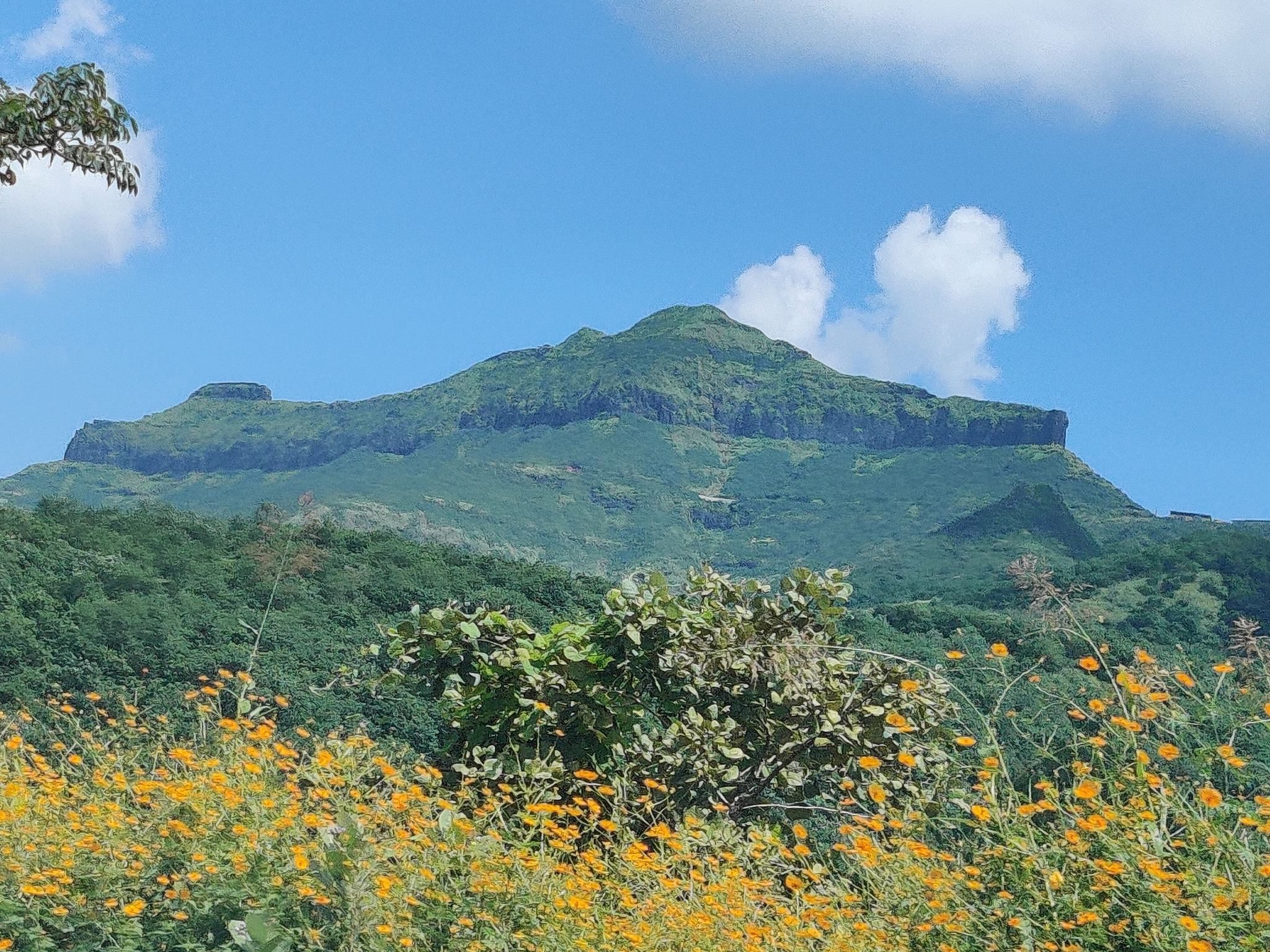
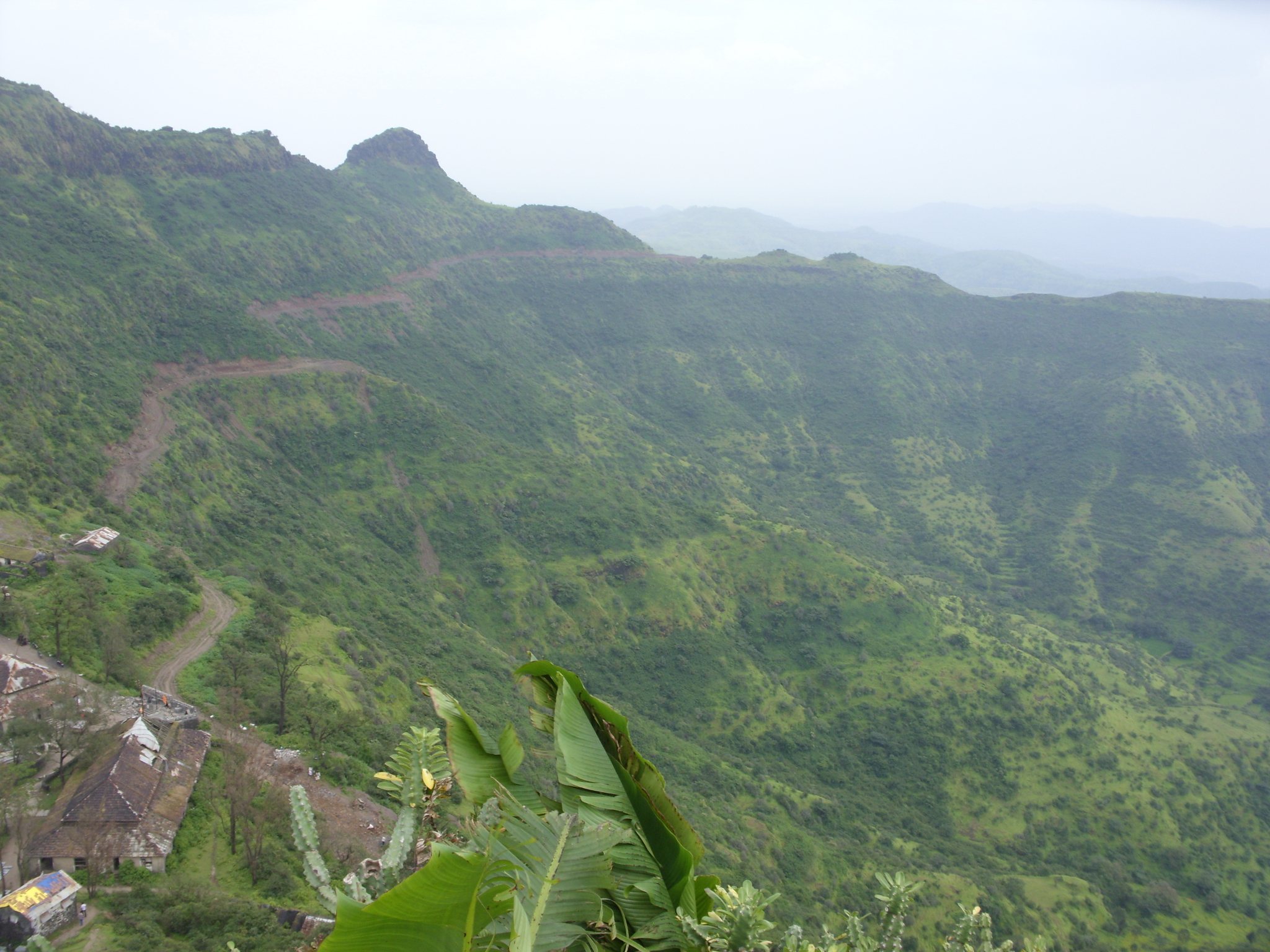
Purandar is a stone-built hill fort in the Western Ghats, standing at 1,374 metres above sea level. It forms a pair with the smaller Vajragad, also called Rudramal, which rises to the east at 1,347 metres. The surviving fort is in ruins and is arranged on two distinct levels, the lower machi, or fortified plateau, and the upper Ballekilla, or citadel.
The Machi
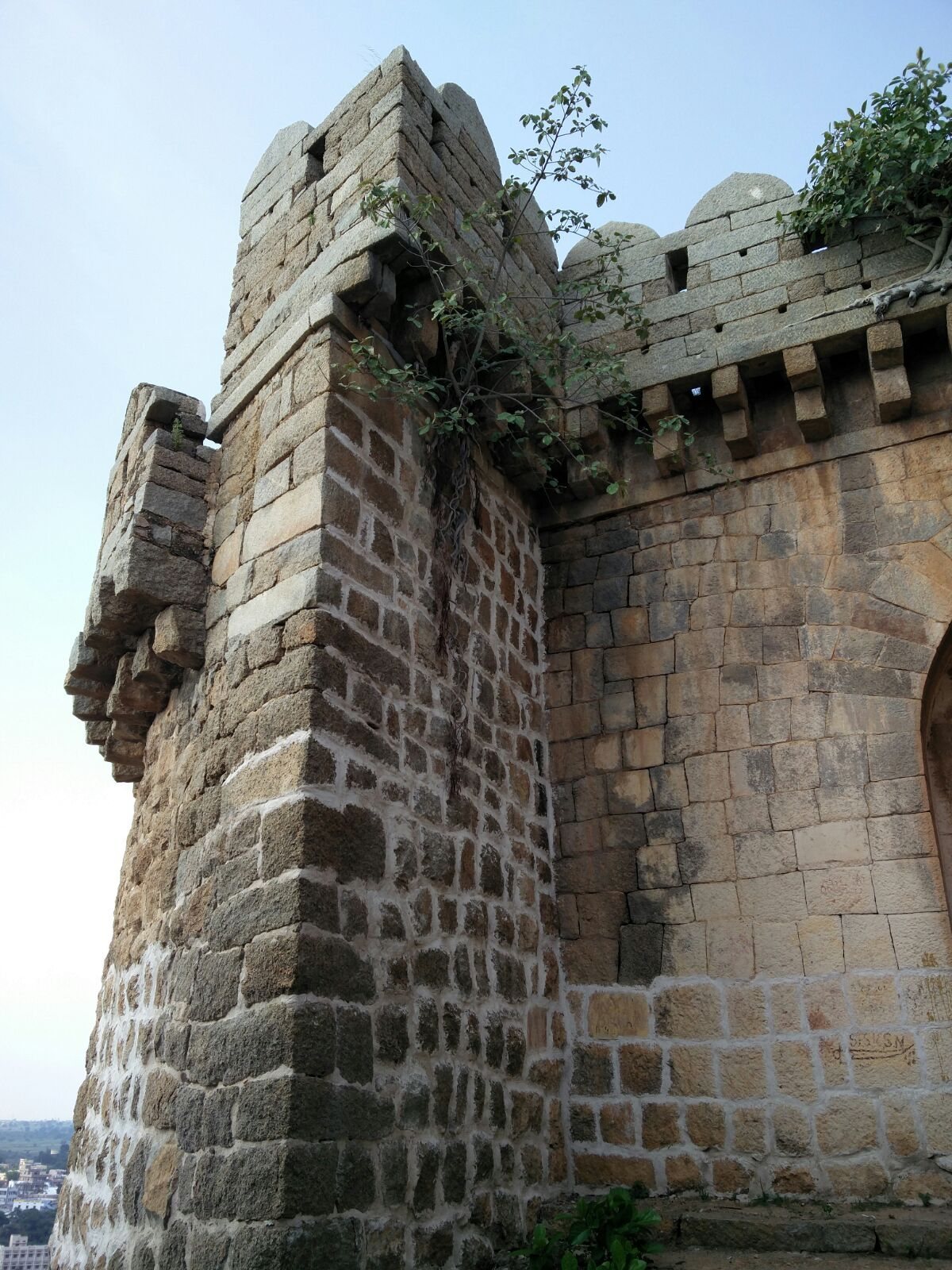
The lower machi includes a flat area north of the main plateau that housed the cantonment and a hospital. Its northern side has a low fall and several bastions, projecting fortified structures from which defenders could protect the walls. An imposing gate at this level is flanked by two towers.
The Ballekilla
A staircase connects the machi with the Ballekilla. The upper citadel is protected by steep drops on three sides. The Dilli Darwaja, or Delhi Gate, is the first Ballekilla structure to come into view, while the ancient Kedareshwar Temple stands within the upper level.
Temples and Commemorative Features
Kedareshwar and Fort Temples
The Kedareshwar Temple in the Ballekilla is dedicated to Shiva. Other temples within the fort are dedicated to Purandareshwar, the fort’s patron deity, and to Sawai Madhavrao Peshwa. A statue of Murar Baji Deshpande commemorates the killedar who was killed defending Purandar during the Mughal siege of 1665.
Narayaneshwar Temple
At Narayanpur, the village at the base of the fort, the thousand-year-old Narayaneshwar Temple survives from the Yadava period. It was built in the Hemadpanthi tradition, a medieval Deccan building style associated with stone construction.