Kardašova Řečice Chateau: A Historic Estate Residence in Czechia
Site at a Glance
- Rating
- 4
- Popularity
- Very Low
- Country
- Czechia
- Primary era
- Early Modern
- Eras represented
- Early Modern
- Civilizations
- Holy Roman Empire, Kingdom of Bohemia
- Site type
- Domestic
- Remains
- Manor House
On this page9 sections
History
Kardašova Řečice Chateau is a historic chateau in Czechia whose associated residential and agricultural complex took shape in the sixteenth century. Its origins lie in the medieval settlement of Řečice, where a parish church and a feudal residence had been established by the turn of the fourteenth century.
Medieval Lords and the Řečice Estate
Before the mid-thirteenth century, the wider area belonged to the extensive holdings of the Lords of Hradec. By no later than the turn of the fourteenth century, Řečice had become a settlement with a parish church and a nearby feudal residence belonging to the Lords of Řečice, a related branch of the Vítkovci, a powerful Bohemian noble family whose heraldic emblem was a five-petalled rose. The founder of the Řečice branch was Ondřej I of Řečice.
After the death of Oldřich III of Hradec, part of the estate was held by Oldřich IV of Hradec. In 1362, he and Ondřej II of Řečice were recorded as joint patrons of the parish church. Before 1367, Oldřich IV exchanged the village of Roseč and its demesne farm for his inheritance in Řečice. That inheritance comprised the market town, associated land, an annual rent of 21 kopas of Bohemian groschen, and 44 houses.
Integration into the Hradec Estate
Under Jindřich IV of Hradec, the market town of Řečice and its fortress became part of the Hradec–Telč estate. In the sixteenth century, Kardašova Řečice, surrounding villages, and three demesne farms formed a separate administrative part of the Jindřichův Hradec estate. A demesne farm was operated directly for the landowner rather than divided among tenants. The revenues of this local unit were used mainly to provide for widows and unmarried daughters of the Lords of Hradec.
A fortress stood near the town, but the Hradec owners also established newer residential and agricultural premises beside the manorial brewery. The complex accommodated employees and included an office for a scribe. During the second half of the sixteenth century, the estate’s owners or senior officials stayed there occasionally, while the estate continued to be administered from Jindřichův Hradec. The local residence was staffed by lower-ranking servants who managed and operated the farm.
Land Reform and Religious Ownership
In 1921, during land reform, the estate holdings of Karel Paar were placed under seizure. The affected properties included the Kardašova Řečice estate with the Dráchov and Pleše farms, as well as the Volanice and Bechyně estates. From 1 October 1922, K. Sedlář, the allocation commissioner of Jindřichův Hradec, began proceedings for the distribution of the Kardašova Řečice estate and its Dráchov, Pleše, and Kardašova Řečice farms.
The State Land Office created a 63-hectare residual estate from the Dráchov farm and sold it to Josef Peterka for 211,500 crowns. A second residual estate, measuring 65 hectares, was created from the Pleše farm and sold to Václav Musil for 204,000 crowns. A residual estate was a reduced estate formed from land remaining after land reform.
The chateau came into the ownership of the Congregation of the School Sisters of Notre Dame in 1930. This Catholic women’s religious congregation is known especially for its educational mission. Restitution returned the property to the congregation during the 1990s, and the chateau now serves as a home for elderly members of the order. Kardašova Řečice Chateau is protected as a Czech cultural monument.
Remains
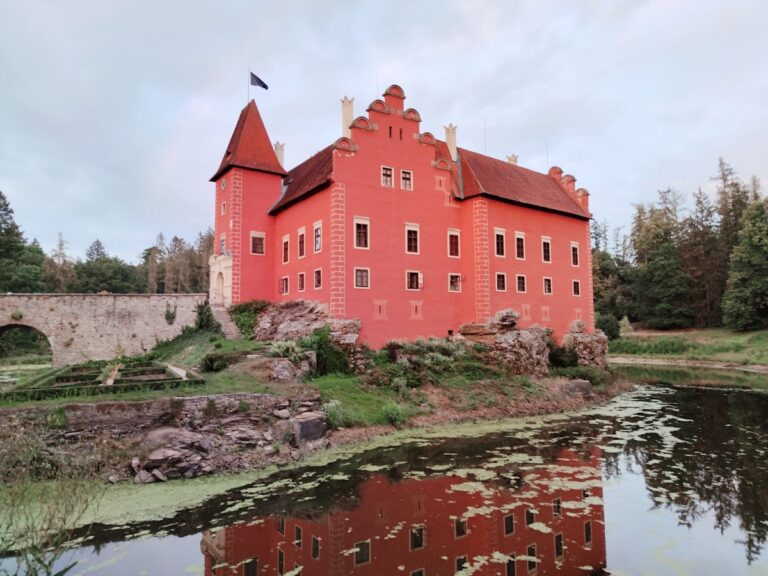
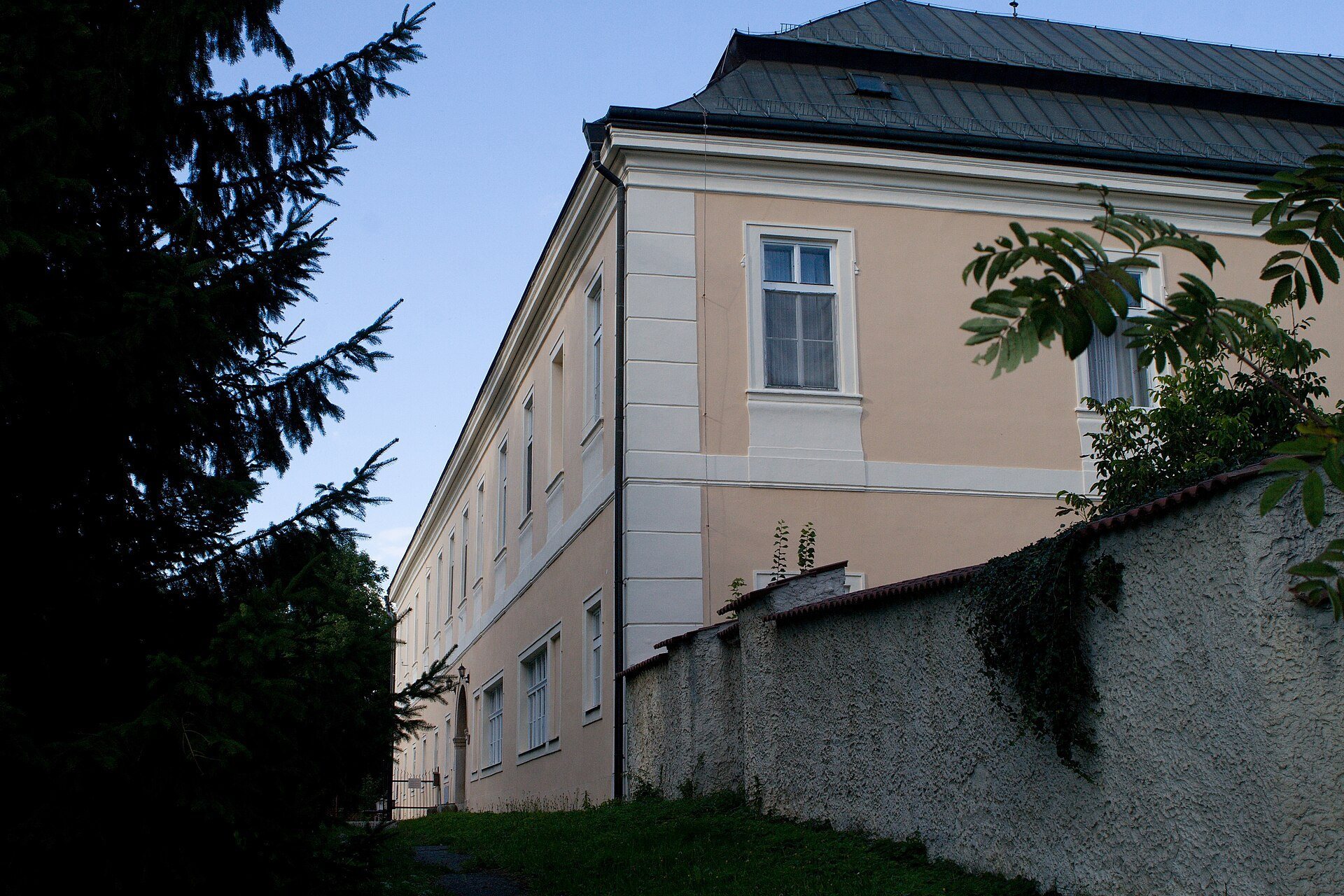
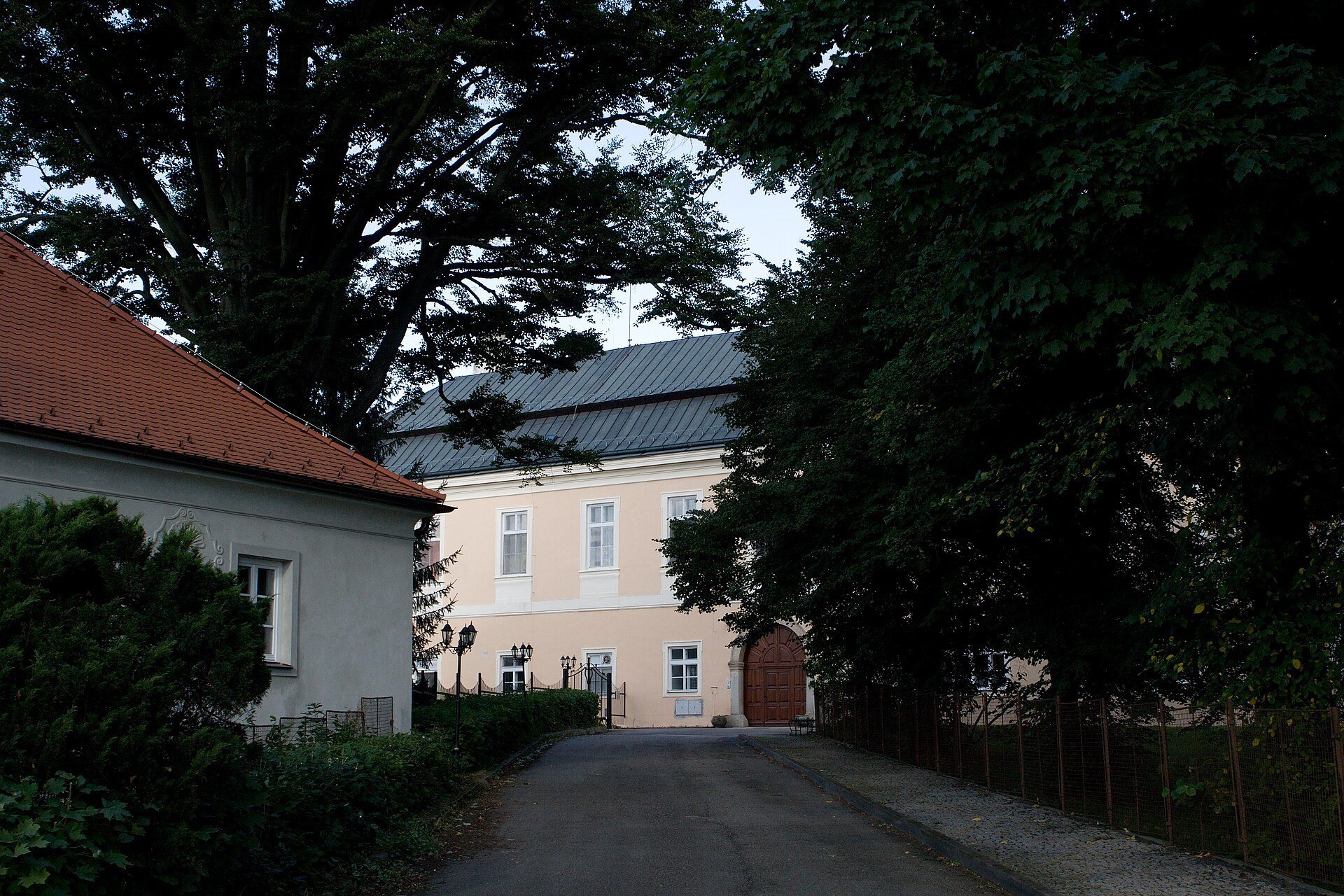
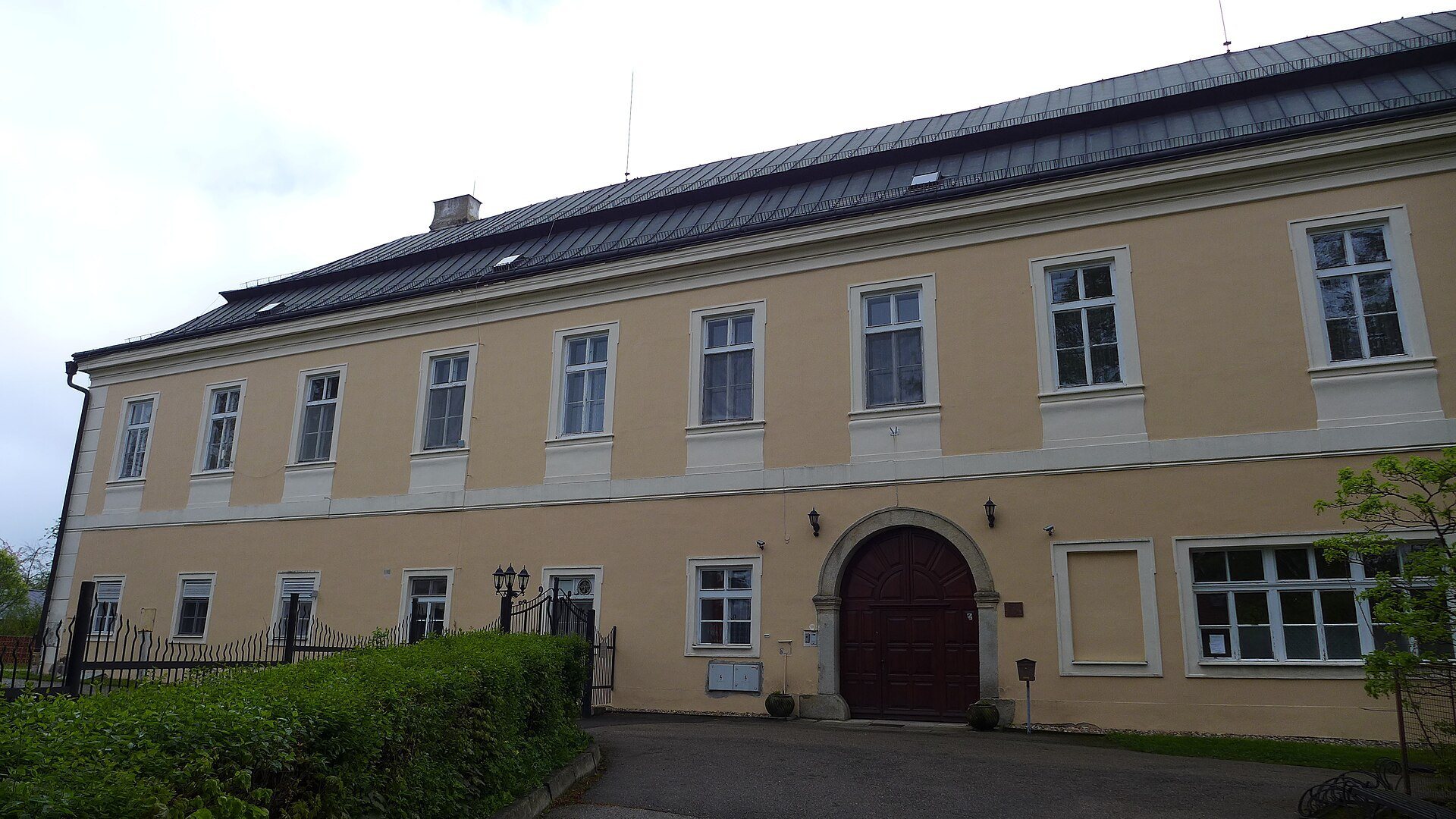
The surviving complex combines the chateau with an English-style park and reflects the estate’s residential and agricultural functions. Its historical arrangement developed beside the manorial brewery, while an earlier fortress stood near the town before the newer premises were established.
Residential and Agricultural Complex
Sixteenth-Century Premises
The sixteenth-century residential and agricultural premises provided accommodation for employees and contained an office for a scribe. They formed part of the estate’s working center beside the brewery, supporting the management and operation of the associated farms. The complex also served as an occasional residence for the estate’s owners or senior officials during the second half of the sixteenth century.
Earlier Fortress
A fortress stood near the town before the construction of the newer residential and agricultural premises. Its presence places the later chateau complex within an earlier local pattern of feudal residence and estate administration.
Park
An English-style park accompanies the chateau and forms part of the protected historic property. The chateau and park are not open to the public.