Lauenburg Castle: An Imperial Hilltop Fortress in Germany
Site at a Glance
- Rating
- 4.6
- Popularity
- Low
- Country
- Germany
- Primary era
- Medieval
- External website
- Open
- Eras represented
- Medieval
- Civilizations
- Holy Roman Empire
- Site type
- Military
- Remains
- Castle
On this page9 sections
History
Lauenburg Castle is a ruined two-part High Medieval hilltop fortress in Germany, built as an imperial castle under Henry IV during the third quarter of the eleventh century. The High Middle Ages, spanning roughly the eleventh to thirteenth centuries, formed the period of its foundation. The complex, which included the Great Lauenburg and Little Lauenburg, was first documented in 1164 and probably took up to ten years to construct. Extending more than 350 metres overall, it was intended to protect Quedlinburg and nearby military roads.
Imperial fortress and medieval conflicts
Lauenburg Castle was associated with the authority of the emperor, whose strongholds served both defensive and administrative purposes. In 1180, during armed conflicts, Frederick I, known as Barbarossa, captured the castle. Frederick was Holy Roman Emperor from 1155 to 1190, and his seizure of Lauenburg brought the fortress into a period of wider political and military contention.
Regenstein and episcopal control
The Counts of Regenstein acquired the castle in 1273, beginning a prolonged power struggle with the Bishop of Halberstadt. Bishop Albrecht II is said to have campaigned against Lauenburg nine times between 1326 and 1351. In 1351, the castle passed into episcopal possession and was then granted back to the Counts of Regenstein as a fief, meaning a territorial right held from a superior in return for service and allegiance.
Later records place the fortress under the Lords of Sommerschenburg. From 1479, its feudal holder was the Quedlinburg collegiate foundation, a religious institution based in Quedlinburg.
Later ownership and dismantling
Among the later owners were Ernst, Duke of Saxe-Gotha-Altenburg, and Albrecht, Duke of Saxe-Coburg. Frederick II of Prussia was also among its owners from 1740. After that date, the castle was sold for demolition. The Prussian state later purchased it for dismantling, after which ownership passed to the city of Quedlinburg and returned to state ownership in 1887.
Remains
Layout and defenses
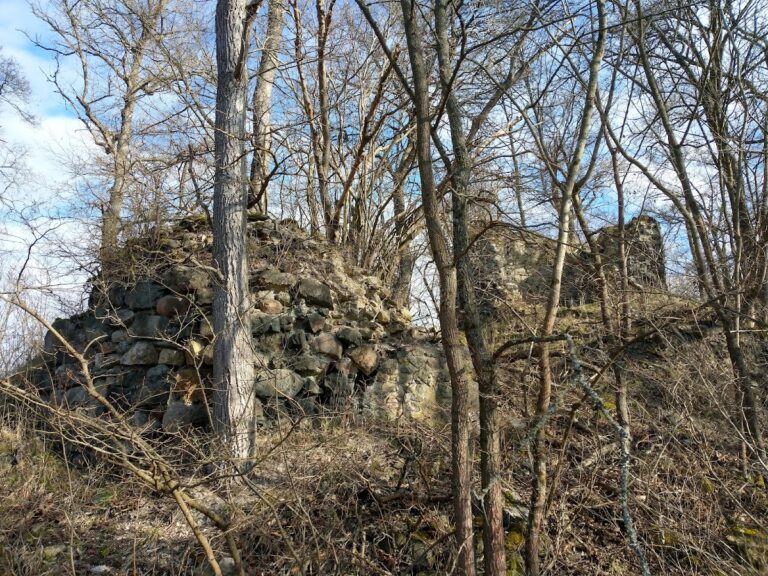
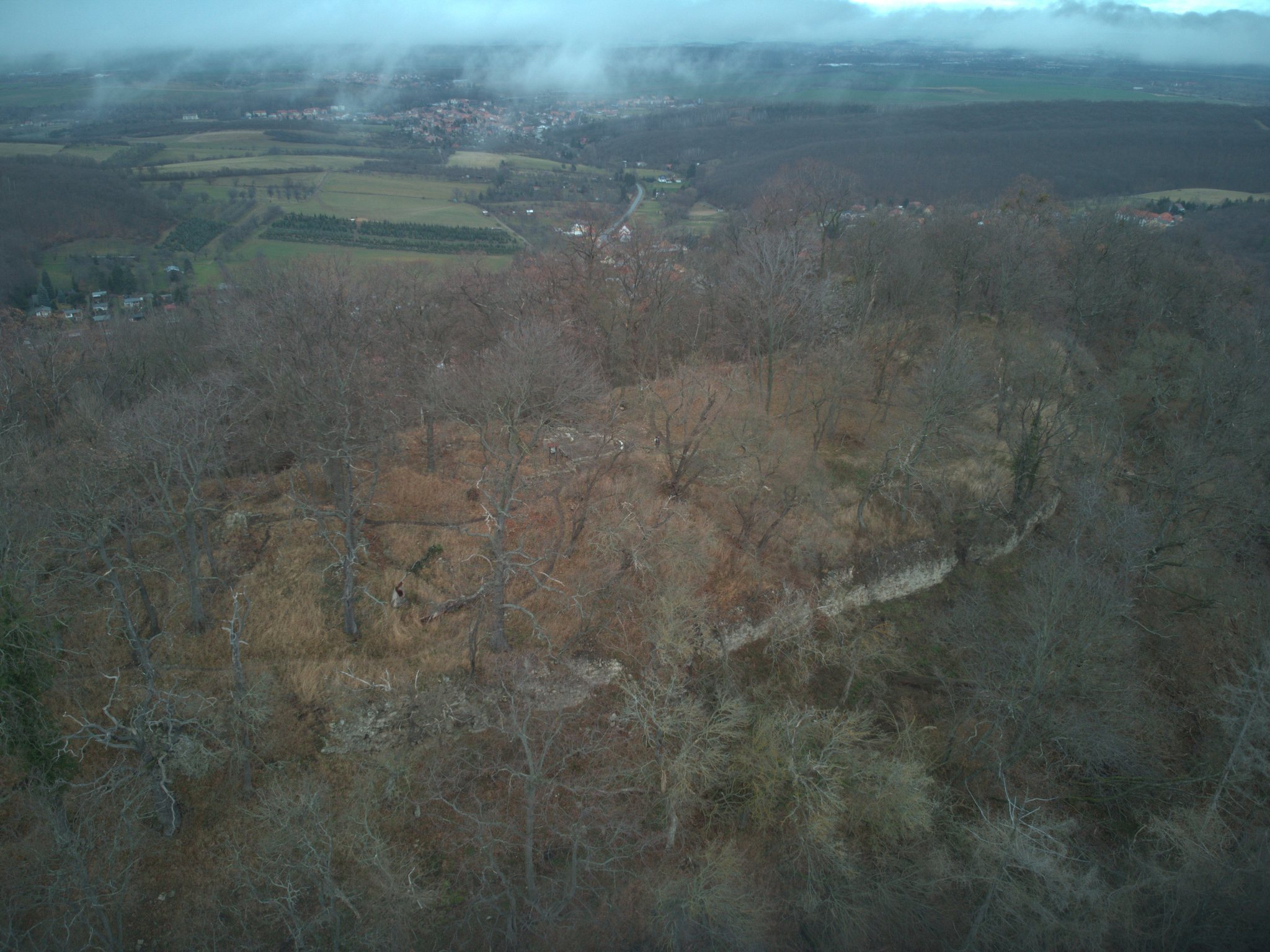
The castle occupies a hill 356.1 metres above sea level on a southwestern foothill of the Ramberg massif, southwest of Stecklenberg. Its two sections, the Great Lauenburg and Little Lauenburg, stand about 200 metres apart. Together they formed a main ward and an outer ward, separated by a substantial rock-cut neck ditch. A ring ditch about 220 metres long, accompanied by an outer rampart, enclosed the entire complex. The ruins of Stecklenburg lie approximately 630 metres to the northeast.
The two castle wards
Great Lauenburg
The Great Lauenburg followed a Romanesque plan, an architectural style of the eleventh and twelfth centuries known for substantial masonry and simple geometric forms. Its oval enclosure measured approximately 25 by 31 metres. A ring wall about 2 metres thick and originally 10 metres high surrounded it, with roughly 5 metres of that wall surviving. Part of the keep, the castle’s principal fortified tower, reaches 12 metres in height.
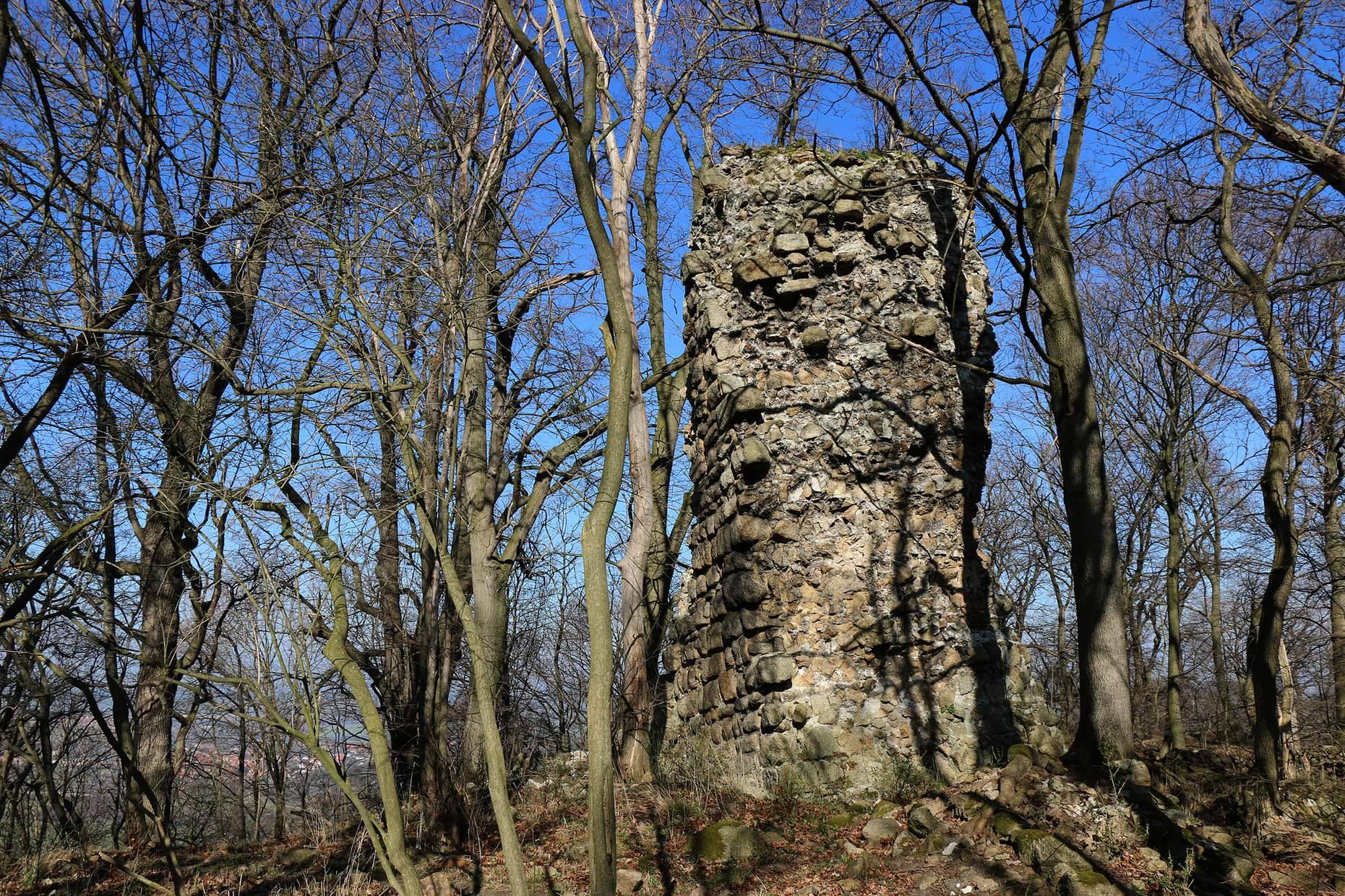
On its western side, the Great Lauenburg was protected by a neck ditch approximately 15 metres wide and 150 metres long. Its pentagonal keep was an unusual feature among Harz castles. Other surviving elements include parts of towers and outer walls, a vaulted structure in the gate area, and a fragment of a building in the western main ward. The main castle is now heavily ruined, leaving only limited remains of its towers and outer walls.
Little Lauenburg
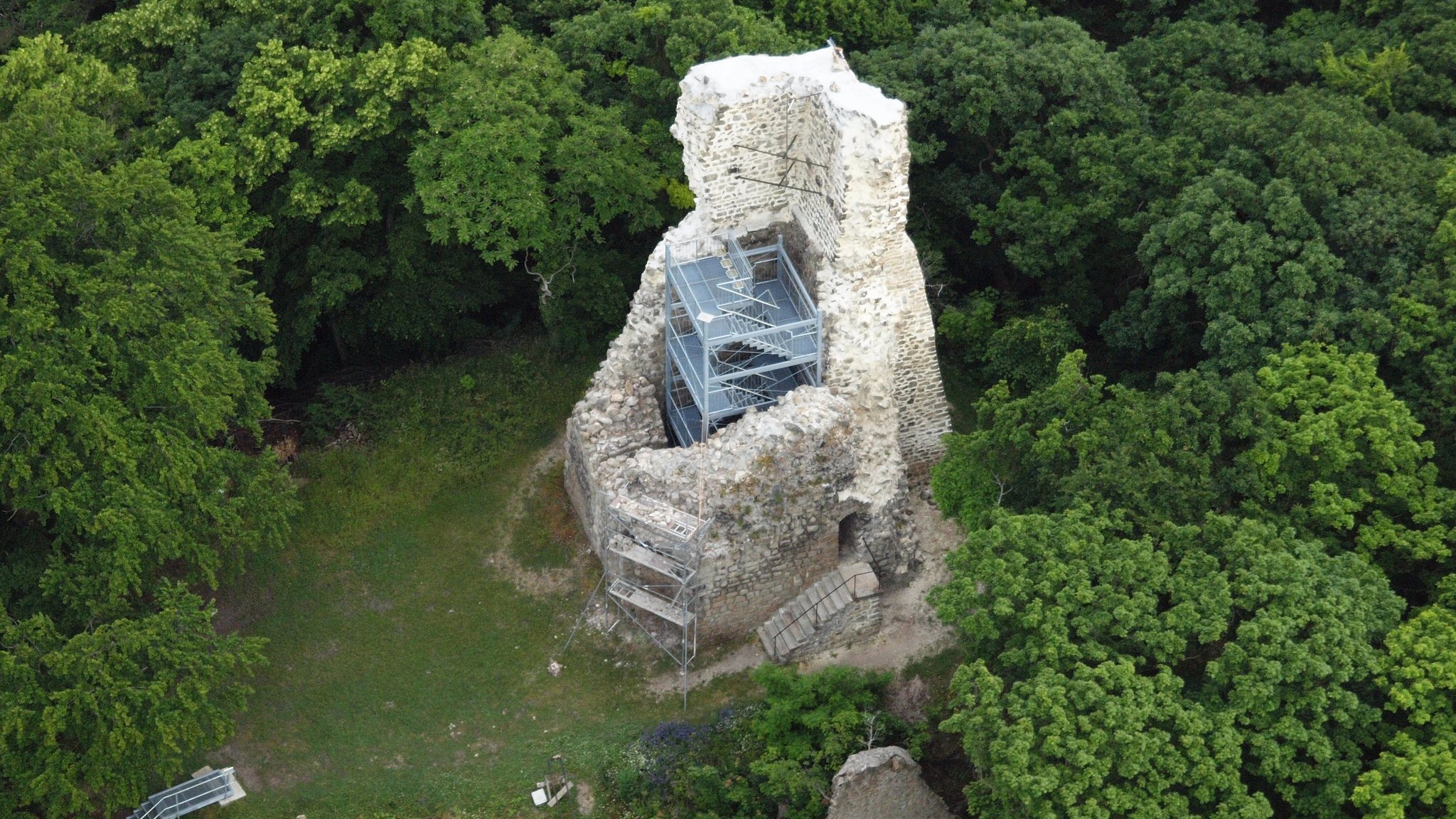
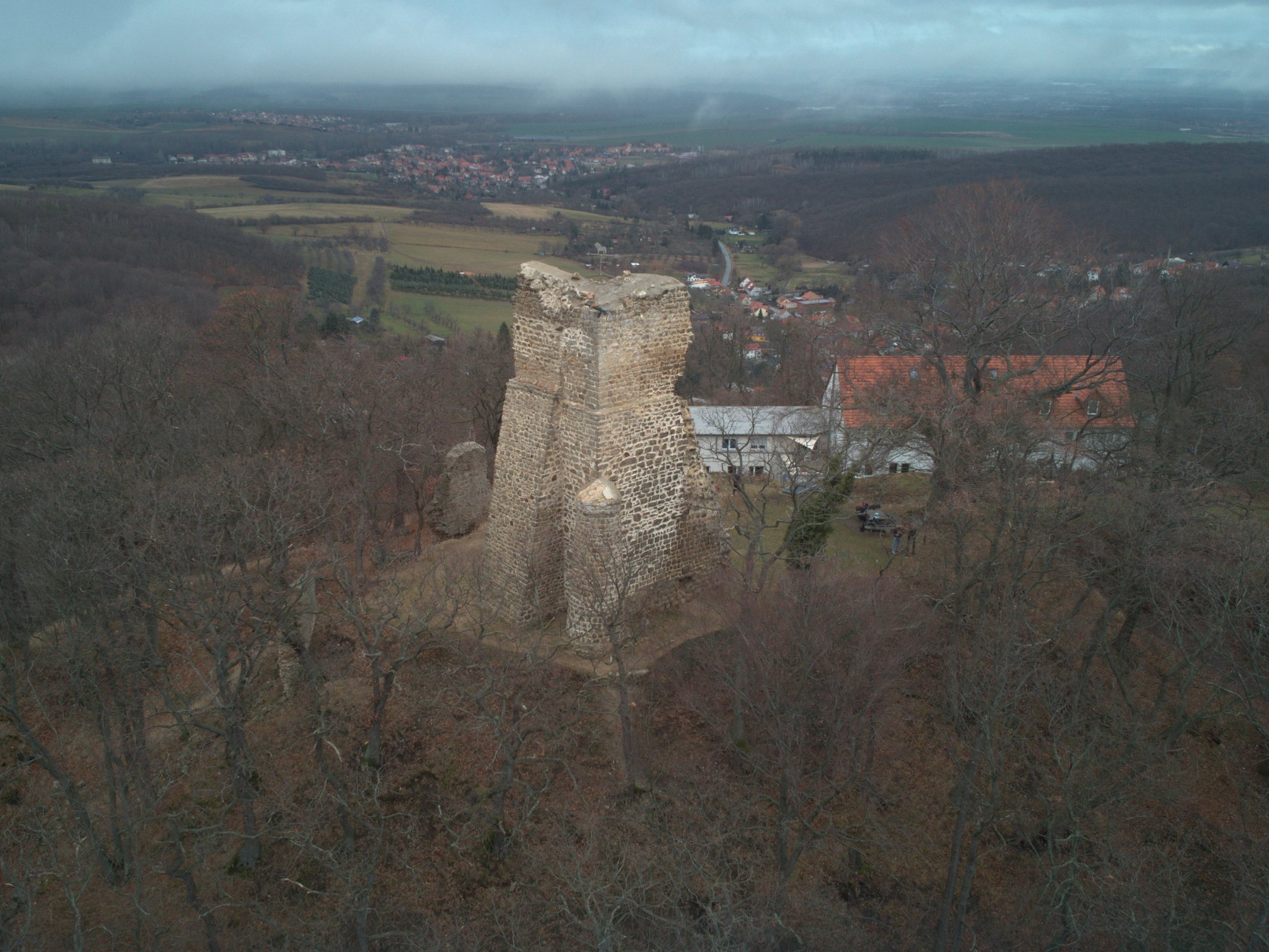
The Little Lauenburg measured approximately 45 by 50 metres. It probably functioned as the outer ward of the Great Lauenburg, although it also formed an independent fortified complex. Its keep measured 10.4 by 10.4 metres, had walls 2.9 metres thick, and originally stood about 30 metres high. Approximately 17 metres of the structure survives. The entrance was elevated, only 60 centimetres wide, and positioned 4.5 metres above ground level. The outer-ward keep is relatively well preserved and remains visible from considerable distance.
A reconstruction model of Lauenburg Castle, made at a scale of 1:20, stands beside the village church in Stecklenberg.