Palace of Heavenly Purity: An Imperial Residence and Audience Hall
Site at a Glance
- Rating
- 4.5
- Popularity
- Very Low
- Country
- China
- Primary era
- Medieval
- Eras represented
- Medieval, Early Modern
- Civilizations
- Unclassified
- Site type
- Civic
- Remains
- Palace
On this page6 sections
History
The Palace of Heavenly Purity is a Ming-dynasty palace in Beijing, China, built in 1420 as part of the Forbidden City. It served as the emperor’s residence during the Ming dynasty, which ruled China from 1368 to 1644. The palace later acquired an important administrative and political role under the Qing dynasty, which ruled from 1644 to 1912.
Ming Imperial Residence
During the Ming period, the palace was the emperor’s living quarters. Its interior was divided into nine rooms on two levels and contained 27 beds. For security, the emperor selected a bed at random each night, a practice that continued into the early Qing period.
Qing Political Center
After the Yongzheng Emperor succeeded his father, the Kangxi Emperor, he chose not to live in the palace that had housed Kangxi for 60 years. Yongzheng and later Qing emperors instead lived in the smaller Hall of Mental Cultivation to the west. From the early eighteenth century, the Palace of Heavenly Purity served as an audience hall. The emperor held court there, met the Grand Council, a senior Qing governing body that advised him on major state affairs, received ministers and emissaries, and hosted banquets.
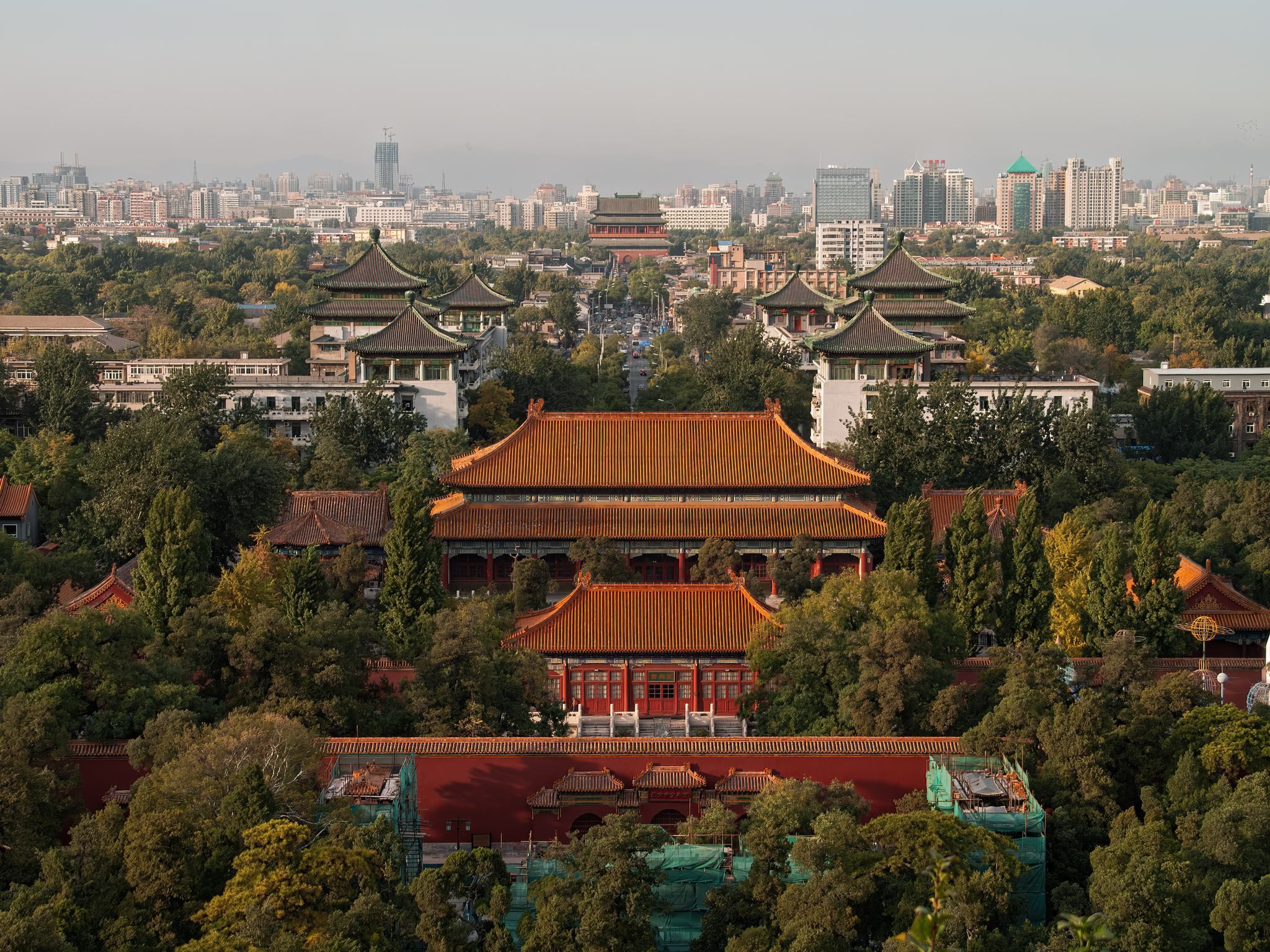
During the late Qing dynasty, the palace was used mainly for political activity. Beginning with Yongzheng, Qing emperors selected their heirs in secret. One copy of the emperor’s will was placed behind the tablet above the throne, while another remained with the emperor. The palace stands at the northern end of the Forbidden City and is the largest of the Inner Court’s three principal buildings. The Inner Court was the Forbidden City’s northern residential and administrative area, separate from its ceremonial outer court.
Remains
Palace Structure
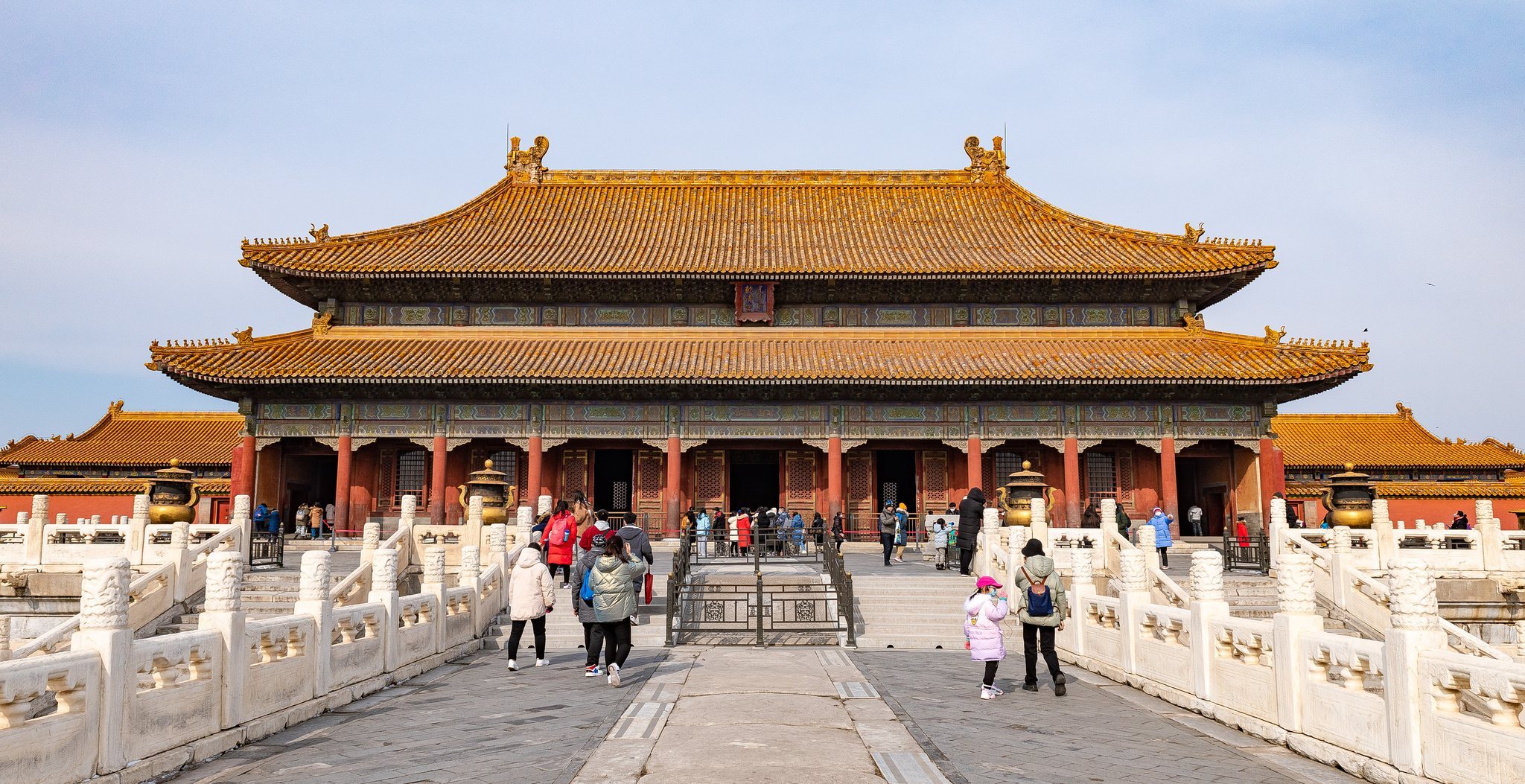
The Palace of Heavenly Purity is a double-eaved building with a hipped roof, standing on a single-level white-marble platform. Nine statuettes line the roof, a mark of the building’s high status; the Hall of Supreme Harmony, the Forbidden City’s most important building, carries ten. A raised walkway links the palace with the Gate of Heavenly Purity to the south.
Throne and Ceiling Features
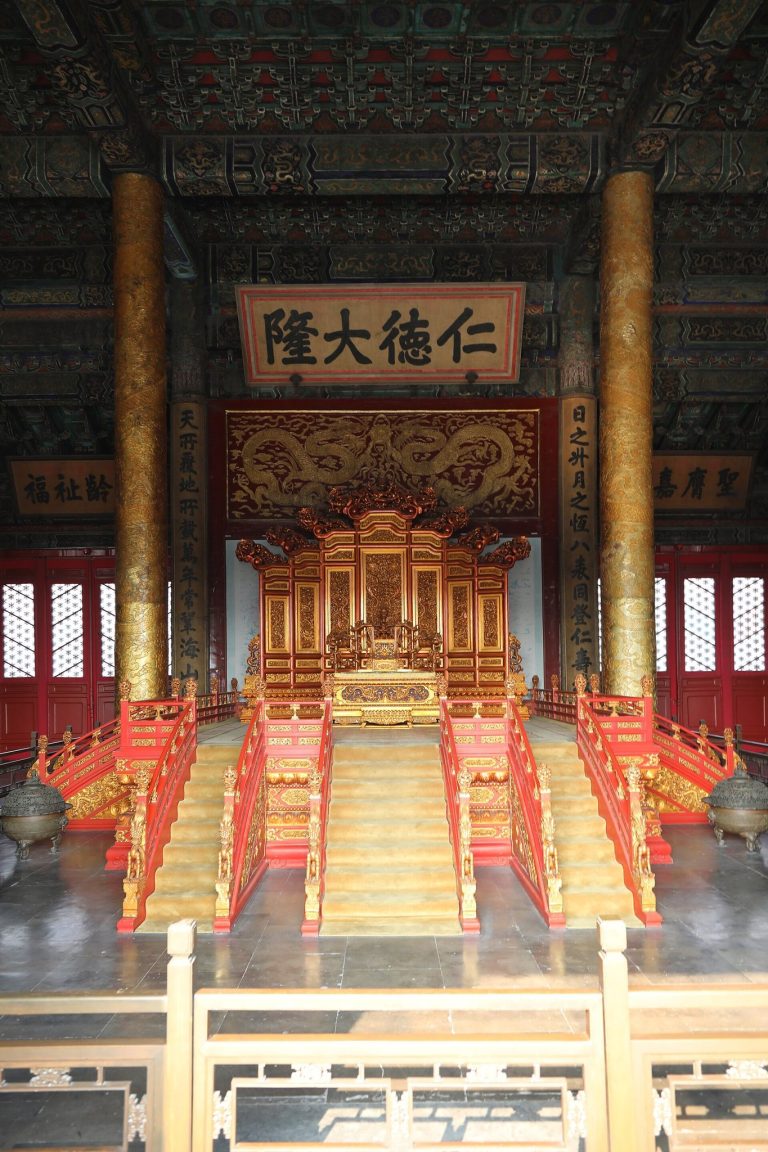
Inside, a recessed ceiling feature called a caisson contains a coiled dragon. At the centre of the palace, an elaborate platform supports the throne and a desk where the emperor wrote notes and signed documents during councils with ministers. Above the throne hangs a tablet bearing the words zhèng dà guāng míng, written from right to left by the Shunzhi Emperor. The phrase has been translated in several ways, including “let the righteous shine.” As a Chinese idiom, it expresses ideals of decency, honesty, magnanimity, and acting openly without concealment.