Citadelle Laferrière: Haiti’s Early-Nineteenth-Century Fortress
Site at a Glance
- Rating
- 4.6
- Popularity
- Low
- Country
- Haiti
- Primary era
- Modern
- External website
- Open
- Eras represented
- Modern
- Civilizations
- Unclassified
- Site type
- Military
- Remains
- Citadel
On this page9 sections
History
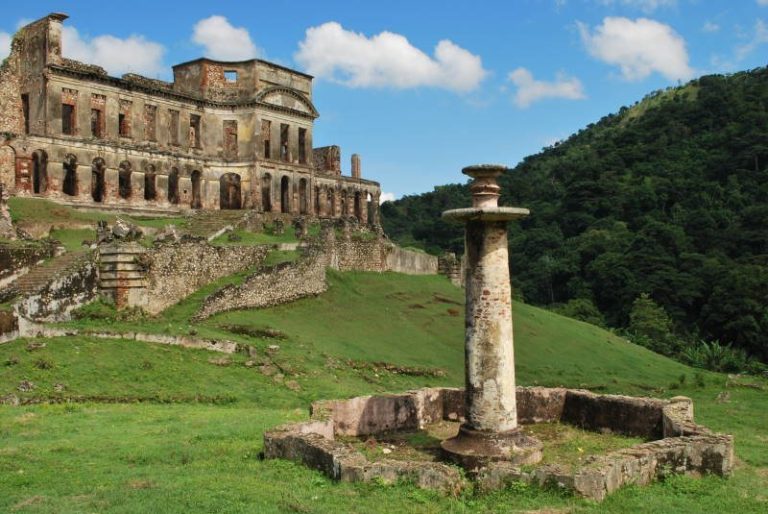
Citadelle Laferrière is a large early-nineteenth-century fortress in Haiti, located above Milot in the country’s north. Built under Henri Christophe between its commission in 1805 and completion in 1820, it formed part of the defensive system of the newly independent First Empire of Haiti. The fortress is regarded as a national symbol and as one of the few military fortifications of African origin in the New World.
Construction under Henri Christophe
Christophe commissioned the Citadelle while he was a general in the Haitian army and chief administrator of the northern region. After the death of Jean-Jacques Dessalines, the first ruler of independent Haiti as emperor, a political struggle divided the country between northern and southern governments. Christophe ruled the north from 1807 and declared himself king in 1811.
Construction on Bonnet à l’Évêque employed tens of thousands of formerly enslaved Haitians and reportedly cost up to 20,000 lives. The mountain site stood several kilometres inland, where its height offered views over the valleys and coastline. The fortress was intended to protect the northern state against a possible French invasion and to serve as a defensible refuge if an invading force reached the island.
A defensive plan that was never tested
Christophe’s strategy called for coastal crops and food supplies to be destroyed during an invasion. His forces would then withdraw to the Citadelle and attack French troops along the single mountain route leading to the fortress. The plan relied on the stronghold’s elevated position, its stores, and the difficult approach through steep terrain.
The anticipated French attack never took place, and the fortress was not used in battle against France. When France recognized Haitian independence in 1825 under an agreement with President Jean-Pierre Boyer, the immediate threat of invasion receded. The Haitian army withdrew, and the Citadelle was abandoned.
Christophe’s final year and the fortress’s later meaning
Christophe suffered a stroke in 1820, after which troops mutinied and opposition increased. He died by suicide later that year. According to tradition, he shot himself with a silver bullet. Loyal followers covered his body with quicklime and buried him in an interior courtyard of the Citadelle to prevent mutilation.
The fortress has since become a national symbol of Haiti. Its image has appeared on Haitian currency, banknotes, postage stamps, and tourism posters. Citadelle Laferrière forms part of the National History Park, which also includes Sans-Souci and Ramiers. UNESCO, the United Nations agency responsible for the World Heritage program, inscribed the property on the World Heritage List in 1982 under criteria (iv) and (vi), with reference number 180.
Repairs and conservation
The Citadelle has undergone repeated repairs and refurbishments since its construction. Conservation and restoration work in the 1980s involved UNESCO and the World Monuments Fund, while later investigations and preservation initiatives also addressed the nearby Sans-Souci Palace. Concerns about deterioration and the safety of the upper levels brought renewed attention to conservation in 2012.
Remains
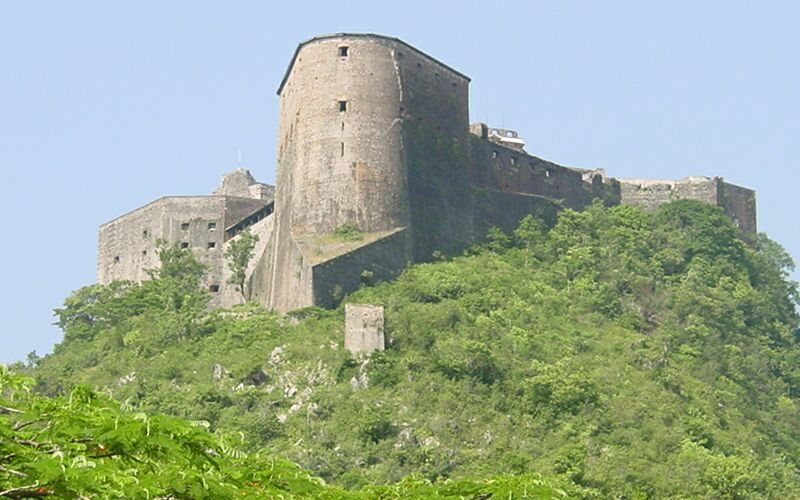
The fortress occupies the summit of Bonnet à l’Évêque at approximately 900 to 910 metres above sea level, about 8 kilometres uphill from Milot and 27 kilometres south of Cap-Haïtien. Its steep slopes provided additional protection and a broad field of observation. The complex covers approximately 10,000 square metres, excluding the surrounding grounds, and its walls rise about 40 metres above the mountaintop. It is described as the largest fortress in Haiti and among the largest in the New World or Western Hemisphere.
Walls and defensive design
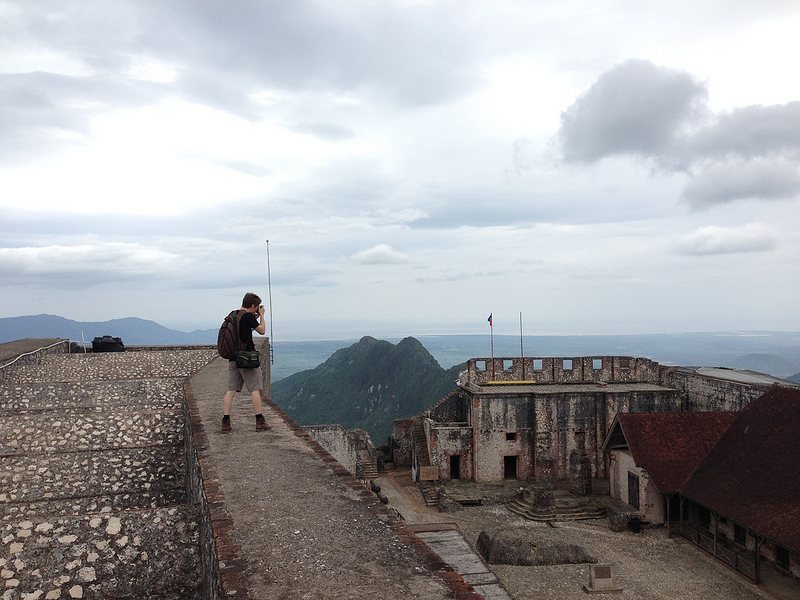
The foundation stones were laid directly on the mountain’s bedrock. Stone, brick, granite, and quicklime form the principal construction materials. The mortar reportedly combined quicklime with molasses, animal blood, and animal hooves cooked into an adhesive. From the fortress, Cap-Haïtien, the adjacent Atlantic Ocean, and the surrounding valleys are visible, while the eastern coast of Cuba may also be seen on clear days.
From the approach trail, the angular mass has been compared to the prow of a large stone ship. Its appearance changes according to the viewer’s position, and some angles were designed to deflect cannonballs. The Epaulette provides an example of this defensive treatment. Most of the fortress has no conventional roof. The upper interior consists largely of a latticework of stone walkways, with some sloping sections covered by bright red tiles.
Weapons and military supply
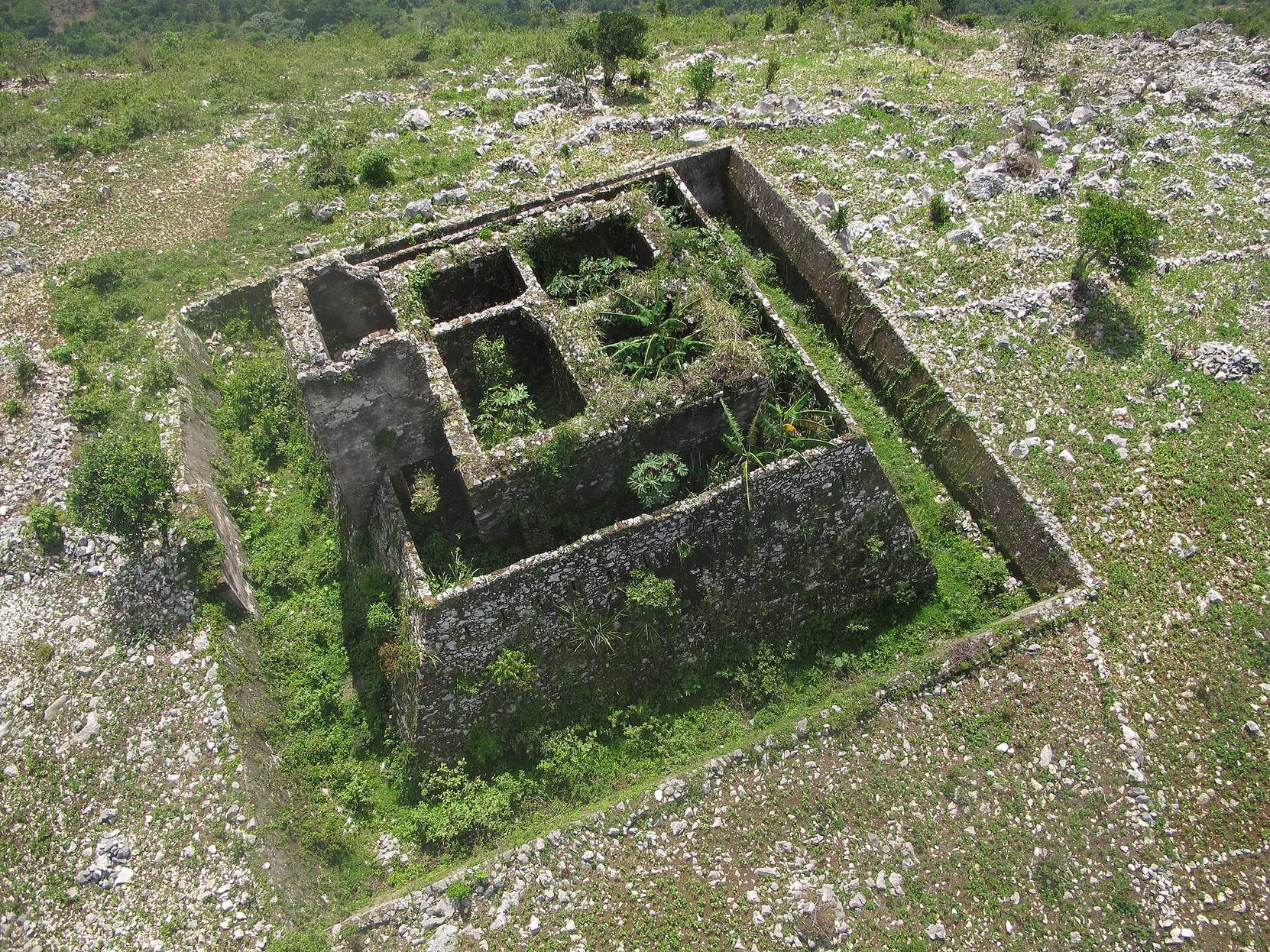
The Citadelle was armed with 365 cannons of varying sizes, assembled from munitions left by European forces that had formerly occupied the island. Pyramidal stacks of cannonballs remain at the base of the walls and in the fortress courtyard. Large cisterns and storehouses were designed to supply food and water for a garrison of 5,000 soldiers for up to one year, supporting the fortress’s intended role as a refuge during an invasion.
Interior facilities and commemorative remains
The complex included royal quarters for Christophe and his family, dungeons, bathing quarters, and bakery ovens. Christophe’s tomb is traditionally identified as being in an interior courtyard. A visible tomb also commemorates his brother-in-law, who was killed when the gunpowder room in which he was located exploded.
The fortress has withstood several destructive earthquakes with little apparent damage, although it has been repaired repeatedly. Relatively little of the original fabric was replaced, and its basic design and layout remain substantially unchanged.