Murud-Janjira: A Historic Island Fortress in Maharashtra, India
Site at a Glance
- Rating
- 4.4
- Popularity
- Very High
- Country
- India
- Primary era
- Early Modern
- Eras represented
- Early Modern
- Civilizations
- Unclassified
- Site type
- Military
- Remains
- Fort
On this page18 sections
History
Murud-Janjira is a historic island fortress off Murud in Maharashtra, India, built as a solid-rock stronghold in 1567 during the early modern period. Its name combines local terms associated with an island, while “Janjira” is linked to the Arabic word jazira. Murud was formerly known in Marathi as Habsan, meaning “of the Habshi” or Abyssinians, a reference to the African-origin Siddis who exercised military and political power in western India. The fortress became the centre of a Siddi-ruled state that resisted repeated efforts by larger regional and European powers to control it.
Early foundations and the solid-rock fortress
Traditions about the first stronghold differ. One account places a wooden garrison on the island in the fifteenth century, established by Koli fishermen from Rajapuri under their chief, Itbarrao Koli. Another tradition attributes the island’s establishment in the sixteenth century to Raja Ram Rao Patil, a patil being a local village or community head. In that version, Piram Khan, an admiral of the Ahmadnagar Sultanate, captured the garrison by entering under the pretence of being a merchant and attacking after a feast.
A separate tradition holds that Abyssinian Siddis established the states of Janjira and Jafarabad in the early twelfth century. After Piram Khan’s capture of the earlier stronghold, the wooden garrison was replaced by a solid-rock fortress associated with Malik Ambar, an Abyssinian military leader and regent of the Ahmadnagar Sultanate. The fortress constructed in 1567 was originally called Jazeera Mahroob Jazeera. These differing traditions preserve several explanations for the origin of the island’s first defenses and the later transformation into a permanent maritime fortress.
Siddi rule and maritime power
The island was controlled by the Adil Shahi dynasty of the Bijapur Sultanate, a major Muslim-ruled state in the Deccan, until the reign of Ibrahim II. Control then passed to the Siddis. Janjira later became autonomous, and in 1621 its commander, Siddi Ambar the Little, successfully resisted Malik Ambar’s attempt to replace him. He is regarded as the first Nawab of the Janjira state, a nawab being a hereditary or appointed provincial ruler or governor.
The Siddis were allied with the Mughal Empire, the major early-modern imperial power in much of South Asia. Janjira and its rulers resisted repeated attempts by the Portuguese, British, and Marathas to capture or subdue the fortress. The island remained unconquered until it became part of Indian territory after independence from British rule in 1947.
Janjira also participated in wider Indian Ocean struggles. In 1539, 200 Malabar sailors from Janjira are said to have joined the Ottoman fleet that reached Aceh before the expedition led by Kurtoğlu Hızır Reis. In 1587, a combined Ottoman and Janjira maritime force is said to have defeated a Portuguese fleet near Yemen. Janjira subsequently played an important part in resisting Portuguese influence in the region.
During the reign of the Mughal emperor Aurangzeb, Sidi Yaqut received a subsidy of 400,000 rupees. He possessed ships weighing approximately 300 to 400 tons. These vessels were unsuitable for open-sea combat against European warships, but they could transport troops for amphibious operations, giving the Janjira state a capability beyond the immediate defense of the island.
Maratha campaigns
The Marathas, a powerful Deccan political and military confederacy, made repeated attempts to overcome Janjira. In 1676, an army of approximately 10,000 Maratha soldiers sent by Peshwa Moropant Trimbak Pingle was repulsed by Janjira’s forces. Shivaji’s troops attempted to scale the granite walls, while his son Sambhaji later tried to tunnel into the fortress. Sambhaji withdrew when a Mughal army attacked the Maratha capital.
To challenge Janjira, Sambhaji built the sea fort of Padmadurg, also called Kasa, in 1676. Its construction lasted 22 years and covered approximately 22 acres. In January 1682, Sambhaji laid siege to Janjira and appointed the Maratha general Dadaji Raghunath Deshpande to begin the operation, promising him one of the eight principal offices of the Maratha Empire if the fortress was captured.
Sambhaji used several strategies during the siege, including the employment of supposed defectors. He also proposed filling a channel approximately 800 yards wide and 30 feet deep with stones and rock fragments to create a causeway to the island. The attempts did not bring the fortress under Maratha control.
Conflict around the Janjira state
Around 1731, a local thanedar, or military and administrative officer, allied with a Muslim Mughal garrison and declared independence. The thanedar and local Kolis then engaged in piracy, attacking ships and disrupting commercial traffic from Surat. Sidi Hilal, a prince of the Janjira dynasty who was ruling Surat at the time, attacked the Kolis, destroyed their boats, captured them, and demanded a large fine.
In 1736, the Siddis of Murud-Janjira fought the forces of the Maratha Peshwa Baji Rao, the chief minister and effective executive authority of the later Maratha state. On 19 April, Maratha forces including Nanaji Surve and Chimaji Appa attacked Siddi forces near Rewas. Approximately 1,500 Siddis, including their leader Siddi Sat, were killed. Peace followed in September, and the Siddis were confined to Janjira, Gowalkot, and Anjanvel. Tulaji Angre captured Gowalkot and Anjanvel in 1745, leaving Janjira as the Siddis’ remaining possession.
Ghosalgad, a separate hilltop fortress approximately 32 kilometres east of Murud-Janjira, served as an inland outpost of the Janjira rulers. Its position differed from the island stronghold, which occupied a rocky maritime site and served as the centre of the state’s coastal defenses.
Remains
Island defenses and entrances
Fortress layout
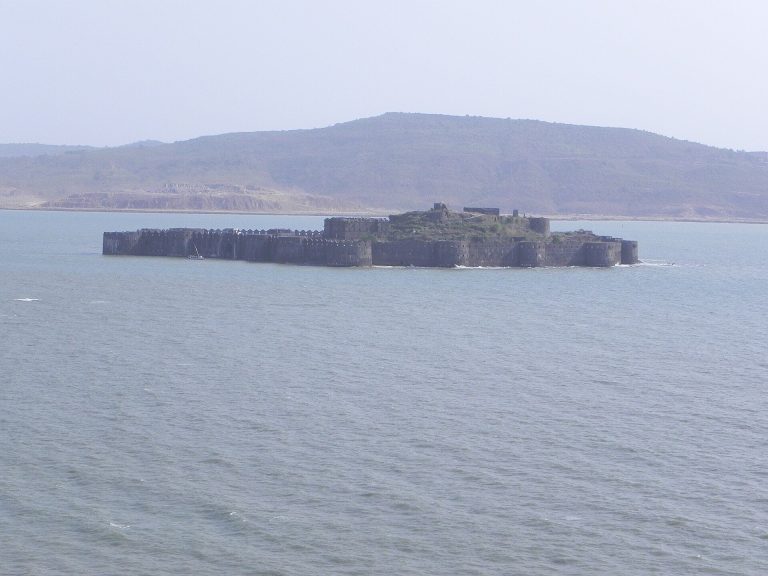
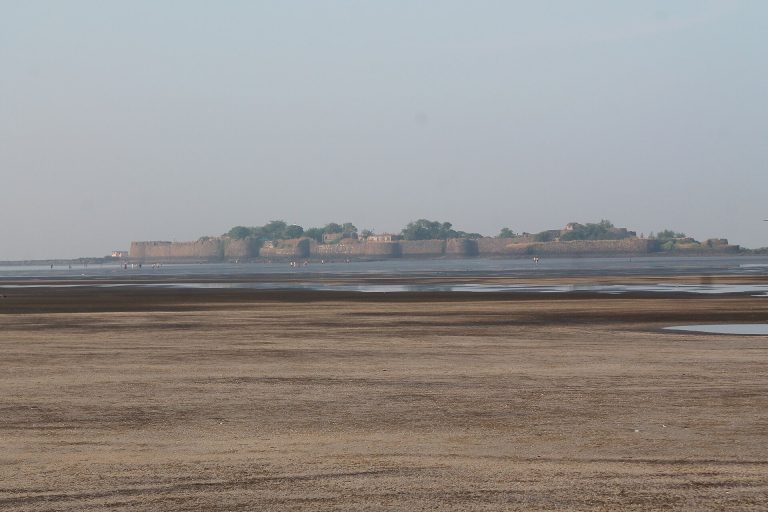
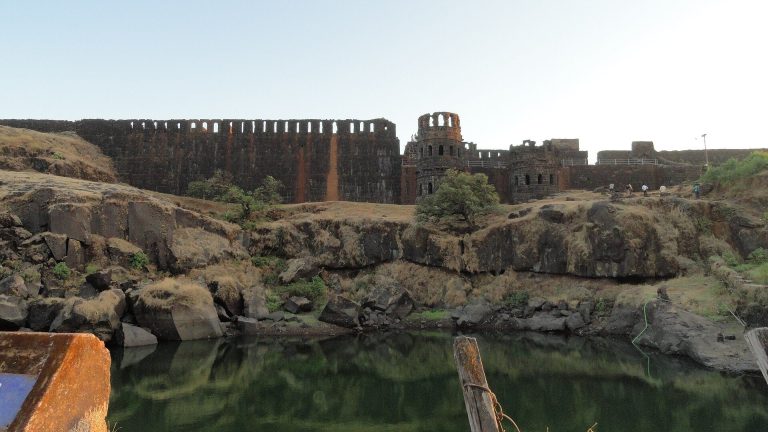
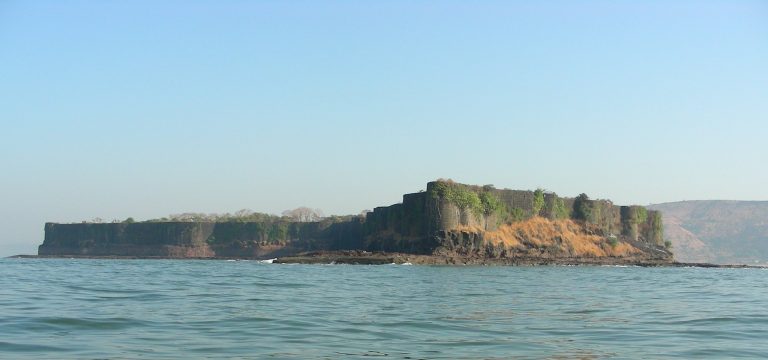
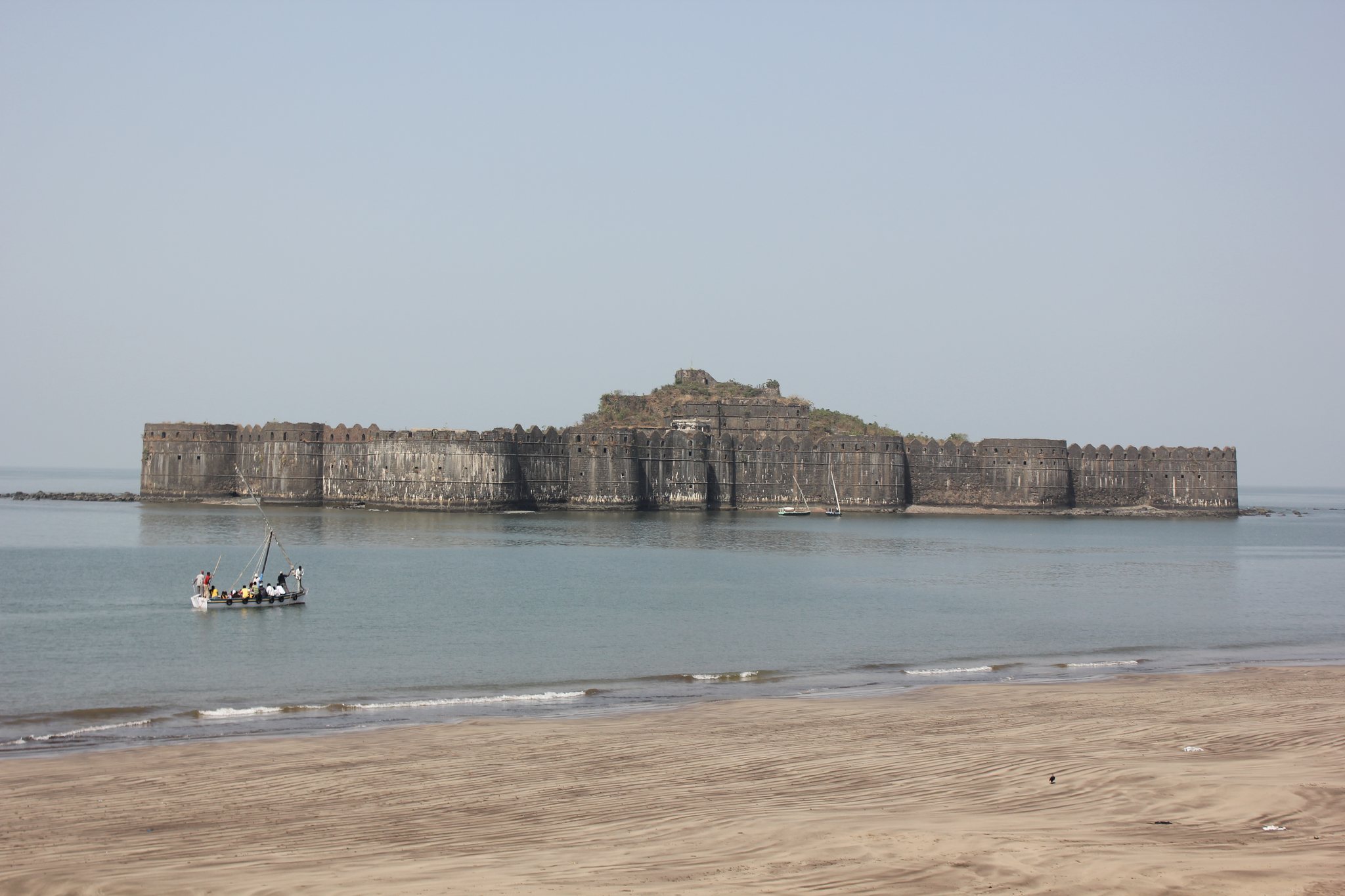
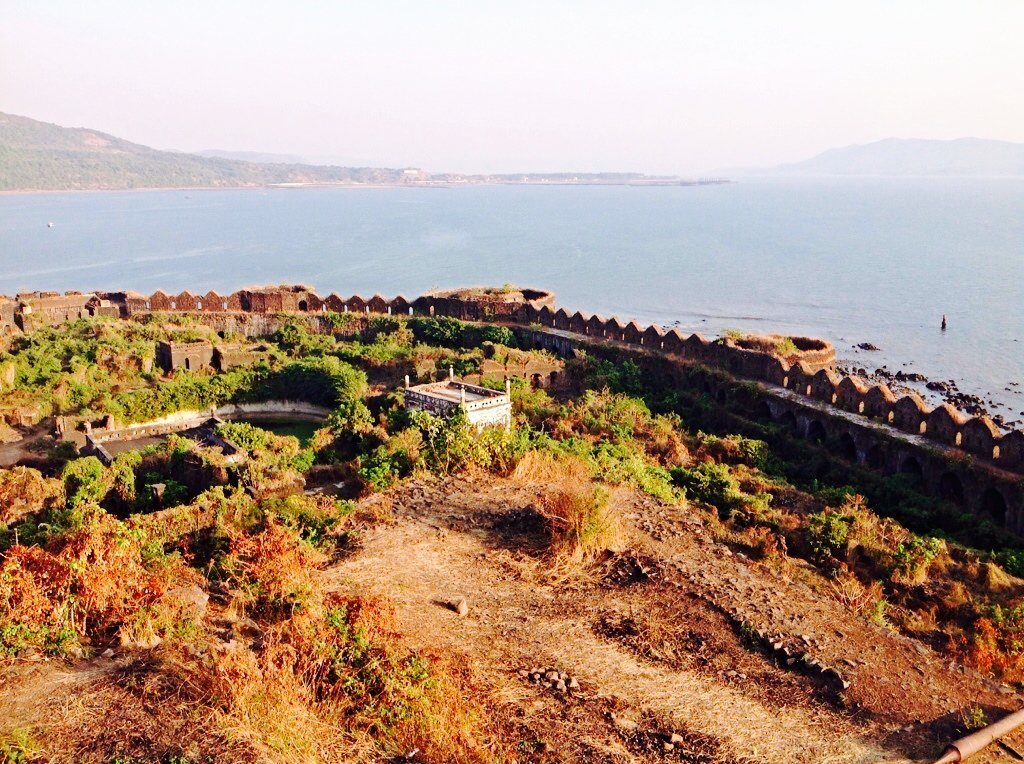
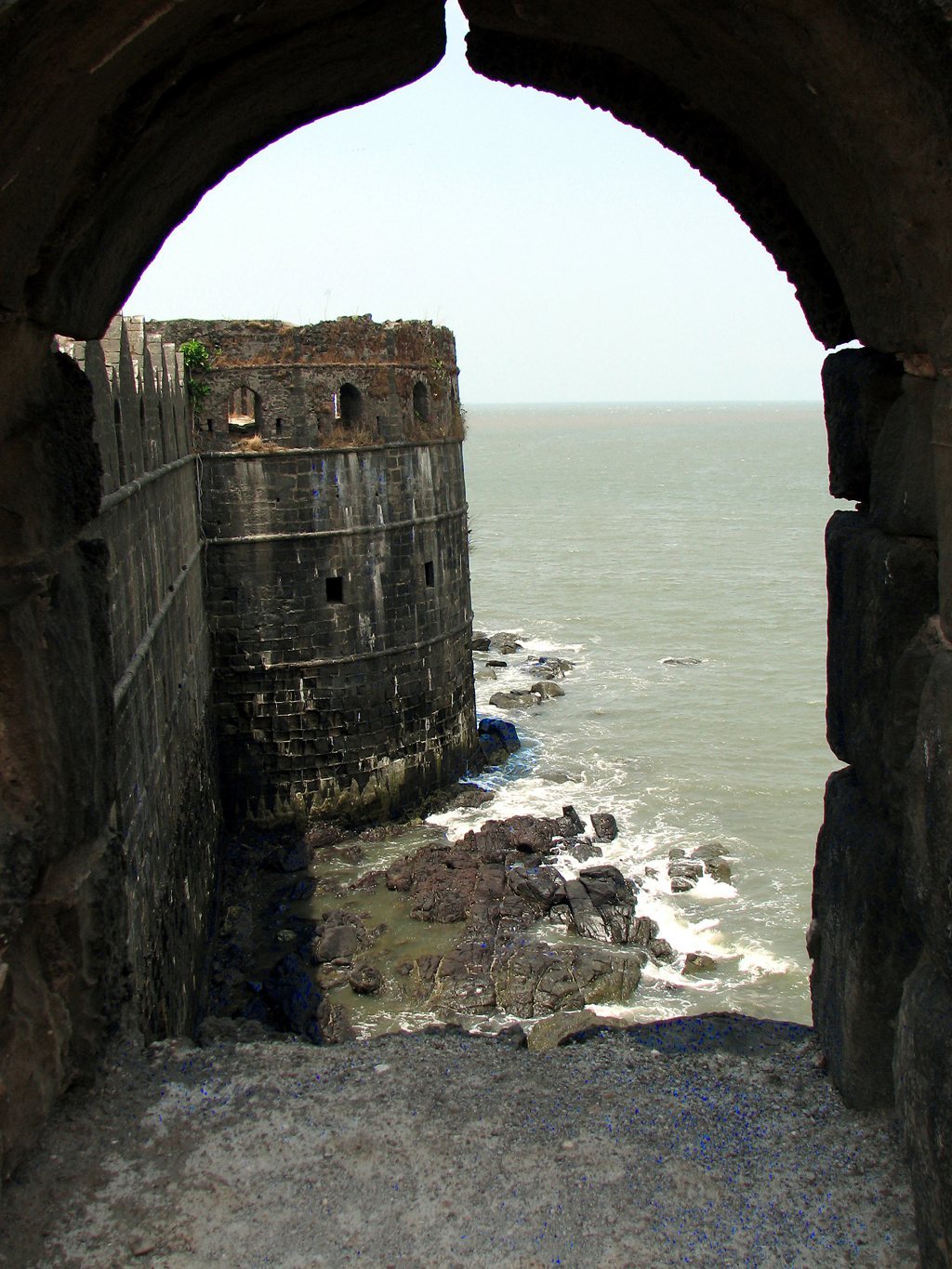
Murud-Janjira occupies an oval-shaped rocky island in the Arabian Sea off the Konkan coast near Murud, approximately 165 kilometres south of Mumbai. The fortress was built directly on the maritime rock rather than on a regular oblong or square plan. Its approximately 12-metre-high walls enclose the surviving remains of a stronghold that once functioned as a complete inhabited settlement. Although the fort is now substantially ruined, its defensive form and relationship to the surrounding sea remain legible.
Main entrance and sea gates
The principal entrance faces Rajapuri on the mainland. Its position is concealed from view until an approach comes to approximately 12 metres from the gate. A small postern, meaning a secondary entrance used for discreet movement or escape, opens toward the open sea. A separate western entrance facing the sea is known as Darya Darwaza.
Bastions and wall openings
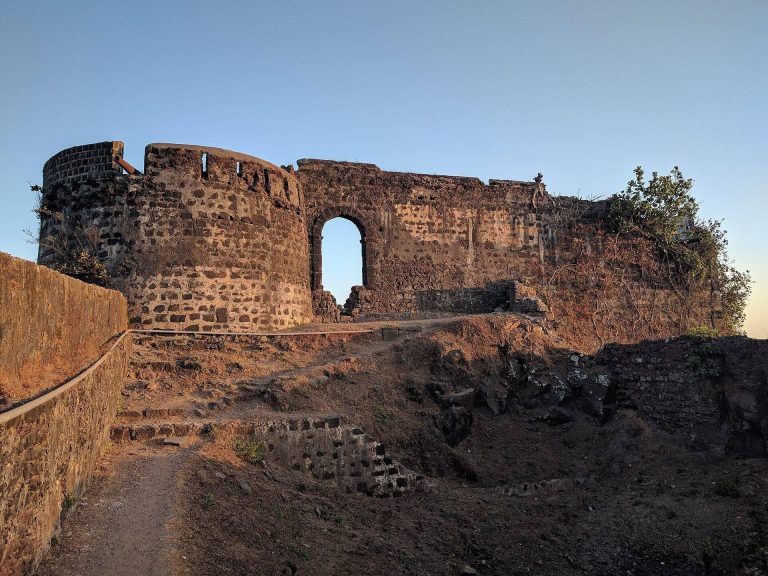
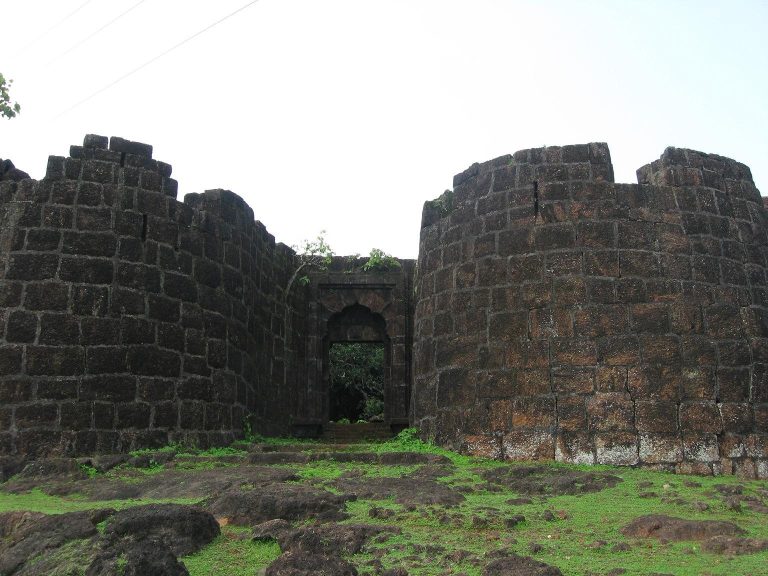
Twenty-six rounded artillery towers, or bastions, project from the fortifications. A bastion is a projecting defensive platform designed to direct fire along the walls. The approximately 12-metre-high walls contain 19 rounded porches or arches, several of which retain mounted cannons. The rounded towers and openings form the principal surviving elements of the fort’s artillery defenses.
Artillery and internal buildings
Cannons
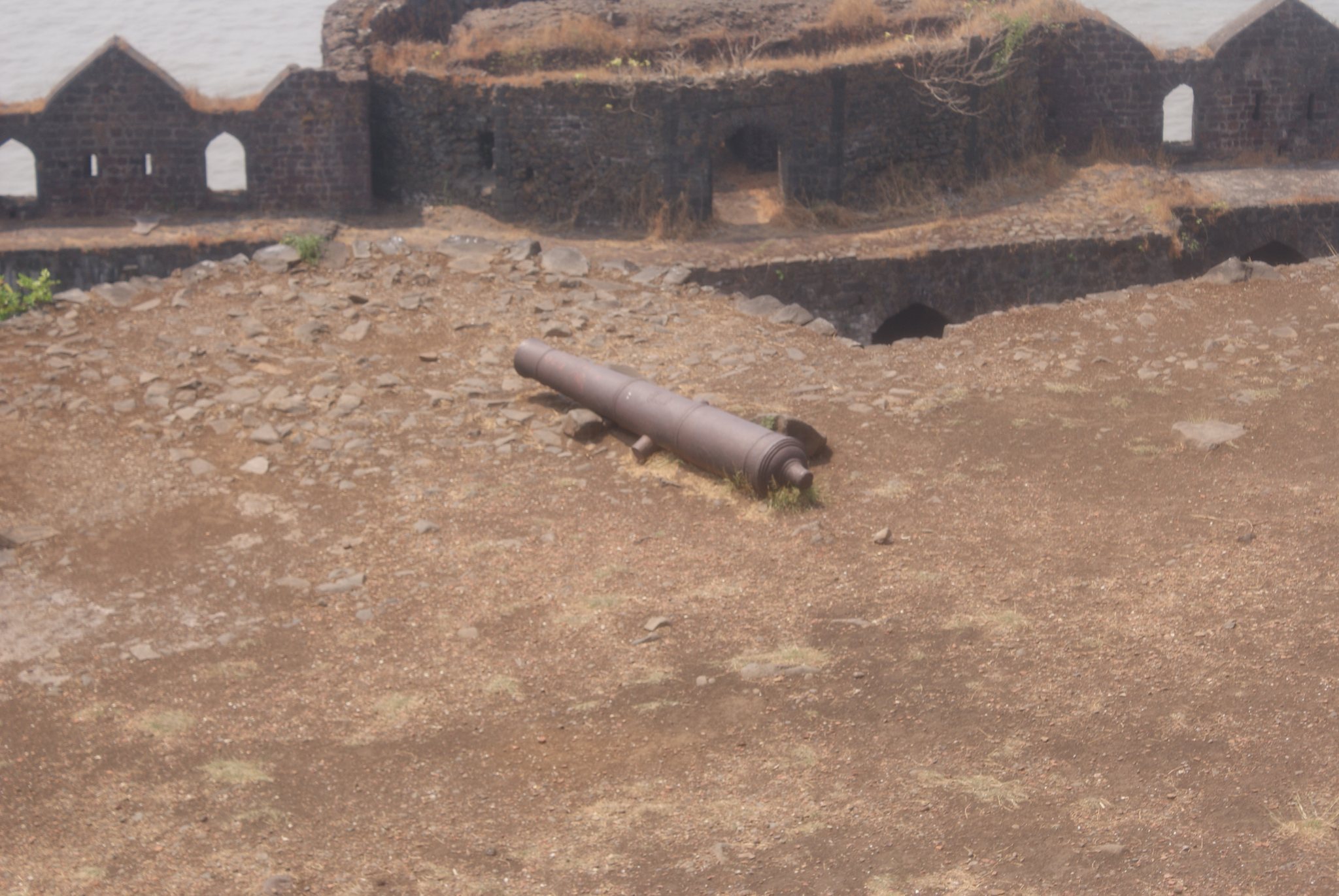
At its height, the fortress held 572 cannons. The surviving artillery includes guns of both local and European manufacture. Three large pieces are known as Kalaal Baangadi, Chavri, and Landa Kasam. Kalaal Baangadi weighs more than 22 tonnes and was one of India’s largest cannons. Its reported range contributed to the formidable reputation of the island’s defenses.
Residential and religious buildings
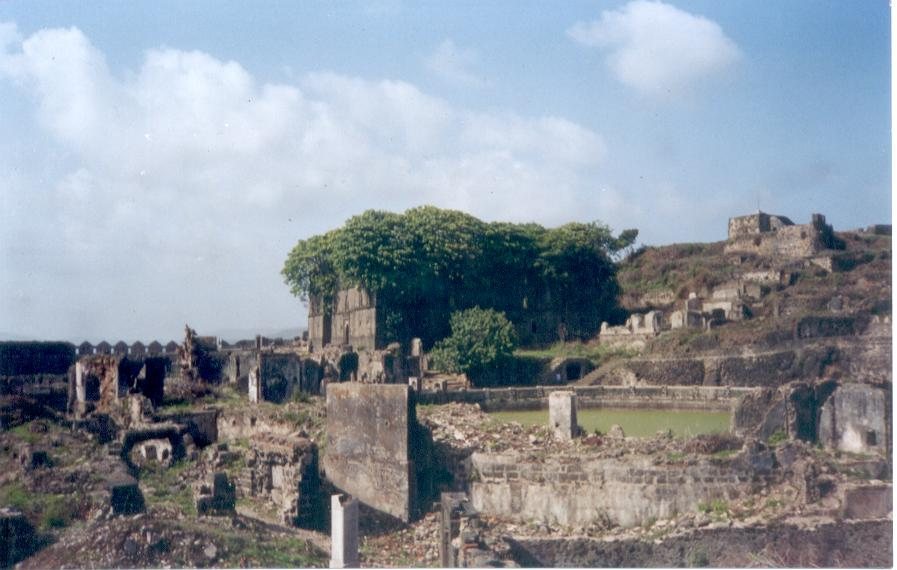
The inhabited stronghold contained barracks, officers’ quarters, palaces, a mosque, baths, and water installations. Quarters within the fort were also occupied by royal women. A luxurious mansion built by a former Nawab of Janjira stands on the island’s outer wall, overlooking the Arabian Sea and the sea fort. The buildings survive within a site that is otherwise substantially ruined.
Water installations
Two small fresh-water ponds supplied the island despite its surrounding salt water. Each is approximately 18 metres deep. A deep well is described as still functional, while channels carried water from streams to the bath. These installations supported permanent occupation and formed part of the fortress’s internal infrastructure.
Carved outer-wall sculpture
A sculpture on the outer wall beside the main entrance shows a tiger-like beast grasping elephants in its claws. It is one of the distinctive carved features associated with the entrance defenses.
Associated mainland and inland structures
Palace at Murud
A palace associated with the Nawabs of Janjira stands at Murud and remains in good condition. It forms a separate mainland structure connected with the ruling house, rather than part of the island fortress itself.
Ghosalgad outpost
Ghosalgad occupies a hilltop approximately 32 kilometres east of Murud-Janjira. It functioned as a separate military outpost of the Janjira rulers, contrasting with the island fort’s rocky maritime position and coastal defensive role.