Elmina Castle: A Portuguese Fortified Trading Post in Ghana
Site at a Glance
- Rating
- 4.5
- Popularity
- Medium
- Country
- Ghana
- Primary era
- Early Modern
- External website
- Open
- Eras represented
- Early Modern
- Civilizations
- Portuguese
- Site type
- Military
- Remains
- Castle
On this page14 sections
History
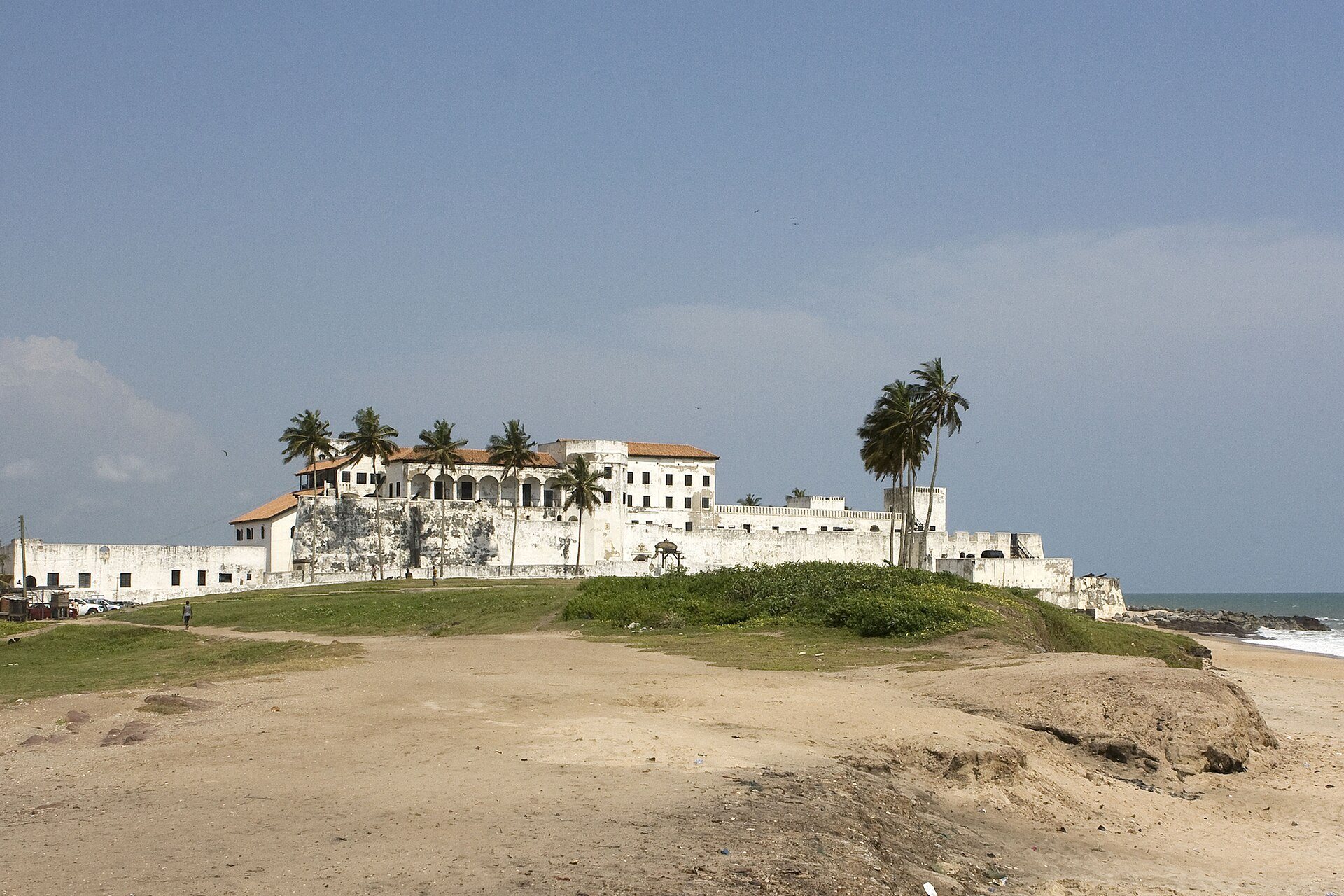
Elmina Castle is a Portuguese fortified commercial complex in Elmina, Ghana, built in 1482 as Castelo de São Jorge da Mina. It was established during Portugal’s expansion along the former Gold Coast and became the first European trading post constructed on the Gulf of Guinea, as well as the earliest surviving European building south of the Sahara.
Portuguese foundation
Portuguese traders reached the Gold Coast in 1471. Fernão Gomes established an earlier trading post at Elmina after finding an existing gold trade involving local communities and visiting Arab and Berber merchants. The name “A Mina” referred to the gold available there. In 1481, King João II ordered a fortified base to protect the gold trade, which had become a royal monopoly.
A fleet of ten caravels and two transport ships sailed from Portugal on 12 December 1481 under Diogo de Azambuja. The expedition carried prefabricated building materials and supplies for 600 men, reaching Elmina on 19 January 1482. Azambuja negotiated with the local chief Kwamin Ansah, also known as Caramansa. Their agreement followed a ceremony involving a feast, musicians, gifts, promises, and implied threats, although Ansah remained reluctant to accept a permanent European settlement.
Construction created conflict. The Portuguese demolished local houses and attempted to quarry a sacred rock believed by Elmina’s inhabitants to be the dwelling of the river god associated with the nearby Benya River. The residents eventually received compensation, but a delay in delivering the promised gifts led to an attack in which several Portuguese were killed. Continued opposition followed, and the Portuguese burned the local village.
Because the building materials had been prepared elsewhere and transported by ship, the first level of the tower was completed in only twenty days. The rest of the fortress and its attached church followed soon afterward despite continued local resistance. Elmina then developed into a town, while the castle took over the military and economic importance previously held by the Portuguese trading station on Arguim Island, off the coast of present-day Mauritania. Azambuja became governor and received the title “Lord of Guinea” from João II, holding the office until his return to Lisbon in 1484.
Gold trade and Portuguese rule
Gold exports from the Gold Coast reached approximately 24,000 ounces annually at the height of the trade in the early sixteenth century. Portuguese pressure led Elmina to declare itself an independent state whose governor controlled the town’s affairs. Portugal offered protection against neighboring coastal groups, but military alliances and the introduction of firearms intensified rivalries and weakened established local social and trading structures.
European involvement also disrupted older trade routes between the coast and the interior. At the same time, cloth and beads became more available, and Elmina’s population grew as merchants arrived to trade with the Portuguese. The authorities initially intended São Jorge da Mina to serve as a transit point rather than participate directly in slave trading, since they did not want to disrupt gold mining and inland commerce. Prisoners were nevertheless brought there from elsewhere, especially from the Slave Coast in Benin and from São Tomé.
The castle in the Atlantic slave trade
By the seventeenth century, Elmina Castle had become a major depot in the Atlantic slave trade, the forced transportation and sale of enslaved Africans across the Atlantic to colonies in the Americas. Enslaved Africans from different West African kingdoms were held in the castle before being sold first to Portuguese and later to Dutch traders in exchange for goods including textiles and horses.
Captives were transported across the Atlantic, including to Brazil and other Portuguese colonies, through the castle’s “Door of No Return.” This role connected the fortress directly to the wider system of forced labor and overseas commerce that shaped European colonies in the Atlantic.
Dutch, British, and Ghanaian administration
The Dutch unsuccessfully attacked the castle in 1596 but captured it in 1637. Elmina then became the capital of the Dutch Gold Coast. The Dutch continued the Atlantic slave trade until 1814, when they abolished it under the Anglo-Dutch treaty concerning the slave trade. During Dutch rule, they also built the smaller Fort Coenraadsburg on a nearby hill to protect the castle from attacks from the interior.
In 1872, Britain acquired the Dutch Gold Coast and the castle through Anglo-Dutch agreements associated with the 1871 Treaty of Sumatra. After Ghana became independent from Britain in 1957, control of Elmina Castle passed to the Ghanaian state. The Ghanaian government undertook extensive restoration during the 1990s, with further work continuing afterward.
Elmina Castle is preserved as a national museum of Ghana and was designated in 1979 as part of the UNESCO World Heritage site comprising Ghana’s forts and castles. It is also a pilgrimage destination for many African Americans seeking connections with African heritage. In 2006, the Zamani Project created a terrestrial three-dimensional laser survey, producing a permanent digital record for research, education, restoration, and conservation.
Remains
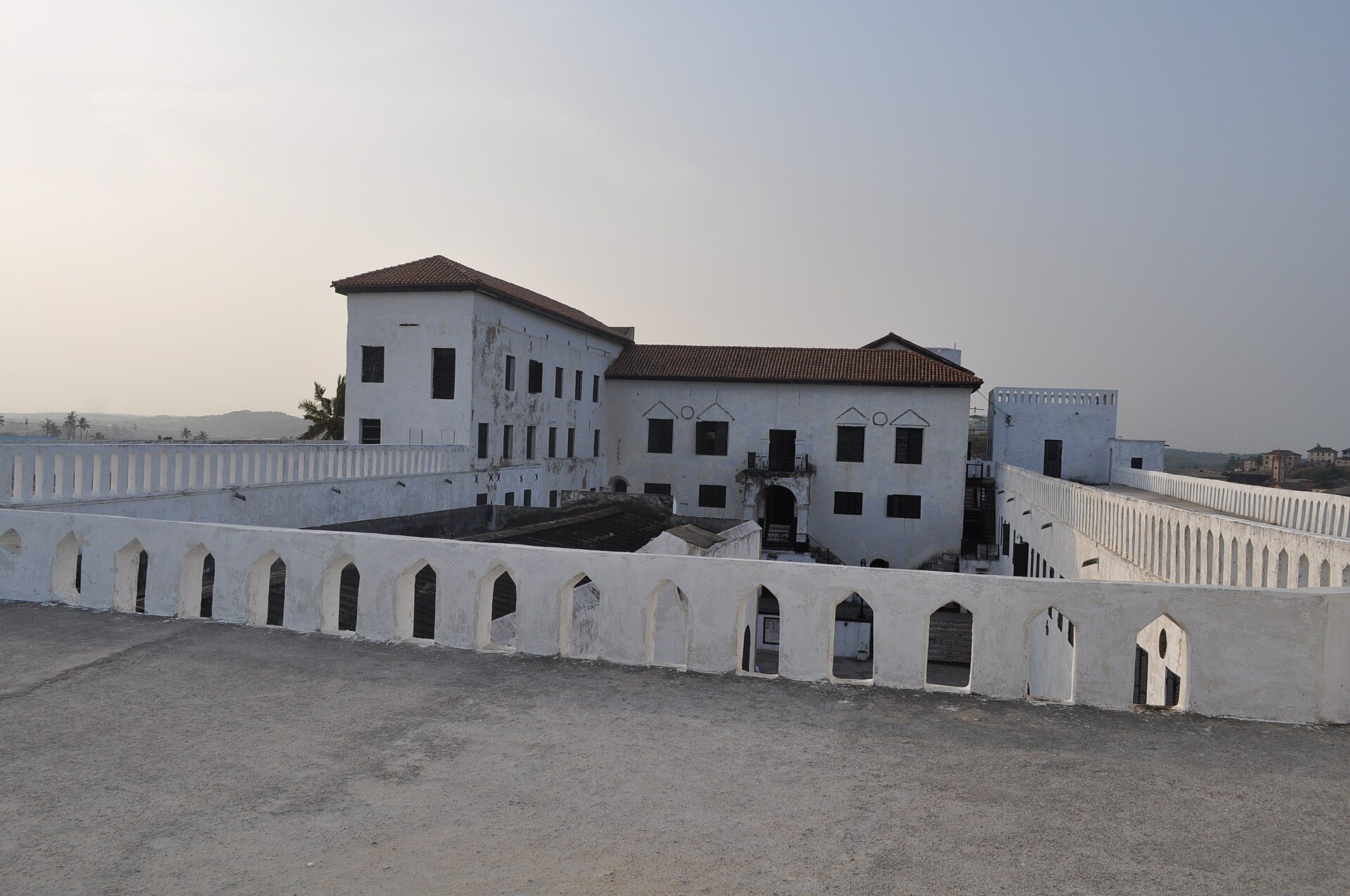
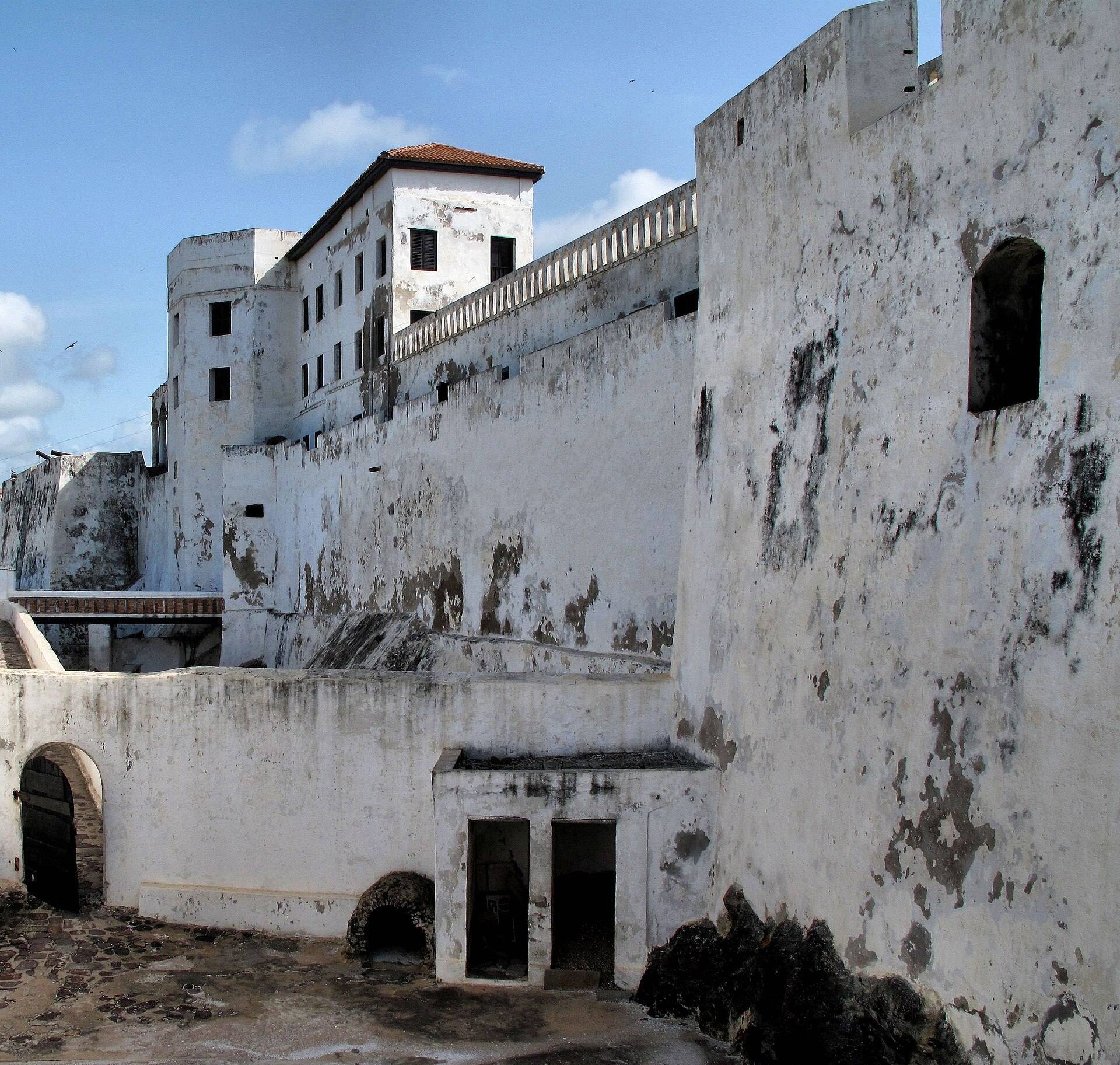
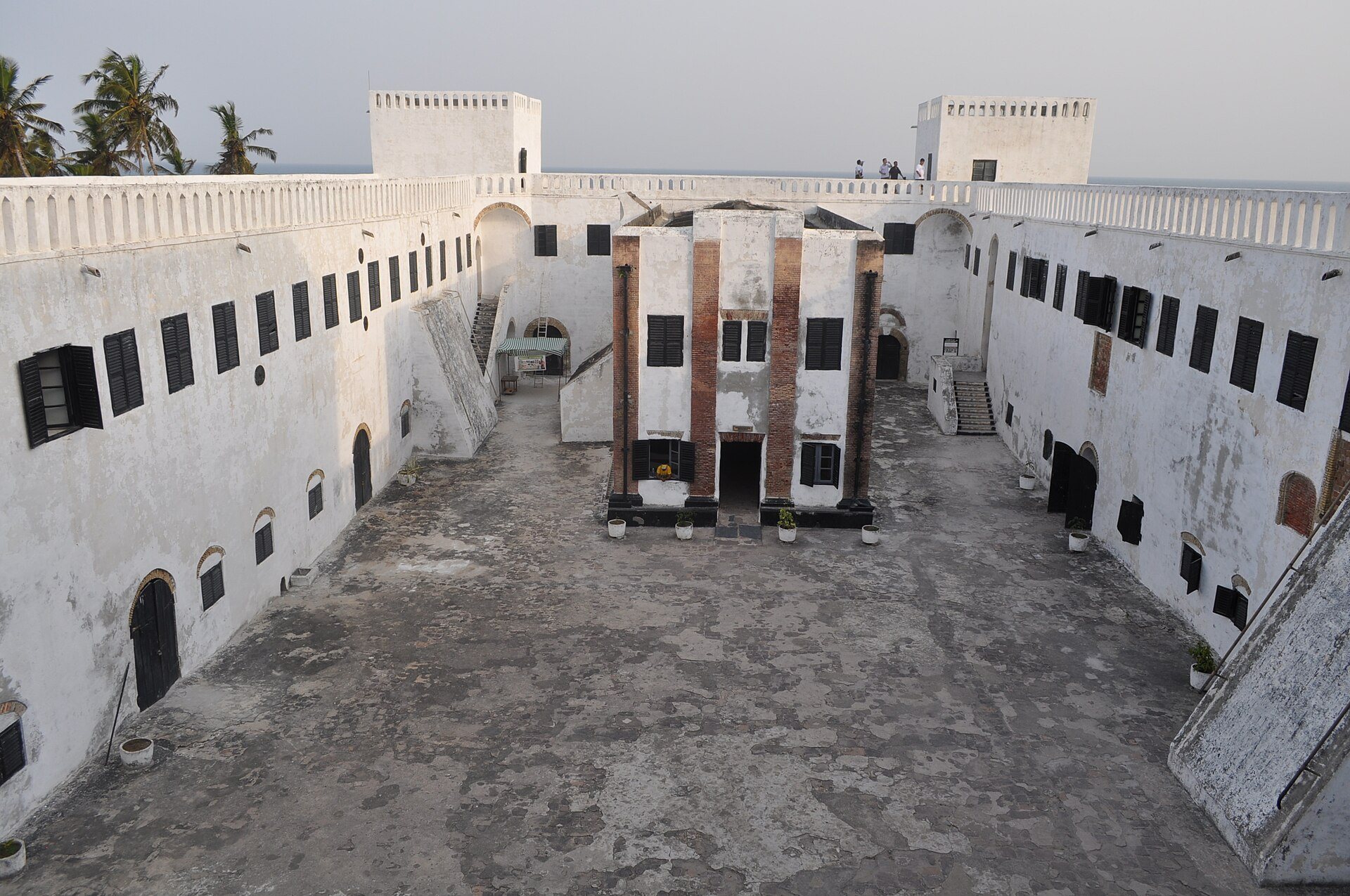
Elmina Castle survives as a fortified commercial complex built on the most defensible position of the Elmina peninsula. Its construction used prefabricated components transported from Portugal, including heavy foundation stones and roof tiles. The complex combined defensive works, commercial and residential spaces, a church, and areas used to confine enslaved people. The first level of its tower was completed in twenty days, while the completed fortress included the main castle and an attached church.
Fortifications and principal buildings
Defensive works and entrance
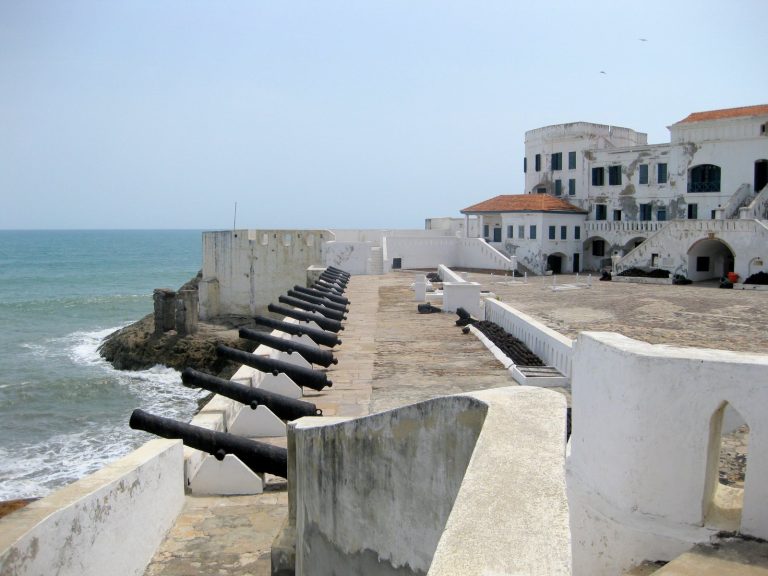
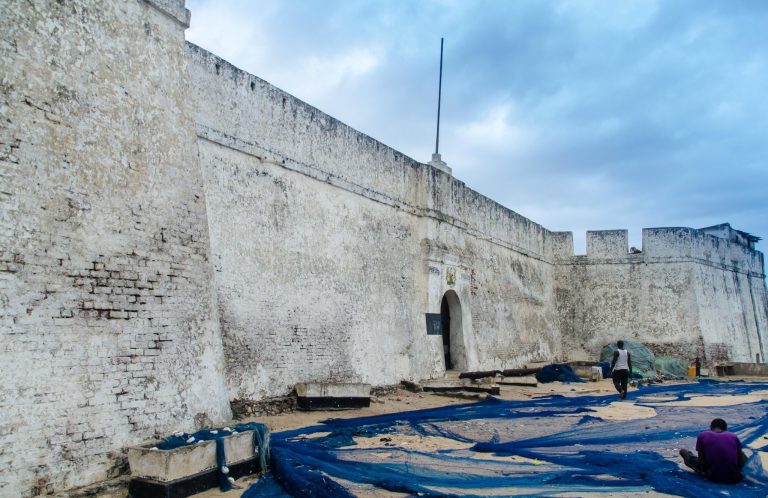
The surviving defensive works include the castle’s entrance gates, upper terraces, and the remains of its pier. The bridge leading to the castle was restored during the Ghanaian conservation program, and work on the upper terraces was still continuing in August 2006. The fortifications formed the protective framework for the commercial and residential areas within the complex.
Church and chapel
The castle contains a chapel originally built by the Portuguese for officers, merchants, and their families. The Catholic church was later used by the British as a Protestant church. Chapel and church interiors remain among the documented features of the complex, alongside commemorative inscriptions.
Governors’ and officers’ quarters
The quarters for governors and officers were spacious and ventilated. They had wooden floors and views toward the Atlantic Ocean, creating a marked physical contrast with the confined spaces below and elsewhere in the castle.
Captive quarters and Atlantic passage
Slave cells and isolation cells
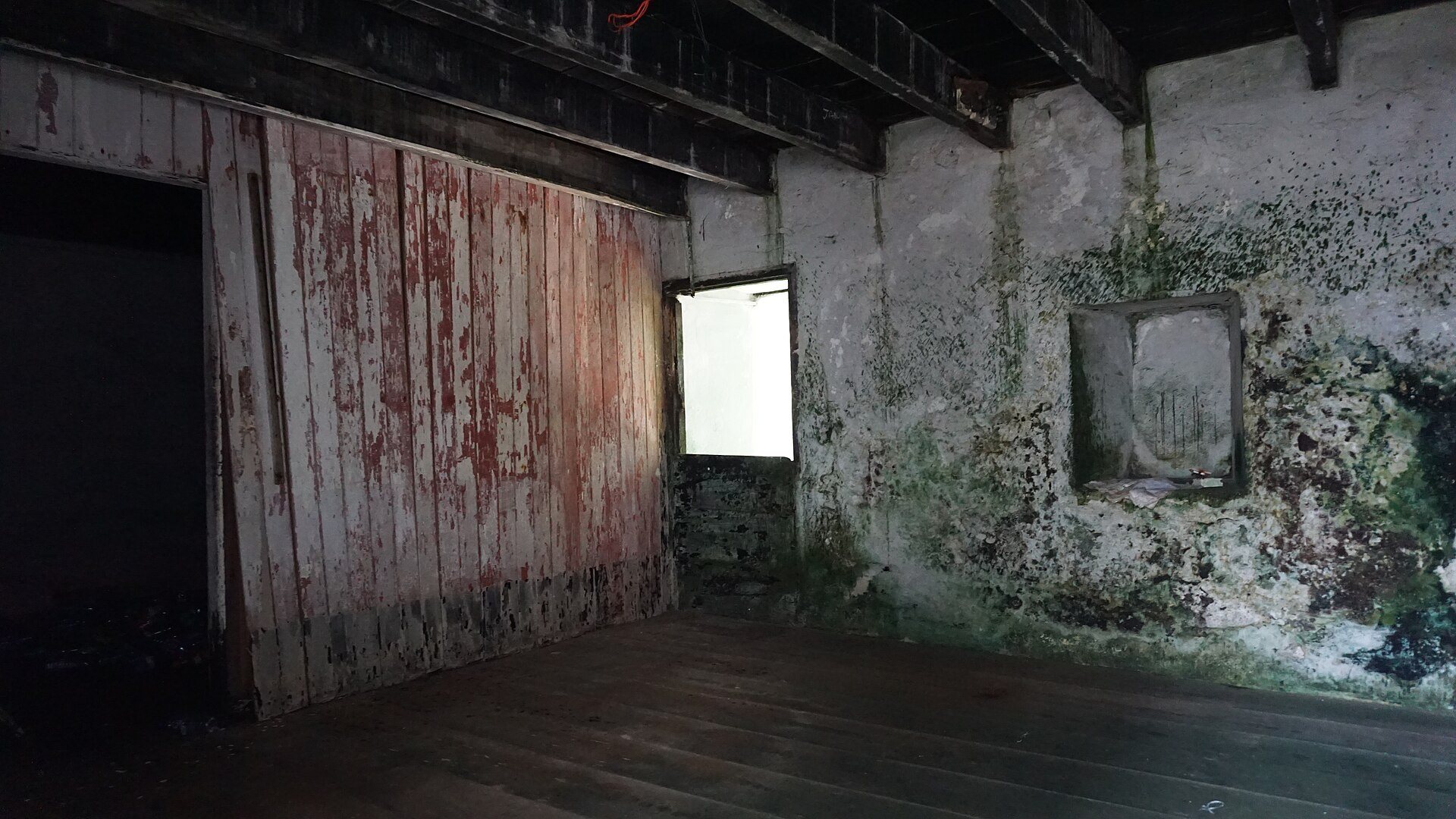
The castle’s slave cells, or dungeons, could hold as many as 1,000 male captives and 500 female captives. The spaces were poorly ventilated, dimly lit, overcrowded, and lacked water and sanitation. Their floors were covered with human waste, and captives could remain imprisoned for up to three months. Male and female captives were held separately, while smaller isolation cells were used for prisoners who rebelled or were regarded as rebellious.
Separate entrances and the Door of No Return
Among the surviving features are separate male and female slave entrances and the exit gate used by enslaved people. Captives were taken through the castle’s “Door of No Return” for shipment and sale in Brazil and other Portuguese colonies. These passages preserve the physical arrangement through which prisoners moved from confinement to Atlantic transportation.
Survey and conservation record
The bridge and upper terraces formed part of the castle’s modern conservation work. The 2006 terrestrial laser survey added a three-dimensional model, panoramic documentation, elevations, sections, and plans to the record of the castle’s fabric. Together, these materials preserve the layout and surviving architectural features for further research, restoration, education, and conservation.