Castillo de Araya: A Spanish Fortress in Venezuela
Site at a Glance
- Rating
- 4.4
- Popularity
- Low
- Country
- Venezuela
- Primary era
- Early Modern
- External website
- Open
- Eras represented
- Early Modern
- Civilizations
- Spanish
- Site type
- Military
- Remains
- Fort
On this page7 sections
History
Castillo de Araya is a seventeenth-century Spanish fortress in Araya, Venezuela, built according to Spanish military engineering to protect the region’s salt flats. The site became important after Dutch efforts to obtain salt from Araya brought Spanish strategic interests into conflict with the Dutch in the Caribbean.
Discovery and Spanish-Dutch conflict
The natural salt flats of Araya came to Spanish attention during Pedro Alonso Niño and Cristóbal Guerra’s expedition along the Paria coast in 1500. Spain initially showed limited interest because it possessed ample salt supplies. This changed in 1598, when the war between Spain and the Netherlands ended Dutch purchases of Spanish salt and encouraged Dutch attempts to obtain salt directly from Araya.
Governor Diego Suárez Amaya, the military engineer Juan Bautista Antonelli, and Captain Pedro Suárez Coronel surveyed the area in 1604. The following year, a Spanish fleet repelled a Dutch privateer attack during the Dutch revolt against Spanish rule, a conflict that developed into the establishment of the Dutch Republic. Spain later suspended plans to defend the salt flats during a truce with the Netherlands, but revived them in 1621 as the Dutch West India Company expanded its commercial and colonial presence in the Atlantic and Caribbean, including at Aruba, Bonaire, and Curaçao.
Construction of the fortress
Antonelli returned to Araya in 1622 to begin the construction project. On November 30 of that year, a Dutch fleet of 27 ships attempted to expel the Spanish and seize the salt flats. Governor Diego Arroyó, heavily outnumbered, restricted the attackers’ access to fresh water until reinforcements arrived. The operation ended on January 13, 1623, after the Dutch commander was killed and the attack failed.
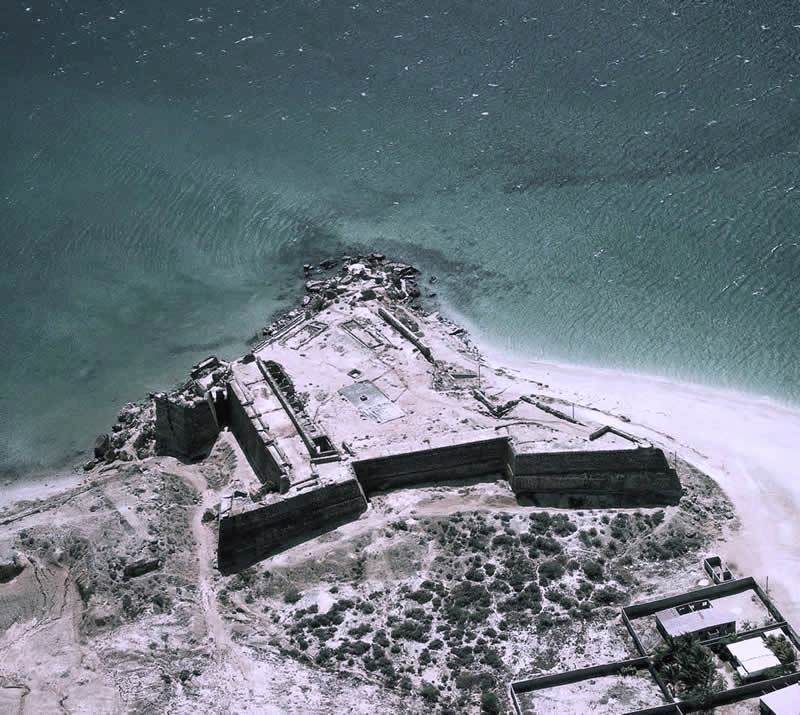
Construction of the Fortress of Santiago began in January 1623. Its first bastion, a projecting section designed to provide defensive fire along adjoining walls, was complete by January 1625. This discouraged the privateer Balduino Enrico from raiding the salt flats. Antonelli directed the works for eight consecutive years. In 1630, Cristóbal de Eguino, governor of Cumaná, sent him to Madrid to report to the king and the Council of War, the royal advisory body responsible for military affairs. Antonelli was then ordered to return to Araya after stopping in San Juan, Puerto Rico, to help arrange that city’s defenses. Once the fortress was completed, the port of Guamache was built.
Reforms, destruction, and commemoration
Engineers Juan Amador Courten and Pablo Díaz Fajardo carried out improvements and reforms at the fortress in 1734. During the Anglo-Spanish War, an eighteenth-century conflict between Britain and Spain, the fortress was rendered unusable and partially blown up on January 6, 1762, apparently on the order of the governor of Cumaná.
Naturalist and explorer Alejandro de Humboldt visited the ruins and the salt flats on August 19, 1799. Also known as the Royal Fortress of Santiago de Arroyo de Araya, Castillo de Araya is described as the oldest surviving fortification in Venezuela. Its ruins were declared a National Historic Monument of Venezuela on October 31, 1960.
Remains
Construction and materials
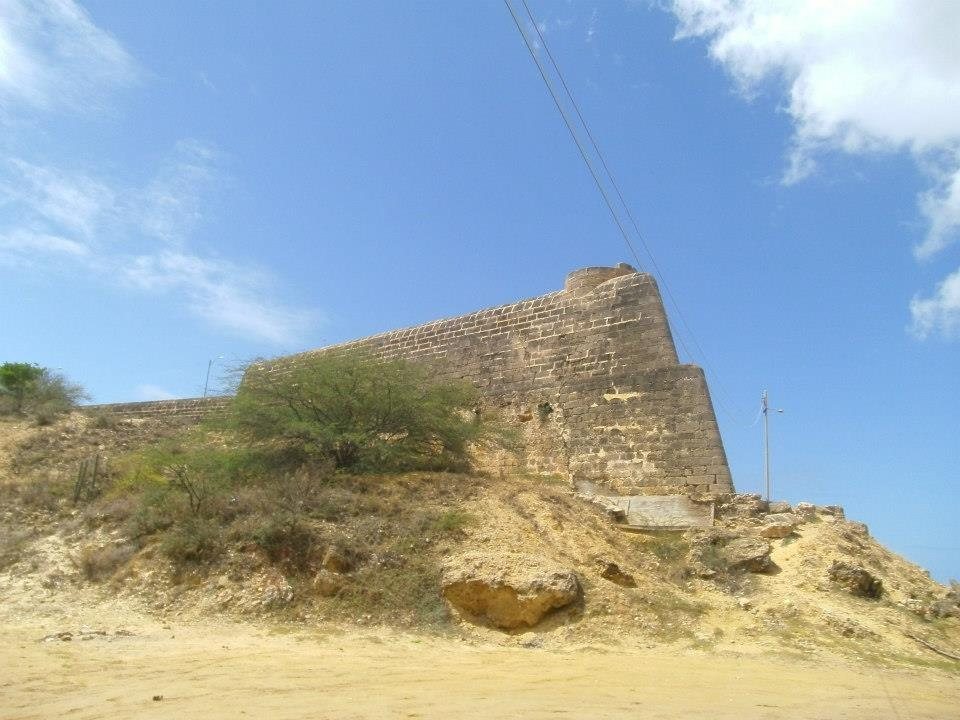
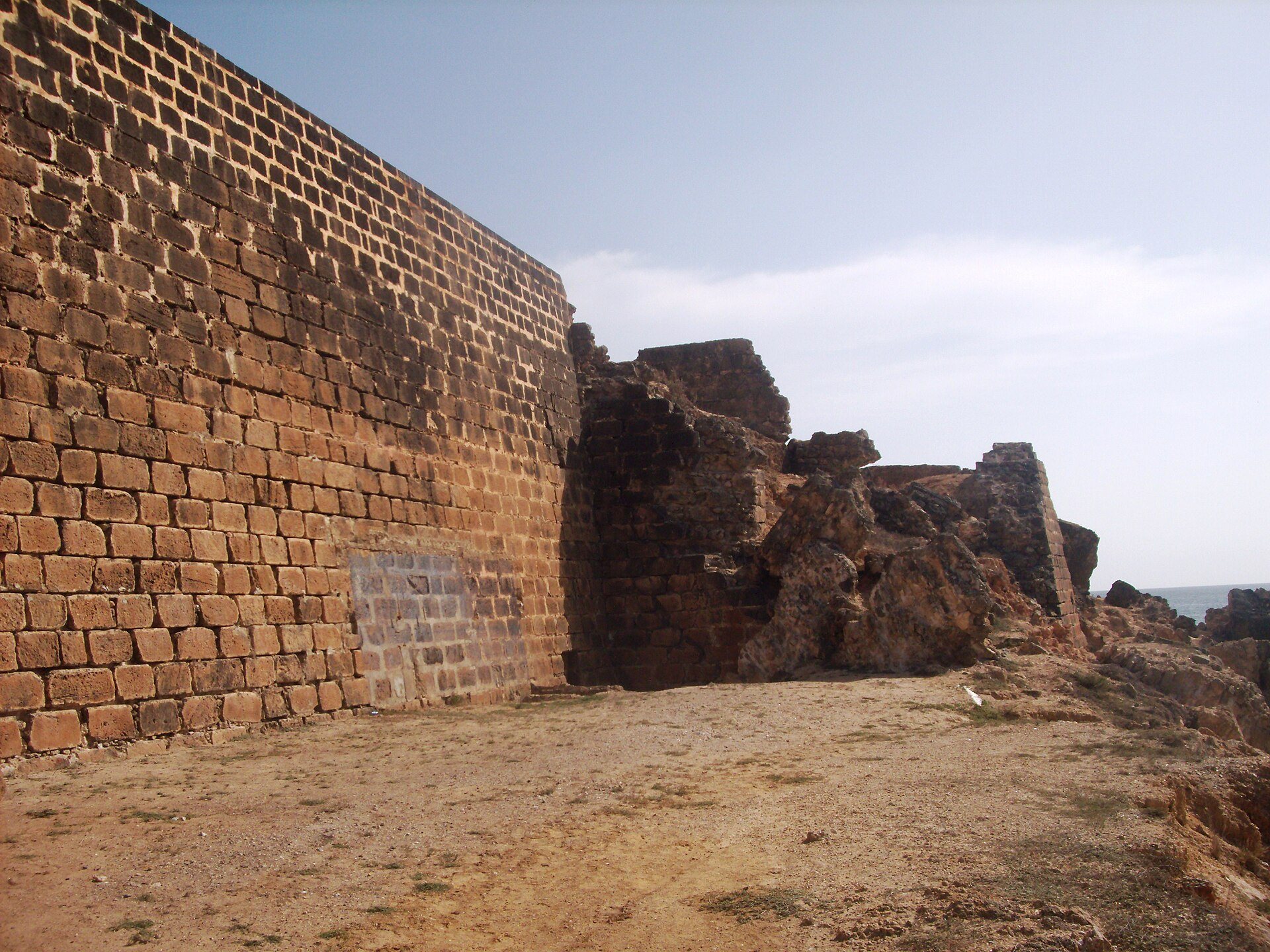
Castillo de Araya represents seventeenth-century Spanish military engineering. The fortress was built from mortar blocks made with materials gathered in the surrounding region. These blocks commonly contain abundant remains of local mollusks and other marine organisms, linking the surviving fabric to the coastal environment around the salt flats.
Fortification remains
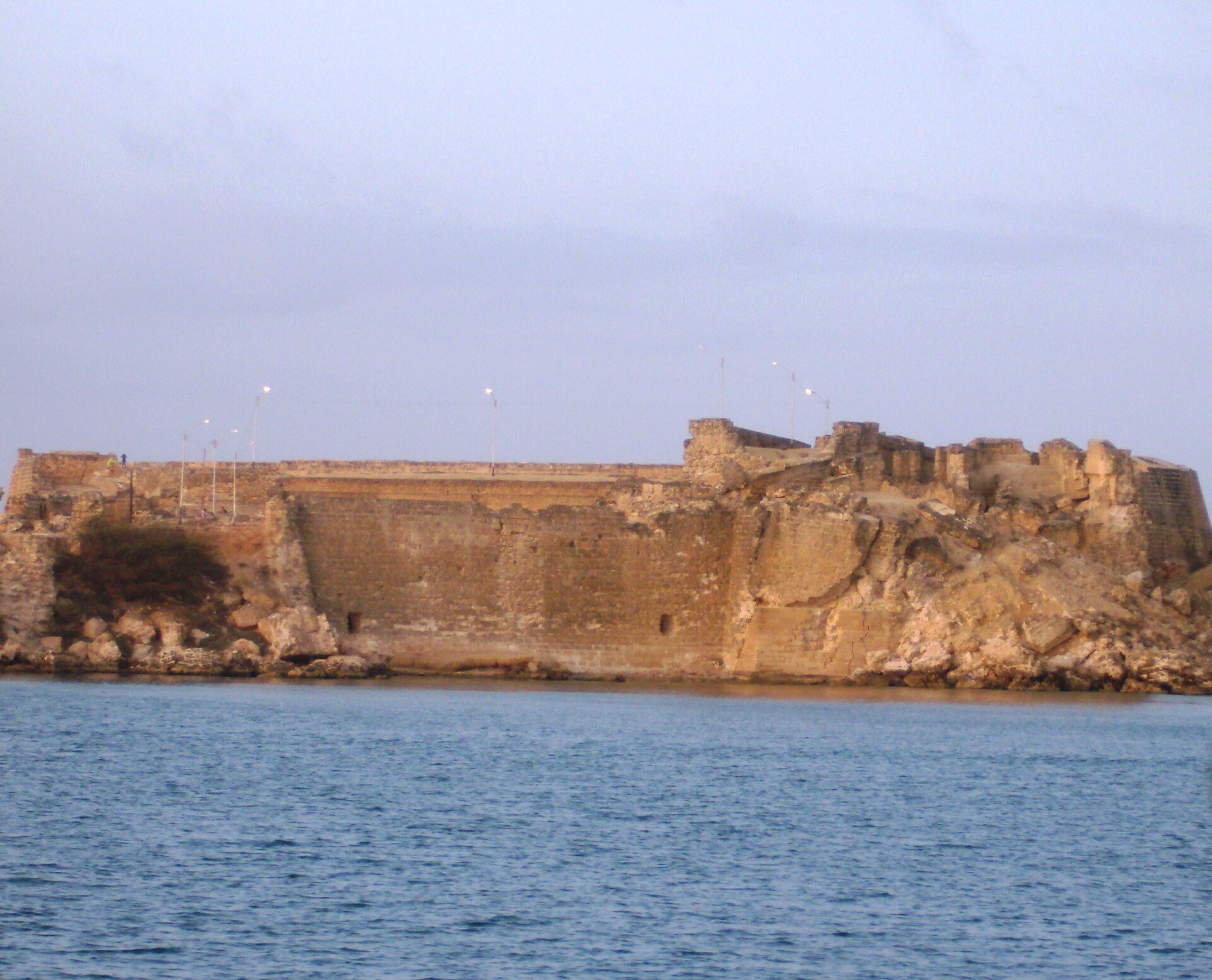
The surviving structure is in ruins after the deliberate destruction of 1762. Its first bastion had already been completed by January 1625, forming part of the defensive work designed to protect the salt flats. The remains preserve the fortress’s regional mortar construction and the physical evidence of a fortification that was later made unusable during the Anglo-Spanish War.