Santa Rosa de la Eminencia Castle: A Colonial Fortress in Venezuela
Site at a Glance
- Rating
- 4.5
- Popularity
- Low
- Country
- Venezuela
- Primary era
- Early Modern
- Eras represented
- Early Modern
- Civilizations
- Spanish
- Site type
- Military
- Remains
- Castle
On this page7 sections
History
Santa Rosa de la Eminencia Castle is a Spanish colonial fortress in Venezuela, above La Asunción on Margarita Island. Construction began in 1677 in the colonial period after the Spanish monarchy ordered its replacement of the older San Bernardo fortress, and the completed stronghold became part of the island’s defenses.
Construction after the 1677 attack
More than 500 French pirates led by the Marquis of Maintenon attacked and looted La Asunción in January 1677. Governor Juan Muñoz de Gadea ordered the new fortress, whose construction began on 24 March that year. Work was completed around 1682 or 1683 under Governor Juan Fermín de Huidobro.
La Asunción had been founded in 1562 by Pedro González Cervantes de Albornoz in the Santa Lucía Valley. Its position later made the city an important stronghold during the Venezuelan War of Independence, the nineteenth-century conflict in which Venezuelan patriot forces fought to end Spanish colonial rule.
Prison during the War of Independence
From November 1815 to January 1816, Spanish forces held Luisa Cáceres de Arismendi in the castle. She was a Venezuelan patriot, and the authorities intended to pressure her husband, Juan Bautista Arismendi, the commander of patriot forces on Margarita Island. They also sought to use her in a prisoner exchange.
A patriot assault on the fortress failed in December 1815, after which her confinement became harsher. On 26 January 1816, she gave birth to a child who died at birth because of the conditions surrounding her imprisonment and delivery. When the proposed exchange was raised, she rejected it, declaring that without a homeland she did not want a wife. The arrival of Simón Bolívar on Margarita in May 1816 led Spanish forces to abandon and partially destroy the fort.
Military reuse and preservation
Between 1818 and 1821, the fort was repaired and used as an artillery headquarters during the War of Independence. It became a gunpowder and ammunition magazine in 1830, then served as barracks and an armory in 1832.
By 1899, the facility was serving as a headquarters. Repairs ordered by President Cipriano Castro in 1901 preceded its use as barracks for the National Army. The troops withdrew after the illness and death of President Juan Vicente Gómez in 1935.
A local initiative established the castle as a War Museum in 1955. On 26 October 1965, during the presidency of Raúl Leoni, it was declared a National Historic Monument, a formally protected site recognized for its historical importance.
Remains
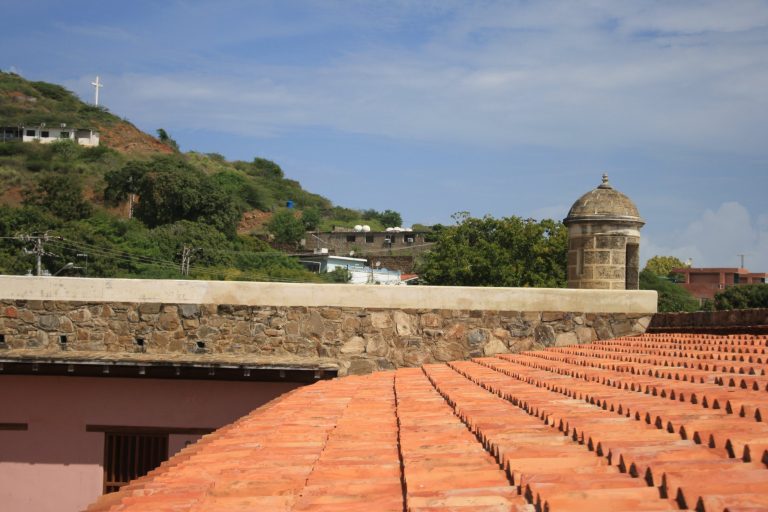
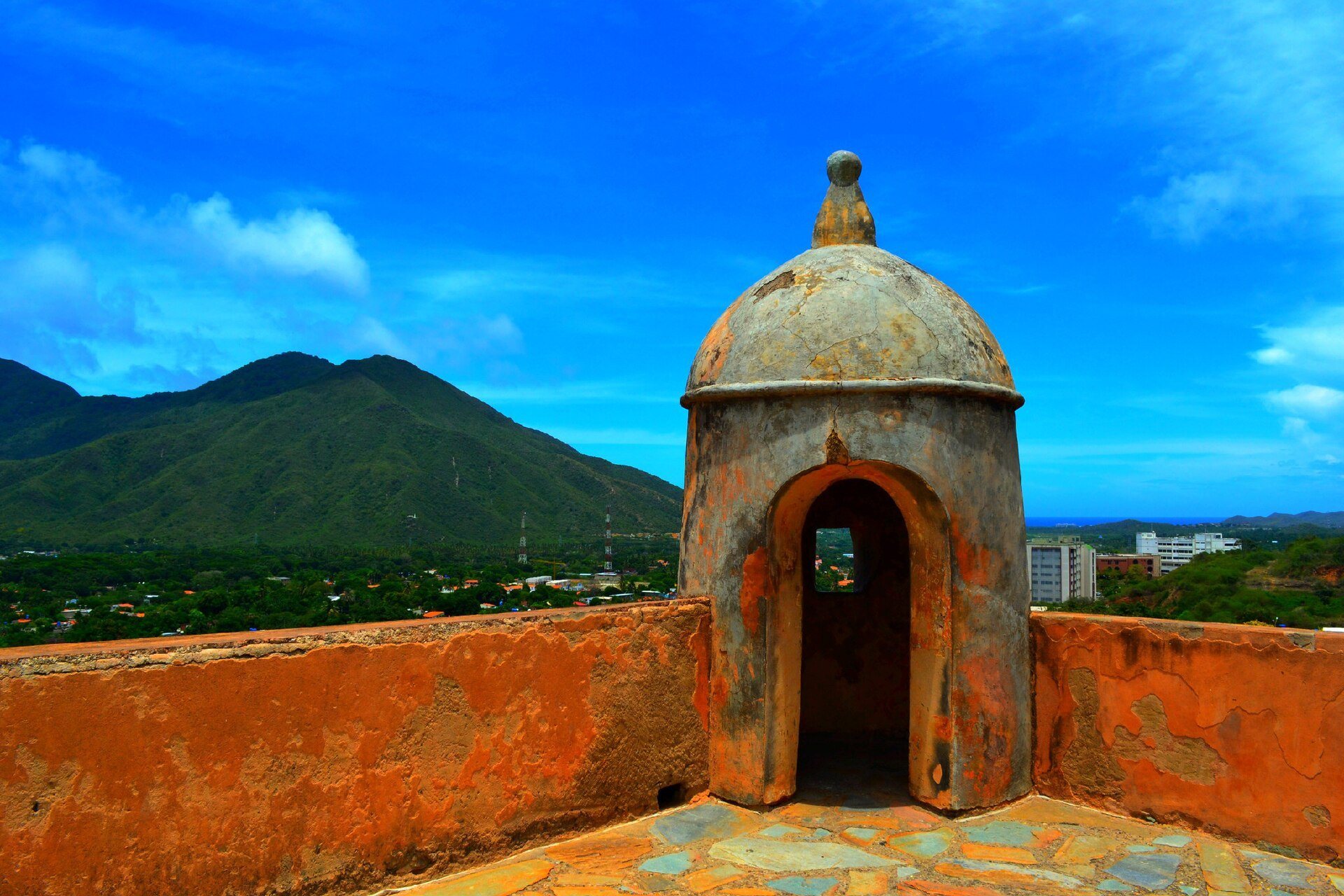
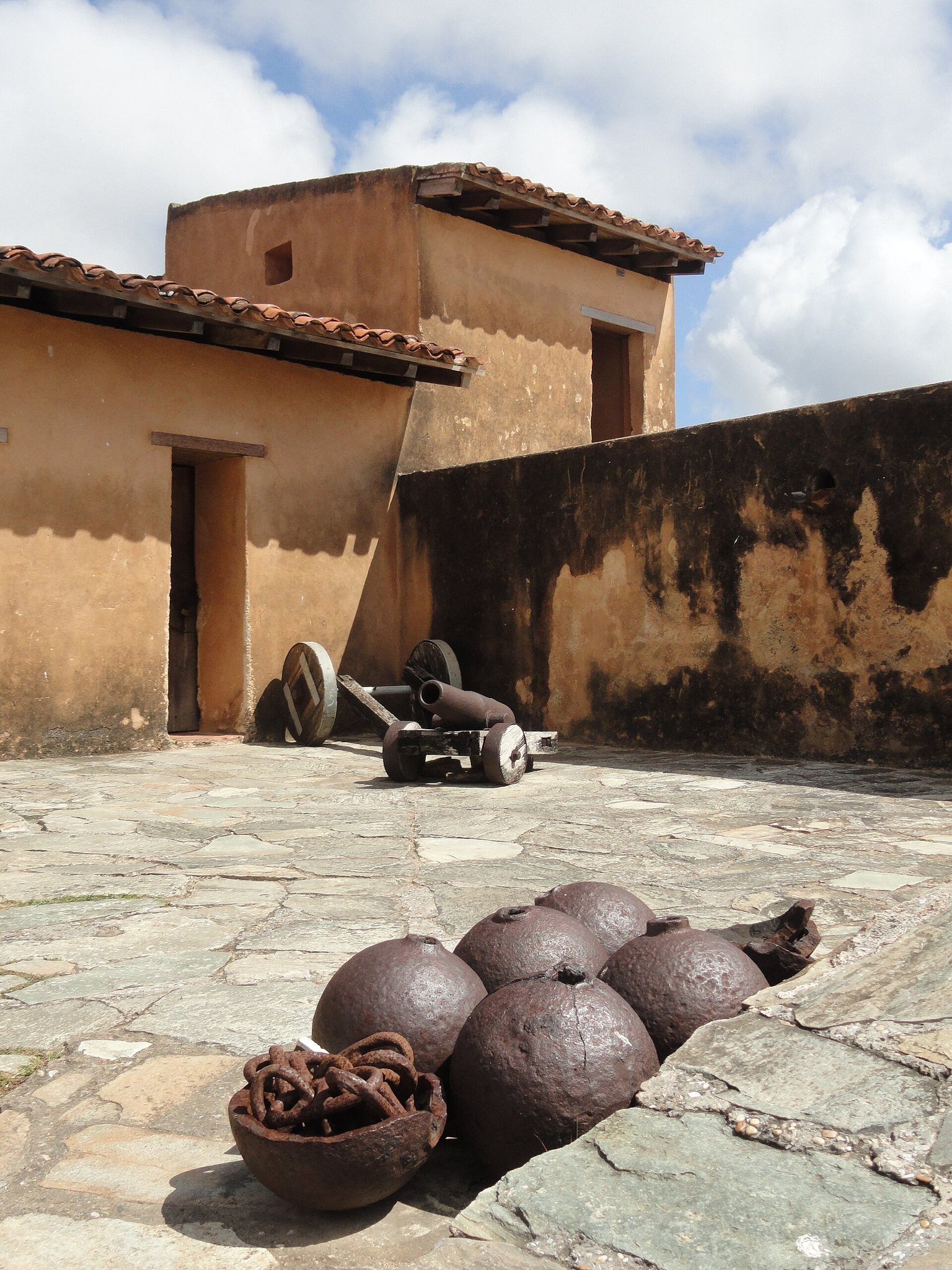
The castle occupies a hill above La Asunción beside a reservoir. Its elevated position overlooks the city and the road between Pampatar and La Asunción, as well as the surrounding hills, the eastern coast, the Atamo Valley, and the lower slopes of the Guayamurí and Matasiete hills. The fort is arranged around three defensive fronts facing south, east, and west.
Defensive works
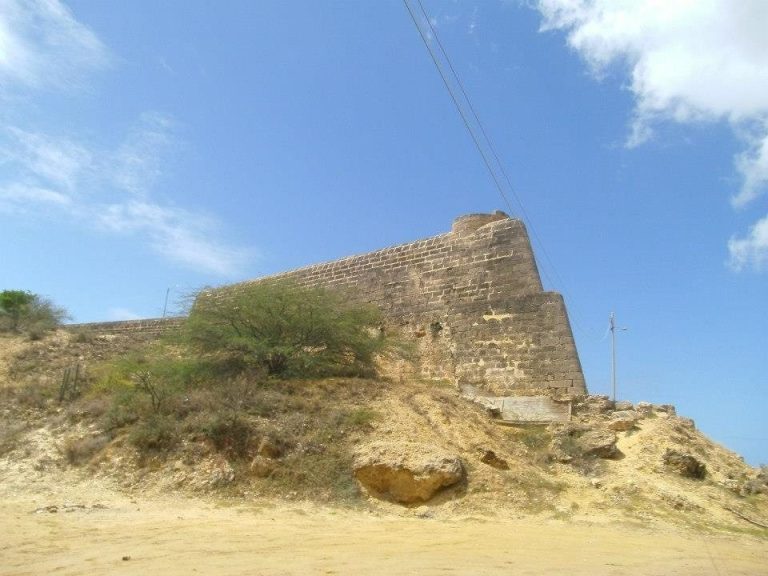
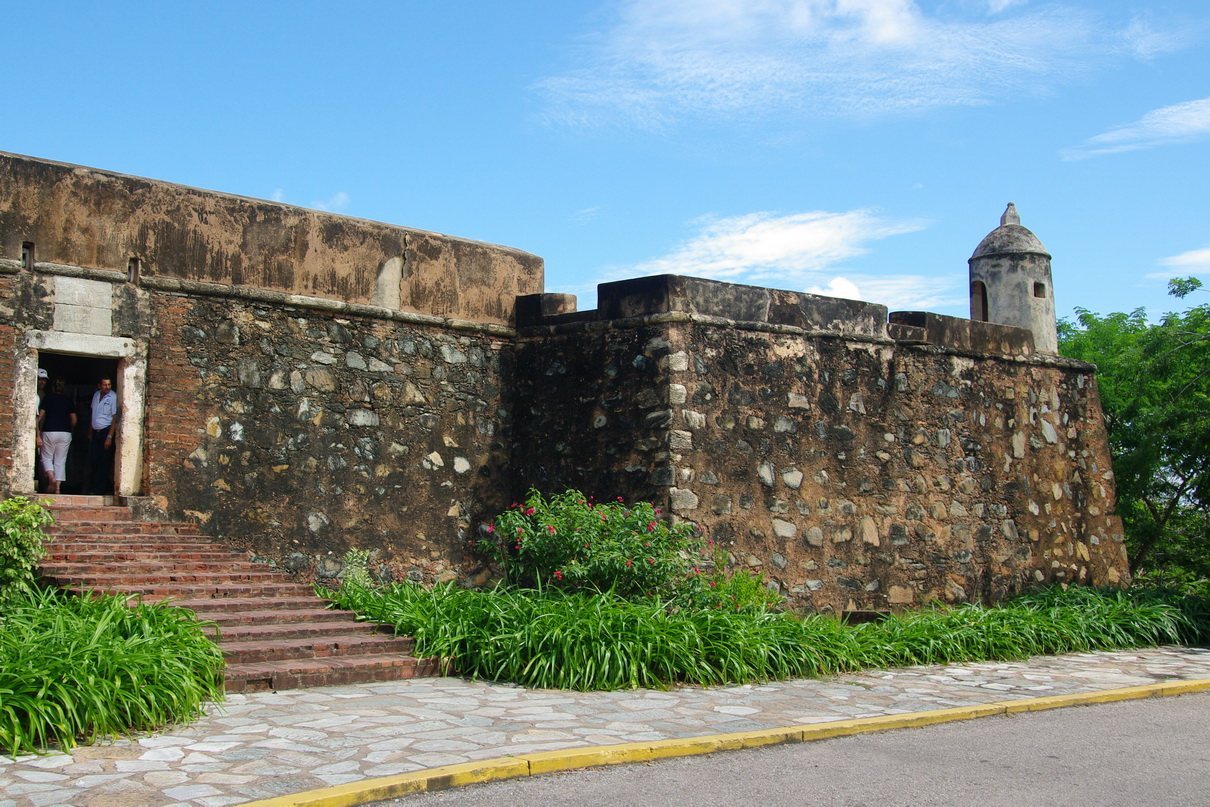
Each of the three principal fronts contains two bastions, two half-bastions, and three curtains. A bastion is a projecting part of a fortification that allowed defenders to direct fire along adjacent walls, while a half-bastion is a smaller projecting work. Curtains are the walls linking defensive positions. A platform with a redan, an angular projecting defensive work, faces north. Stone walls protect the central part of the castle from the surrounding outer structures.
Central complex
The complex contains barracks, a chapel, and a cistern. The cistern is a tank for collecting and storing water, an important internal supply in a fortress where outside access could be restricted. It stands in the parade ground beside a curbstone and the ramp leading to the upper level.
The parade ground appears to retain its original layout. Most of the walls remain intact, while surviving sections that required rebuilding were reconstructed with reference to their original characteristics.