Kirkstead Abbey: A Cistercian Monastery in Lincolnshire
Site at a Glance
- Rating
- 4.2
- Popularity
- Very Low
- Country
- United Kingdom
- Primary era
- Medieval
- Eras represented
- Medieval
- Civilizations
- English
- Site type
- Religious
- Remains
- Monastery
On this page9 sections
History
Kirkstead Abbey is a former Cistercian monastery in the United Kingdom, founded in 1139 by Hugh Brito, lord of Tattershall. Its architecture belongs to the later twelfth century, with the surviving church fabric dated to that period. The abbey was a daughter house of Fountains Abbey, an important English Cistercian monastery within the line of Clairvaux. The Cistercians were a reform movement that sought stricter observance of the Rule of Saint Benedict through austerity, manual work, and separation from secular life.
Foundation and expansion
An abbot and twelve monks from Fountains established the first community. The original site stood on the eastern bank of the River Witham, in a plain surrounded by scrub and marshes, but it soon proved too small. In 1187, Robert, Hugh Brito’s son, supplied a nearby replacement site and the monastery moved there. The date probably relates to the completion of the abbey, while the architecture has been dated to around 1175.
Kirkstead established a Cistercian daughter house at Hovedøya near Oslo in 1147. Around 1155, it also received properties in Lincolnshire that had previously been granted to Bégard Abbey in Brittany. The monastery held the lordship of Wildmore, granted by the lords of Bolingbroke, Scrivelsby, and Horncastle, although those lords and their tenants retained rights to common pasture. Monks Smithy House near Rotherham may also have begun as a grange belonging to Kirkstead.
Medieval community and reform
Kirkstead flourished during the Middle Ages and attracted a substantial monastic community. Its first two abbots had left the Benedictine monastery of St Mary’s in York to join the Cistercians in pursuit of a stricter observance of the Benedictine rule. The abbots included Robert of Sutholme or Southwell, Walter, Richard, Thomas, William, Henry, Hugh, Simon, Robert of Withcall, John of Louth, John of Lincoln, Thomas of Nafferton, Richard Wainfleet, Richard Herbotyl, Roger, Ralf, John Rawlinson, John Tadcaster, and Richard Harrison.
The monastery suffered serious losses in the fourteenth century, particularly during the Black Death. In 1441, its abbot was appointed with the abbots of Furness, Byland, Sawley, Hailes, and Morgan to participate in the reform of English Cistercian monasteries.
Dissolution and later history
In 1534, Kirkstead’s income was assessed at 286 pounds. The monastery was dissolved in 1537 during Henry VIII’s suppression of the monasteries, which followed his break with the Catholic Church and the confiscation and closure of England’s monastic houses. Richard Harrison and three monks were executed on 6 March 1537 after being implicated in the 1536 Lincolnshire Rising and the related Pilgrimage of Grace, a major northern uprising against Henry VIII’s religious and governmental policies. Their implication was probably unjust.
After the Dissolution, the abbey lands passed to the Duke of Suffolk and later to the Clinton earls of Lincoln. The Clintons built a large country house on the estate, but it had disappeared by 1791. The monastery itself was closed and gradually fell into decay. The surviving site is protected as a Grade I listed building and a scheduled monument, with the Grade I listing made in 1966.
Remains
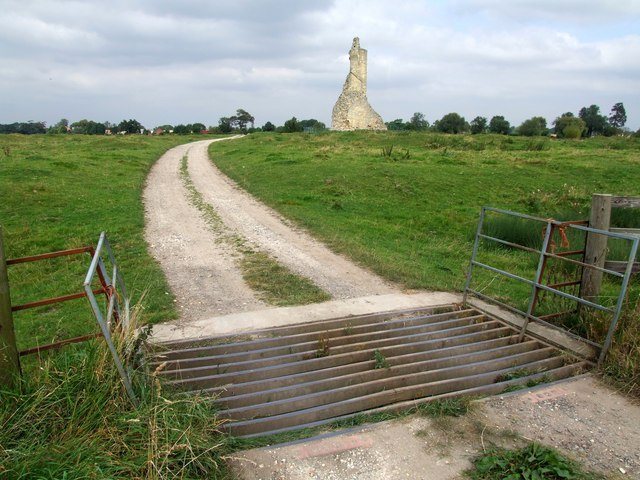
The surviving remains stand in pasture and represent only part of the medieval monastery. The abbey followed the Cistercian layout associated with Fountains Abbey, but the surviving fabric is too limited to establish the complete appearance of the complex. The present site is defined chiefly by a fragment of the church, extensive ground remains marking the monastic buildings, and a separate gate chapel.
Medieval abbey complex
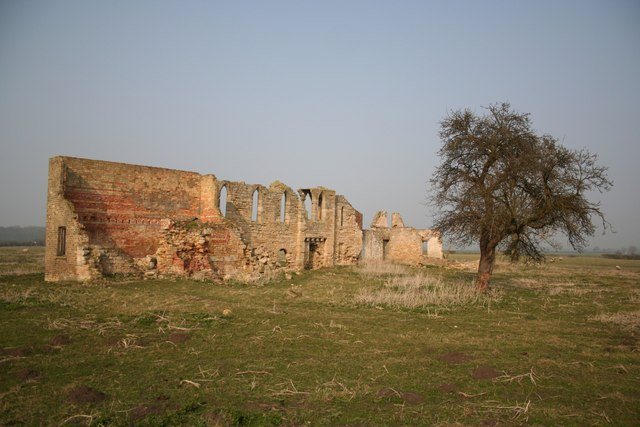
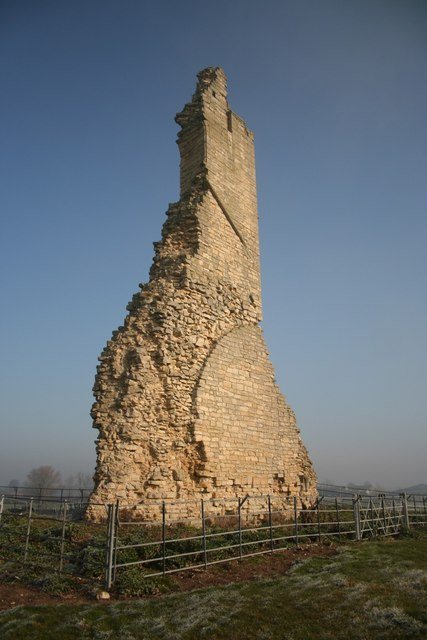
The surviving medieval church fabric is the south-east corner of the southern transept, the part of a church that extends across the main axis of the nave to create a cross-shaped plan. This twelfth-century wall rises through three levels. Two paired openings in its middle level lead towards the roof space. Its arrangement resembles that of other Cistercian abbeys in Lincolnshire and ultimately reflects the architectural model of Fountains Abbey. A comparable three-level arrangement had already been used at Preuilly Abbey in the 1120s.
Transept wall
The transept fragment is the principal standing medieval wall. Its three-level elevation and paired upper openings preserve part of the church’s former vertical composition, although the limited survival of the building prevents reconstruction of the whole abbey church.
Earthworks
Extensive earthworks mark the large group of buildings that once surrounded the church. These surviving banks, foundations, hollows, and related ground traces define the former monastic complex at ground level. Aerial archaeology has revealed further traces of the monastery.
Gate chapel
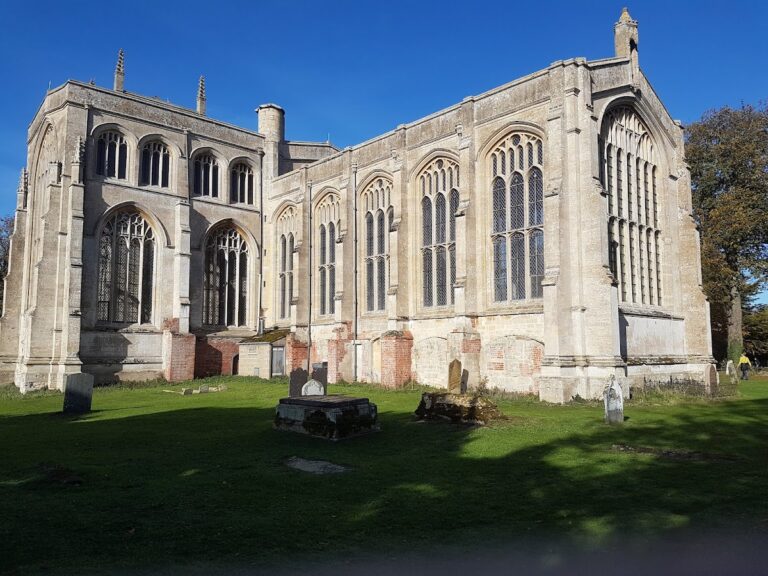
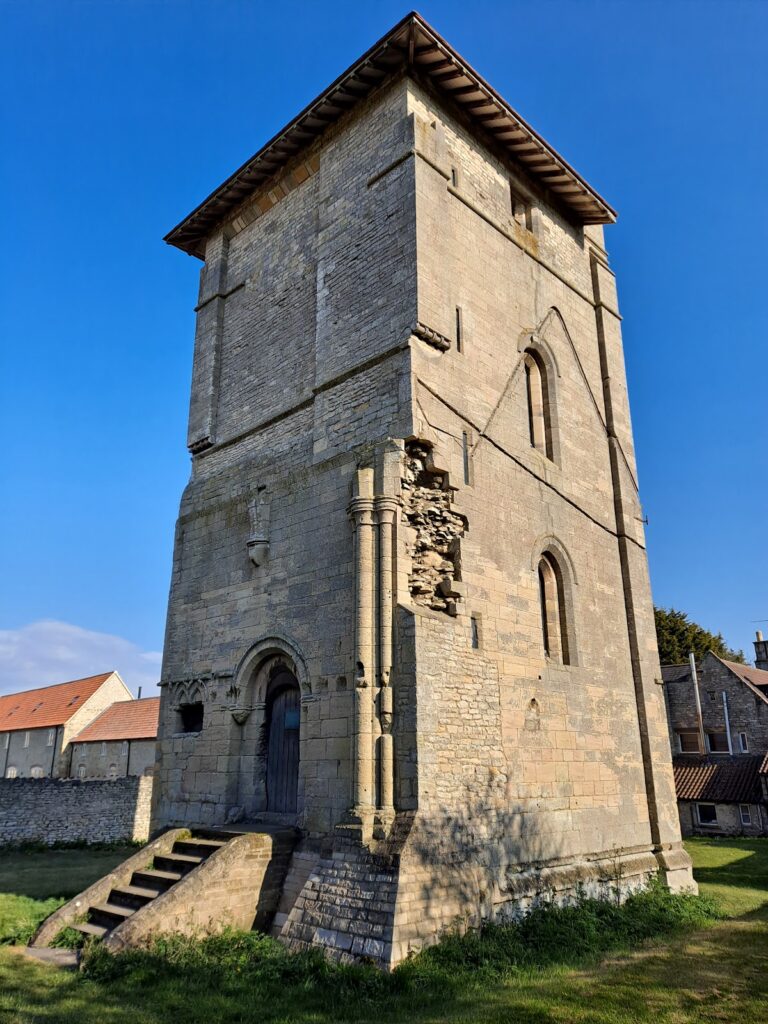
A separate thirteenth-century gate chapel dedicated to Saint Leonard also survives. It was restored in 1913 and 1914 and is now used as a parish church. A path leads through the pasture to the restored chapel, which remains distinct from the fragmentary abbey church and the earthworks of the former complex.