Kaihōzuka Kofun: A Late Kofun-Period Chiefly Tomb in Osaka


Site at a Glance
- Rating
- 4
- Popularity
- Very Low
- Country
- Japan
- Primary era
- Medieval
- Eras represented
- Medieval
- Civilizations
- Yamato
- Site type
- Burial
- Remains
- Tomb
On this page4 sections
History
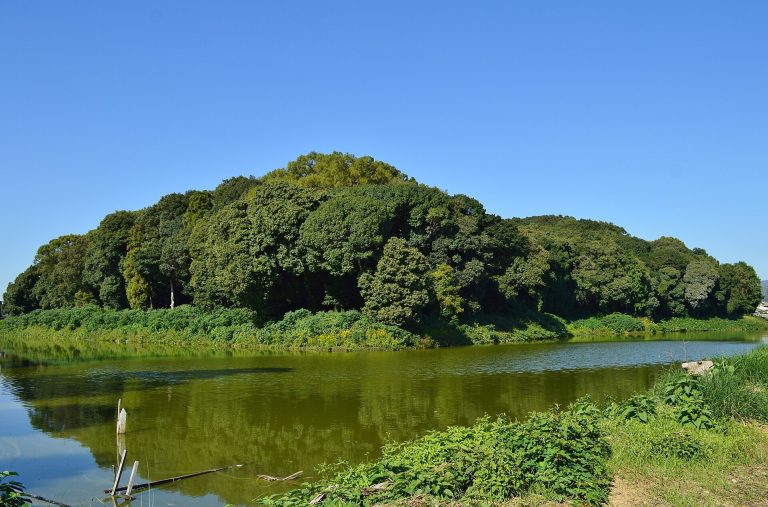
Kaihōzuka Kofun is a late sixth-century burial mound in Ibaraki, Osaka, Japan, built during the late Kofun period of ancient Japanese society. It stood at the southern end of a terrace extending from the Hokusetsu Mountains and is regarded as a chiefly tomb in the historical region of western Mishima. Its construction followed two earlier chiefly tombs in the area, placing it within a succession of burials associated with powerful regional leaders.
The mound was largely levelled over time, while the burial chamber was damaged by the 1946 Shōwa Nankai Earthquake. Grave goods were recovered during investigations in 1909 and 1935. The quantity and quality of these objects, together with the use of green schist from near Wakayama Prefecture, make the tomb especially noteworthy. Kaihōzuka Kofun became an Osaka Prefectural Historic Site on December 7, 1970.
Remains
Mound and stone chamber
The original form of the mound is uncertain, although it is estimated to have been circular. A low surviving rise measures about 25 metres across and approximately 1 metre high. Beneath it is a large horizontal stone chamber, a tomb entered through a passage leading into the burial room. The chamber opens toward the west and has a single-sleeve form, with an asymmetrical side extension at the entrance to the burial room. The burial room measures 4.6 metres long, 2.5 metres wide, and 3.3 metres high, while the surviving passage is 6.3 metres long.
Stone coffin and grave goods
A stone coffin stands at the centre of the burial room. It was made from green schist, a greenish metamorphic stone, and consists of six slabs fitted together to form a box. Numerous objects were found both inside and outside the coffin during the 1909 and 1935 discoveries. They include Sue ware, a high-fired stoneware tradition of the Kofun period, and Haji ware, a low-fired earthenware used in ancient Japanese domestic and funerary contexts. The recovered objects are held by the Tokyo National Museum.