Tōkō-ji Temple: A Historic Buddhist Temple in Yunomine, Japan


Site at a Glance
- Rating
- 4.4
- Popularity
- Very Low
- Country
- Japan
- Primary era
- Medieval
- Eras represented
- Medieval, Early Modern
- Civilizations
- Tokugawa
- Site type
- Religious
On this page9 sections
History
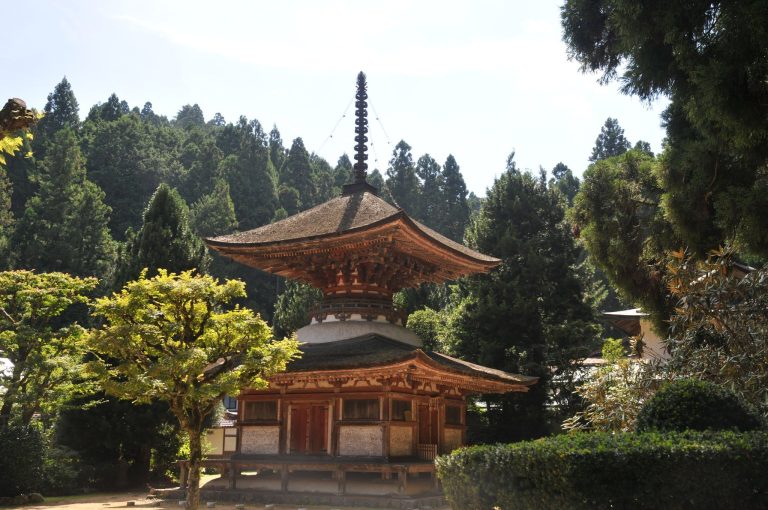
Tōkō-ji Temple is a Japanese Buddhist temple in Tanabe, Japan, situated at Yunomine Onsen, a hot-spring settlement in Wakayama Prefecture. Also known as Yakuōzan Tōkō-ji, it belongs to the Tendai tradition and venerates Yakushi Nyorai, the Buddhist healing Buddha, as its principal image. Its precise foundation date is uncertain, although temple tradition places the construction of a tahōtō, a pagoda with a square lower level and rounded upper body, in 1108.
Origins and Kumano worship
Two traditions explain the temple’s beginnings. One attributes its foundation to the Naked-Form Saint, who found deposits of minerals around the Yunomine spring that had naturally taken the form of Yakushi Nyorai. Another credits the ascetic En no Gyōja, a legendary mountain practitioner associated with the origins of Shugendō, during the reign of Emperor Go-Toba. The traditions preserve the temple’s close association with the healing qualities of the hot spring, while leaving its exact foundation date unresolved.
A prayer decree of Emperor Toba is said to have granted temple land for the construction of the tahōtō in 1108. As devotion to Kumano expanded, additional halls, pagodas, and Buddhist images were reportedly established. Kumano was a major network of pilgrimage sanctuaries and sacred landscapes in the Kii Peninsula. A 1109 text praises Yunomine as a renowned bath capable of curing every illness, while later medieval evidence places a hall dedicated to Yakushi Nyorai at the site by the late Heian period.
The Yunomine Prince Shrine was worshipped within the precinct, and a Kamakura-period Kumano mandala shows the deity Yunomine Kongō Dōji beside the Yakushi Hall. Bathing at Yunomine became an important act of ritual purification before pilgrims continued to Kumano Hongu Taisha, one of the principal Kumano shrines. Tōkō-ji appears to have served as the administrative temple of the Prince Shrine. A 1382 entry mentions lamp oil for a Kannon Hall within the precinct.
Medieval religious activity
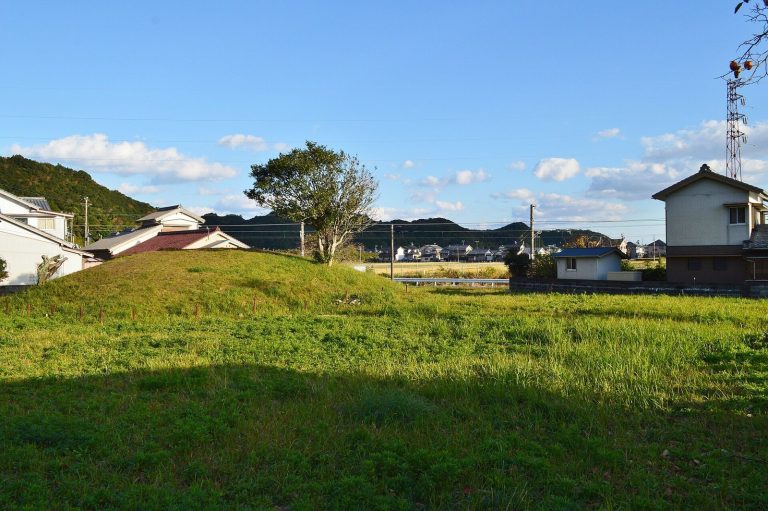
During the medieval period, the hot spring and temple were apparently administered by itinerant practitioners of Ji-shu, a Buddhist movement centered on travelling religious specialists and recitation of the Buddha’s name. The religious narrative of Oguri Hangan tells how Princess Terute brought the leprosy-suffering Oguri to Yunomine, where he was cured. A mound associated with this story was established at the site.
The ritual use of the spring continued as part of the approach to Kumano Hongu. Separate bathing facilities served ordinary pilgrims, warriors, and the priestly family of Hongu, and early-modern depictions present Yunomine as a busy pilgrimage settlement. This activity connected the temple’s Buddhist worship, the Prince Shrine, and the healing reputation of its hot spring.
Repairs and early-modern administration
In 1590, Toyotomi Hideyoshi, the military ruler who unified Japan in the late sixteenth century, ordered repairs to the Yakushi Hall and tahōtō. Katagiri Katsumoto, a military official entrusted with administrative and construction duties, acted as commissioner. During the Edo period, Tōkō-ji belonged to the Old School of Shingon Buddhism, another Japanese Buddhist tradition, and operated without a parent temple under the hereditary priestly family of Kumano Hongu.
During the Genna era, five koku, a historical measure of land-based income, were assigned to the temple from territory controlled by the Mizuno family of Shingu. A 1632 inventory lists the Yakushi Hall, Prince Shrine, bathhouse, sacred enclosure, tahōtō, Tōkō-ji building, and gate. Early-modern plans likewise show the Yakushi Hall, Prince Shrine, tahōtō, and upper bathhouse as buildings that underwent rebuilding.
Destruction and revival
The temple endured the Meiji-era campaign against Buddhist institutions but lost its lands. Its priest became a Shinto priest at Kumano Hongu, leaving Tōkō-ji without a resident priest or parishioners. The temple was abolished in 1872, then revived in 1879 at the villagers’ request as a Tendai temple affiliated with Seiganto-ji at Nachisan.
A fire in the Yunomine hot-spring area in May 1903 destroyed the temple buildings. The principal image survived, while other Buddhist images and treasures were evacuated successfully. Donations from lay believers enabled the Yakushi Hall to be rebuilt as the present main hall in 1931. In 1967, the paintings of the Sunlight and Moonlight Bodhisattvas on the doors of the former zushi, a small shrine-like enclosure protecting a Buddhist image, became a prefectural tangible cultural property. A rock-carved inscription associated with the medieval mendicant tradition also received designation as a prefectural historic site.
Remains
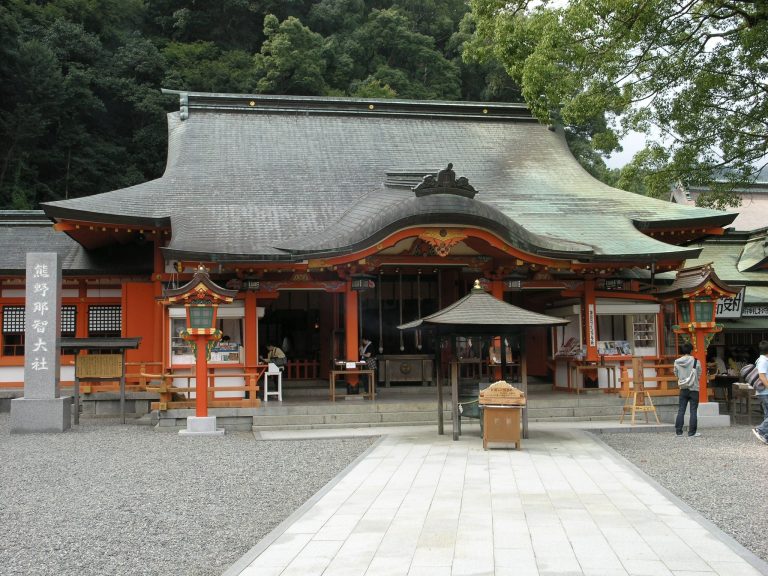
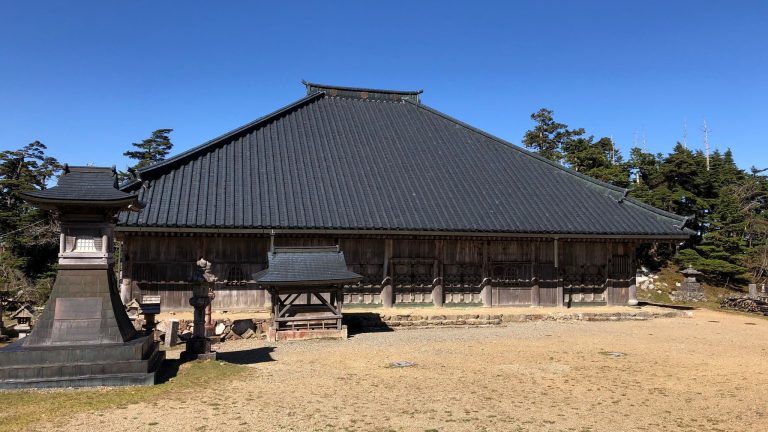
The surviving temple is centered on the 1931 main hall, which encloses the naturally formed image of Yakushi Nyorai. Historical inventories and plans place the hall within a wider precinct that included the Prince Shrine, bathhouses, sacred enclosure, tahōtō, Tōkō-ji building, and gate. Other surviving features extend beyond the main building, including Buddhist sculptures, painted doors, bridge finials, a rock-carved inscription, and the Fudō Waterfall above the sacred grounds.
Main hall and Yakushi image
The present main hall is the rebuilt Yakushi Hall of 1931. Because the principal image cannot be moved, the building serves as its protective enclosure, with a zushi constructed around it. The seated Yakushi Nyorai measures 234.8 centimetres in height and consists of naturally deposited hot-spring minerals. A small opening in the chest appears to extend into the image, and tradition holds that hot water once flowed through it.
The doors of the former zushi carry paintings of the Sunlight and Moonlight Bodhisattvas. They are thought to have come from the enclosure that stood before the 1903 fire and display features of early-modern Buddhist painting. They are generally dated to around the late sixteenth century. The solar disc includes a three-legged crow associated with Kumano.
Wooden Buddhist sculptures
Two wooden standing images of the Sunlight and Moonlight Bodhisattvas and twelve wooden standing images of the Twelve Divine Generals date from the Edo period. Temple tradition attributes them to Kūkai, the founder of Shingon Buddhism, but their joined-block construction and crystal-inlaid eyes point to artistic practices around the middle of the Edo period. Their halos, pedestals, and some heads have suffered losses and repairs.
A wooden Shaka Triad comprises Shaka Nyorai, 43.2 centimetres high, with Monju Bodhisattva at 25.2 centimetres and Fugen Bodhisattva at 25.1 centimetres. Ink writing on the upper surface of Shaka’s lotus pedestal shows that the three statues were made together in 1612. They served as the principal images of the tahōtō.
Other sculptures include a 101.2-centimetre wooden standing Kannon Bodhisattva, considered to have been the principal image of the Kannon Hall mentioned in historical records. Its main body is attributed to the Heian period through its sculptural technique, while the copper crown, pendants, celestial robe, feet, halo, and lotus pedestal were made in the Edo period. A 98.8-centimetre wooden standing Bishamonten dates from the twelfth century. An Edo-period wooden Fudō Triad consists of a 78.0-centimetre Fudō Myōō flanked by Kongara Dōji and Seitaka Dōji, measuring 49.3 and 49.8 centimetres respectively. A wooden standing Jizō Bodhisattva from the Edo period measures 98.8 centimetres.
Entrance features and devotional landscape
Six cast-bronze ornamental finials from the balustrade of a former bridge at the temple entrance survive as four large and two small pieces. Their dedication date is 1596. Prolonged exposure to hot-spring steam rising from the riverbed caused extensive corrosion. Incised inscriptions on the four large finials name two donors from Taki in Ise Province and give the year of dedication.
A rock-carved devotional inscription dated 1355 stands beside the prefectural road north of the temple grounds. Tradition attributes its lettering to Ippen, a medieval Buddhist teacher associated with Ji-shu, who is said to have written it with his fingernail. Above Tōkō-ji, beyond the sacred grounds of the Yunomine Prince Shrine, Fudō Waterfall is traditionally identified as a place where the Naked-Form Saint practised austerities. A small Konpira shrine stands on the waterfall’s left bank. The grounds are also associated with a stone monument commemorating Genpō Yamamoto, a Japanese Zen Buddhist priest.