Sheikh Muslihiddin Mosque and Mausoleum: A Religious and Memorial Complex in Tajikistan
Site at a Glance
- Rating
- 4.7
- Popularity
- Low
- Country
- Tajikistan
- Primary era
- Early Modern
- Eras represented
- Early Modern, Modern
- Civilizations
- Khanate of Bukhara, Khanate of Kokand
- Site type
- Religious
- Remains
- Tomb
On this page11 sections
History
Sheikh Muslihiddin Mosque and Mausoleum is a religious and memorial complex in Khujand, Tajikistan, built at the burial place of Muslihiddin Khudjandi. The complex developed from a twelfth-century mausoleum into a larger center of worship and remembrance, later incorporating a nineteenth-century mosque and minaret.
Muslihiddin Khudjandi and the First Mausoleum
Muslihiddin Khudjandi lived from 1130 to 1222 and is remembered as a ruler of Khujand, poet, philosopher, Sufi teacher, and Islamic theologian. His preserved biography and local tradition portray him as a holy man and miracle-worker. For centuries, the people of Khujand have venerated him as the city’s spiritual protector, although Islam does not formally recognize patron saints.
Muslihiddin was first buried in Undzhi, a settlement outside Khujand. His followers later brought his remains into the city and built a modest mausoleum over the grave during the twelfth century. This early structure was a small baked-brick burial chamber with terracotta ornamentation. Mongol invasions in the thirteenth century destroyed it.
Reconstruction and Religious Development
The mausoleum was rebuilt during the fourteenth century as a two-room building, which was later destroyed for unknown reasons. A major reconstruction in the sixteenth century established a mausoleum-khanqah, a Sufi religious center for worship, instruction, communal gatherings, and spiritual practices, on the remains of the earlier buildings. The complex therefore served not only as a tomb but also as a place for prayer, ritual ceremonies, and Sufi gatherings.
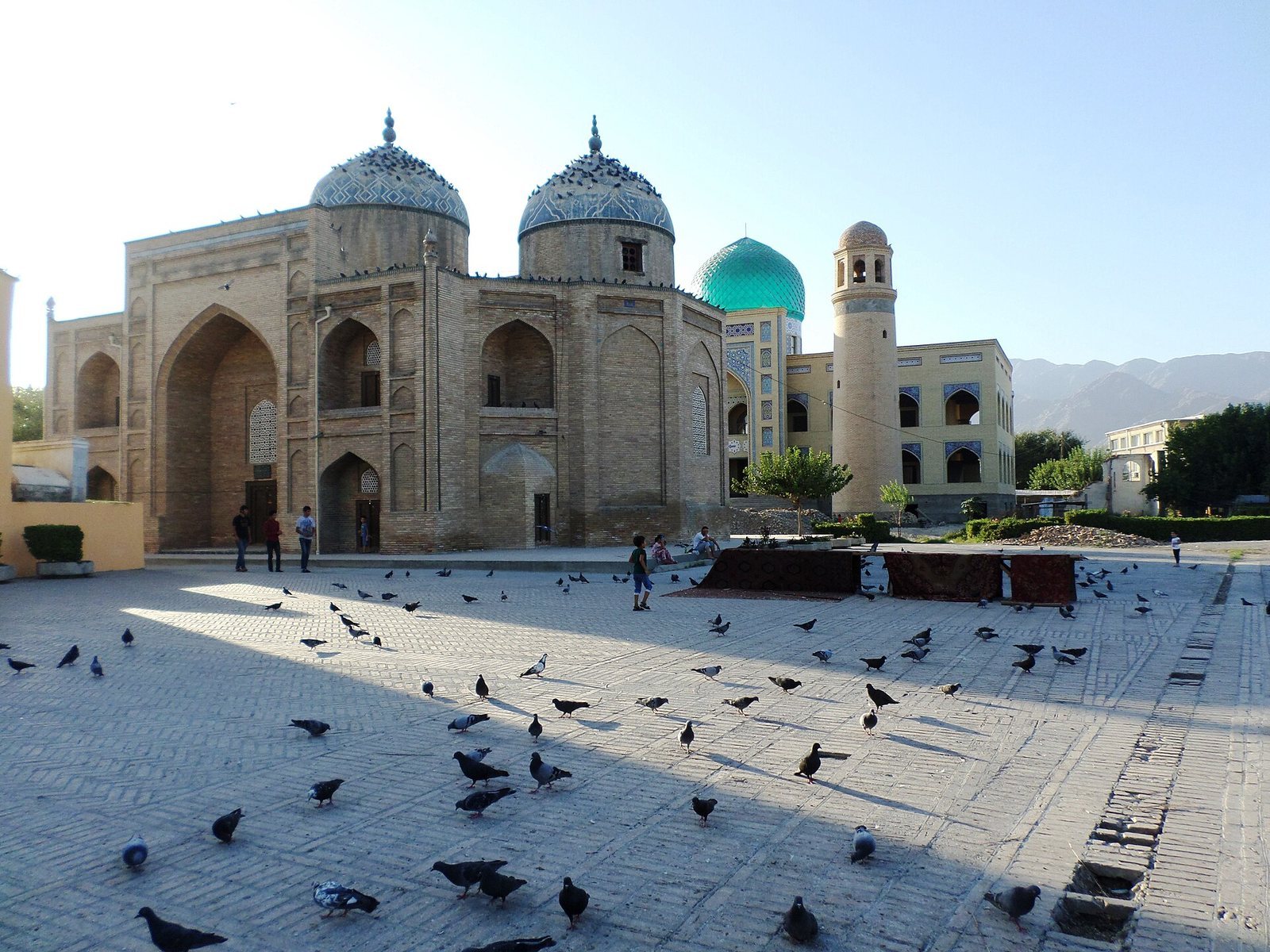
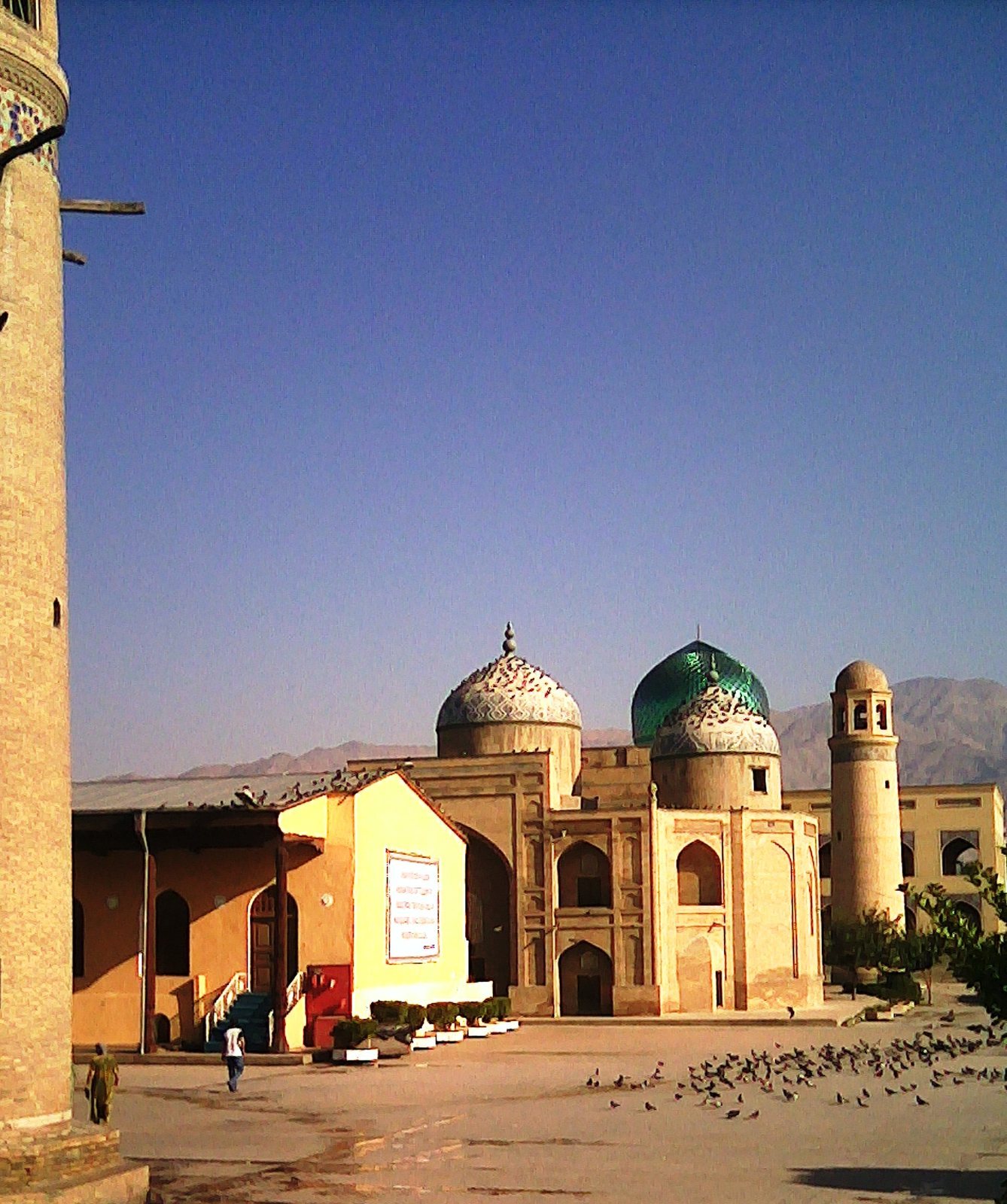
Repeated repairs and reconstructions changed the building’s original sixteenth-century appearance. During the second half of the twentieth century, part of the mausoleum housed the regional museum of history and local lore. A grand mosque was added beside it during the nineteenth century, together with a minaret more than 20 metres high. The monument is under state protection and forms part of the Sheikh Muslihiddin Historical and Architectural Complex.
Remains
The Mausoleum
Domed Memorial Structure
The mausoleum is a large, two-storey building crowned by a dome and entered through a monumental portal. Its upper ziyoratkhona, or commemoration hall associated with a tomb, has a cross-shaped plan, a dome, and three front entrances framed by portal structures. Numerous additional chambers extend the building beyond the central memorial spaces.
Burial Vault and Sagona
Below the commemoration hall lies the gurkhona, the burial chamber beneath or within a mausoleum. A carved wooden sagona, or sarcophagus used to mark a burial, remains in this vault. Geometric patterns, vegetal motifs, and ornamental inlays cover the tomb chest, expressing local woodcarving traditions.
Earlier Decorative Remains
The twelfth-century burial chamber was built from baked brick and decorated with terracotta ornamentation. The site also preserves remnants of painted and enamel decoration, paintings, inscriptions, and carved wooden elements from a later mausoleum.
The Mosque, Minaret, and Burial Grounds
Nineteenth-Century Mosque
The nineteenth-century mosque contains halls and iwans, large roofed spaces open on one side, supported by rows of columns arranged on a modular grid. Carved wooden ceilings, painted decoration, and woodcarving survive within the building. Its construction combines burnt brick, raw brick, and plaster.
Minaret and Surrounding Grounds
A nineteenth-century minaret rises more than 20 metres within the complex. Ancient burial grounds surround the tomb, while the mosque and minaret stand alongside the mausoleum, which forms the centerpiece of the larger religious and memorial ensemble.