Tepe Sialk: A Prehistoric Settlement and Archaeological Mound in Iran
Site at a Glance
- Rating
- 4.3
- Popularity
- Low
- Country
- Iran
- Primary era
- Bronze Age
- External website
- Open
- Eras represented
- Stone Age, Bronze Age, Iron Age
- Civilizations
- Unclassified
- Site type
- City
On this page20 sections
History
Tepe Sialk is a prehistoric archaeological settlement in Iran, near Kashan in Isfahan Province, whose earliest known community occupied the northern mound around 6000–5500 BC. The site developed through the Neolithic, Chalcolithic, Proto-Elamite, Bronze Age, and Iron Age periods, with occupation continuing for more than 7,500 years. It is regarded as one of the earliest known village settlements on the Kashan plain and the central Iranian plateau, and its associated culture has been linked with the Zayandeh River culture.
Early farming communities
During the sixth millennium BC, the inhabitants of Tepe Sialk cultivated crops, kept animals, produced pottery, and built houses from mud brick. Cattle and sheep bones indicate the keeping of domesticated animals. The settlement also supported spinning, weaving, pottery production, toolmaking, and the working of stone, bone, copper, bronze, and iron over successive phases.
The northern mound contains the Sialk I and Sialk II levels, archaeological labels used to distinguish successive occupations. Sialk I represents the earliest settlement phase. Its inhabitants used stone and bone tools, and pottery burials were placed within the settlement. Sialk II brought the first signs of metallurgy at the site, together with material indicating wider contacts with communities beyond Tepe Sialk.
Expansion and increasing complexity
The southern mound contains the Sialk III and Sialk IV levels. Sialk III continued from the preceding phase through the fifth millennium and the beginning of the fourth millennium BC. It is divided into seven sub-periods, during which buildings and crafts became more complex, particularly metalworking.
Sialk IV began in the second half of the fourth millennium BC. Its earliest phases were connected with the Uruk and Jemdet Nasr traditions of Mesopotamia, while later material belonged to the Proto-Elamite horizon. Proto-Elamite refers to an early writing and cultural tradition of southwestern Iran whose administrative-style signs remain only partly understood. Material from the later part of Sialk IV also resembles finds from Susa III.
Five Proto-Elamite tablets were recovered during the early excavations, and later work established evidence for Proto-Elamite occupation on the southern mound. Clay cylinder seals were also found. They were used in connection with goods sent from Tepe Sialk to other regions. The tablets may have recorded accounts, tax figures, or trade transactions, although their exact contents remain uncertain.
Abandonment and later occupation
The Sialk IV period ended with the temporary abandonment of the site at the beginning of the third millennium BC. More than a thousand years later, the settlement was occupied again during the second half of the second millennium BC. Its final occupation is divided into the Sialk V and Sialk VI phases.
Much of the material from these later phases came from Cemetery A and Cemetery B. Sialk V is represented by bronze weapons and other objects, jewelry, some iron items, and gray-black or red pottery, occasionally decorated with geometric designs. Later burial customs included weapons, ornaments, helmets, horse equipment, and other valuable objects. These changes have been interpreted as evidence of social distinctions among nobles, courtiers, soldiers, farmers, villagers, and craftspeople.
Rediscovery and archaeological investigation
Tepe Sialk was traditionally known among the people of Kashan as the “accursed city.” It was not identified archaeologically until 1931, when objects from the site reached the Louvre and their antiquity was recognized. Roman Ghirshman was then sent to Iran and continued the investigation with the cooperation of André Godard, the director of the National Museum of Iran. Ghirshman and Tania Ghirshman directed excavation seasons in 1933, 1934, and 1937 on both mounds and the nearby cemeteries. Their results appeared in Paris in 1938–1939 in two volumes titled Fouilles de Sialk près de Kashan.
Excavation resumed from 1999 to 2004 through the Sialk Reconsideration Project, directed by Sadegh Malek Shahmirzadi with a team from the University of Pennsylvania and Iran’s Cultural Heritage Organization. The project examined the ziggurat-like platform, craft specialists, hunters, and the fortified village. In 2008–2009, an Iranian team led by Hassan Fazeli Nashli, with support from Robin Coningham of Durham University, investigated the northern mound and found six Late Neolithic burials.
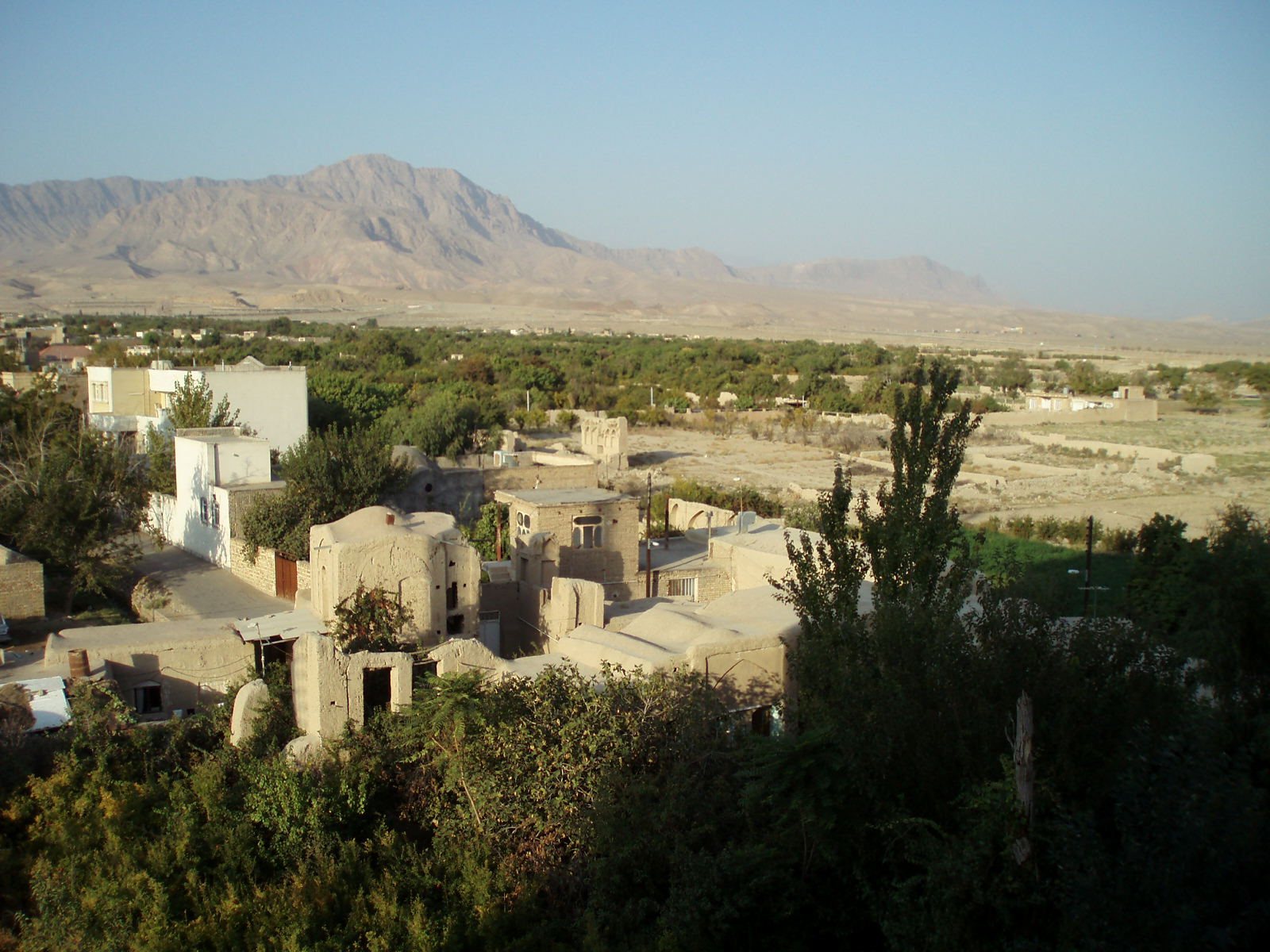
Tepe Sialk entered Iran’s national heritage register on 15 September 1931 under registration number 38. It is also identified as a property on Iran’s tentative list for UNESCO World Heritage. Nearby water sources helped sustain the settlement. Cheshmeh-ye Soleiman, or Solomon’s Spring, has supplied water from the surrounding mountains for thousands of years and still flows.
Remains
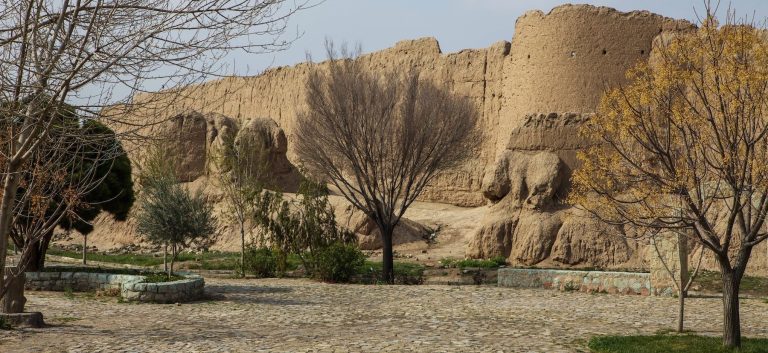
Tepe Sialk consists of a northern mound and a southern mound roughly 600 metres apart, together with two cemeteries. A tepe is an archaeological mound formed by accumulated buildings, debris, and occupation layers. Cemetery A lies about 200 metres south of the southern mound, while Cemetery B is west of the mounds beneath gardens and agricultural land. The surviving complex is in ruins, with fragments of ancient pottery visible on and around the two mounds.
The northern mound
Sialk I
The northern mound is the oldest part of Tepe Sialk and contains the Sialk I and Sialk II levels. Sialk I has relatively simple architecture and includes pottery-containing burials. Its pottery includes Zagheh archaic painted ware dating to approximately 6000–5500 BC, especially in sub-levels 1–2. In sub-periods 3–5, vessels had clearer surfaces and painted decoration, while stone and bone tools remained in use.
Sialk II
Buildings in Sialk II contain the earliest signs of metallurgy at the site. The material from this level also points to increased contact with communities outside Tepe Sialk. These remains belong to the northern mound’s sequence of early settlement layers and help connect its domestic architecture with the development of specialized production.
The southern mound and stepped platform
Sialk III and Sialk IV architecture
The southern mound contains the Sialk III and Sialk IV levels. Its buildings used molded mud brick, with stone becoming more common over time. Small houses were later replaced by larger mud-brick buildings. In the late fourth millennium BC, some buildings had low doors and windows, while certain entrances contained two-part hearths, with one section used for cooking and the other for baking bread.
The ziggurat-like platform
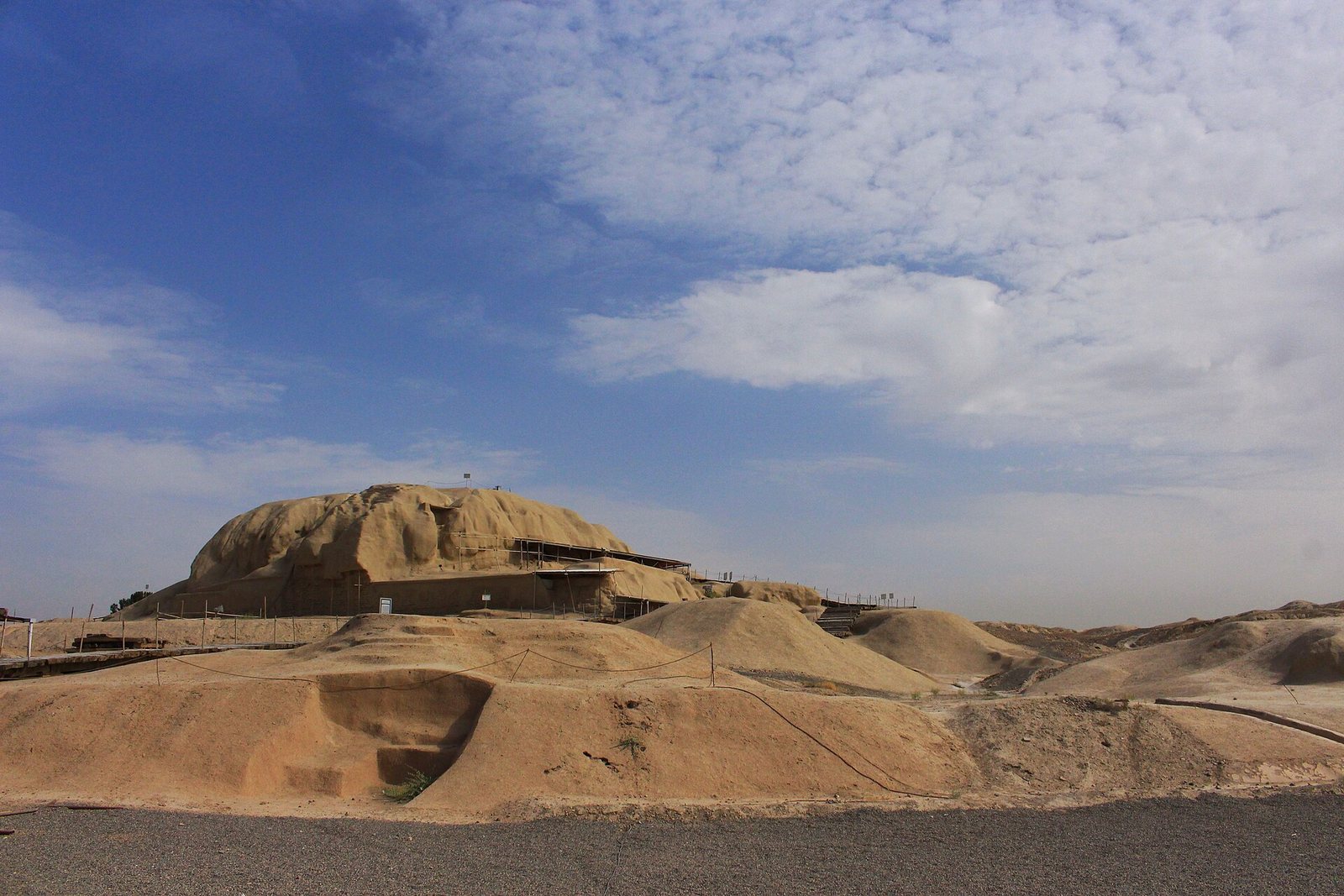
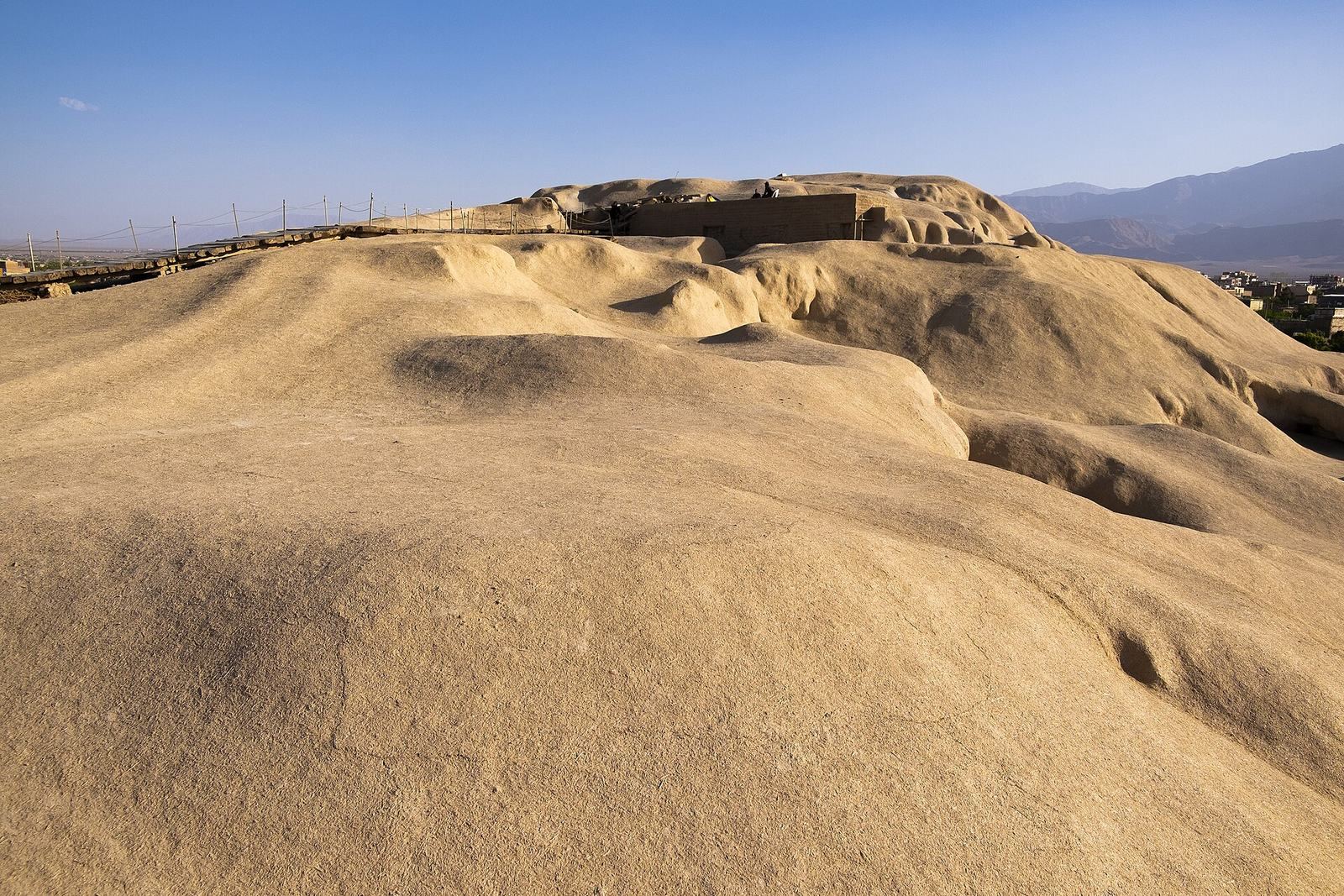
The most prominent surviving structure is a monumental stepped mud-brick platform traditionally called the Sialk Ziggurat. A ziggurat is a monumental stepped platform associated with ancient Near Eastern religious architecture, but recent descriptions characterize this structure more cautiously as ziggurat-like. It generally dates to around 3000 BC and belongs to the Sialk IV level. Excavations indicate that its construction required approximately 1.25 million mud bricks.
The surviving walls include several platforms. Excavated records refer to the wall of the second platform and to the southern facade of the remains. Earlier interpretations placed the construction in the late fourth or early third millennium BC, while the more cautious dating around 3000 BC reflects the structure’s position within the Sialk IV sequence.
Workshops and material production
Metalworking installations
A metal-smelting furnace was found in the southern part of the mound. Metallurgical remains from Sialk III and IV include large quantities of slag, litharge cakes and fragments, crucibles, molds, and other smelting residues. Litharge is lead monoxide produced during the processing of lead-bearing ores. The site has yielded some of the earliest known evidence of silver production, including litharge and slag.
Pottery and textile production
Spindle whorls made from stone and clay point to spinning and weaving. Pottery kilns produced red pottery, while copper was hammered into tools, pins, and delicate vessels. Bone carving and the manufacture of ornaments also formed part of the settlement’s material culture. Fine painted vessels carry geometric designs and images of wild animals, birds, ibexes, horses, and the sun. Some vessels became progressively more regular and highly finished, possibly through shaping on a hand-turned board.
Later pottery includes gray-black and red vessels with geometric decoration. A bridge-spouted jar from Tepe Sialk dates to approximately 800–600 BC, and a painted vessel from the first millennium BC is preserved in the National Museum of Iran.
Cemeteries and burials
Cemetery A
Cemetery A is approximately 3,500 years old and lies south of the southern mound. Its graves contain pottery, bronze weapons, ornaments, iron objects, horse-related equipment, and other grave goods. These objects provide evidence for changing burial customs during the later occupation of Tepe Sialk.
Cemetery B
Cemetery B is approximately 3,000 years old and lies west of the mounds beneath gardens and agricultural land. Its burials include pottery, metal weapons, ornaments, horse equipment, and other objects placed with the dead. Some later bodies were arranged with the arms and legs drawn toward the chest, and certain graves had pitched coverings made from stones and clay tablets.
Earlier burials and human remains
Some earlier inhabitants were buried near household hearths. Their bodies were coated in ochre, and tools or other implements were placed in the graves. Excavated human remains include the skeleton of a girl approximately ten years old, dating to around 5,500 years ago.
Objects and surviving collections
Finds from Tepe Sialk include pottery, bronze and iron weapons, copper mirrors, marble vessels probably used for perfume, gold and lapis-lazuli earrings, silver ornaments, stone vessels, Proto-Elamite tablets, and clay cylinder seals. Early excavation finds are distributed among several collections, including the Louvre, the British Museum, the Metropolitan Museum of Art in New York, the National Museum of Iran, the Fin Garden Museum, a museum beside the archaeological site, and private collections.