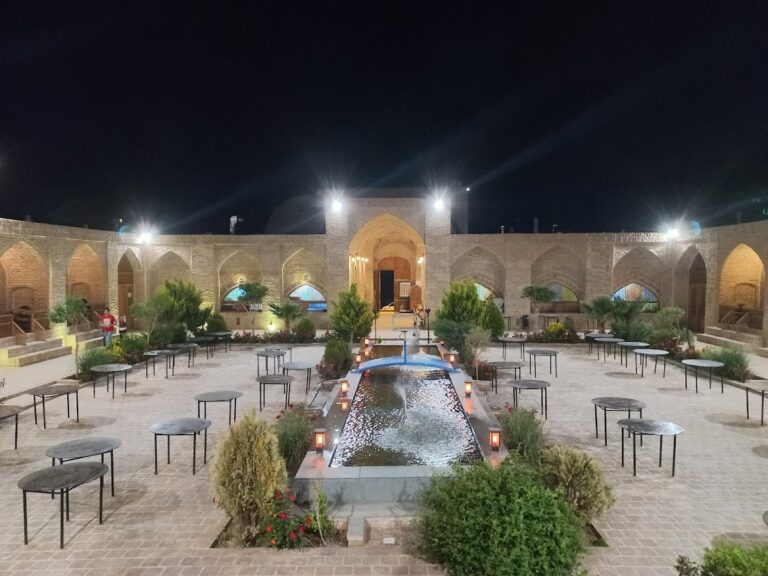
Pasangan Caravanserai: A Safavid Roadside Complex in Iran


Site at a Glance
- Rating
- 3.9
- Popularity
- Very Low
- Country
- Iran
- Primary era
- Early Modern
- Eras represented
- Early Modern
- Civilizations
- Safavid
- Site type
- Economic
- Remains
- Caravanserai
On this page5 sections
History
Pasangan Caravanserai is a Safavid-period caravanserai in Iran, located in Qom Province along the road toward Kashan. A caravanserai was a roadside lodging and service complex for travelers, caravans, and pack animals. The building was commissioned by order of Shah Abbas I, the Safavid monarch who ruled from 1588 to 1629 and supported extensive infrastructure projects across Iran. Its architecture is associated with both Safavid and Qajar styles.
Safavid foundation and later use
The caravanserai stands in Qom County’s Central District, approximately 20 kilometers along the road to Kashan. Its position reflects the Safavid government’s wider efforts to support major routes with roads, bridges, caravanserais, and religious buildings. The building later served as a police station during the twentieth century, giving the complex a use beyond its original function as roadside accommodation.
Protection and restoration
Pasangan Caravanserai, locally called Pasangoun, was registered as one of Iran’s national monuments under registration number 357 on 10 June 1942. Restoration and reconstruction under the supervision of cultural-heritage authorities have continued since 2009, with Saeed Ebrahimi Pour carrying out the work. The complex now also accommodates an astronomical-observation center and venues for national and religious celebrations.
Remains
Square brick-and-stone complex
Pasangan Caravanserai is a square building covering 2,500 square meters at an elevation of 902 meters above sea level. Its construction uses brick and stone, with saruj, a traditional waterproof mortar used in parts of the Middle East, among the identified materials. The surviving structure expresses the combination of Safavid and Qajar architectural associations attributed to the building, while restoration and reconstruction have shaped its present condition.