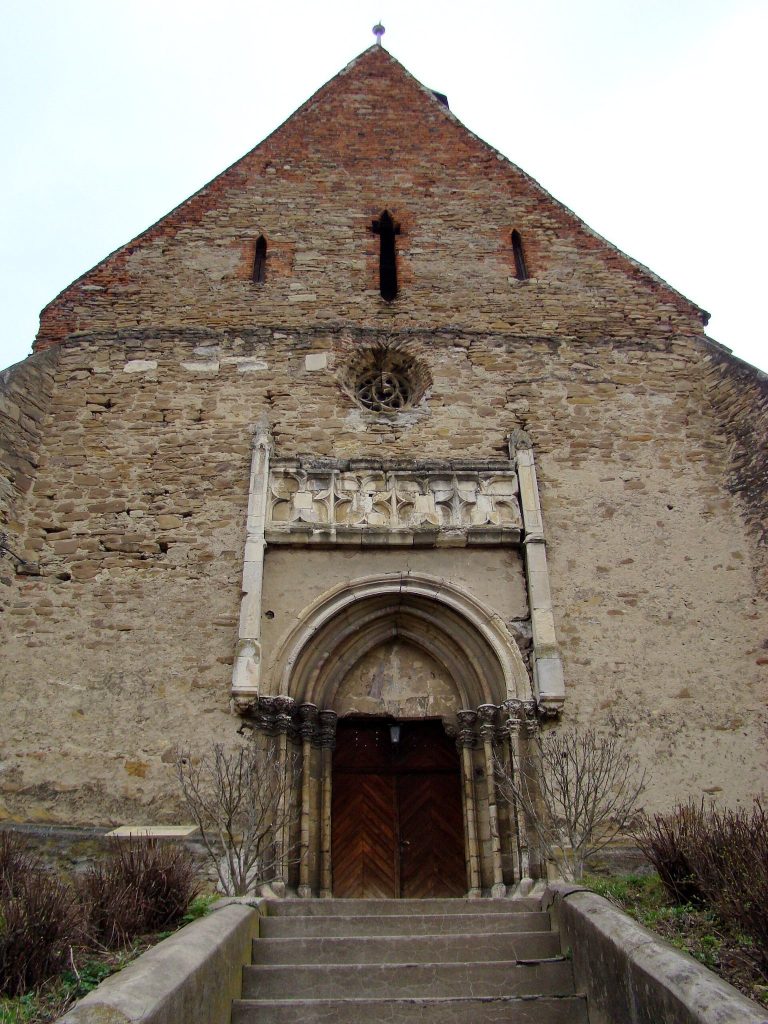
Unitarian Church in Târnăveni: A Historic Gothic Church in Romania

Site at a Glance
- Rating
- 4.2
- Popularity
- Very Low
- Country
- Romania
- Primary era
- Medieval
- External website
- Open
- Eras represented
- Medieval, Early Modern, Modern
- Civilizations
- Habsburg, Hungarian, Ottoman, Principality of Transylvania
- Site type
- Religious
- Remains
- Church
On this page6 sections
History
The Unitarian church in Târnăveni, Romania, is a historic Christian church that originated in the late thirteenth century and was first built in the Gothic style. Unitarianism is a Christian tradition that emphasizes the oneness of God and rejects the doctrine of the Trinity. The building developed through several phases, including reconstruction in the sixteenth century and further construction in the eighteenth and nineteenth centuries.
Medieval origins and later construction
The church’s original medieval phase belongs to the late thirteenth century. Its Gothic character places it within a period of Christian architecture known for pointed arches, strong vertical emphasis, and visibly structured masonry. The building was reconstructed during the sixteenth century, and a tower was added in 1599. Additional construction in the eighteenth and nineteenth centuries shaped the church’s later form.
Heritage status
The church is listed as a historic monument by Romania’s Ministry of Culture and Religious Affairs. It is also entered in Romania’s National Archaeological Register under code 114934.03.
Remains
Exterior structure
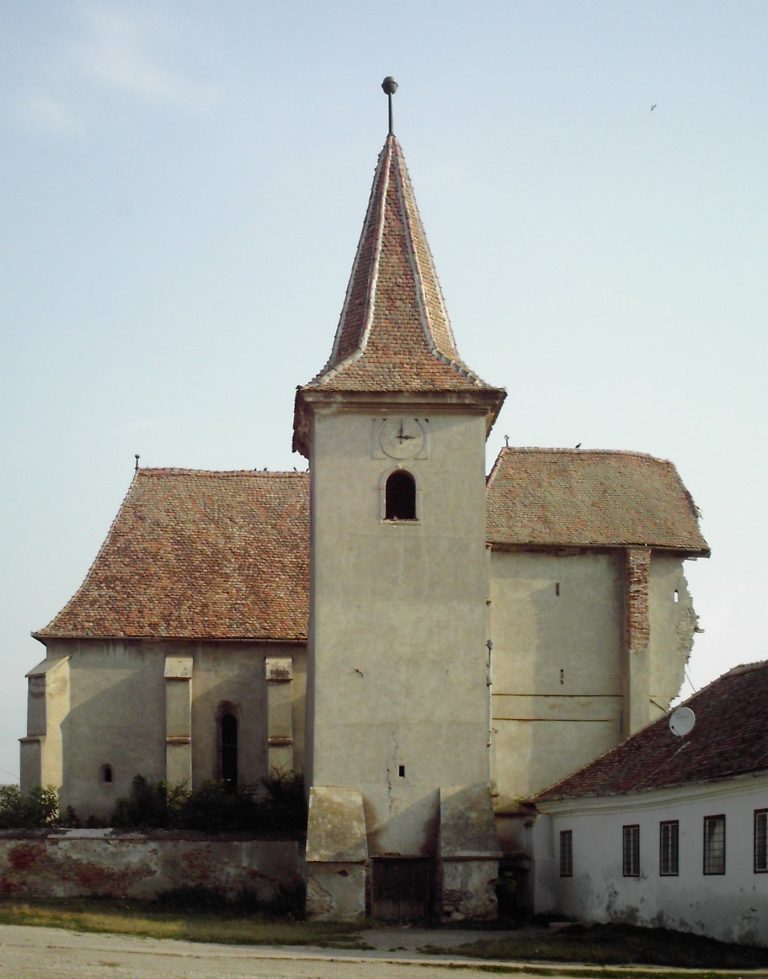
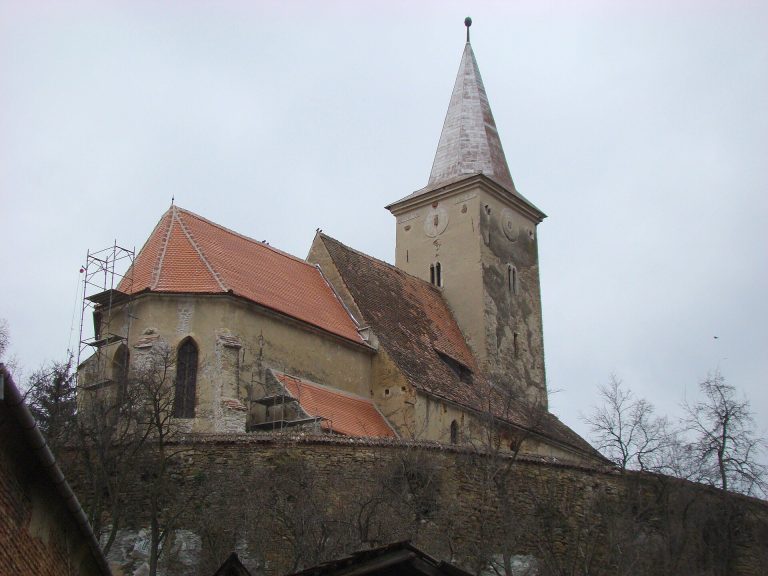
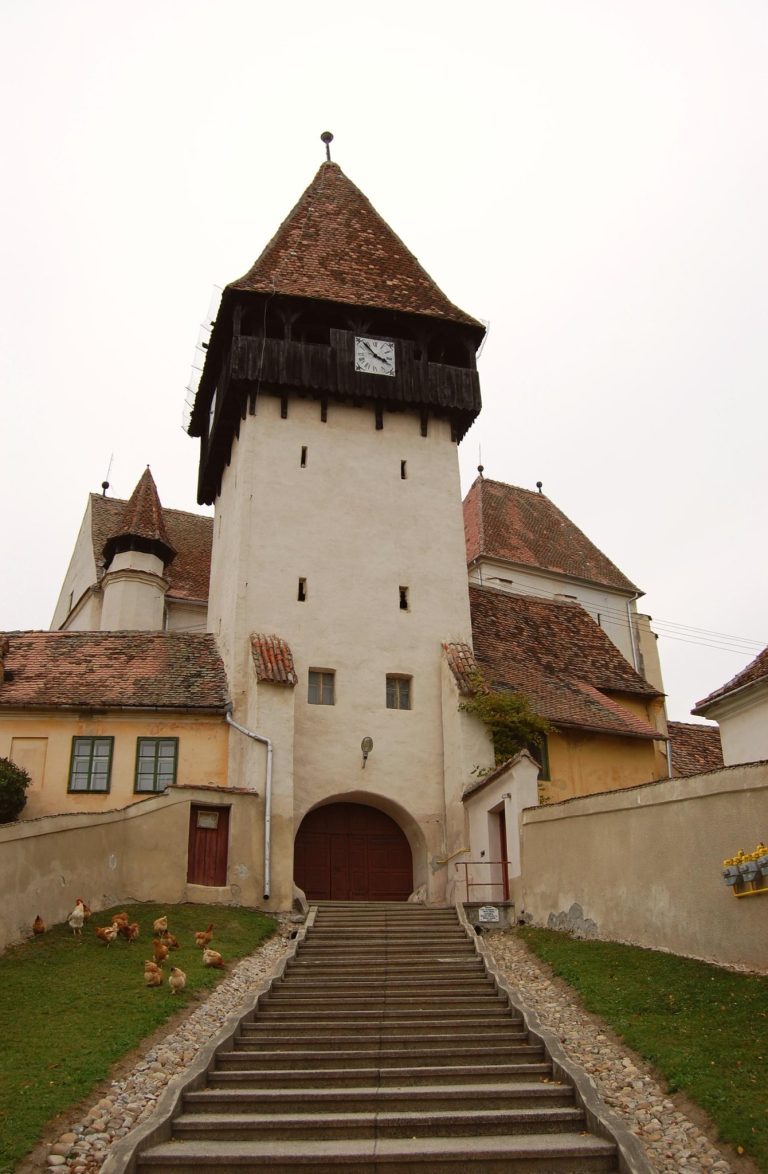
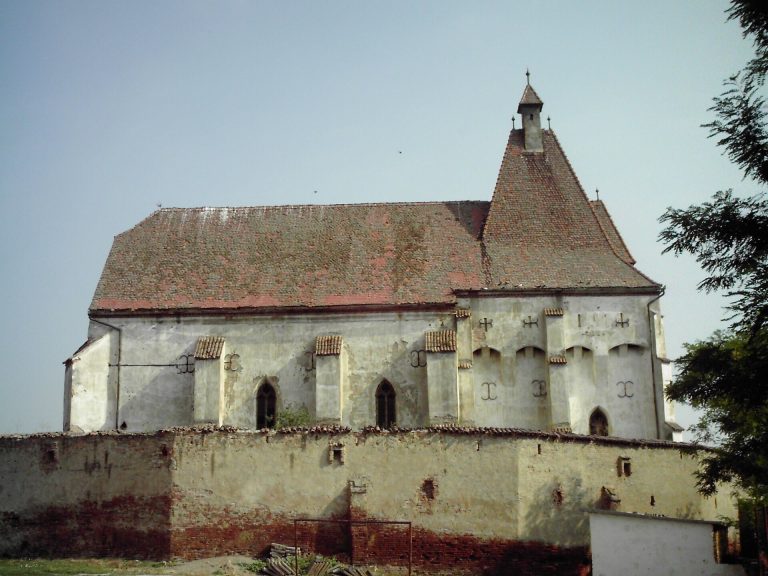
The surviving church has a rectangular nave strengthened by buttresses, which are projecting masonry supports built against a wall. A portico fronts the building and carries a high tympanum-shaped facade. A tympanum is the framed triangular or segmental area forming the upper part of a church facade, often above an entrance. The tower built in 1599 is articulated by cornices, a horizontal belt course, and decorated window surrounds framing its openings.
Painted and carved interior
Inside, a wooden painted coffered ceiling covers the church. Its 99 framed panels were made in 1769 by János Váradi, an eighteenth-century craftsman associated with painted church decoration. Alongside Protestant religious symbolism, the panels show a hand holding a sword, a chessboard, laughing grapevines, and a sickle swinging through a wheat field. The pulpit roof is a finely carved work produced in 1764 in a Kolozsvár carpentry workshop. Kolozsvár is the historical Hungarian name for Cluj-Napoca, a major city in Transylvania. The parapets of the western and eastern galleries are painted yellow.