Al-Mahdi Mosque: An Eighteenth-Century Mosque in Sana’a, Yemen


Site at a Glance
- Rating
- 4.6
- Popularity
- Very Low
- Country
- Yemen
- Primary era
- Early Modern
- Eras represented
- Early Modern
- Civilizations
- Unclassified
- Site type
- Religious
- Remains
- Mosque
History
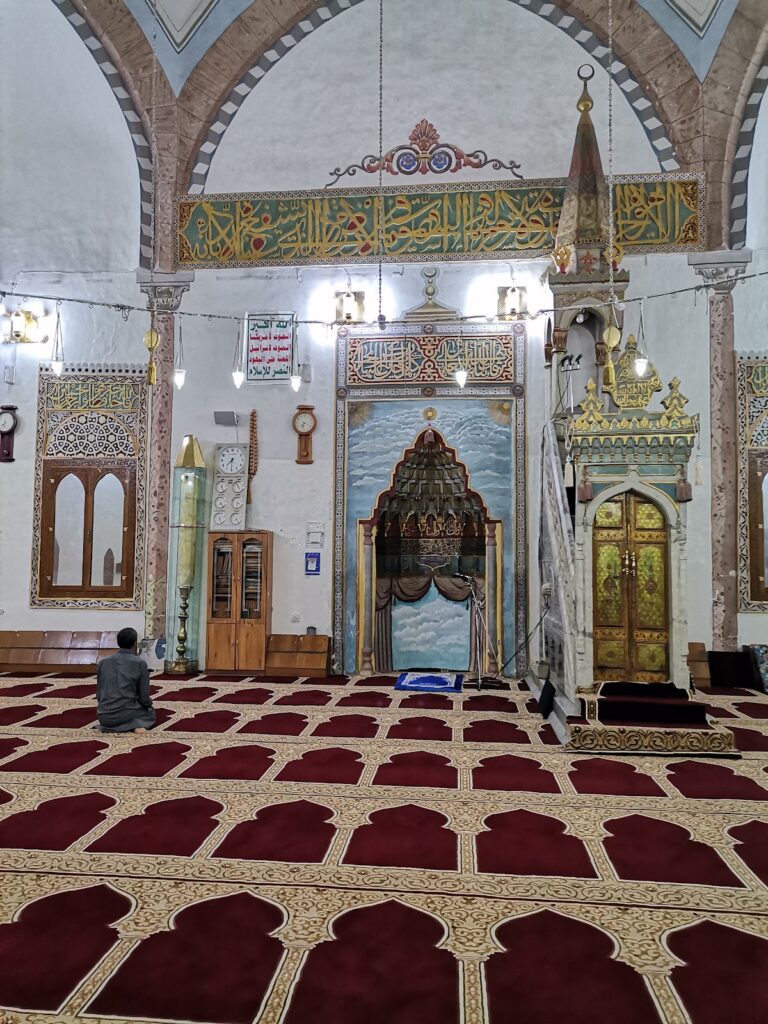
Al-Mahdi Mosque is an eighteenth-century mosque in Sana’a, Yemen, built in 1750–1751 under Imam al-Mahdi Abbas bin Mansour in a style combining Ottoman and Yemeni architectural features. Also called Qubbat al-Mahdi and the Mosque of al-Mahdi Abbas, it was commissioned during a period of Yemeni rule between the first and second Ottoman occupations of Yemen.
Imam al-Mahdi Abbas ruled from 1748 to 1775. The mosque’s design repeats features associated with the al-Bakiriyya and Talha mosques, linking its appearance to architectural forms used during the Ottoman presence in Yemen. Its construction, however, took place after the first Ottoman occupation ended in 1635 and before the second began in 1872, when the building was ordered by a Yemeni ruler.
After Imam al-Mahdi Abbas died, he was buried at the mosque, and a tomb was built for him. Here, “Mahdi” refers to the imam who commissioned the mosque as well as to an Islamic eschatological figure traditionally understood as a future guide who will restore justice before the Last Judgment. The mosque remains active and open for worship, and it forms part of the UNESCO World Heritage Site of the Old City of Sana’a.
Remains
Al-Mahdi Mosque stands in western Sana’a, in the Qubbat al-Mahdi neighborhood of the western Sarar district. It is positioned beside the Seila, along a road that follows the boundary of the Old City. During the rainy season, the Seila fills with water and becomes a small temporary river, or wadi, forming part of the mosque’s physical setting.
The building combines Ottoman and Yemeni architectural styles and is marked by a single dome and one minaret. The mosque also contains the tomb built for Imam al-Mahdi Abbas after his death, preserving the connection between the building’s religious function and the ruler who commissioned it.