Spitakavor Church of Ashtarak: An Armenian Apostolic Church at a Gorge’s Edge

Site at a Glance
- Rating
- 5
- Popularity
- Very Low
- Country
- Armenia
- Primary era
- Medieval
- Eras represented
- Classical, Medieval
- Civilizations
- Armenian
- Site type
- Religious
- Remains
- Church
On this page7 sections
History
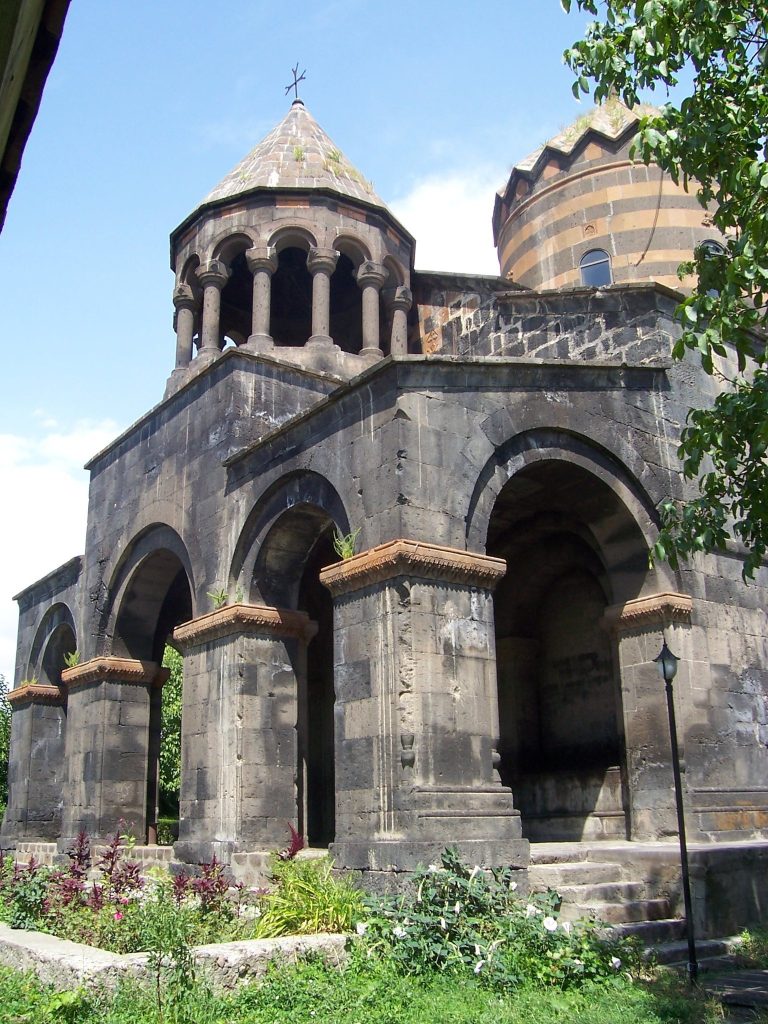
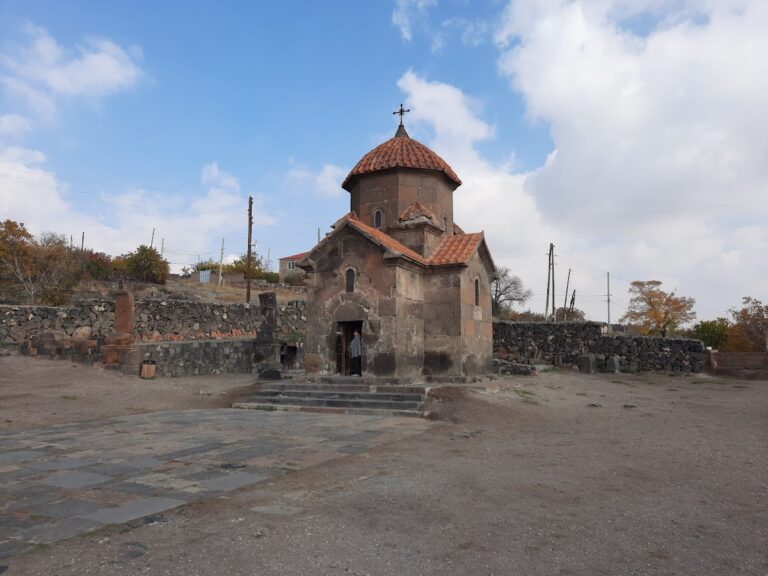
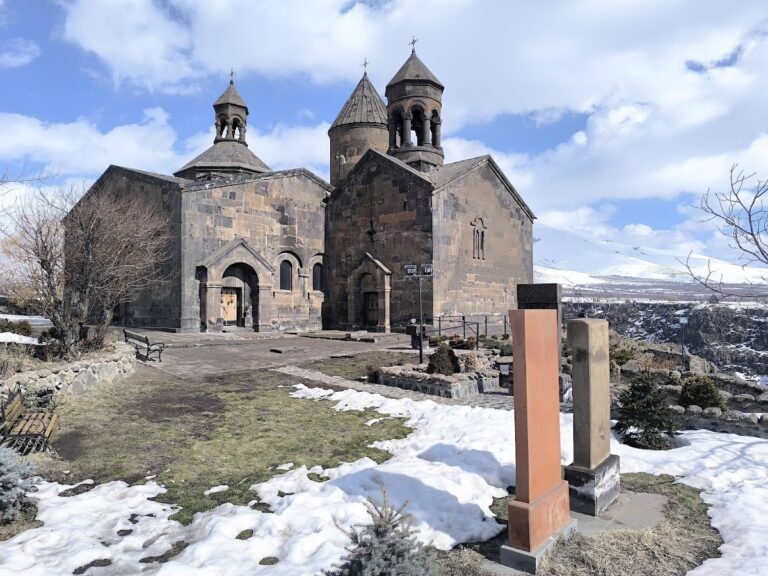
Spitakavor Church of Ashtarak is a historic Armenian church in Armenia, located in Ashtarak at the edge of a gorge and associated with the Armenian Apostolic Church, the historic Christian church of Armenia. It is traditionally described as having been built in the fifth or sixth century and reconstructed in the thirteenth or fourteenth century, although other descriptions date the surviving church to the thirteenth century or to the thirteenth and fourteenth centuries.
Dating and Identification
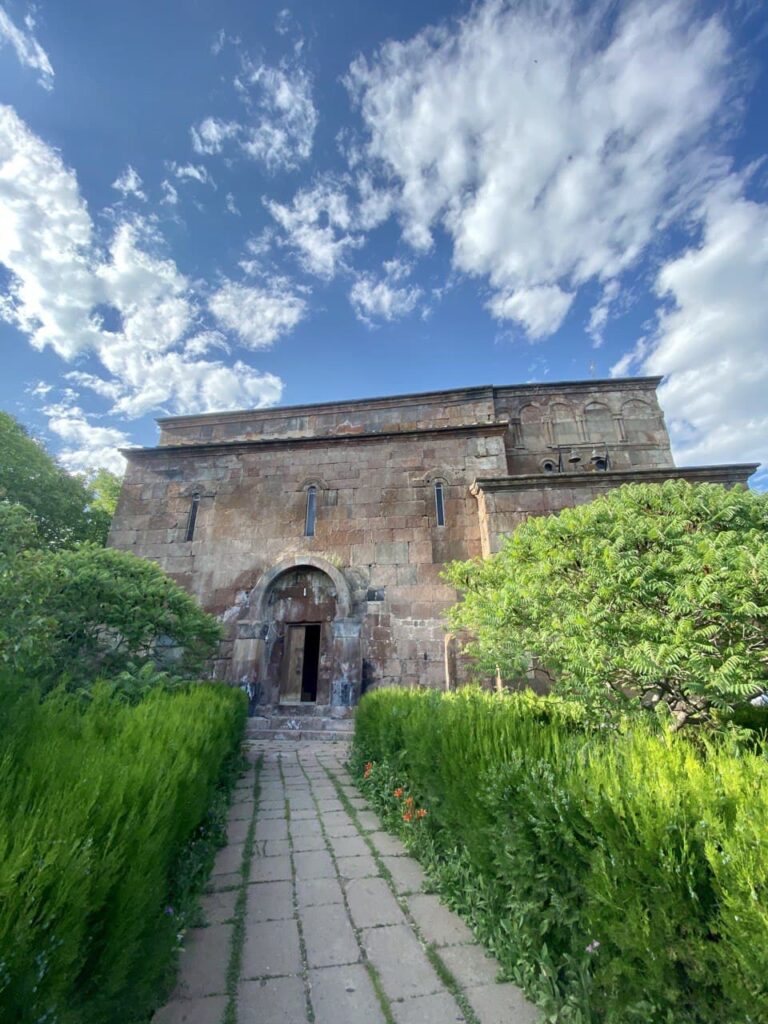
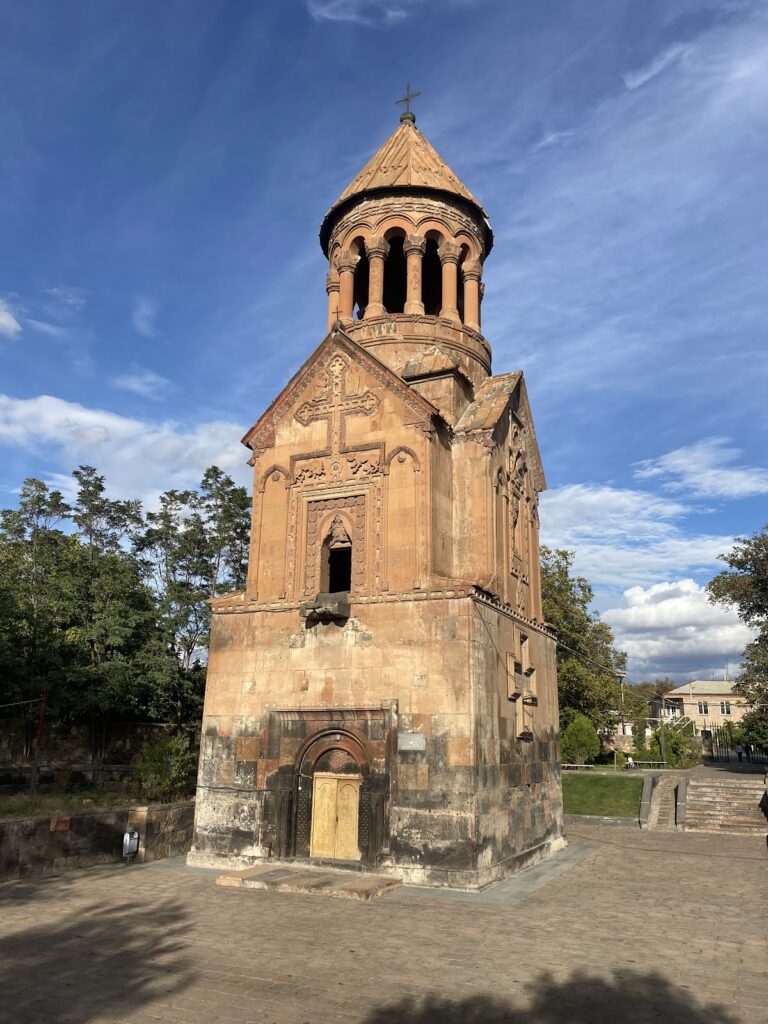
The church’s name and chronology are complicated by a long-standing confusion between Spitakavor and Tsiranavor. Local usage identifies Spitakavor as the white-colored church dating from the fifth or sixth century. Some markers and descriptions, however, apply the name Spitakavor to an apricot-colored church associated with the thirteenth century. The two buildings stand close to one another, allowing the names to overlap in descriptions of Ashtarak’s historic churches.
The church is included in Ashtarak’s list of immovable historical and cultural monuments and is described as a cultural monument of Armenia. Accounts differ over whether it functions as an active church, while its current status gives it to the Armenian Apostolic Church for free, indefinite use.
Legend of the Three Sisters
A local legend connects the churches along the gorge with three sisters who loved the same man, Prince Sargis. The two elder sisters threw themselves into the gorge wearing apricot-colored and red dresses. After learning of their deaths, the youngest sister followed in a white dress. Sargis then became a hermit, and three churches were said to appear along the gorge’s edge, associated with the sisters’ colors: Karmravor, Tsiranavor, and Spitakavor.
Remains
Church Building and Gorge Setting
Spitakavor is a small Armenian-style church positioned beside the gorge within a residential neighborhood. Descriptions of its plan differ: one identifies it as a centrally planned, cruciform building, meaning that its layout forms a cross around a central core, while another describes a single-nave rectangular church with one principal interior space and a vaulted roof. These differing architectural descriptions reflect the wider uncertainty over whether the building being described is Spitakavor or the nearby Tsiranavor.
Apricot-Colored Church
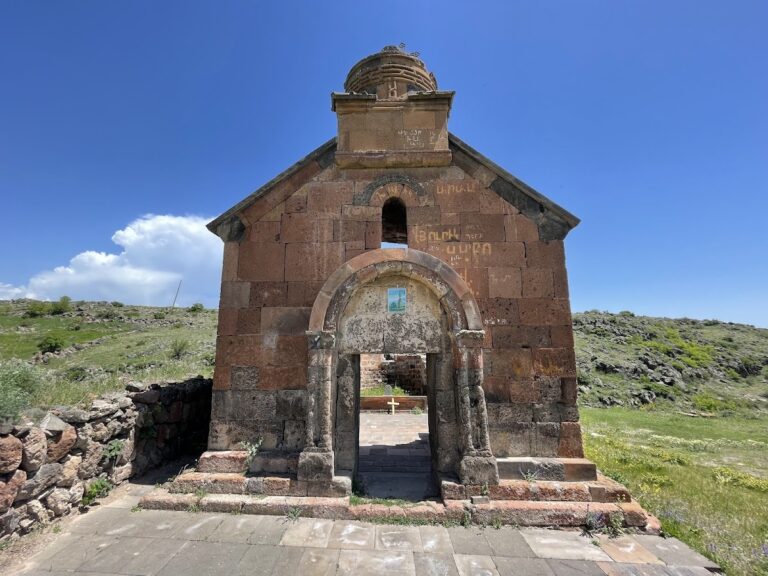
The identification of the apricot-colored church places its construction in the thirteenth century and describes it as built from apricot-orange tufa, a relatively light volcanic stone widely used in Armenian architecture. Its roof, drum, the cylindrical or polygonal structure supporting a dome, and dome have collapsed, leaving the walls. The front facade has a principal portal, or formal entrance doorway, and a second portal opens on the side. Inside, the walls are generally flat, apart from a semicircular apse, a rounded-ended space used for the principal sacred focus of a Christian church, directly opposite the main entrance. The exterior has little decoration beyond cruciform reliefs.
Nearby White Church
A separate white-colored church identified locally as Spitakavor stands a short distance away. Its proximity to the apricot-colored building is a central physical reason for the two names being applied inconsistently. The church may be viewed across the gorge from Surp Sarkis Church, while the surrounding residential setting places the buildings close to the historic urban fabric of Ashtarak.