Igreja de Santo António de Lisboa: A Lisbon Sanctuary of Saint Anthony


Site at a Glance
- Rating
- 4.7
- Popularity
- Medium
- Country
- Portugal
- Primary era
- Early Modern
- External website
- Open
- Eras represented
- Early Modern
- Civilizations
- Portuguese
- Site type
- Religious
- Remains
- Church
On this page9 sections
History
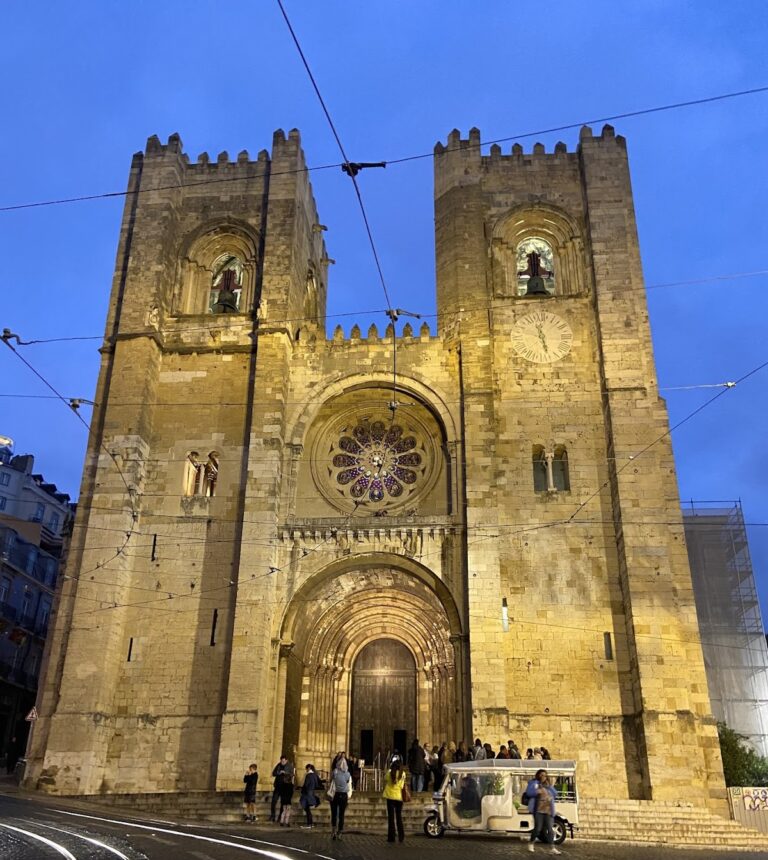
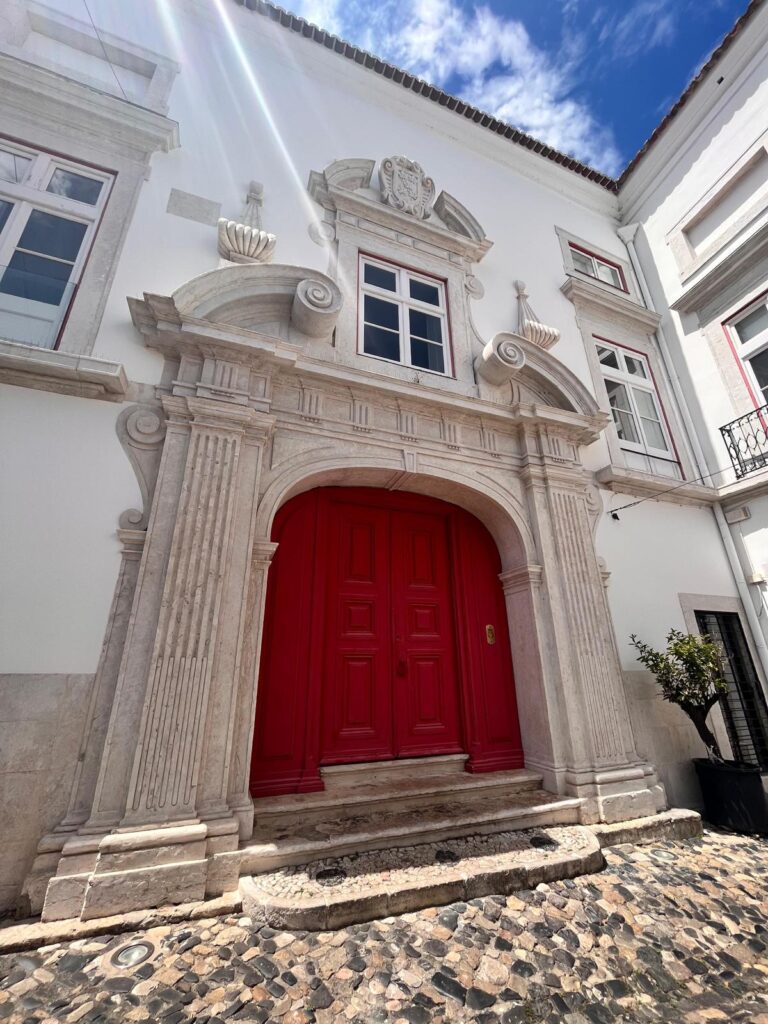
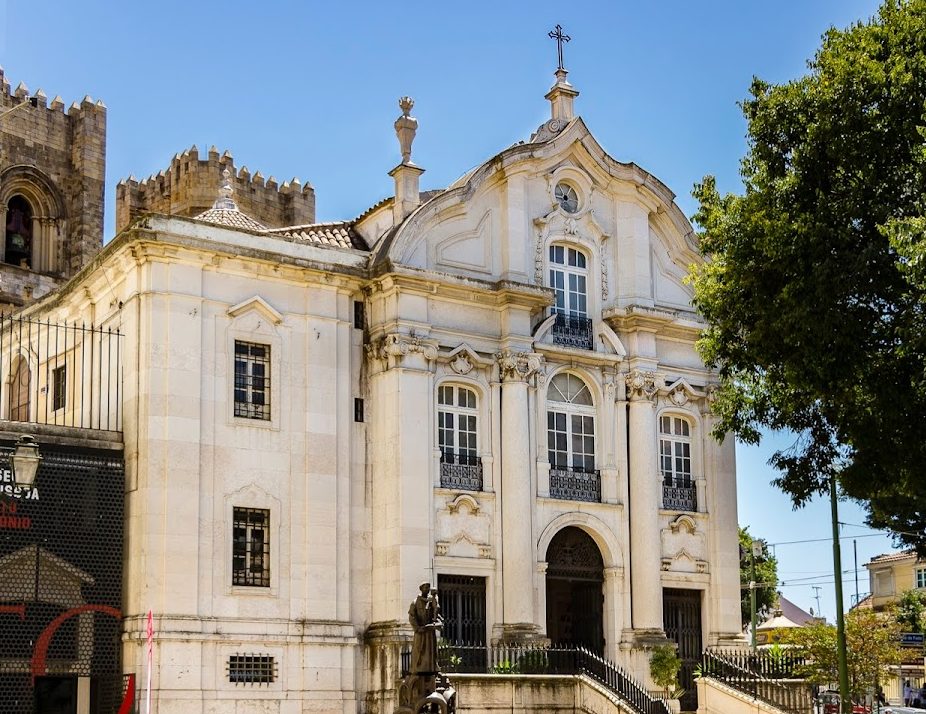
Igreja de Santo António de Lisboa is a Roman Catholic church in Lisbon, Portugal, standing in the Alfama district beside Lisbon Cathedral. The present building, completed in 1767, is a late-Baroque Pombaline church with Rococo characteristics, and it occupies the traditional site of the house where Fernando de Bulhões, known as Saint Anthony of Lisbon or Saint Anthony of Padua, was born in 1195.
The birthplace of Saint Anthony
The house associated with Fernando de Bulhões no longer survives. The birthplace tradition places it near the former Porta do Mar, an opening in the medieval city wall. Fernando entered the Franciscan Order, a Catholic religious order founded on the teachings of Saint Francis of Assisi, in 1220 while studying in Coimbra. He then adopted the name António, travelled as a missionary in Italy, and eventually settled in Padua. He was canonised in 1232, less than a year after his death, and became closely associated with both the Franciscan Order and Lisbon, where he is regarded as a patron.
A chapel was built on the traditional birthplace site in the fifteenth century. During the reign of King Manuel I, it was rebuilt as a small church in the early sixteenth century. The Brotherhood of Saint Anthony was established there during the same century, while the Lisbon Senate occupied a neighbouring house. These institutions helped maintain the site as a place of local devotion and civic association.
Rebuilding after the earthquake
In 1730, during the reign of King John V, the church was rebuilt, enlarged, and redecorated. The Lisbon earthquake of 1755 destroyed the building, although its main chapel remained standing. A new church was erected after the disaster and completed in 1767. Its reconstruction formed part of the wider rebuilding of Lisbon associated with Pombaline architecture, an eighteenth-century style developed during the city’s recovery after the earthquake.
The rebuilt church became a sanctuary of Saint Anthony. Since 1755, an annual procession has departed on 13 June, the saint’s feast day, and passed through Alfama. The date remains part of Lisbon’s Popular Saint Festivities. A local custom also brings young people who hope to marry to the church to pray and leave flowers for Saint Anthony, who is regarded there as an intercessor for newly married couples.
The church’s construction was partly supported by donations collected by children, who traditionally asked for “a little coin for Saint Anthony.” The building belongs to the Archdiocese of Lisbon and is served by priests of the Franciscan Order. It is classified as a National Monument.
Modern religious and cultural history
On 12 May 1982, Pope John Paul II visited the church and prayed in its crypt. During the visit, he inaugurated a statue of Saint Anthony by the sculptor Soares Branco in the square in front of the church. The church was renovated in 1995 for the eighth centenary of the saint’s birth.
Remains
Church and underground remains
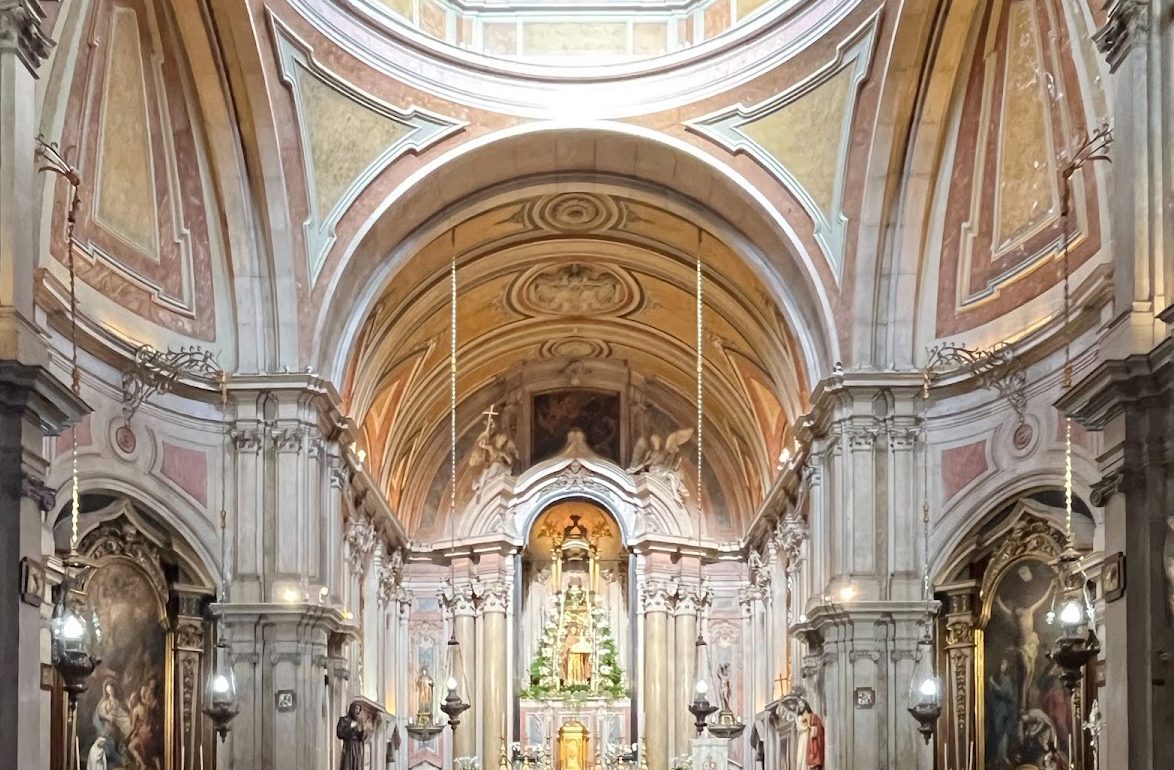
The present church has a single nave, the main interior space of a church, and is richly decorated with marble. Its late-Baroque and Pombaline character appears in the sinuous lines of the pediment, the decorated upper part of the facade, and the staircase. Rococo qualities add a highly ornamental finish to the eighteenth-century design. Statues and paintings inside the church depict miracles attributed to Saint Anthony.
The crypt
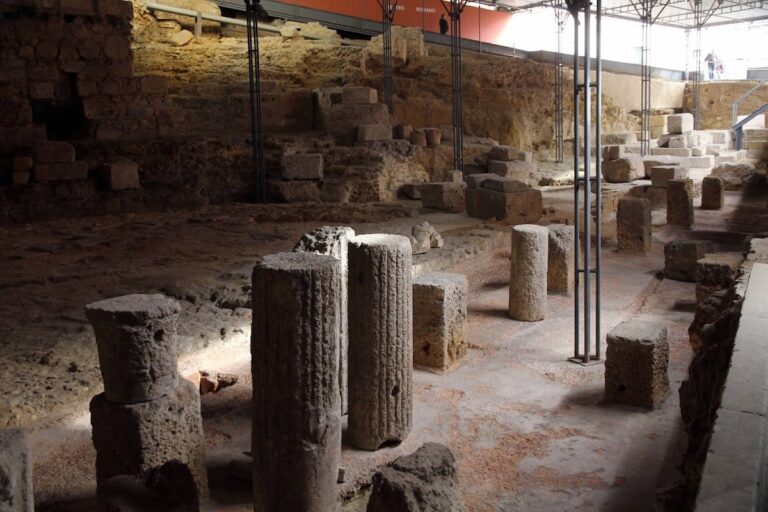
The crypt, a chamber below the main floor, is entered through the sacristy, the room where clergy prepare for worship and keep liturgical objects. It is the only surviving part of the original church after the destruction of 1755. Fragments of an older foundation remain there and are traditionally believed to belong to Saint Anthony’s birthplace. The descent into the crypt includes a modern tile panel commemorating Pope John Paul II’s visit in 1982.
The chapel interior
The chapel floor is covered with coins left by devotees, while messages from worshippers are displayed on the walls. These features form part of the continuing devotional use of the church and accompany the paintings and statues connected with Saint Anthony’s miracles.
The Saint Anthony Museum
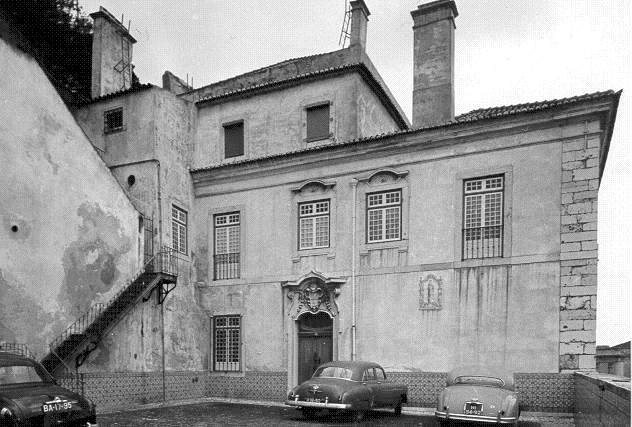
A small museum dedicated to Saint Anthony stands beside the church. Its annex was created in 1962 on the traditionally identified birthplace site. The museum contains sculpture, painting, ceramics, books, and other objects associated with the saint. Its exhibition was renewed between 2010 and 2012 through a project carried out by Ana Cristina Leite, Pedro Teotónio Pereira, and Rita Fragoso de Almeida.