St. Gallus: A Late Gothic Parish Church in Steinhöring, Germany
Site at a Glance
- Rating
- 4.6
- Popularity
- Very Low
- Country
- Germany
- Primary era
- Medieval
- External website
- Open
- Eras represented
- Medieval, Early Modern, Modern
- Civilizations
- Duchy of Bavaria, Electorate of Bavaria, German, Holy Roman Empire
- Site type
- Religious
- Remains
- Church
On this page7 sections
History
St. Gallus is a Roman Catholic parish church in Steinhöring, Germany, built in the late fifteenth century as a late Gothic church. It belongs to the Steinhöring parish association in the Ebersberg deanery of the Archdiocese of Munich and Freising. The church is dedicated to Saint Gallus, an early medieval Christian missionary and monastic founder associated especially with the region around Lake Constance.
Late Gothic Origins and Baroque Transformation
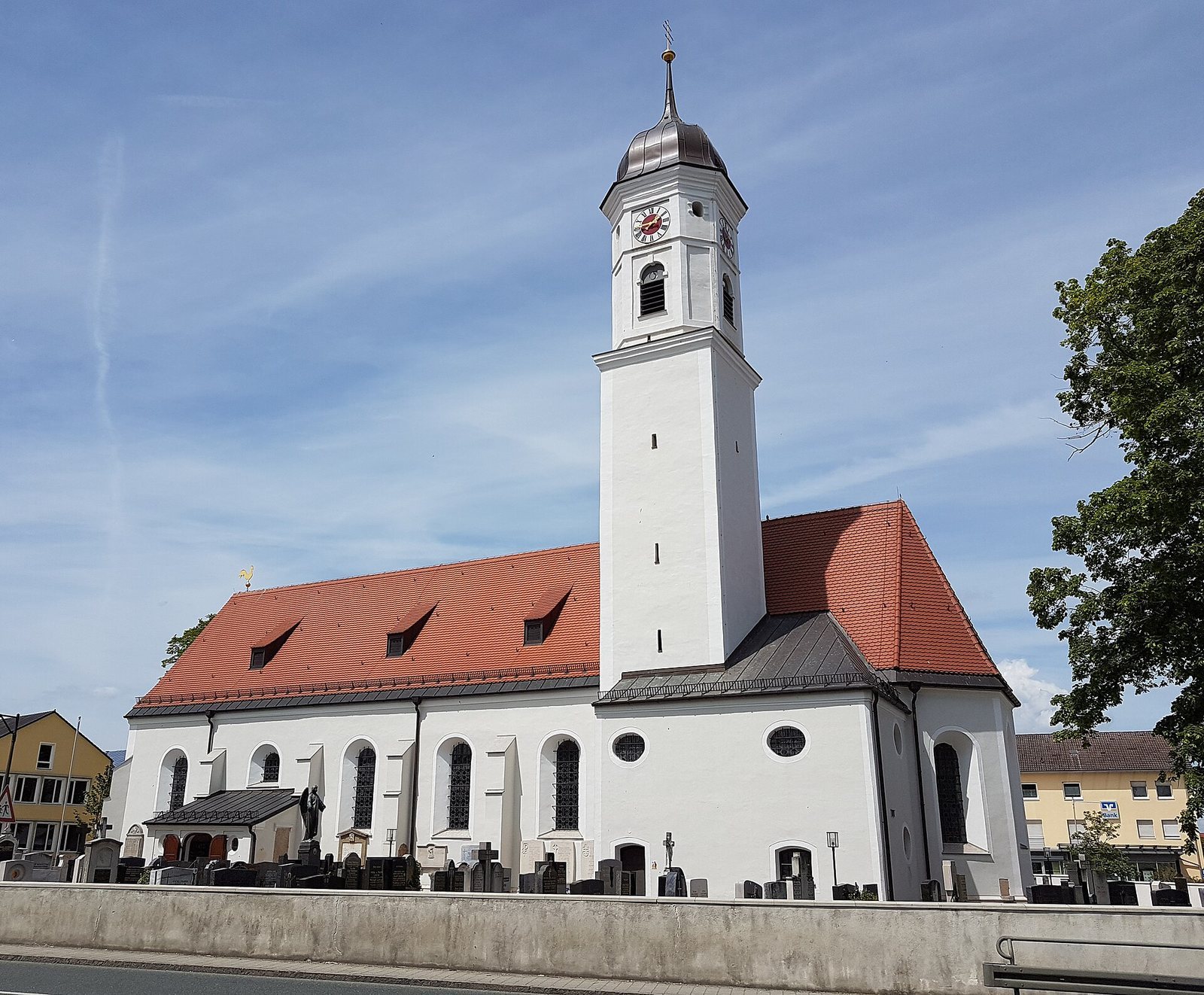
The church was remodeled in Baroque style in 1727. This phase gave the tower its octagonal upper stages and bell cupola, changing the appearance of the earlier late Gothic building while retaining its principal structure. In 1849, the nave was extended westward by two bays, adding to the church’s length.
Restoration and Modern Liturgical Changes
The Baroque altars were altered over the centuries. A restoration in 1952 returned them to their original Baroque marbling. During the same work, the rear wall of the high altar was removed to produce a more open and visually lighter arrangement. Paintings were taken from the two side altars and replaced with sculptural groups.
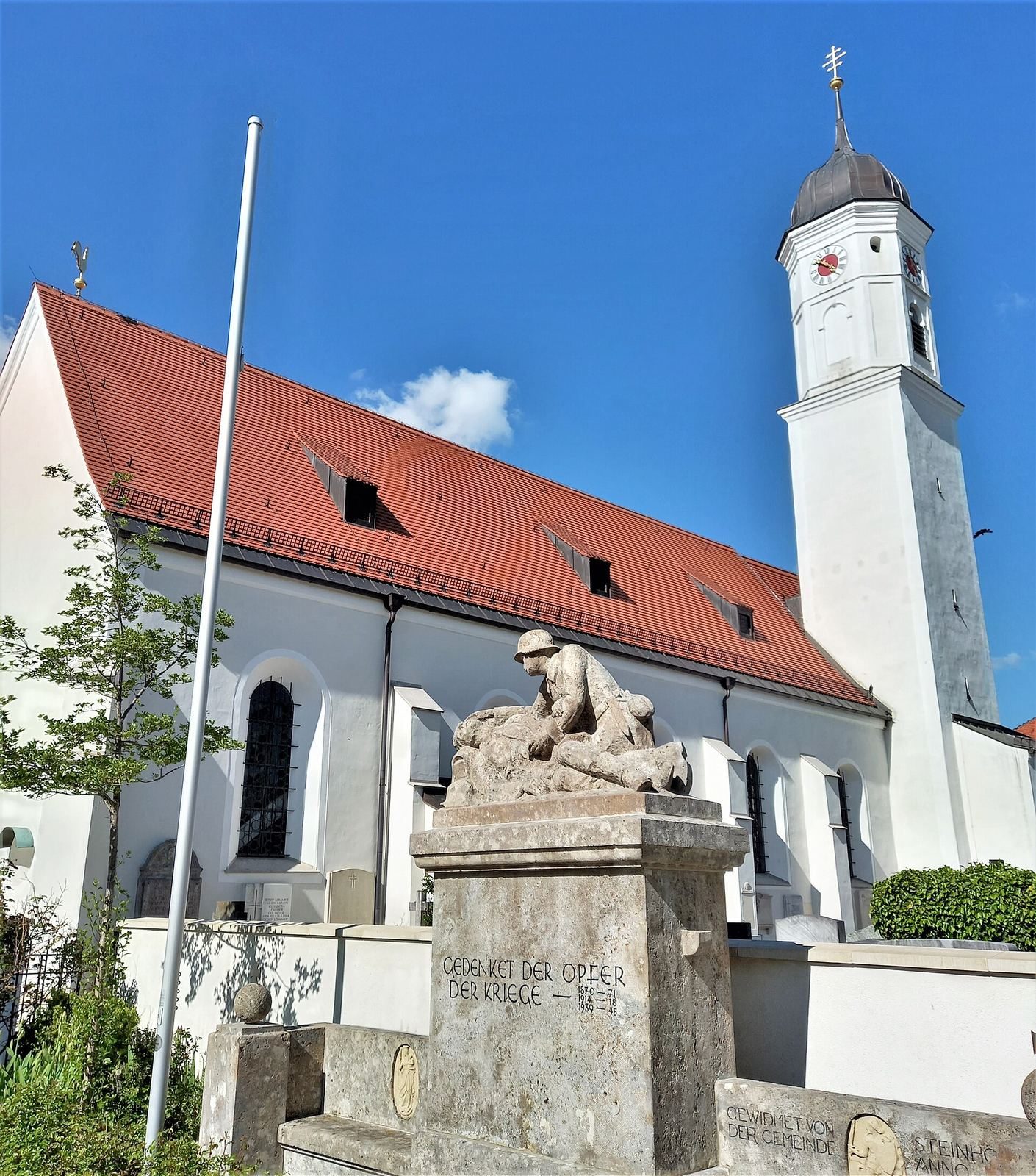
Earlier organs were installed in 1766, 1774, and 1908. The present organ was built in 1979 by Anton Staller, with its main division placed in the case of the 1908 instrument made by G. F. Steinmeyer & Co. of Oettingen. From 2014 to 2016, the church underwent comprehensive interior renovation. The work included new furnishings for the chancel and the replacement of the former cross at the western end of the roof ridge with a gilded Gallus rooster created by Eva Raiser-Johanson.
Remains
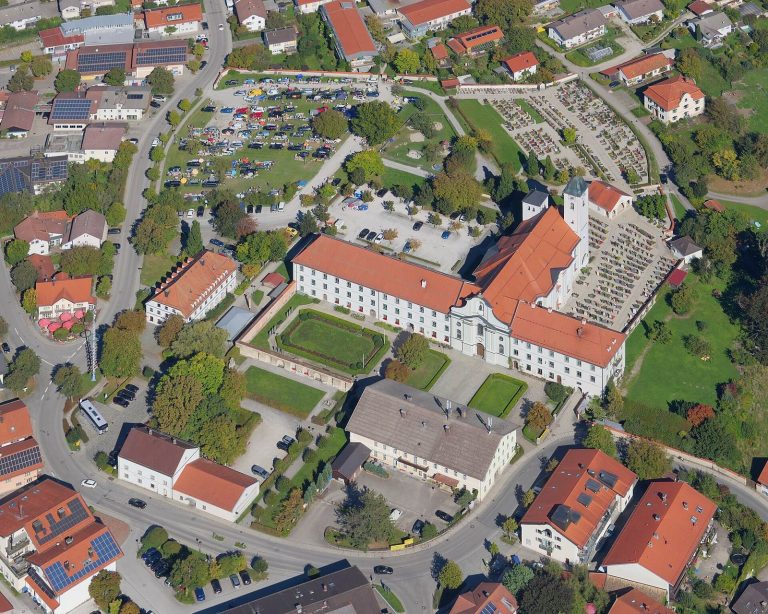
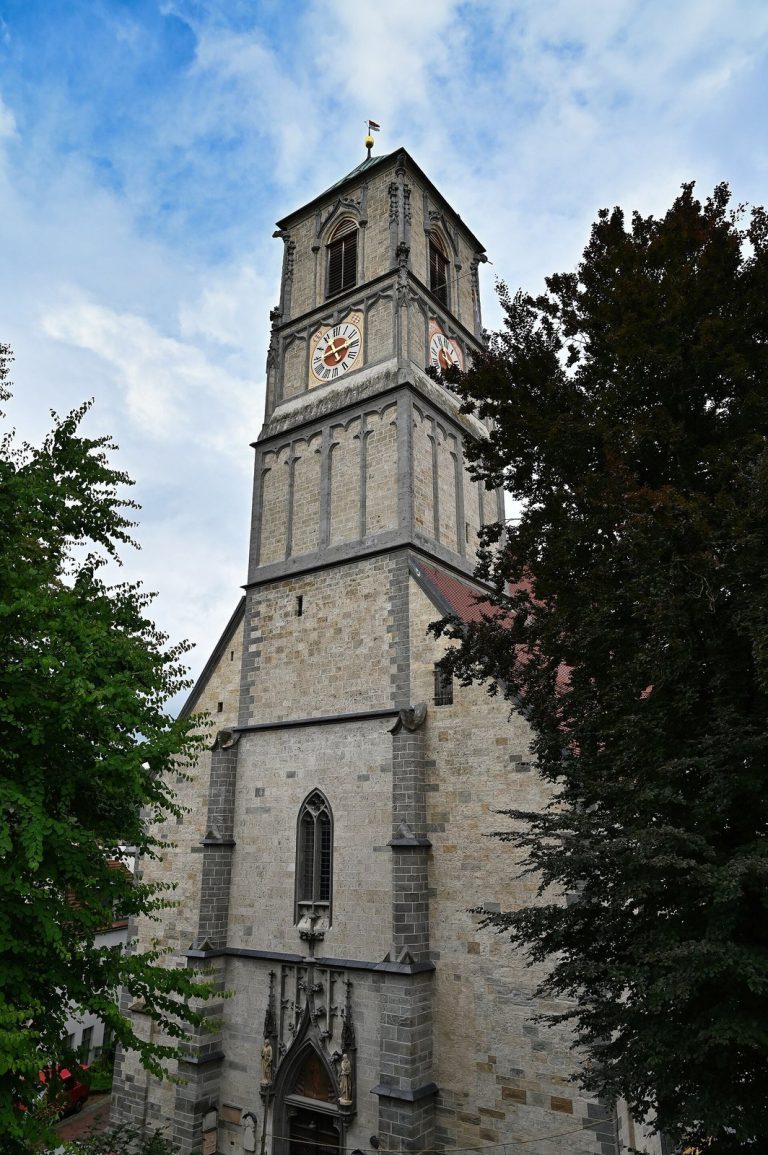
St. Gallus is a late Gothic single-nave church with a buttressed nave, a narrower choir at the east end, and a tower attached to the choir’s south wall. The choir closes on three sides, while the nave and choir together measure 35 metres in length and the nave is 8 metres wide. A south porch gives access to the portal. At the southeast corner between the tower and choir stands a sacristy with an oratory, a room intended for private or restricted prayer, on its upper floor.
Tower and Bells
The choir-flank tower has a square lower plan and octagonal upper stages added in 1727. It rises to 37 metres and is capped by a bell cupola. A tower clock and a bell frame containing three bells form part of the surviving tower equipment. The bells were cast by the Bachert bell foundry.
Chancel and High Altar
The renovated chancel contains a celebration altar, ambo, Easter candlestick, and baptismal area designed by Sabine Straub. Their forms draw on the column-based architecture of the high altar. Twelve columns are visible on the outside of the new altar, while a central column contains a reliquary, a container for preserving or displaying religious relics, with interred relics.
The Baroque high altar surrounds a Madonna in a radiant aureole with sculptures of Saint Gallus, Saint John of Nepomuk, Saint Henry, and Saint Leonard. Above them are the Holy Spirit represented as a dove and God the Father as ruler of the world. An Eye of God bearing the symbol of the Holy Trinity forms the upper termination of the altar. The Madonna holds the Christ Child on her left arm. For a long period, both figures were dressed in textile garments that did not correspond to the style of the other furnishings.
Passage doors on both sides of the altar table allow the high altar to be walked around. Half-length figures of Saint Peter and Saint Paul, formerly placed beside the high altar tabernacle, now occupy the positions once held by the tabernacles of the side altars.
Side Altars and Organ
The left side altar contains a sculptural group of Saint Anne with the Virgin Mary and the Christ Child, a subject known as Anna selbdritt. In this representation, the child sits on his grandmother’s lap while Mary kneels beside him and looks upward as he smiles at her. The right side altar holds a statue of Saint Joseph.
The present organ stands on the gallery. It is a purely mechanical slider-chest organ with 18 stops, two manuals, and a pedal. Its main division is housed in the case of the earlier 1908 instrument.