Old Moster Church: A Medieval Romanesque Parish Church in Norway
Site at a Glance
- Rating
- 5
- Popularity
- Very Low
- Country
- Norway
- Primary era
- Medieval
- Eras represented
- Medieval, Early Modern
- Civilizations
- Danish, Norwegian
- Site type
- Religious
- Remains
- Church
On this page7 sections
History
Old Moster Church is a medieval Romanesque stone church in Mosterhamn, Norway, built on the island of Moster around the twelfth century. Its foundation traditions connect the site with the introduction of Christianity to Norway and with the early development of Christian law.
Early Christian traditions
An early church at Moster is traditionally associated with King Olav Tryggvason, whose construction of a church there around 996 was recorded by Snorri Sturluson, a medieval Icelandic historian and author. The earliest building may have been a wooden post church, a timber structure supported by upright posts, but its form is unknown.
Around 1020–1024, King Olaf II held a thing at Moster. A thing was a formal medieval Scandinavian assembly for deciding legal and political matters. The meeting is associated with the conversion of the Norwegian kingdom to Christianity and with the introduction of the earliest Christian law in Norway.
Construction and parish use
During the twelfth century, the earlier church was demolished and replaced on the same site by the present stone building. Archaeological and historical evidence places the probable beginning of construction around 1100 and its completion around 1150, although the exact dates remain uncertain. The church was earlier affiliated with the Catholic Church and later became part of the Church of Norway, within Moster Parish in Sunnhordland Deanery and the Diocese of Bjørgvin.
Old Moster Church served as the main church of Moster Parish until the congregation outgrew its capacity. A new Moster Church was built nearby in 1874, and the older church was then intended for demolition. The Society for the Preservation of Ancient Norwegian Monuments purchased the building and converted it into a museum. Peter Andreas Blix restored it in 1896 in an effort to reflect its historical appearance.
Later civic and religious role
In 1814, the church served as an election church and polling station for elections to the Norwegian Constituent Assembly, which drafted the Constitution of Norway. It is no longer used for regular parish worship, but remains consecrated and is occasionally used for special occasions. Old Moster Church is an automatically protected Norwegian cultural heritage site and belongs to the Society for the Preservation of Ancient Norwegian Monuments.
Remains
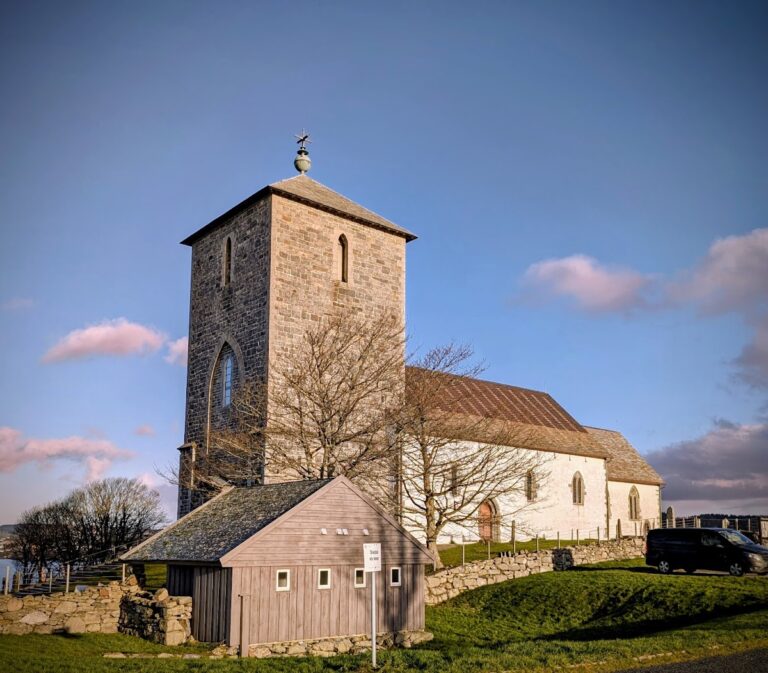
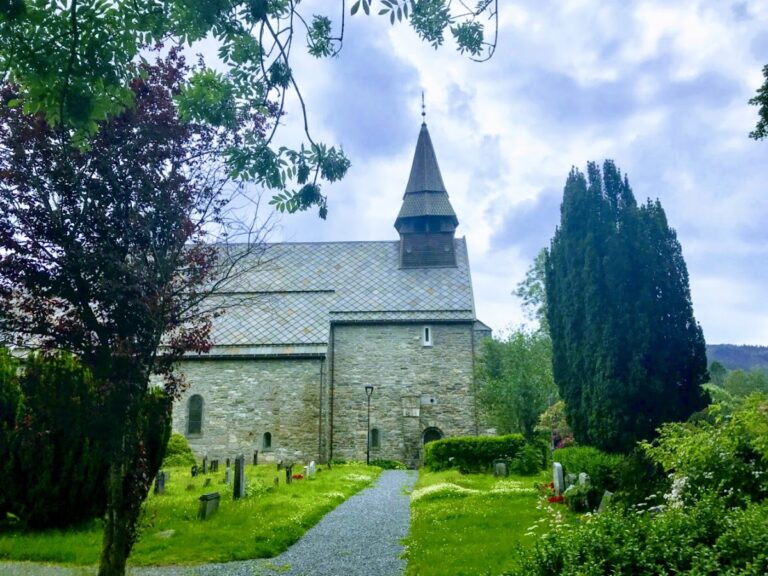
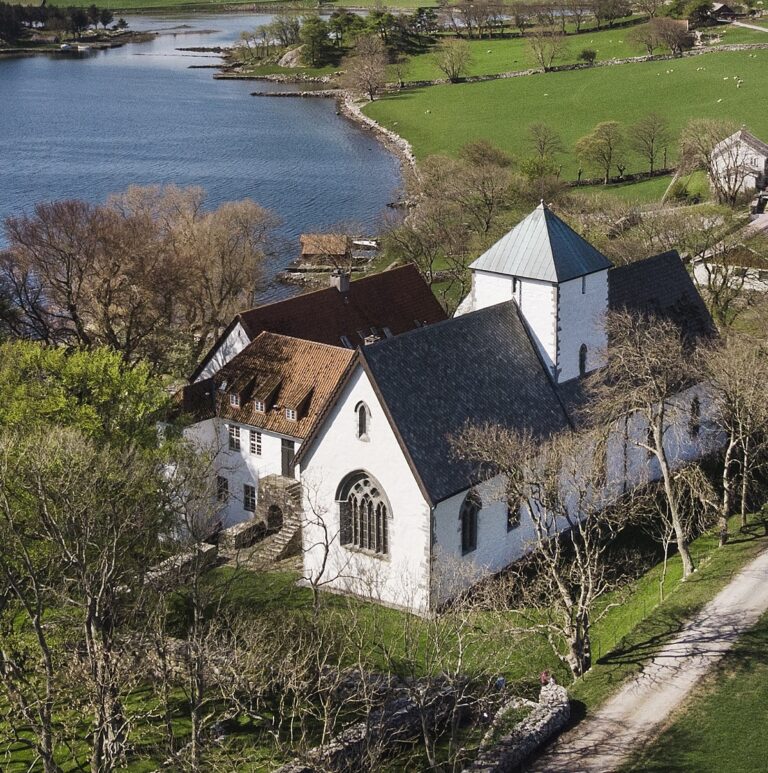
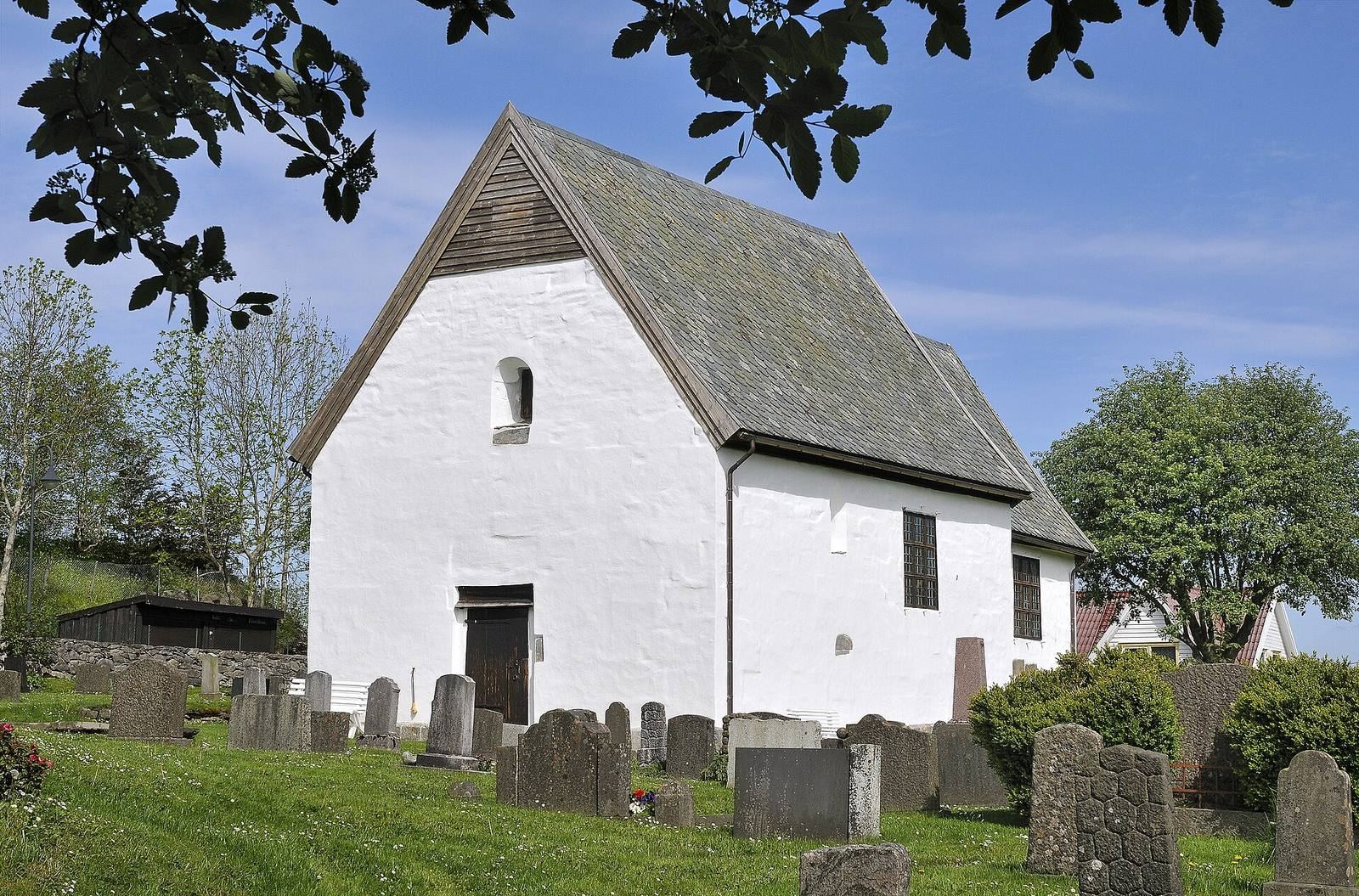
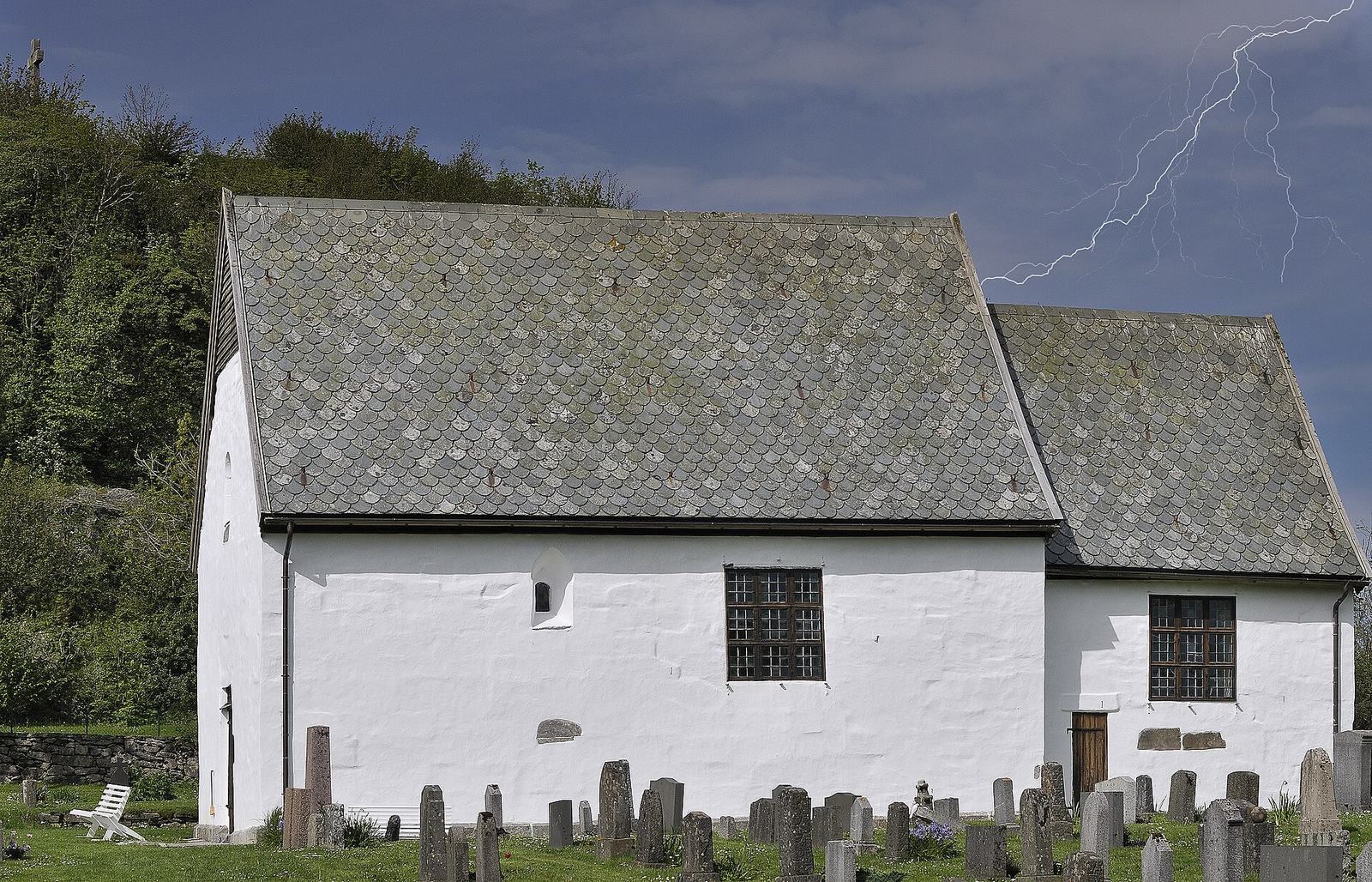
Old Moster Church is a small Romanesque long church, a plan with one lengthwise nave and a narrower chancel at one end. The building has a rectangular nave and a narrower rectangular chancel. It is constructed mainly from soapstone obtained from a quarry near Lykling, and some of its masonry and wall openings are considered particularly old.
Stone layout and openings
The nave measures approximately 12.4 by 8.1 metres, while the chancel measures about 5.9 by 6 metres. The nave has an entrance in its western wall, and the chancel has a separate entrance in its southern wall. These openings have Romanesque characteristics, with compact proportions and simple medieval forms. The church has capacity for about 80 people and stands on the site associated with the earlier foundation traditions.
Interior furnishings and decoration
The roof structures were replaced in the eighteenth century. Interior murals were added after the Reformation in Norway, with the oldest paintings dating from around 1600. The pulpit and altar are from the seventeenth century, while the baptismal font dates from 1722. Together, these features preserve evidence of the church’s later religious use within its medieval stone structure.