Daler Church: A Romanesque Lutheran Church in Denmark
Site at a Glance
- Rating
- 4.3
- Popularity
- Very Low
- Country
- Denmark
- Primary era
- Medieval
- External website
- Open
- Eras represented
- Medieval, Early Modern
- Civilizations
- Danish
- Site type
- Religious
- Remains
- Church
On this page11 sections
History
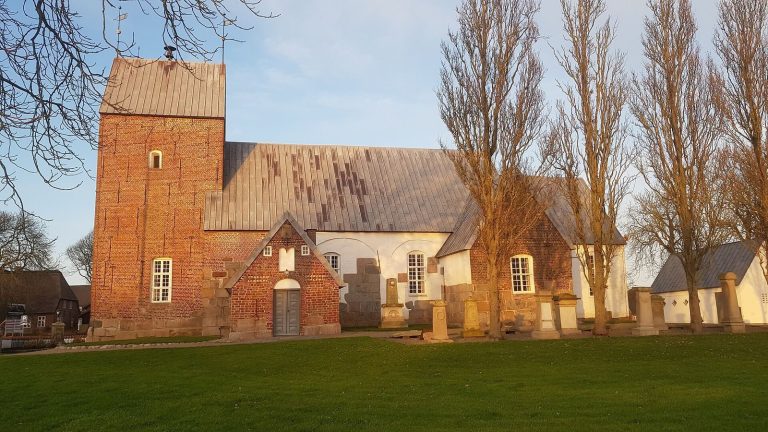
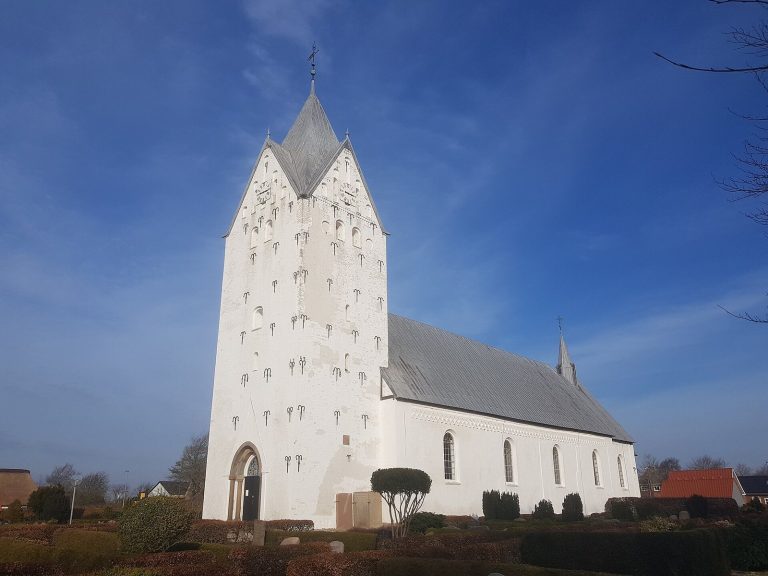
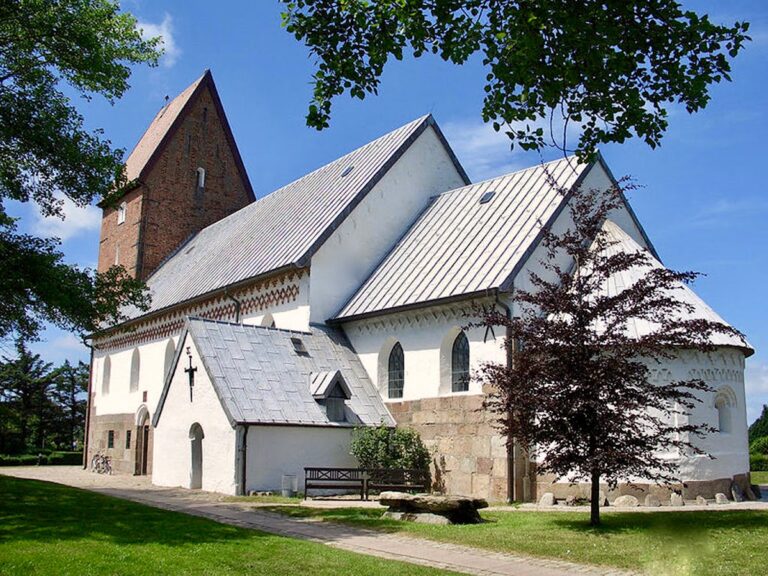
Daler Church is a Lutheran church in Daler, Denmark, belonging to Daler Parish in the Diocese of Ribe and the Danish National Church. Its oldest building phases date from 1100 to 1200, when it was built as a Romanesque granite church with a nave and choir. The church was originally dedicated to Saint Maurice, a Christian martyr traditionally associated with the Theban Legion and widely venerated in medieval Europe.
Medieval development
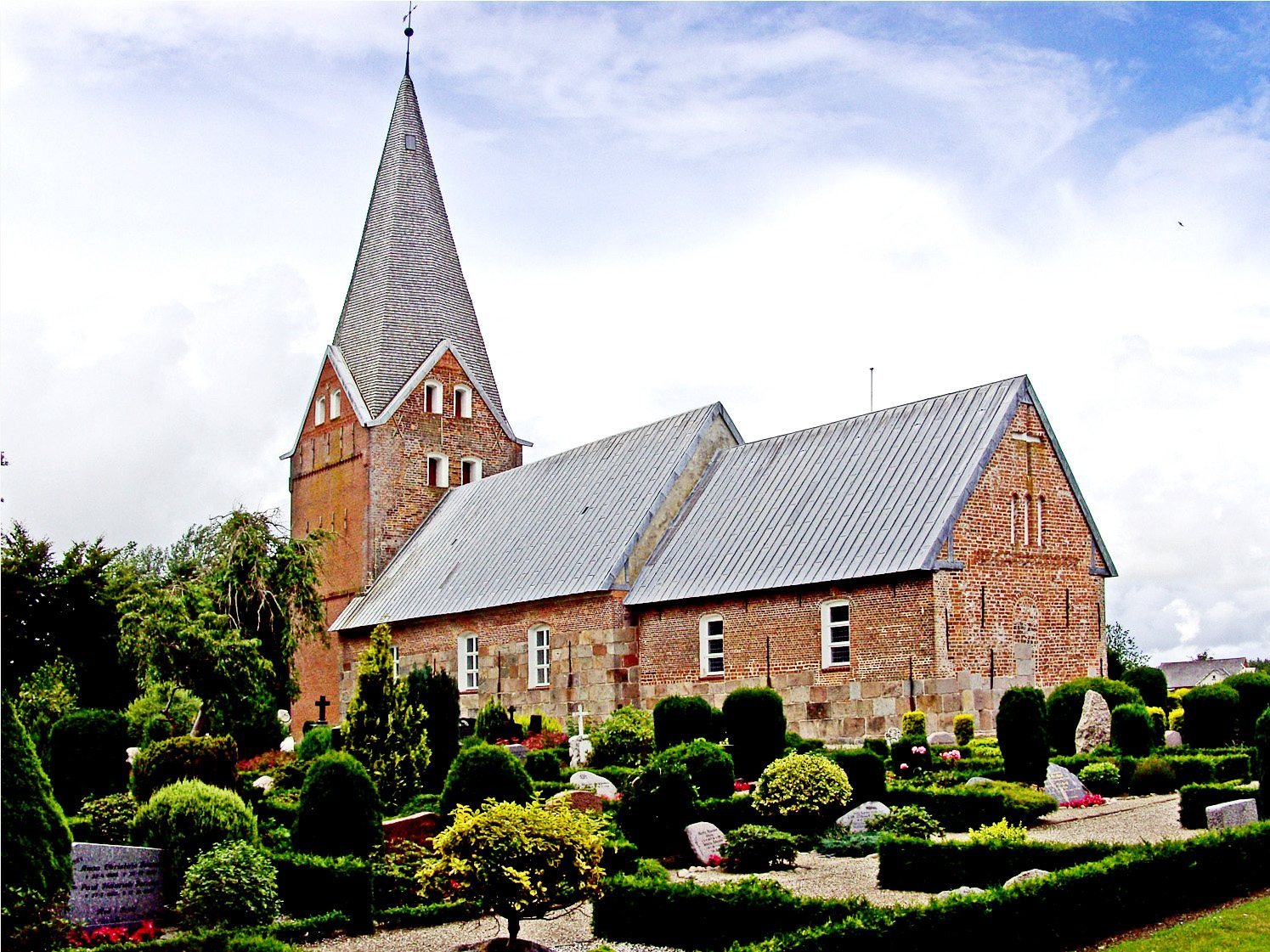
In the late thirteenth century, the choir was extended eastward. The eastern end of this addition remains in a relatively original external condition. During the Late Gothic period, approximately 1400 to 1550, the church acquired a western tower and porches on its north and south sides. Vaults were probably also inserted into the choir during this period. The medieval church had separate entrances for men and women, and the former women’s entrance can still be identified in the northern wall.
Alterations and restoration
Major changes took place in 1776. The masonry of the north and south walls was extensively restored, the two choir vaults were removed and replaced with a wooden ceiling, and the eastern part of the choir was shortened to create a sacristy. The masonry at the eastern end of the choir was later covered with whitewash, which was removed during restoration in 1980. Two small Romanesque windows in the northern wall of the nave, previously blocked, were reopened in 1942 and 1943.
War, worship, and later use
During the First World War, when the area belonged to Germany, churches in the surrounding region lost many bells so their bronze could be used for munitions. Daler’s bells were not melted down, unlike those at nearby Højer and Emmerlev. A memorial on the south side of the nave commemorates those who died in the Schleswig Wars, while a memorial on the north side honors First World War dead from Daler, Gærup, and Østerby.
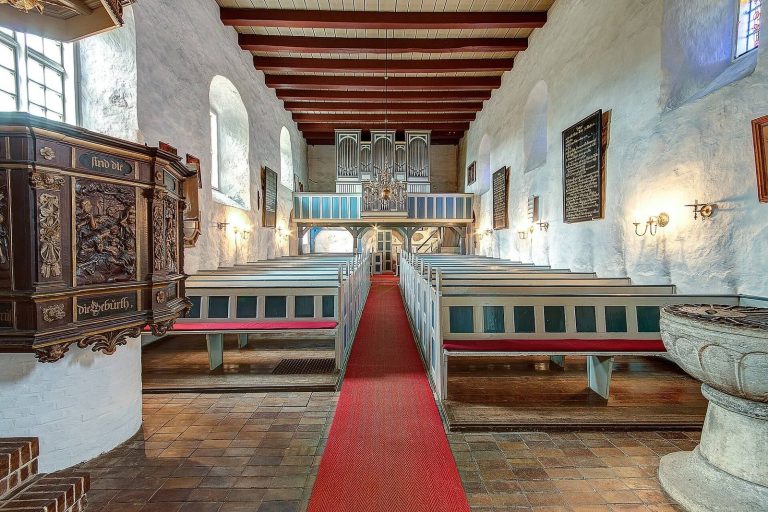
The former northern porch was used for a period as a barn and now serves as a chapel. In 1978, Bruno Christensen & Sønner built a new organ to replace Marcussen & Søn’s 1893 instrument. The earlier organ case was retained. The church also preserves a votive ship, a model vessel offered as a devotional or commemorative gift, donated by the architect Arne Finsen.
Remains
Medieval fabric and layout
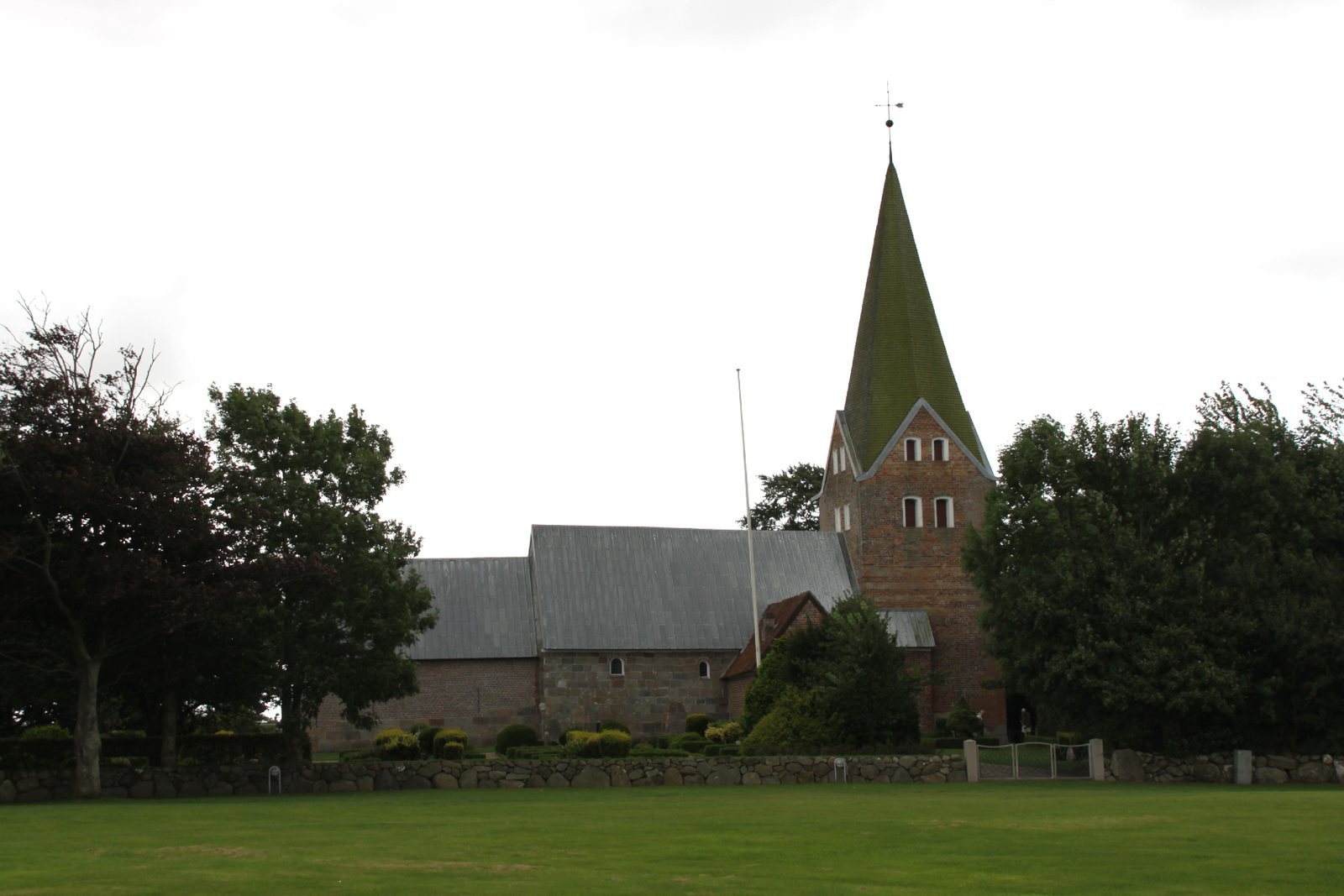
Daler Church retains a Romanesque granite nave and choir, covered by lead roofs. The nave’s roof structure is believed to be original, while the choir roof probably belongs to the late-thirteenth-century eastern extension. The nave has always had a beam ceiling. At the east end of the choir, a blocked round-arched window remains within the external masonry. The square western tower has an octagonal spire, and the present entrance leads through the tower space. The tower space and the porch have wooden ceilings.
Tower and northern chapel
The tower contains two bells. One is a fifteenth-century Gothic bell without an inscription but with a pilgrim badge. The other was cast in Lübeck in 1607 by Reinhold Bennik and carries an inscription in Low German. A very steep staircase on the northern side of the tower space leads upward. The former northern porch, now a chapel, is a Late Gothic structure.
Nave furnishings
A bier dated 1707 hangs on the south wall. The nave also contains the memorials to the dead of the Schleswig Wars and to the First World War dead from Daler, Gærup, and Østerby. The votive ship is a model of the schooner-brig Haabet.
Pulpit and baptismal font
The pulpit was made in a workshop in Lübeck and donated in 1606 by Iacob Moritz, a citizen of the city. It has abundant wood carving and inlay work, including scenes of the Annunciation, Nativity, Crucifixion, Resurrection, Ascension, and Last Judgment, each accompanied by related texts. In the Crucifixion scene, two praying men take the places usually associated with Mary and John. They represent Iacob Moritz and his brother Hans, who had worked as undertakers during a plague epidemic, survived it, and prompted the donation as an expression of gratitude to God. The sounding board above the pulpit includes carved figures and reliefs, a quotation from John 3:16 around its edge, and a dove beneath it representing the Holy Spirit.
The Romanesque granite baptismal font has a conical base decorated with four male heads. Its basin dates from 1760. The present pews are relatively new, but their side panels and the doors along the central aisle come from late-sixteenth-century pews. The older panels show that the earlier pews were very narrow.
Chancel and altarpiece
A fifteenth-century Mary altar stands north of the chancel arch. This side altar survived the Reformation, the movement that reshaped Western European Christianity and changed many medieval churches from Catholic to Protestant worship. It shows a crowned Mary standing on a crescent moon and carrying the infant Jesus. The adult-sized head of Jesus reflects the period’s limited ability to carve a convincingly childlike head. Coats of arms on the chancel arch date from the Late Gothic and Renaissance periods and were painted over in 1922.
The choir contains a stone altar that formerly served in the church. A large Gothic cross hangs on its northern side, with accompanying figures of Mary and John that probably date from the seventeenth century. The main altarpiece is a fifteenth-century Gothic retable, an ornamental structure placed behind an altar. Its height was changed in 1776 after the choir vaults were removed. The apostles are arranged in a single row, with the crucified Christ at the center beside Mary and John, four apostles in the central section, and the remaining eight in the two wings.
The lower section of the retable, called the predella, contains a painting of the Last Supper. Its empty place in the foreground represents an invitation to everyone to participate in Communion. Four altar candlesticks also remain, two from the Late Gothic period and two from the seventeenth century.
Organ
The 1978 organ has ten stops distributed between two manuals and a pedal. Its case comes from the 1893 instrument that it replaced.