St. Johannis: Wernigerode’s Medieval Evangelical Parish Church
Site at a Glance
- Rating
- 4.7
- Popularity
- Very Low
- Country
- Germany
- Primary era
- Medieval
- External website
- Open
- Eras represented
- Medieval
- Civilizations
- Holy Roman Empire
- Site type
- Religious
- Remains
- Church
On this page13 sections
History
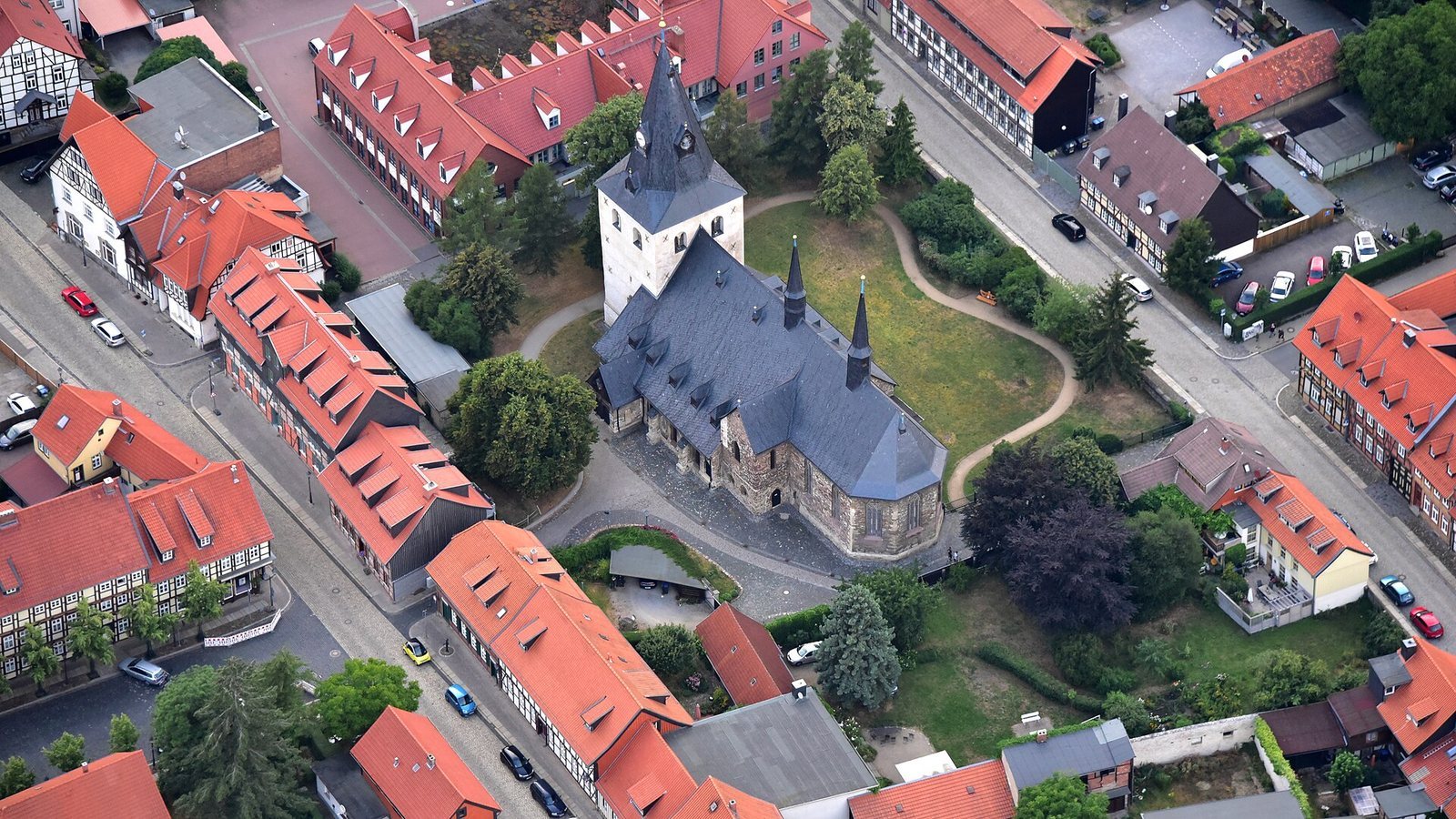
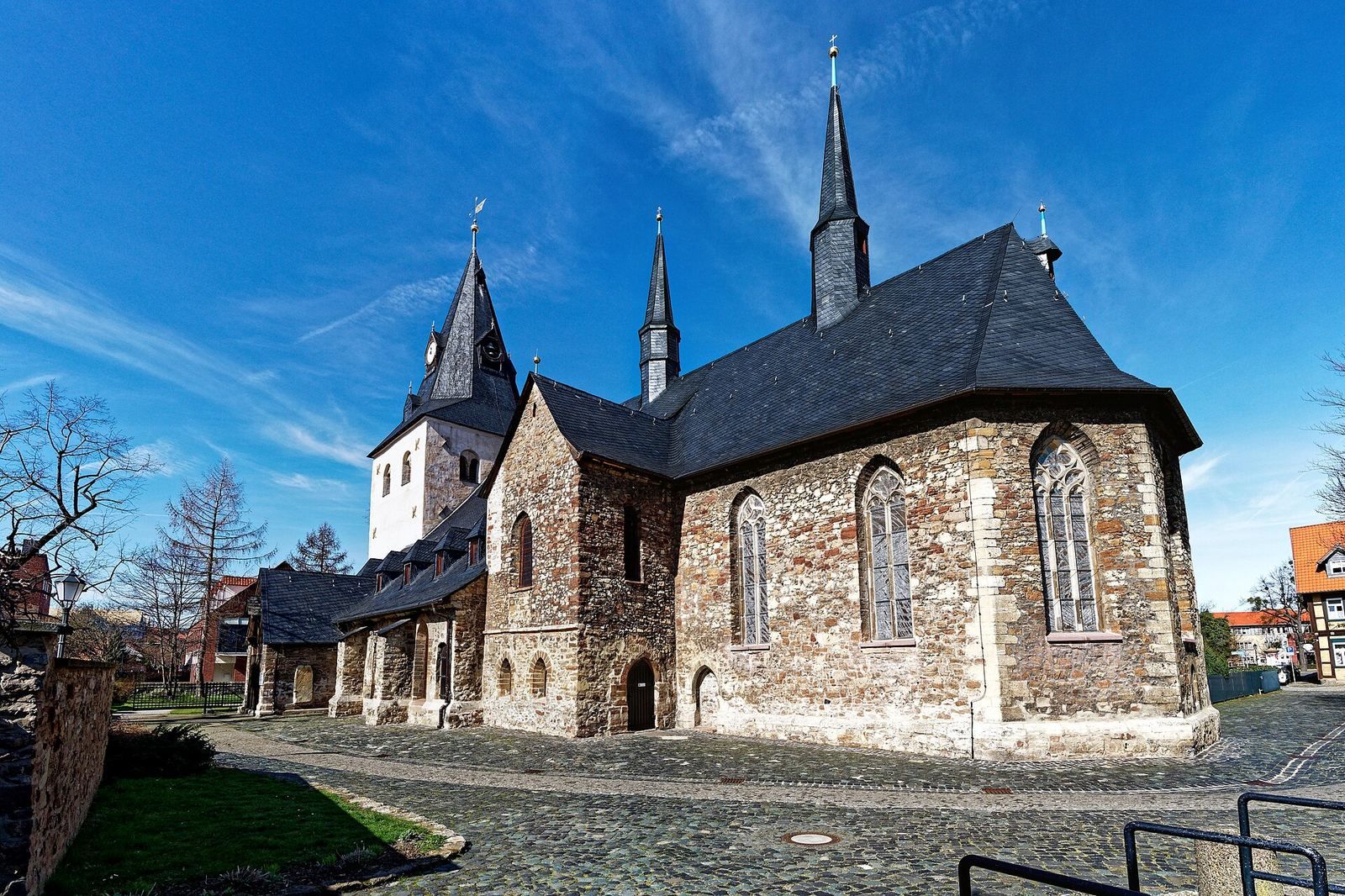
St. Johannis is an Evangelical parish church in Wernigerode, Germany, completed in 1279 in the Romanesque period. It stands at the northwestern edge of the historic Neustadt, a settlement that developed during the thirteenth century as new residents arrived from surrounding villages. Its Romanesque core makes it the oldest surviving church in Wernigerode.
Medieval foundation and rebuilding
The church was completed in 1279, when its altar was consecrated by Volrad, the medieval bishop of Halberstadt. A bishop was a senior Christian official responsible for a diocese. The original building had a Romanesque nave, but this was transformed in the fifteenth century into a three-aisled hall church, a design in which the nave and side aisles have approximately equal height. The rebuilding was completed in 1497.
Neo-Gothic restoration
The entire building underwent extensive restoration in the nineteenth century. In 1864 and 1865, the southern portal porch was renewed, Baroque galleries and pews were removed, the windows were enlarged, and additional dormer windows were installed. The local woodcarver Gustav Kuntzsch produced new furnishings, including the ceiling, side-aisle cladding, pews, and a west gallery for a new organ. This Neo-Gothic restoration was completed in 1885.
War damage and later conservation
Bombing on 22 February 1944 damaged the roof, choir, and windows, including the choir’s stained glass. Only emergency repairs were initially undertaken after the war. Major restoration began in 1970, reopening the previously bricked-up west portal and renovating the ground-floor tower room. The tower room was connected with the church interior in 1992, the tower roof was renewed in 1993, and the choir roofs followed in 1994.
Organ history and heritage status
An organ is first recorded at St. Johannis in 1568. The earlier instrument was rebuilt in 1666 and 1667 by Friedrich Besser, and again in 1725 and 1726 by the organ builder Meybaum. Further renewals took place in 1790 and 1860. During the nineteenth-century restoration, the older instrument was replaced by a new organ made by Friedrich Ladegast, with a Neo-Gothic case designed by Carl Frühling and produced by Gustav Kuntzsch. It is the only surviving example of three Ladegast organs formerly located in Wernigerode. St. Johannis is protected as a cultural monument in Saxony-Anhalt and forms part of the Romanesque Road, a heritage route linking Romanesque monuments in central Germany.
Remains
St. Johannis retains Romanesque fabric in its west tower and southern transept, while the former Romanesque nave survives in transformed form as a fifteenth-century three-aisled hall church. The building’s surviving furnishings range from a fifteenth-century folding altar to later Renaissance, Neo-Gothic, and modern stained-glass work.
Romanesque fabric and portal
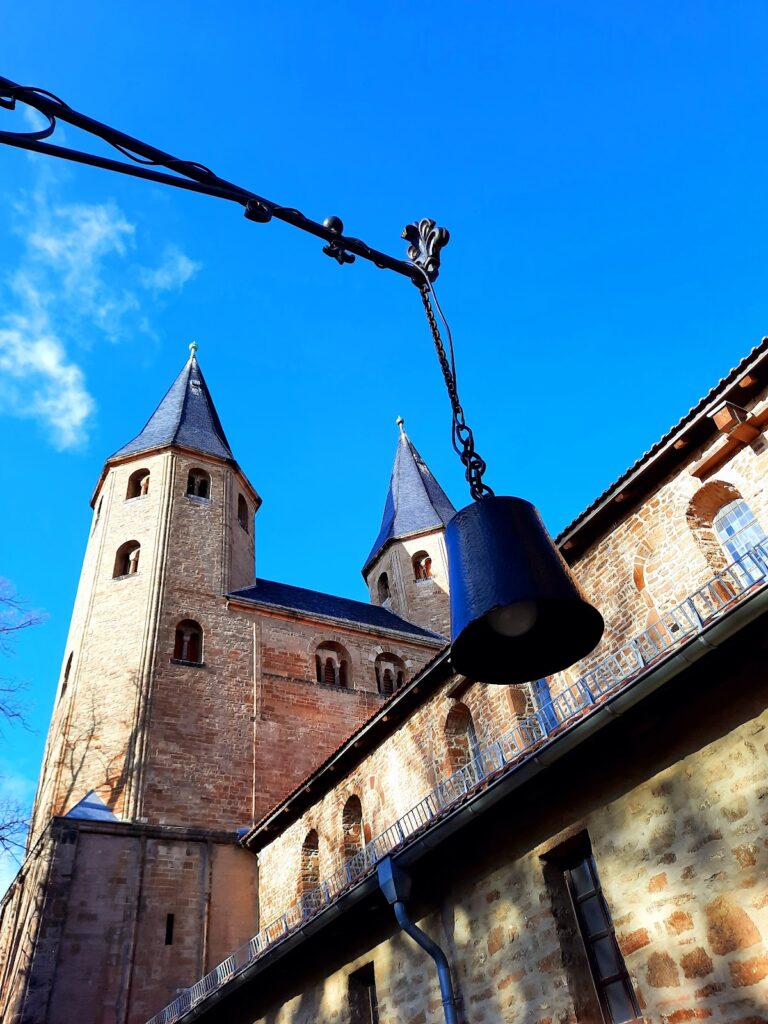
The west tower and southern transept preserve the church’s Romanesque construction. The west portal, reopened during the restoration begun after 1970, contains a representation of the Lamb of God. The nave was rebuilt as a hall church in the fifteenth century, creating the principal unified interior space that remains within the earlier Romanesque framework.
Medieval and early modern furnishings
Folding altar
The richly decorated five-part folding altar dates from 1415, according to the date on its reverse, and has undergone repeated restoration. When fully opened, its golden-shimmering festive face centers on Mary, the mother of Jesus, as Queen of Heaven with the Christ Child. Four musical angels and further angels carrying palm branches surround her. Statuettes of Catherine and Barbara stand above, while Peter and John the Baptist appear below.
Relief panels on the altar present episodes from the life of Jesus, including the Annunciation and Nativity, the Adoration of the Magi, his childhood, Baptism, Entry into Jerusalem, Passion, and Last Supper. The partly opened Sunday face shows the Nativity, Christ’s Circumcision in the Temple, the Adoration of the Magi, the Death of Mary in the presence of the Apostles, and her Assumption into Heaven. The closed weekday wings contain the Annunciation and the Adoration of the Magi.
Pointed, gable-shaped cresting crowns the altar. Its half-length reliefs represent female saints with their traditional attributes: Barbara with a tower, Mary Magdalene with an ointment vessel, a royal female church founder, Catherine with a sword and wheel, Mary with the Christ Child, Apollonia with pincers and a tooth, Dorothea with a basket, Ursula with an arrow, and an unidentified saint associated with a possible moon or sun face. Two knights holding coats of arms frame the saints. The compartments of the predella, the lower section beneath the main panels, are empty and probably once held saintly figures or relics.
Pulpit and baptismal font
The pulpit dates from around 1600 to 1615. A sculpture of John the Baptist, shown with a cross staff and book, stands on the southern choir wall and dates from around 1500. At the entrance to the choir, an octagonal baptismal font dated 1569 displays the Baptism of Christ and profiles of historical figures, including Martin Luther, the German theologian and reformer whose teachings shaped the Protestant Reformation, and Georg Aemilius, superintendent of the County of Wernigerode. A superintendent was a senior Protestant cleric responsible for church administration within a territory.
Choir windows and organ case
Choir windows
The choir received ten newly designed windows in 2016. They were based on designs by Günter Grohs and executed by the F. Schneemelcher glass workshops in Quedlinburg.
Neo-Gothic organ case
The present organ is housed in a Neo-Gothic case designed by Carl Frühling and made by Gustav Kuntzsch. Its carved case belongs to the nineteenth-century furnishing scheme that reshaped the church’s interior.