Fatih Mosque, Bursa: A Byzantine Church Converted into a Mosque


Site at a Glance
- Rating
- 4.6
- Popularity
- Low
- Country
- Turkey
- Primary era
- Medieval
- Eras represented
- Medieval, Early Modern
- Civilizations
- Byzantine, Ottoman
- Site type
- Religious
- Remains
- Church
On this page7 sections
History
Fatih Mosque, also known as Fatih Camii, is a historic Byzantine building in Türkiye, located in Tirilye in Bursa Province. Probably constructed as a Byzantine church between AD 720 and 730, or possibly in the early ninth century, it is one of the oldest known examples of a cross-in-square church and is regarded as the oldest surviving Byzantine building in the region. The Byzantine Empire was the medieval Roman Empire centred on Constantinople and predominantly Christian.
Byzantine origins
The church was probably dedicated to Christ and Saint Stephen the Confessor, a Byzantine Christian saint associated with opposition to iconoclasm, the rejection or destruction of religious images. It is often called the Church of Saint Stephen at Trigleia, although another interpretation identifies it as the Church of Saint Theodore. The building has also been associated with the Trigleia Monastery, identified by Cyril Mango and Ihor Ševčenko, while other interpretations connect it with the Chinolakkos Monastery. Both were Christian monastic institutions.
Its design belongs to the cross-in-square type, in which a central domed space is surrounded by four arms within a roughly square plan. The early church included a chapel on its south side. Earlier elements were incorporated into the building, including sixth-century sculptures, some of which may have been re-carved later.
Ottoman conversion
After the Ottoman conquest of Anatolia, the Byzantine church was converted into a mosque in the sixteenth century. The Ottoman Empire was the Muslim imperial state that conquered and ruled much of Anatolia. The building was renamed Fatih Camii, meaning “Mosque of the Conqueror,” and became affiliated with Sunni Islam.
Twentieth-century changes
During the Greek Summer Offensive of 1920, Greek forces briefly occupied Bursa, and the mosque was temporarily rededicated as a Greek Orthodox church. Greek Orthodox Christianity is the Eastern Orthodox tradition associated with Greek-speaking Orthodox communities and churches. Following the Greco-Turkish population exchange, the building was converted back into a mosque in 1923. Its protected status reflects the importance of its surviving Byzantine fabric.
Remains
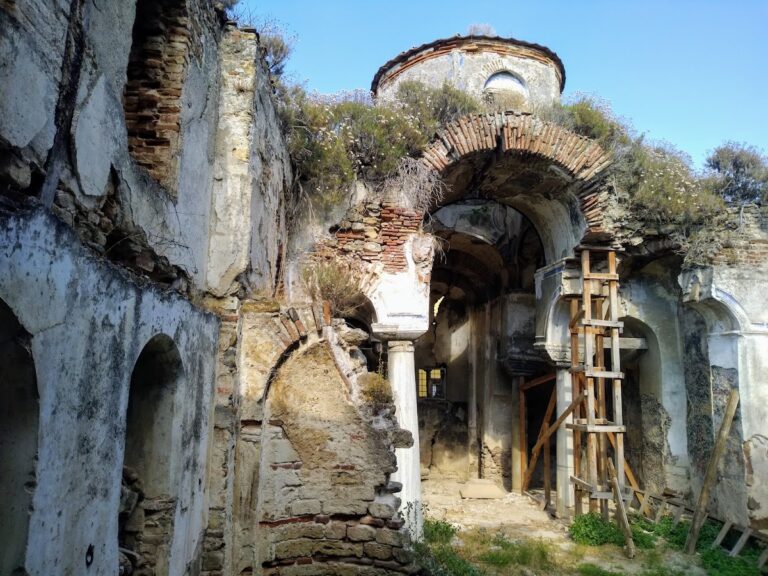
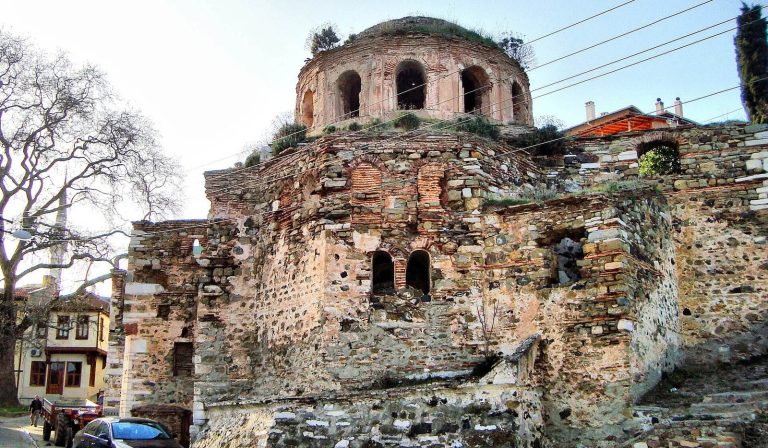
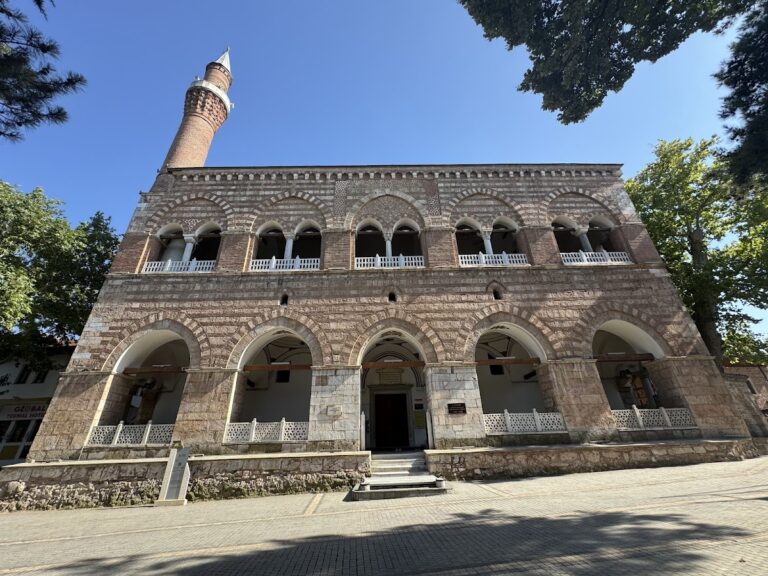
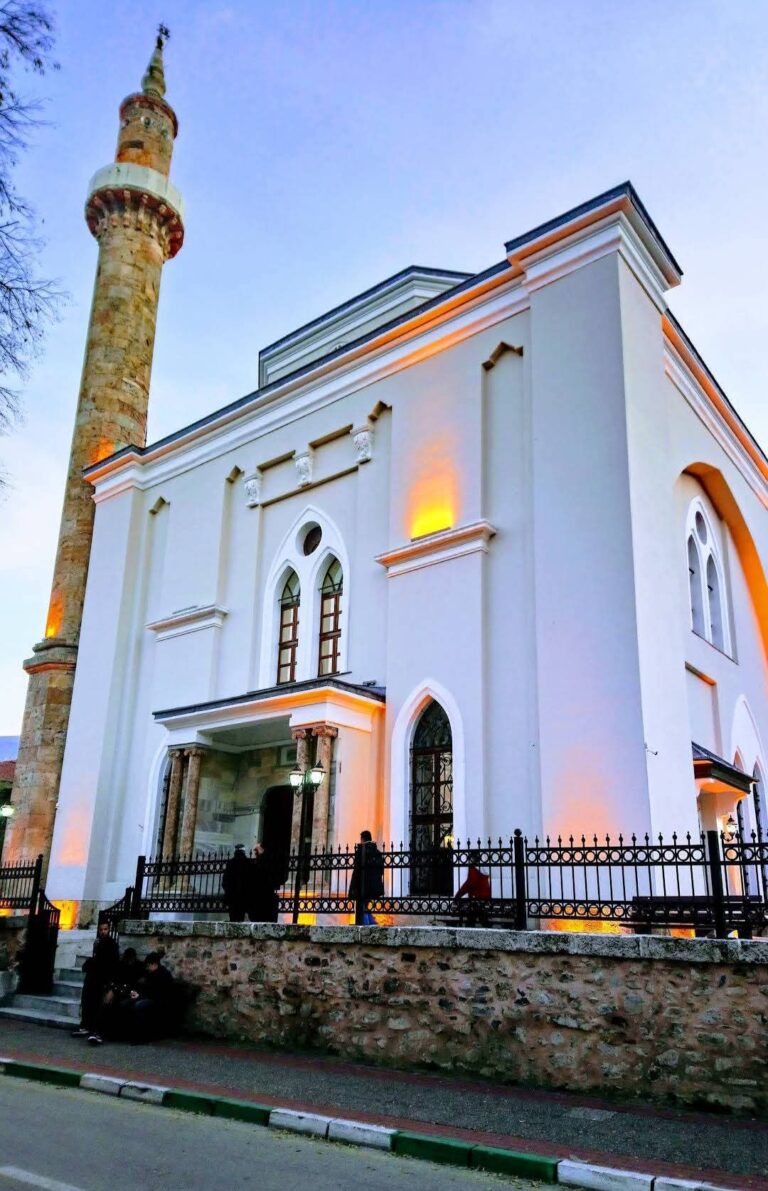
The surviving structure retains the compact, centrally organized form of a Byzantine cross-in-square church. A domed central space forms the core of the building, while the former church arrangement is also reflected in the central apse, the semi-circular sanctuary end. The entrance is approached through a portico with a wooden roof carried by four columns whose capitals have ornamental metalwork.
Dome and Byzantine fabric
The central dome is carried by a cylindrical tholobate, the drum that supports a dome, which is pierced by eight windows. The dome rises approximately 19 metres and measures about 4.5 metres across. Sixth-century sculptures incorporated into the building provide evidence of earlier material within the later Byzantine structure, although some may have been re-carved.
Islamic adaptations
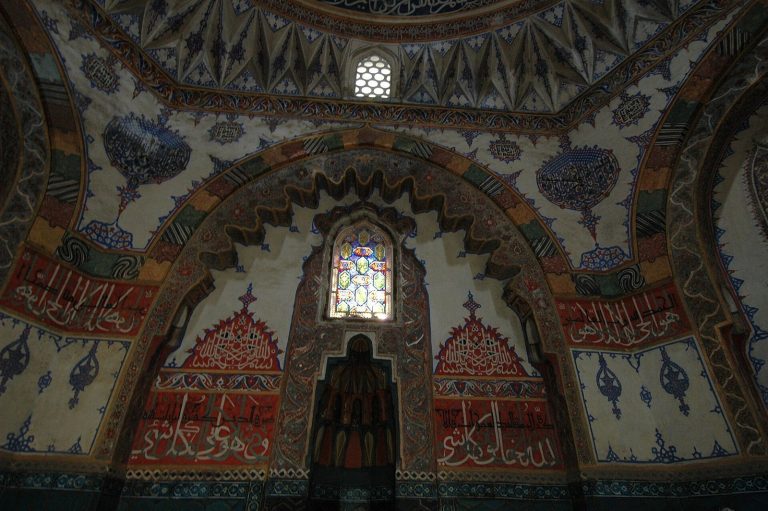
The conversion to a mosque altered the central apse through the installation of a tall tiled mihrab, the niche indicating the direction of prayer toward Mecca. It is covered by a half-dome and occupies the former position of the church’s bema, the raised sanctuary area associated with the altar. A minaret was added after the conversion. The earthquake of 1855 badly damaged it, after which the minaret was rebuilt.