Gryta Church: A Medieval Lutheran Parish Church in Sweden
Site at a Glance
- Rating
- 3.9
- Popularity
- Very Low
- Country
- Sweden
- Primary era
- Medieval
- External website
- Open
- Eras represented
- Medieval, Early Modern, Modern
- Civilizations
- Swedish
- Site type
- Religious
- Remains
- Church
On this page9 sections
History
Gryta Church is a medieval Lutheran church in Gryta, Sweden, near Örsundsbro, with origins in the Romanesque period and a long history as an active parish church in the Archdiocese of Uppsala. Christianity had reached the surrounding area by the eleventh century, as Christian crosses carved on nearby rune stones indicate. The earliest church at Gryta was probably a wooden building.
Medieval development
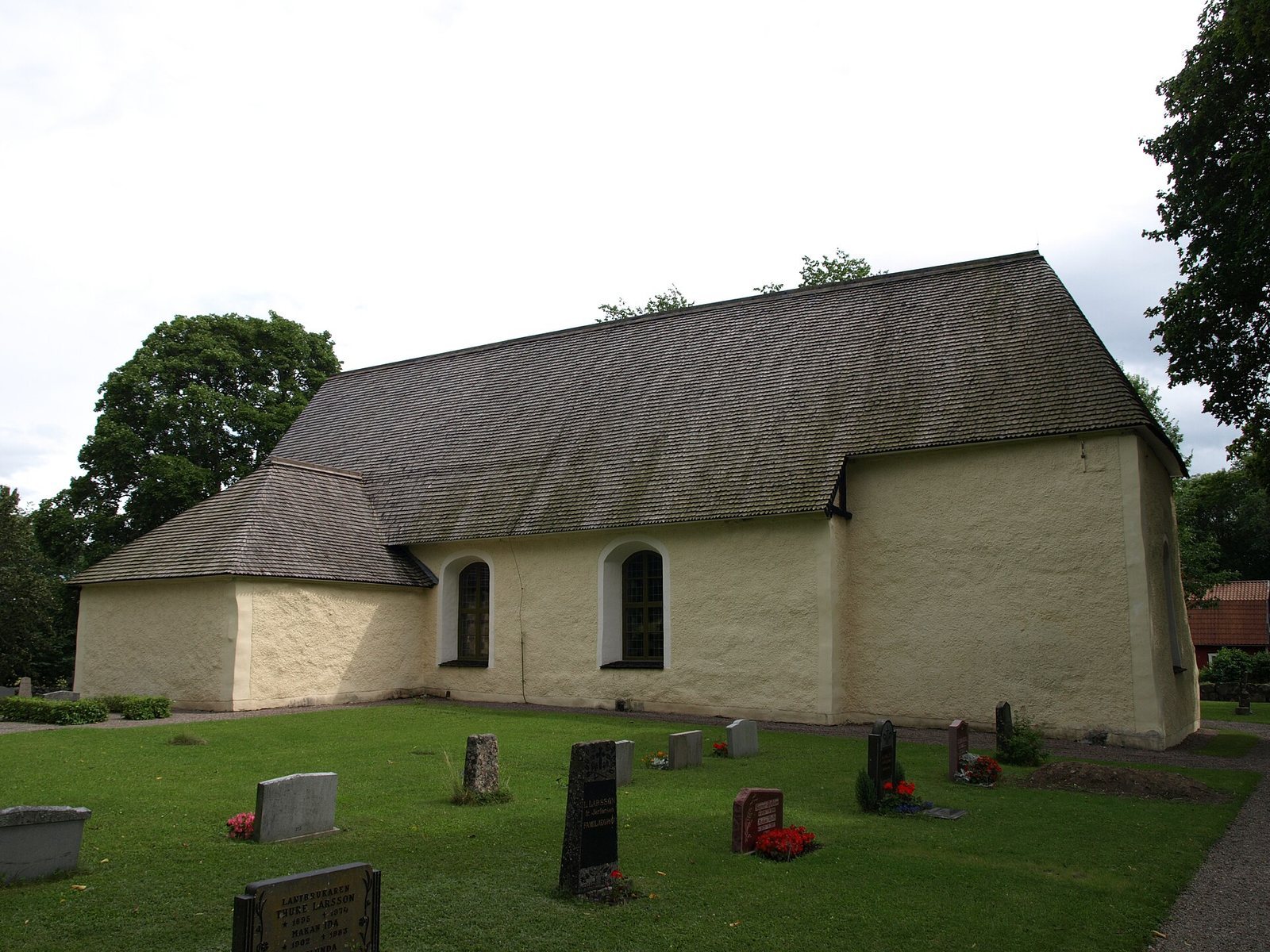
The oldest surviving masonry belongs to the nave and is built of fieldstone. The church originally followed a single-nave plan with a rounded apse. It was enlarged, probably between about 1250 and 1350, and a narrower western section was erected around the twelfth century. This western structure formed the lower part of the church’s original stone tower.
During the fifteenth century, brick vaults were added over the nave and tower. The wall paintings belong to the same broad period. An inscription gives their date as 1487, and their style connects them with the work of a student of Albertus Pictor, whose workshop produced many church murals in central Sweden, particularly in the Mälaren region.
Fire, rebuilding, and later changes
Lightning struck Gryta Church in 1578, causing a destructive fire. The apse probably acquired its present semicircular form during the reconstruction that followed. The oldest surviving church council register, from the middle of the seventeenth century, records repairs to the tower, showing that the damaged and altered western structure continued to require attention.
The upper parts of the stone tower were dismantled in 1775 because they had fallen into poor condition. During the 1770s, everything above the ground floor was demolished, and the ceiling was rebuilt so that the church could be covered by a low-pitched roof. A separate bell tower was probably built in 1752, providing a new structure for the church’s two bells.
Furnishings and the church setting
Most of the surviving furnishings are Rococo, an eighteenth-century style known for refined, light ornament. The pulpit is older than these furnishings. It was acquired in 1697 and was probably made locally after a model from a neighboring church. Its form and smooth decoration reflect fashions current in the mid-seventeenth century.
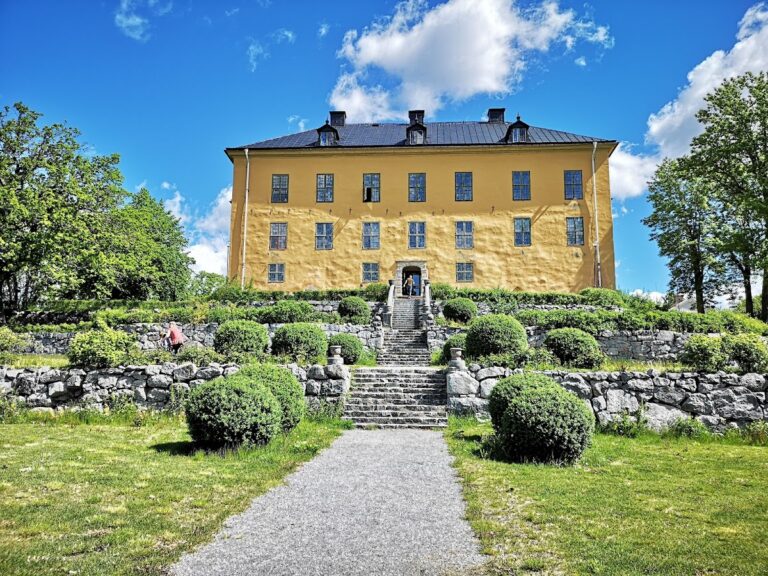
The cemetery has been enlarged several times toward the north. A neoclassical chapel was built in its southeastern corner around 1802. The church stands in a shallow valley about two kilometers northeast of Örsundsbro, while Salnecke Castle lies a few hundred metres to the west.
Remains
Church structure
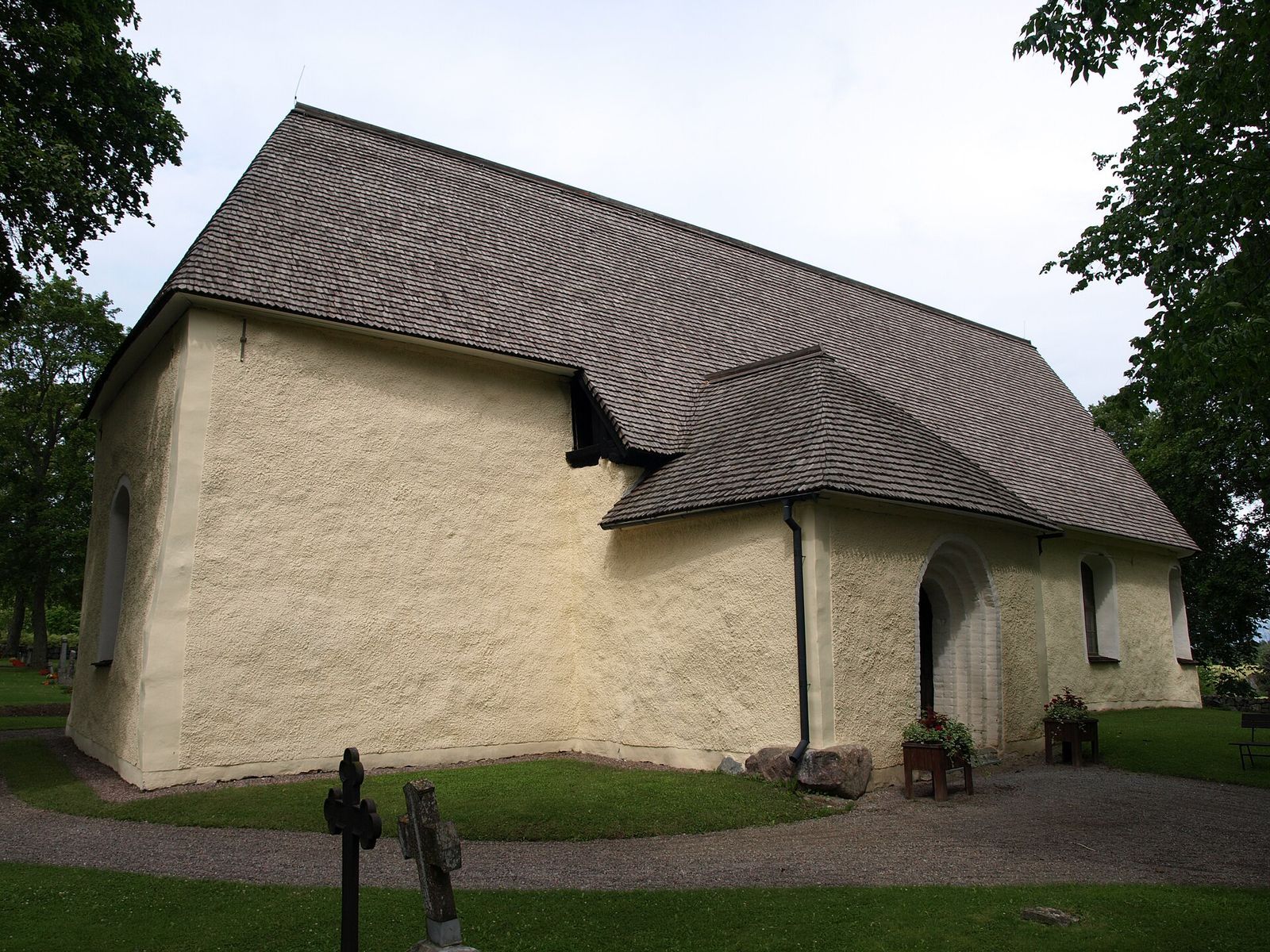
Gryta Church retains a compact single-nave layout with a rounded apse. Its earliest walls are made of fieldstone and survive chiefly in the nave, while the western end preserves the ground-floor remains of the former tower. A vestry stands on the north side, and a porch is attached to the south. The present roof and ceiling reflect the eighteenth-century rebuilding that followed the removal of the tower’s upper sections.
Vaults and medieval paintings
Fifteenth-century brick vaults span the interior. The nave has three arches, and the vault over the former tower contains richly decorated fragments of four painted scenes, of which two have been interpreted. The paintings are associated with the Mälaren Valley style of the later fifteenth century and bear the inscription giving the date 1487. Enlarged windows in the 1790s caused the loss of much of the painted surface.
The first arch contains an extensive sequence of religious images. Its eastern part shows Saint Gregory with Mark the Evangelist and Saint Ambrose with Matthew the Apostle. The southern section includes Saint Augustine with John the Apostle and the creation of Eve. Other scenes portray the devil playing a bagpipe, the sacrifices of Cain and Abel, Cain’s murder of Abel, Moses before the burning bush, the union of Adam and Eve, and the Fall of Man.
The same arch continues with the Expulsion from the Garden of Eden and the scene known as “When Adam dug and Eve spun.” It also includes Saint Jerome with Luke the Evangelist and Emperor Augustus kneeling before the Sibyls, prophetic female figures from classical tradition who were incorporated into Christian art as heralds of Christ’s birth. Half-length prophets emerge from a large bell-shaped floral form in the lower corners.
The eastern part of the middle arch shows the Coronation of Mary, with Christ wearing a crown and holding a cross-bearing orb. Its southern section depicts Delilah cutting Samson’s hair, Goliath holding a club in the background, and Samson breaking the lion’s jaw.
Furniture and bell tower
The pulpit, acquired in 1697, is the oldest surviving piece of church furniture. Its locally made form, probably based on a neighboring example, combines the shape and soft, smooth ornament associated with seventeenth-century fashion. The separate bell tower is made of tarred wood and contains a large bell and a small bell. It stands about 100 yards north of the church. Its lower section has inclined walls covered with tarred panels and diagonal bracing, characteristic of its eighteenth-century construction.
Cemetery and Spenska Chapel
The cemetery is largely grass-covered and crossed by gravel-paved paths. A gray stone wall encloses it, with deciduous plants growing into the masonry. Two grave blocks with stone frames lie near the north side of the vestry, while the oldest graves are immediately south and west of the church. Some of these graves have cast-iron tracery.
The Spenska Chapel occupies the southeastern corner of the cemetery. Built around 1802, it is a neoclassical structure with plastered facades finished in yellow limewash. The cemetery’s latest northern enlargement is bounded on its north and east sides by Gunnebo fencing and includes a newly built memorial.