Uppsala Castle: A Renaissance Royal Fortress-Palace in Sweden
Site at a Glance
- Rating
- 4.3
- Popularity
- Medium
- Country
- Sweden
- Primary era
- Early Modern
- Eras represented
- Early Modern, Modern
- Civilizations
- Swedish
- Site type
- Domestic
- Remains
- Palace
On this page16 sections
History
Uppsala Castle is a sixteenth-century Renaissance royal fortress-palace in Uppsala, Sweden, built during the reign of Gustav I Vasa as Sweden strengthened centralized royal rule. Its construction followed the Dacke War, a peasant uprising against the king, and formed part of plans for new defensive castles. The castle also expressed royal supremacy after the Protestant Reformation, the religious and political movement through which Sweden broke with papal authority and adopted Lutheranism under the monarchy.
Royal predecessors and the Vasa foundation
Before the present castle, Uppsala had two royal residences. The medieval royal estate of Föresäng stood on Islandet until a fire destroyed it in 1543. West of Uppsala Cathedral, the monarchy also took over a medieval archbishop’s castle during the Reformation. Both sites served as royal residences before construction began on the castle at Kasåsen.
Castle building is conventionally dated to 1549, although work on the bastions had begun by 1545 and other construction was underway by 1547. Henrik von Köllen was responsible for the initial building work, and Povel Schütz directed it from 1551 to 1558. During Gustav I Vasa’s reign, the complex gained royal apartments and two western bastions, Gräsgården and Styrbiskop. An eastern extension soon followed, with representative rooms that included a hall of state and a church.
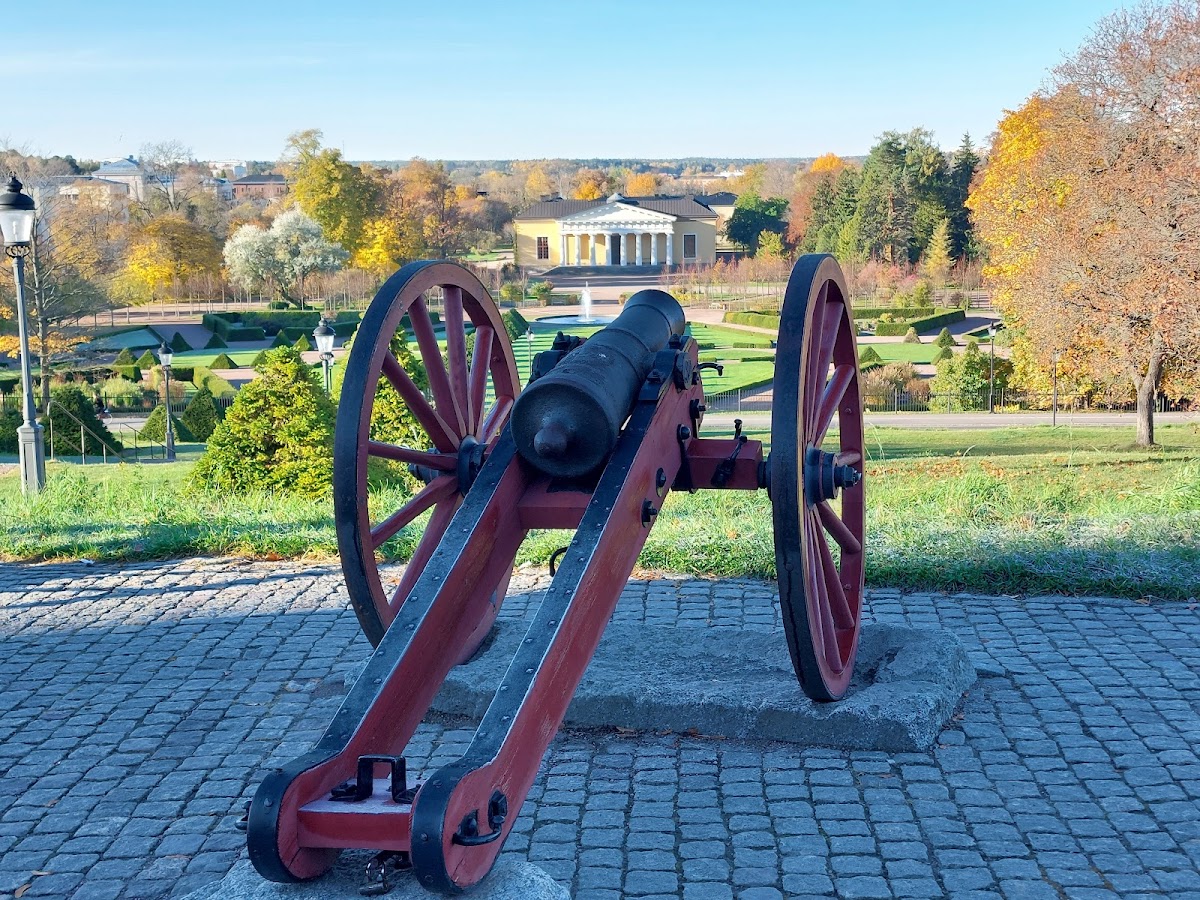
The Styrbiskop battery, a fortified artillery position, was deliberately aimed at Uppsala Cathedral. Its direction reflected the conflict between the king and church authorities during the Reformation. The castle therefore combined military purpose with a visible statement of the monarchy’s authority over the former ecclesiastical center.
Rebuilding as a Renaissance palace
The representation wing was completed under Eric XIV, one of Gustav I Vasa’s sons and successors. In 1567, the castle became the scene of the Sture murders, when Eric XIV killed five prominent Swedish nobles. This event placed the royal residence at the center of a violent episode in Sweden’s dynastic and political history.
A major fire on 23 April 1572 severely damaged the original royal apartments and the representation wing. Franciscus Pahr was engaged to rebuild the complex. After his death in 1580, the work continued under another architect, possibly Willem Boy, while Antonius Watz also held a leading role. Under John III and his successors, the rebuilding changed the former fortress into a representative Renaissance palace.
John III’s program created a new south wing containing royal apartments, a hall of state, and a church. It also included a rebuilt southwest tower and a new southeast tower. The eastern wing, known as the Long Castle, was intended to connect the south wing with a planned northern addition. Two-thirds of it had been completed when John III died in 1592. A large garden was laid out east of the castle at the foot of the hill.
Charles IX intended to complete the northern and eastern additions. The eastern wing and its northeast tower were completed, while the northern project stopped before the planned wing was finished. The castle’s principal form had developed by about 1600. The north tower was completed in 1614, and additional work began under Gustavus Adolphus, also known as Gustav II Adolf, from 1620, with the Danish architect Casper Panten involved in the building program.
A center of religion and monarchy
Uppsala Castle remained an important setting for national religious and political decisions. In 1593, more than 300 priests met there and ratified Sweden’s transition from Catholicism to Lutheranism. Gustavus Adolphus was crowned at the castle, and in 1630 he announced Sweden’s decision to enter the Thirty Years’ War, the European conflict of 1618 to 1648 that combined religious, dynastic, and political struggles.
During the 1640s, a fountain supplied with water pumped from the Fyris River was added to the courtyard. On 6 June 1654, the Swedish government announced Queen Christina’s abdication in the Hall of State. Christina was the Swedish monarch who relinquished the throne that year, making the castle once again the setting for a major change in the country’s monarchy.
Fire, reduction, and eighteenth-century rebuilding
On 16 May 1702, a fire that devastated much of Uppsala heavily damaged the castle, especially the south wing. Repairs were delayed for decades, partly because resources were directed toward rebuilding Stockholm’s Tre Kronor Castle after its fire five years earlier. Stone from Uppsala Castle was later taken to Stockholm for the new Stockholm Palace, and other records associate some of the material with a hospital in Uppsala.
Repair and rebuilding began again between 1743 and 1762 after Adolf Frederick, then the elected heir to the Swedish throne, initiated the work and commissioned Carl Hårleman. Hårleman was an eighteenth-century Swedish architect and the principal architect of the post-fire rebuilding. His plans were only partly realized. Adolf Frederick became king in 1751 and moved to Drottningholm Palace, while Uppsala’s declining status as a royal city and the shortage of royal funds fixed much of the castle’s later form.
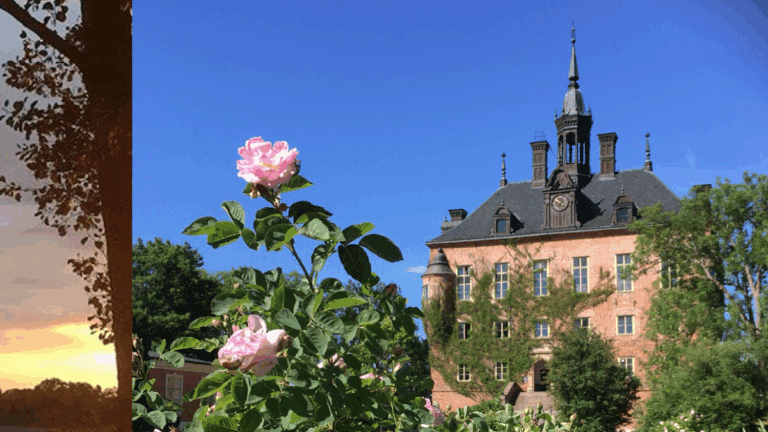
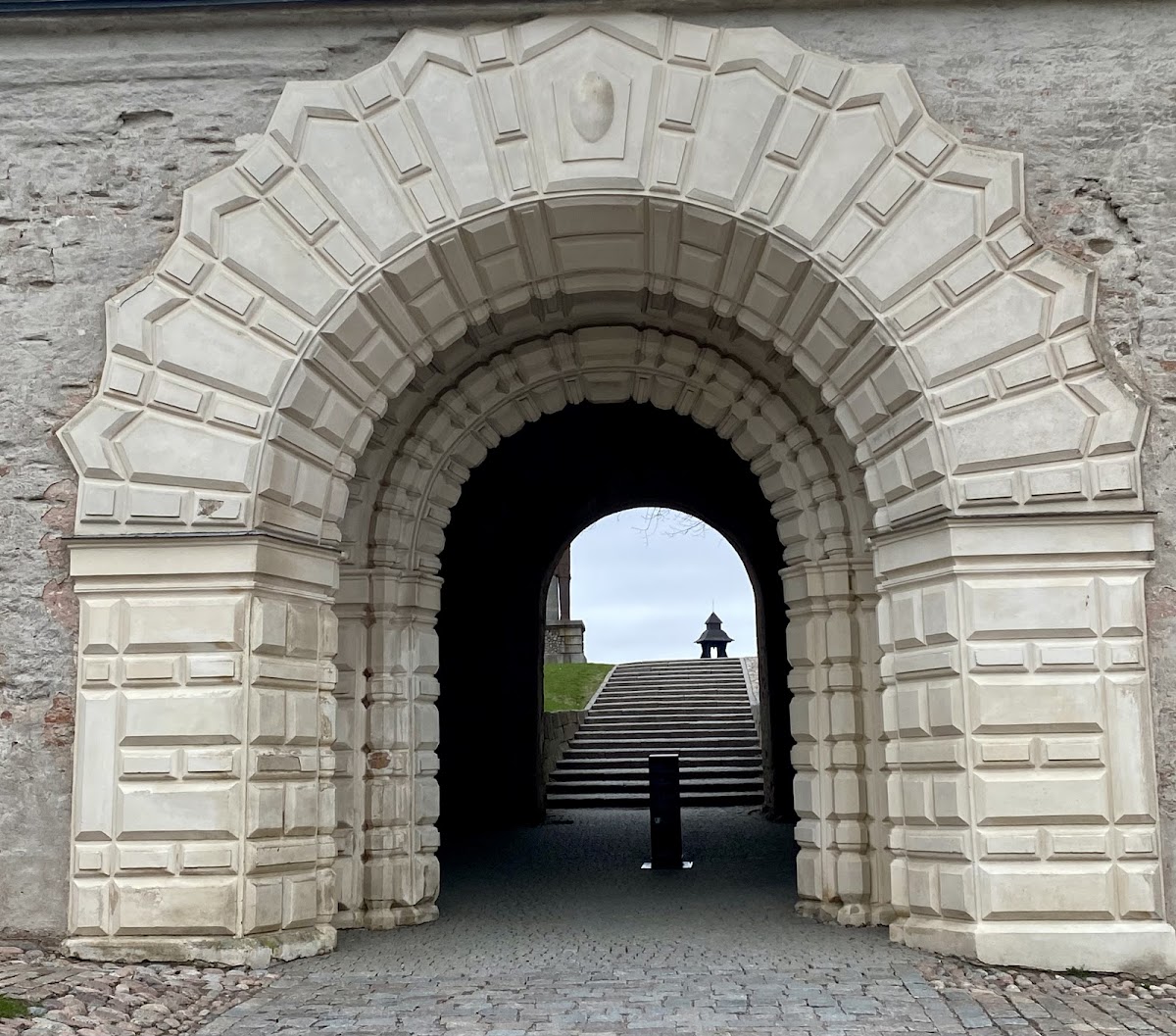
The western part of the south wing, including the former royal apartments above King John’s Portal, was not rebuilt after the fire. The less damaged eastern part was repaired, and the former church space was divided into floors and rooms for royal apartments. The southeast tower, which stood only two storeys high after Hårleman’s work, was fully rebuilt in 1815 for use as a county prison. The broader restoration was completed between 1815 and 1820.
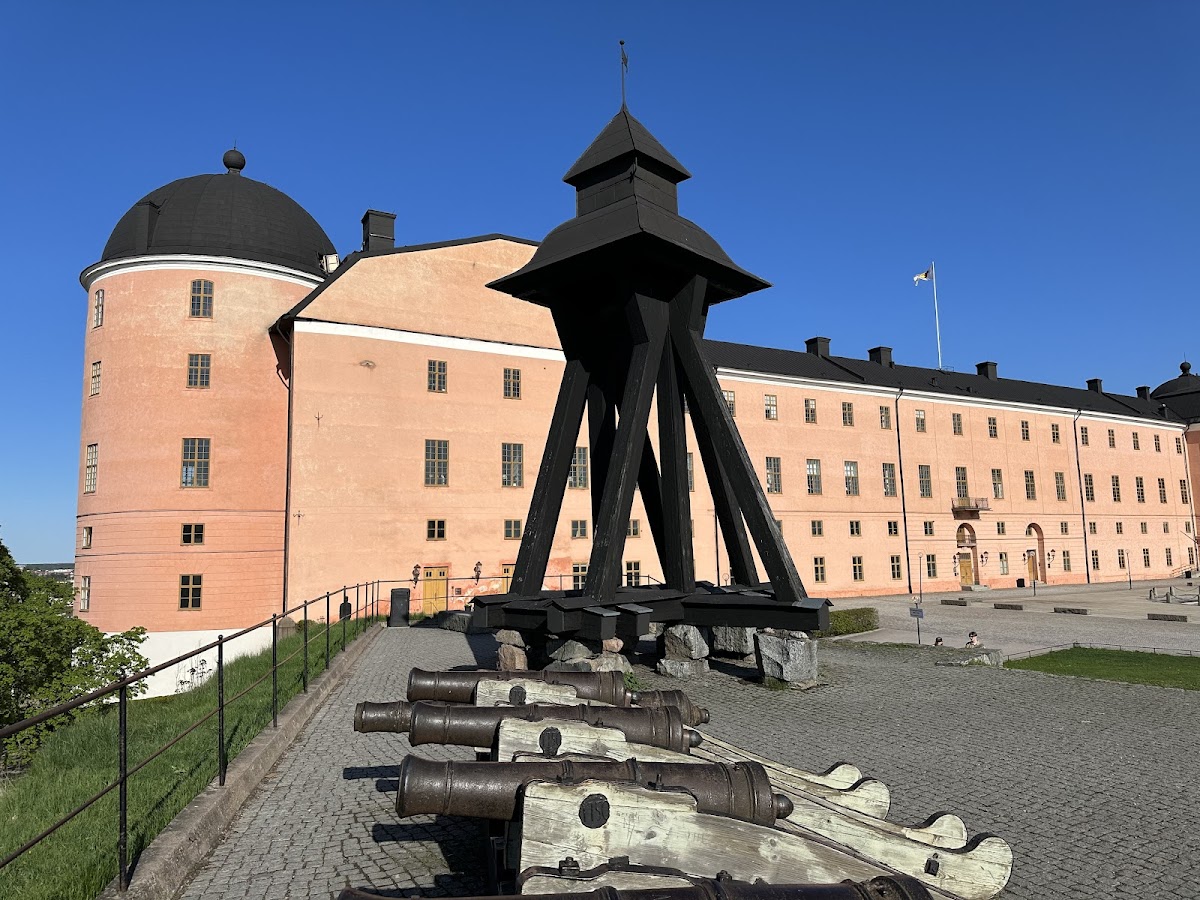
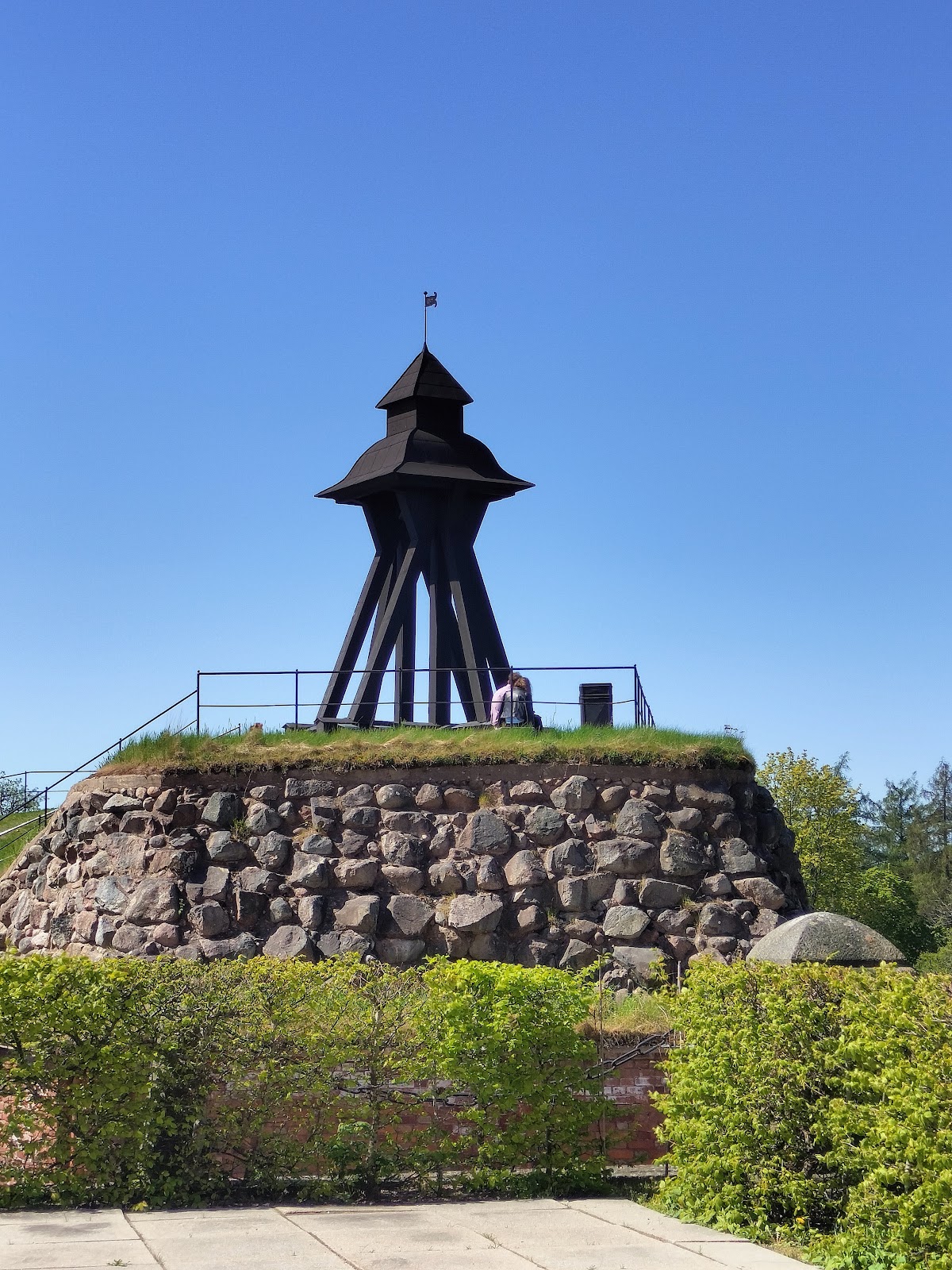
The Gunilla Bell was cast in 1588 and recast in 1759 after the fire. It was moved from the southeast tower to the battlements of the Styrbiskop battery, where it later served as Uppsala’s curfew bell. The castle is now listed in Sweden’s register of protected buildings.
Administrative and cultural uses
After the eighteenth-century repairs, the castle served for many years as the administrative center of Uppsala County and remained the location of the Hall of State. The Hall of State was restored in the 1930s and continues to serve as an event space. The building is also the official residence of the Governor of Uppsala County, the Swedish state’s senior administrative representative in the county, and contains rented business premises.
The Swedish government established a regional archive in the castle in 1903. It housed historical and genealogical records from Uppsala and neighboring counties in the former church area of the south wing. The archive moved out in 1993. Dag Hammarskjöld spent part of his childhood in the castle while his father, Hjalmar Hammarskjöld, was Governor of Uppsala County. Dag Hammarskjöld later served as Secretary-General of the United Nations from 1953 to 1961.
The Uppsala Art Museum opened in the south wing in 1995. From 1997, it also displayed Uppsala University’s art-study collection, including historic Swedish paintings. That collection moved to the university’s Gustavianum museum in spring 2017. The Peace Museum occupied part of the castle from 2006 until 2019 and closed after high radon levels were discovered in December 2019.
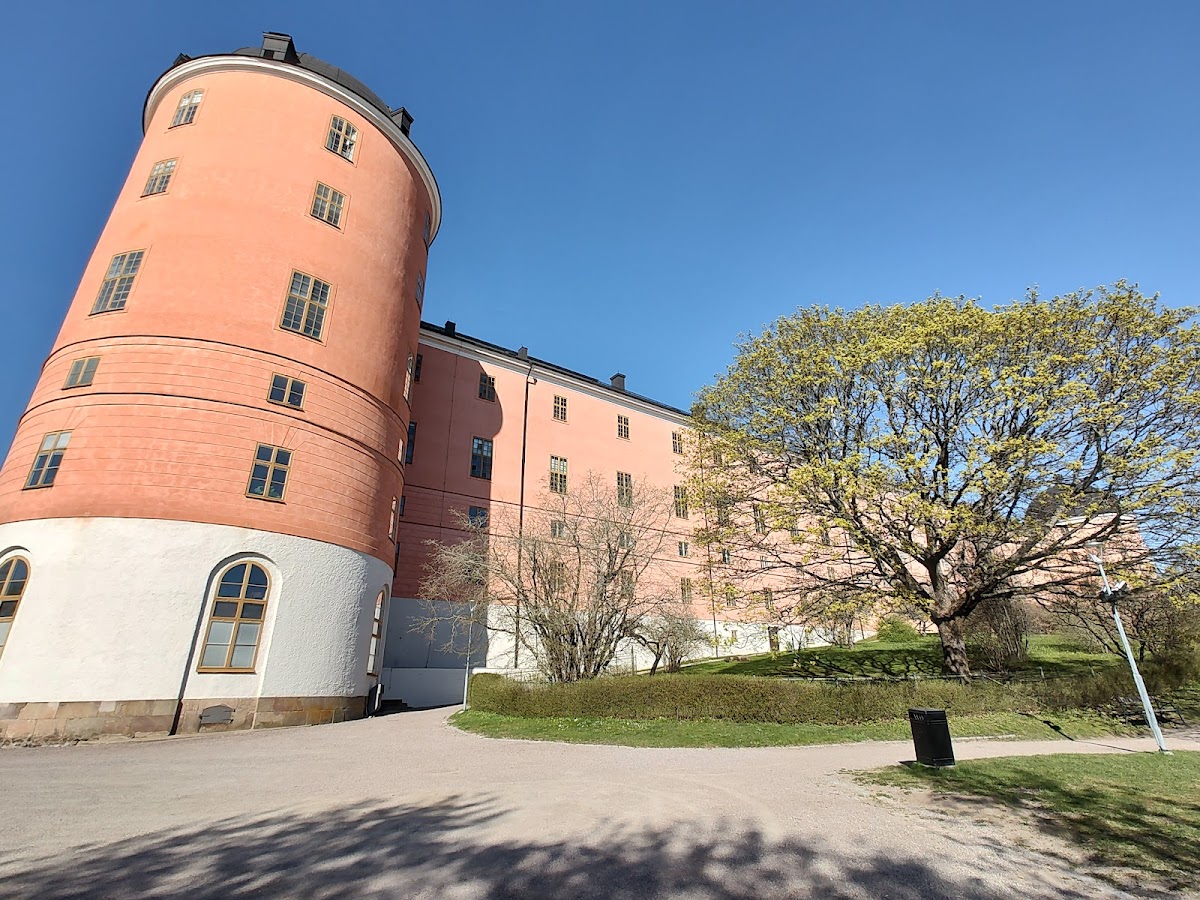
Facade restoration in 2002 and 2003 reinstated the historical color scheme associated with Carl Hårleman. The Uppsala Castle Museum opened in the building on 17 May 2025. Its principal exhibition, Castle Life, interprets the castle’s history and the people who lived and worked there from the sixteenth century to the present.
Remains
Uppsala Castle occupies the top of the Kasåsen esker, and its surviving buildings form a Renaissance fortress-palace that has been remodeled, expanded, and altered since the sixteenth century. The early complex was oriented west to east, while the later arrangement developed around a north to south axis. Its physical remains bring together foundations, towers, bastions, wings, interior decoration, and gardens created during several building phases.
The early fortress
Royal apartments and Vasaborgen
The first royal apartments occupied the southwest corner of the complex. Their surviving foundations now contain the Vasaborgen museum, preserving the ground plan of the original 1549 royal accommodation within the later castle. The early buildings stood alongside the western defenses and formed the initial core from which the Renaissance palace developed.
Styrbiskop battery
The Styrbiskop battery remains directed toward Uppsala Cathedral. A battery is a fortified position for artillery, while a bastion is a projecting fortification designed to allow defensive fire along adjoining walls. The present battlements hold the Gunilla Bell, which was cast in 1588, recast in 1759, and later used as Uppsala’s curfew bell.
The Renaissance palace
South wing and interior decoration
The south wing contains the royal apartments in its western half and the former Hall of State and church in its eastern half. The Hall of State now serves as event space, while the wing also houses the Uppsala Art Museum. The former church had a large, multi-storey stucco reredos, an ornamental structure behind an altar. Sections of this altar backdrop survived the 1702 fire and remained visible when the church interior was later divided into floors and rooms.
The castle walls were originally richly painted with biblical quotations. Two stucco inscriptions remain discernible, identified with Psalms 33:18 and 145:18. These fragments form part of the surviving interior decoration and preserve evidence of the visual religious program associated with the Renaissance palace.
Long Castle and towers
The eastern wing, called the Long Castle, is a long, narrow addition intended to link the south wing with the planned northern wing. The Long Castle and its northeast tower were completed, while the north tower reached completion in 1614. The rebuilding also produced the southwest tower in renewed form and the southeast tower, which was later rebuilt for use as a county prison.
Gardens and surrounding grounds
Castle gardens
A large garden was established east of the castle at the foot of the hill during the late sixteenth century. The garden in front of the castle was destroyed in the 1702 fire and recreated as a Baroque garden in 1744 according to Carl Hårleman’s plan. Its later arrangement therefore belongs to the post-fire transformation of the castle grounds.
University botanical garden
The botanical garden in front of the castle belongs to Uppsala University. Its plants were transferred from the university’s older botanical garden, founded beside the Fyris River in 1655. The new garden opened in 1807 after expansion and the construction of the Linnaeanum greenhouse. It now covers more than 34 acres and contains more than 11,000 plant species, including laurel trees associated with Carl Linnaeus that are more than 250 years old. Linnaeus was the Swedish botanist whose system for classifying living organisms became foundational to modern biological taxonomy.