Church of Saint George: A Gothic Revival Church in Luková, Czechia


Site at a Glance
- Rating
- 4.6
- Popularity
- Medium
- Country
- Czechia
- Primary era
- Modern
- External website
- Open
- Eras represented
- Medieval, Early Modern, Modern
- Civilizations
- Holy Roman Empire, Kingdom of Bohemia
- Site type
- Religious
- Remains
- Church
On this page9 sections
History
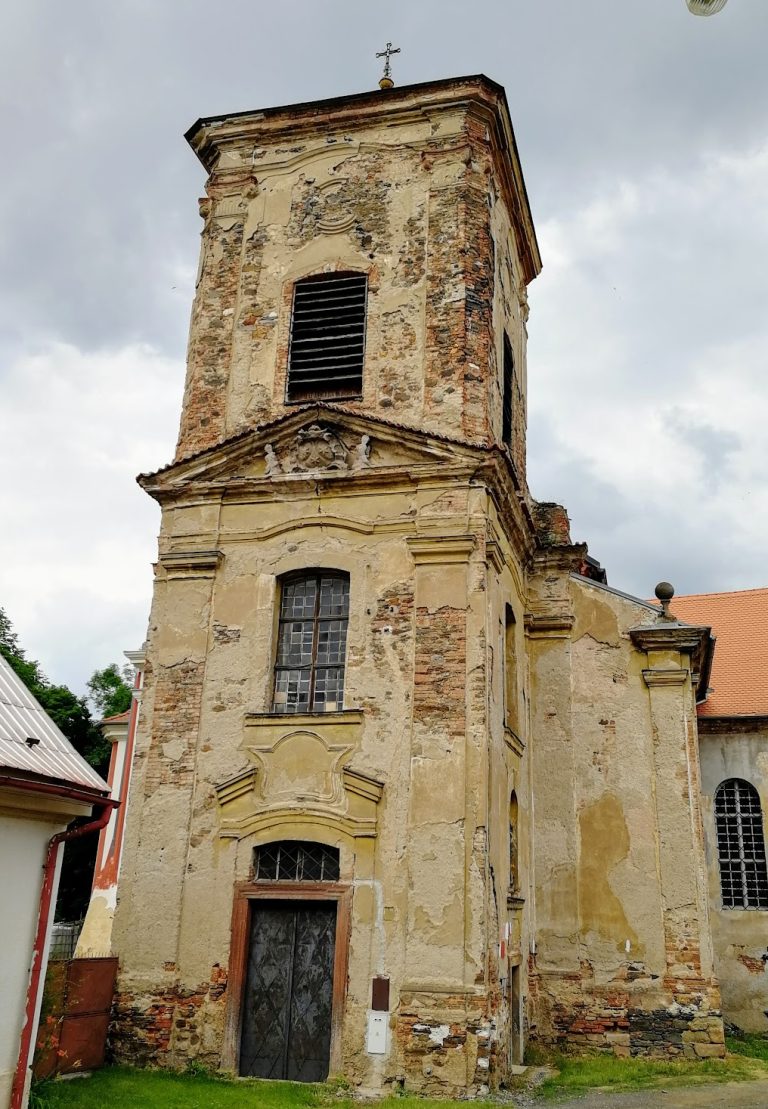
The Church of Saint George is a Roman Catholic filial church in Luková, Czechia, built in 1352 and associated with the medieval Gothic tradition. A filial church depends on a main parish church, and this one belongs to the parish of Manětín in the Diocese of Pilsen. Some accounts place an earlier church on the site as early as the thirteenth century. Dedicated to Saint George, the Christian martyr traditionally portrayed as a mounted warrior defeating a dragon, the building served the local Catholic community for centuries.
Medieval origins and reconstruction
The church was damaged or destroyed during the Hussite Wars, fifteenth-century religious and political conflicts in Bohemia connected with the reform movement initiated by Jan Hus. Repairs followed in the sixteenth century. Later fires repeatedly affected the building, with the major fire of 1796 leaving only the presbytery vault, the part of the church reserved for the altar and clergy, and the sacristy, the room used for liturgical preparation and storage.
Rebuilding completed in 1800 transformed the earlier Baroque church and gave it a Gothic Revival character. Gothic Revival, also called Neo-Gothic, revived medieval Gothic forms. The reconstruction also included the addition of a tower. The church’s last nineteenth-century restoration took place in 1858.
Decline after the Second World War
The expulsion of the predominantly German population after the Second World War contributed to the church’s decline. During a funeral service in 1968, the ceiling and part of the roof collapsed. Parishioners regarded the accident as a bad omen, and Mass was subsequently held outdoors rather than inside the church.
The building then became neglected and was repeatedly looted. During the communist period, paintings, statues, the bell, and the clock were removed, while the organ was damaged. Fires and the First World War had already taken the church’s bells. Two tower bells and a small bell in the roof turret were requisitioned during the war, and a replacement bell was obtained from the hospital in Manětín.
Artistic revival and preservation
In 2012, Czech artist Jakub Hadrava created My Mind as his bachelor’s project at the Faculty of Design and Art of the University of West Bohemia in Pilsen. Local resident and volunteer caretaker Petr Koukl helped with the installation and with reopening the church during parts of the year.
The project was conceived as a memorial to the German inhabitants who had attended Sunday Mass in the church in the early twentieth century before their expulsion after the Second World War. Visitors developed different interpretations of the figures, and the installation brought renewed public and religious interest to the building. At the request of the Catholic Church, religious services resumed. The church became known for its ghost sculptures and as the “church of the nine ghosts.”
Donations and grants associated with the sculpture exhibition supported preservation work, with more than 23,000 euros collected by 2018 for the church and the Diocese of Pilsen. Repairs have included the roof, roof trusses, tower, windows, and facade, while interior repairs continued in 2026. The Church of Saint George is protected as a cultural monument of the Czech Republic.
Remains
The Church of Saint George is a stone masonry building that brings together medieval Gothic origins, later Gothic Revival alterations, and Romanesque Revival elements. Romanesque Revival reinterprets the rounded arches and heavy forms associated with Romanesque architecture. The surviving structure includes a tower, sacristy, presbytery, roof turret, and organ, while the principal surviving furnishings are the benches.
Structure and furnishings
Tower, roof, and sanctuary
The 1796 fire shaped the church’s present form. The presbytery vault and sacristy survived the fire, while the rebuilding of 1800 altered the earlier building and added a tower. The roof and roof trusses were later renewed after water entered through the damaged covering. Work also repaired or renewed the tower, windows, and facade.
Interior furnishings
Before the church’s furnishings were lost, the interior contained three altars. The high altar displayed an image of Saint George with life-size gilded statues of Saints Peter and Paul. The side altars carried images of the Savior of the World and the Immaculate Conception. The church also formerly held a Renaissance baptismal font carved from sandstone, liturgical equipment, bells, and an organ.
My Mind installation
Hadrava’s My Mind places 32 life-sized plaster human figures among the pews and in adjacent areas near the gallery. Covered with white cloth, the figures are arranged standing and seated, with most sitting on the benches. The installation began as a smaller group popularly associated with nine ghostlike figures, and additional sculptures were added as the exhibition became more widely known. Their arrangement evokes former worshippers gathered inside the abandoned church.