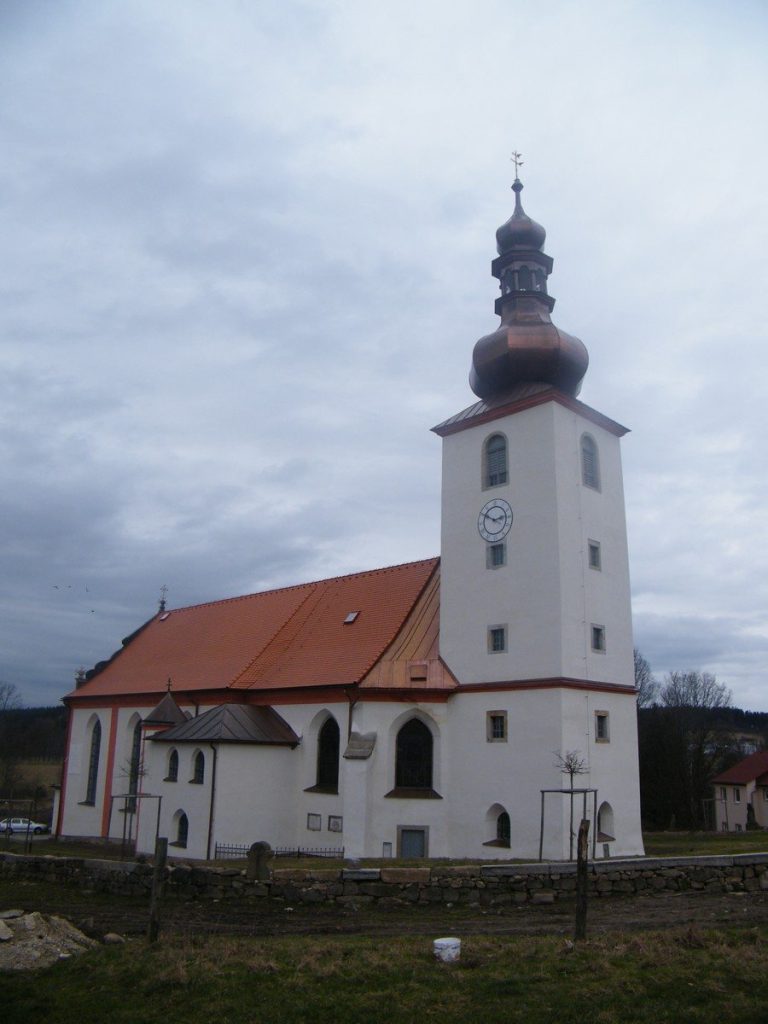
Peter-und-Paul-Kirche: A Historic Evangelical-Lutheran Church in Sebnitz, Germany


Site at a Glance
- Rating
- 4.2
- Popularity
- Very Low
- Country
- Germany
- Primary era
- Early Modern
- External website
- Open
- Eras represented
- Medieval, Early Modern, Modern
- Civilizations
- Habsburg, Holy Roman Empire, Kingdom of Bohemia
- Site type
- Religious
- Remains
- Church
On this page8 sections
History
Peter-und-Paul-Kirche is a historic church in Sebnitz, Germany, dedicated to Saints Peter and Paul, the two New Testament apostles. A small church is presumed to have stood here in the thirteenth century, although no surviving remains can be securely assigned to it. The building was first mentioned in written records in 1428.
Medieval Foundation and Reformation
The medieval town grew toward the end of the fifteenth century, bringing new inhabitants and creating the need for a larger church. The late Gothic choir and its surviving outer walls and buttresses belong to this period of expansion. Peter-und-Paul-Kirche was originally Catholic. During the Reformation, the sixteenth-century religious movement that led many churches in Saxony to adopt Protestant worship and organization, it became Protestant in the mid-sixteenth century.
The church’s Renaissance furnishings include a high altar and baptismal font dated 1586. These works belong to the period before the major rebuilding of the building itself. The church later continued as a Protestant place of worship and developed into the parish church that serves Sebnitz.
Rebuilding and Later Changes
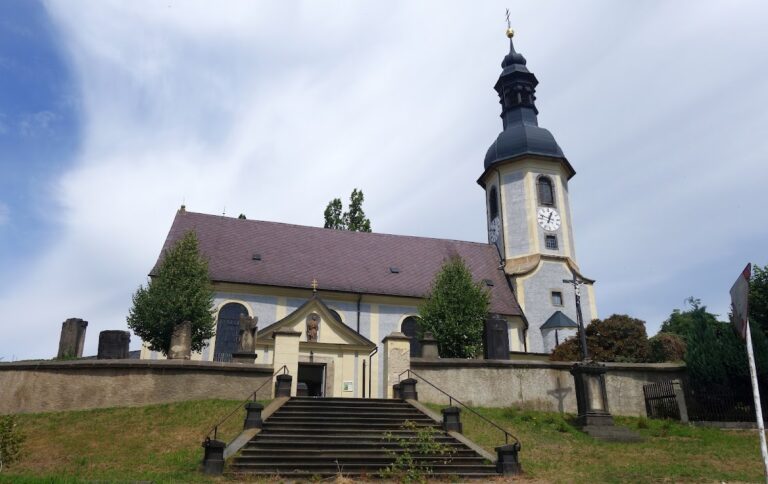
A major rebuilding in 1619 replaced or enlarged the main body of the church with a larger early Baroque nave and vestibule, while retaining the older choir. The interior was restored in 1892. Extensive work in 1928 and 1929 changed the interior, restored furnishings, added a new tower and belfry, and created the present choir vault. Otto Rometsch built the tower in 1928.
Today, Peter-und-Paul-Kirche is an Evangelical-Lutheran parish church administered by the Sebnitz-Hohnstein parish within the Pirna church district of the Evangelical-Lutheran State Church of Saxony. It continues to host regular worship. Organ music frequently accompanies services, sometimes joined by a choir, children’s choir, or brass ensemble. A traditional Christmas Day service includes works by the local composers Gotthilf Sigismund Hein and Christian Gottlob August Bergt. Since 1993, the church has also hosted the concert series Musik in Peter-Paul, which presents performers from different countries and musical genres. The building is protected as a cultural monument under designation number 09276512.
The park south of the church occupies the site of the former church cemetery, which was abolished after 1861. A rectory built in 1912 stands east of the church, while the town hall is to the north and a town square lies approximately 100 metres north of the building.
Remains
Peter-und-Paul-Kirche is an oriented, single-nave hall church built of stone, with the altar toward the east. Its form brings together a late Gothic choir, an early Baroque nave and vestibule, and a historicizing tower that is the newest major component. The sacristy is identified as the oldest surviving part of the building. The choir’s late Gothic outer walls are reinforced by buttresses and end in a three-eighths polygonal plan.
Choir and Nave
The nearly square nave, dated 1619, is linked to the narrower choir by a triumphal arch. A wooden central support carries the interior structure, creating a single-support hall. The nave has a wooden coffered ceiling from 1619, probably made by Hans Panitz. A coffered ceiling is divided into recessed or framed panels. This ceiling contains 88 panels decorated with ornaments and coats of arms.
Two-storey wooden galleries surround the nave. Their 55 parapet panels carry richly figured scenes from the Old and New Testaments, painted in 1688 and 1689 by the Dresden painter Johann Gottfried Burchardy. The choir has one-storey galleries decorated with depictions of the apostles. Its present cell vault dates from 1928. A cell vault is formed from interconnected concave compartments.
The choir also retains remnants of late Gothic wall paintings showing scenes from the life of Christ. Three large portraits of pastors from the seventeenth and eighteenth centuries remain in the choir, adding later commemorative images to the medieval painted decoration.
Altar, Pulpit, and Baptismal Font
The richly carved high altar is a two-storey Renaissance structure with paintings framed by columns. Its main panel, dated 1586, depicts the Last Supper and is attributed to Martin Kott of Bad Schandau. Kott included himself among the figures, holding a palette and brushes. The upper painting represents the Descent from the Cross. Side niches contain fully sculpted figures of John the Baptist and the Apostle John, with angels above them.
A richly painted wooden Renaissance pulpit from the sixteenth century stands in the choir. Its basket carries carved representations of the Evangelists, Peter, and the Savior, while the stairway depicts the Conversion of Paul. The Renaissance baptismal font also dates from 1586. It was altered in 1928 with large inscriptions and gilding.
Sculpture and Other Furnishings
A large wooden crucifix from the early sixteenth century stands on the central nave support. Its hands were replaced in 1908. Beneath it is a wooden late Gothic figure of the Sorrowful Mother from the end of the fifteenth century. The Madonna probably came from a late Gothic Crucifixion group.
Gustav Niemand created a church-shaped shadow play in 1910, known as the Sebnitzer Schattenspiel. Figures from a late Gothic winged altarpiece formerly associated with the church are displayed in the local Heimatmuseum. Several Baroque tombstones are installed along the exterior wall.
Organ
The organ was built in 1902 by the Dresden Jehmlich brothers’ workshop. It has approximately 2,000 pipes, two manuals, and a pedal division. Its original 27 stops were expanded in 1928, and the instrument was restored in 1991 and 2008. Together with the church’s choirs and brass ensembles, it remains part of the building’s continuing musical use.