Church of the Nativity of the Theotokos, Zaraiske: A Wooden Greek Catholic Church
Site at a Glance
- Rating
- 4
- Popularity
- Very Low
- Country
- Ukraine
- Primary era
- Early Modern
- Eras represented
- Early Modern, Modern
- Civilizations
- Habsburg, Polish–Lithuanian Commonwealth
- Site type
- Religious
- Remains
- Church
On this page8 sections
History
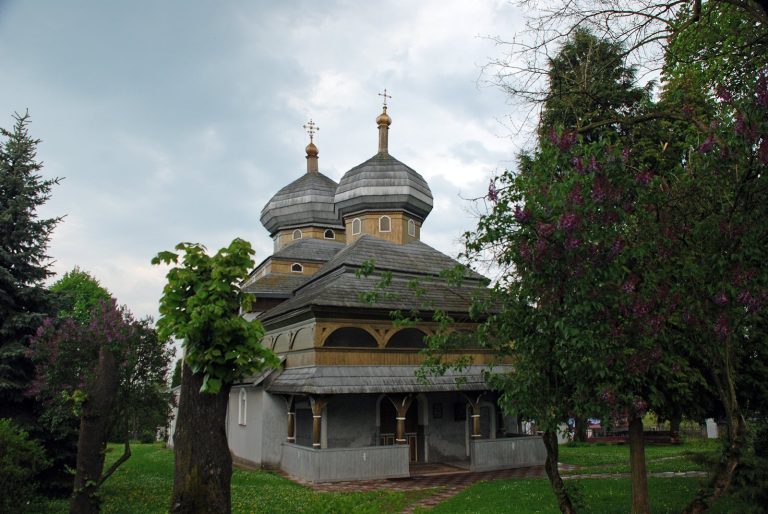
The Church of the Nativity of the Theotokos is a wooden Greek Catholic church in Zaraiske, Ukraine, built by the local community in the tradition of Boyko architecture. Greek Catholic churches follow Eastern Christian worship while remaining in communion with the Roman Catholic Church. The church is regarded as an ancient monument of Ukrainian wooden construction and takes its name from the Christian feast commemorating the birth of Mary, the mother of Jesus.
Construction and Later Changes
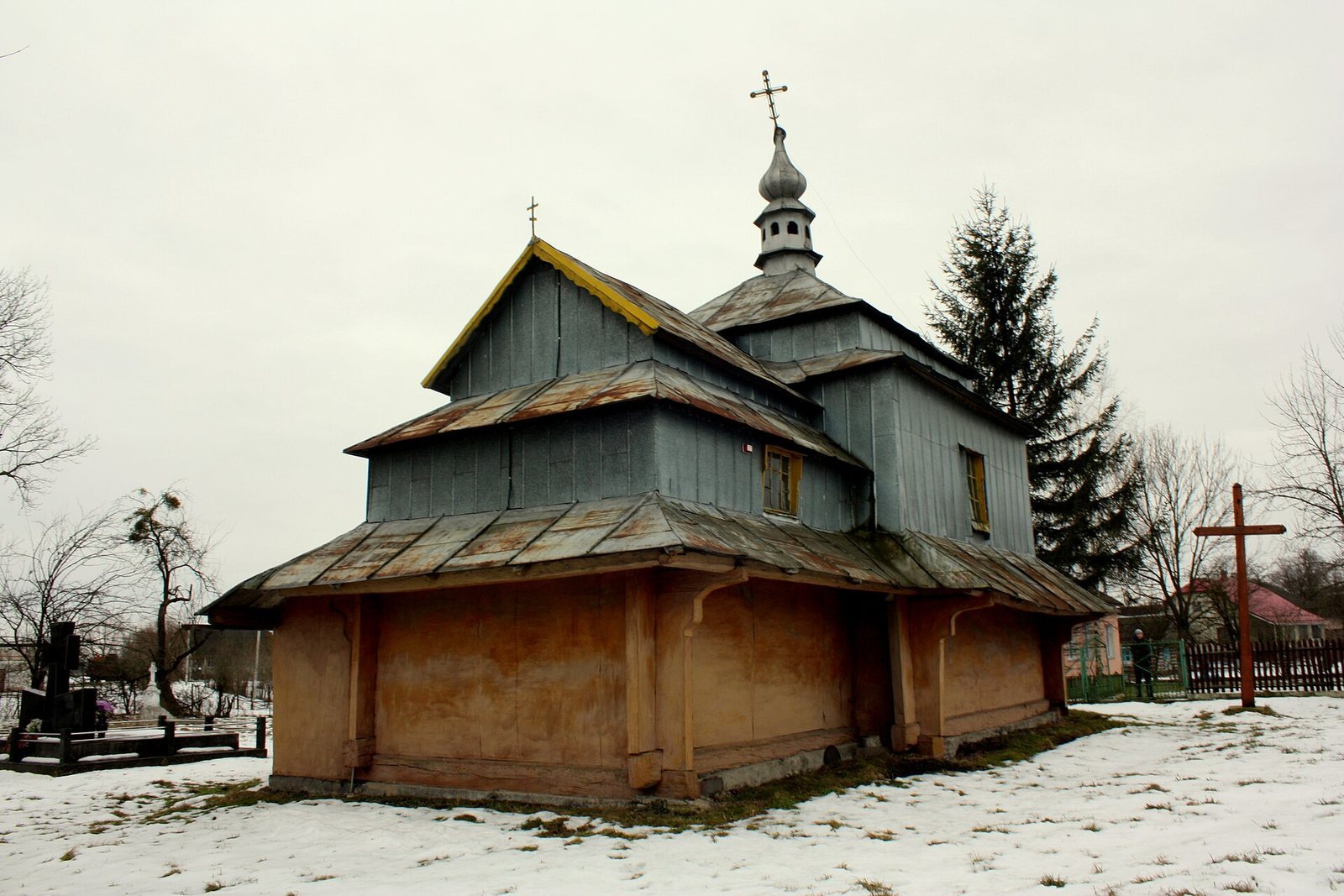
The date of construction remains uncertain, with both 1634 and 1894 associated with the building. It was repaired in 1850. During the 1930s, its original shingle roofing was replaced with galvanized sheet metal, changing an important part of the church’s external fabric.
The church was closed and inactive from 1957 until 1989. On 6 September 1979, it entered the Ukrainian SSR’s state-protected register of urban-planning and architectural monuments. The church and its adjoining bell tower were listed as a monument of national importance under protection numbers 1409/1 and 1409/2.
Protection and Present Condition
The building is now described as neglected and in an emergency condition. A proposal to transfer it to Drohobych for use as a museum exhibit was rejected by the Zaraiske community. The community instead intends to establish a church museum at the original site, retaining the monument in its historical setting.
Remains
The complex consists of a wooden, three-section church with a single upper structure and a pyramidal, tent-like roof termination, together with a separate wooden bell tower. Its form reflects traditional Boyko building culture, associated with the wooden churches of the Carpathian region. The church was financed through the local community and preserves interior furnishings from several periods.
Church and Bell Tower
Wooden Church
The church has three sections and is crowned by a single pyramidal roof termination. Its wooden construction and compact arrangement belong to the traditional Boyko architectural vocabulary. The building’s shingle roof was later covered with galvanized sheet metal, and the structure is presently in an emergency condition.
Bell Tower
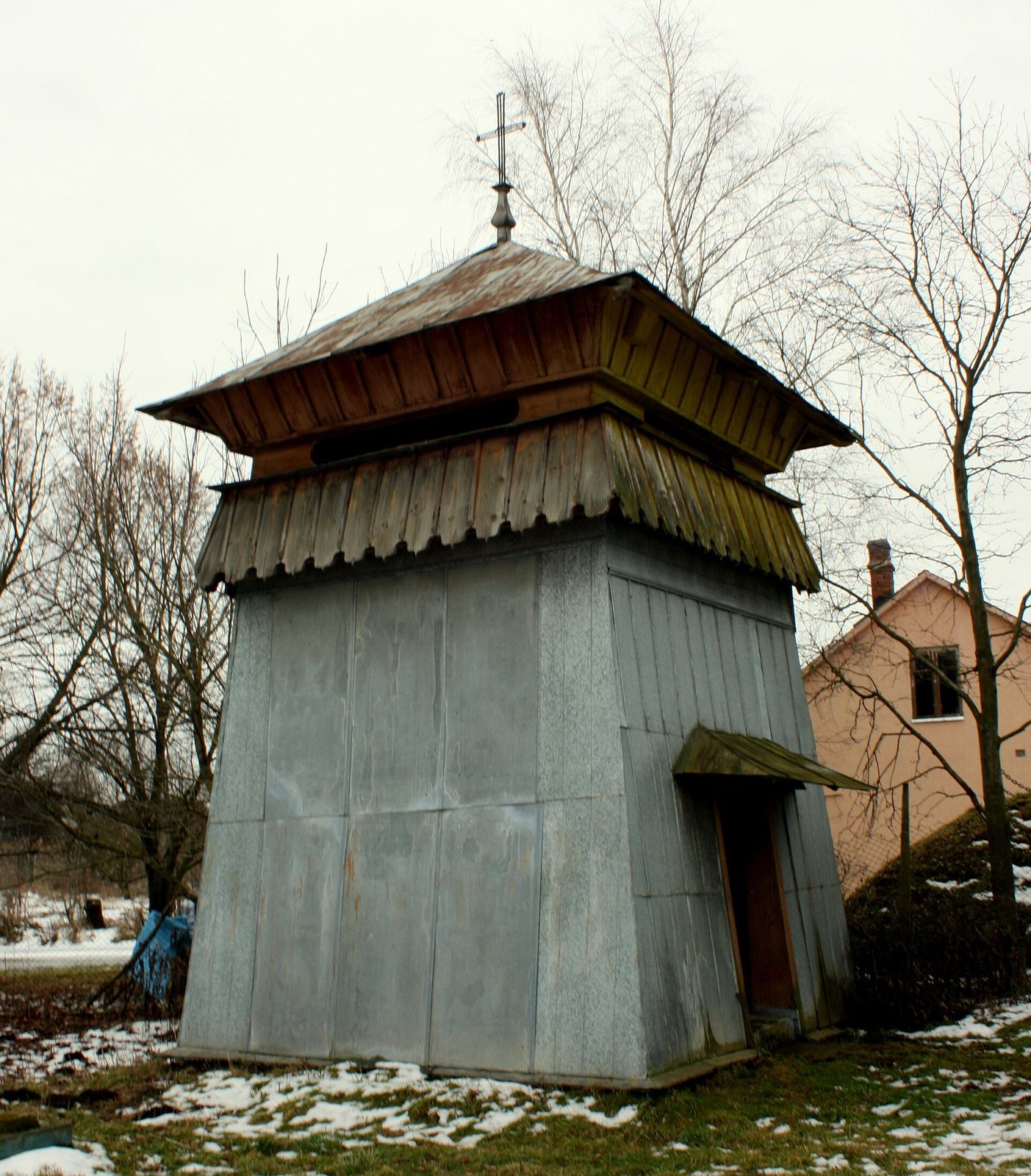
A wooden bell tower stands beside the church. Built in 1850, it has a square plan and a post-supported structure. It forms the second protected component of the monument complex, listed under protection number 1409/2.
Iconostasis and Interior Furnishings
The church preserves a carved four-tier iconostasis, the decorated screen separating the sanctuary from the main body of an Eastern Christian church. It was created at the end of the seventeenth century by craftsmen associated with the artistic center in Sudova Vyshnia. Preliminary examination probably attributes its icon paintings to Ivan Medytskyi, an icon painter who lived in Sambir.
The iconostasis combines carved and gilded architectural forms. Its Royal Doors, the central doors traditionally leading toward the altar area, are especially finely shaped. Later renewals crudely overpainted the icons, and extensive restoration is required to remove additions considered to have no artistic value. Other preserved icons and small altars inside the church date from the eighteenth and nineteenth centuries.