Santuario della Madonna dei Bisognosi: A Mountain Sanctuary in Italy


Site at a Glance
- Rating
- 4.7
- Popularity
- Low
- Country
- Italy
- Primary era
- Medieval
- External website
- Open
- Eras represented
- Medieval
- Civilizations
- Kingdom of Naples
- Site type
- Religious
- Remains
- Sanctuary
On this page11 sections
History
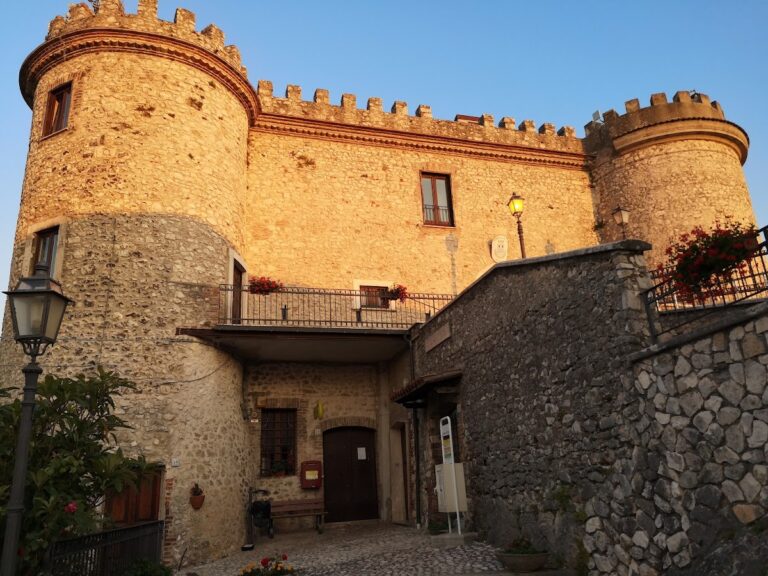
Santuario della Madonna dei Bisognosi is a Roman Catholic sanctuary in Italy, standing on Mount Serra Secca between Pereto and Rocca di Botte. Dedicated to Mary, the mother of Jesus, it is associated with the Capuchin Friars Minor and the Diocese of Avezzano. Tradition places its foundation in the early seventh century, either in 608 or around 610, when a wooden image of the Virgin was brought from Seville and a shrine was established on the mountain.
Foundation traditions
The sanctuary is also known as Madonna del Monte, a name linked to its mountain setting and early history. According to tradition, the inhabitants of Pereto and Rocca di Botte founded the shrine together. The Virgin icon was supposedly carried inland from Seville to protect it from invading Saracens, a medieval European term for Muslim peoples, especially those associated with Arab or North African forces. A mule carried the image to Mount Serra Secca, where the exhausted animal died. The inhabitants interpreted this as a sign that Mary had chosen the location for a new shrine.
The construction was traditionally divided between the territories of Pereto and Rocca di Botte, and the shared project was said to have helped reconcile the two communities. The earliest references seem to belong to the twelfth century and mention the sanctuary’s existence in 1065, providing an early historical indication of the institution beyond its foundation traditions.
Pope Boniface IV and the early shrine
Tradition also connects the sanctuary with Pope Boniface IV, a seventh-century pope whose pontificate lasted from 608 to 615. Seriously ill, he is said to have prayed to the Virgin of Seville and recovered. The tradition places his visit to the church in June 610 or June 613. During that visit, he supposedly requested an enlargement, supplied funds, granted indulgences, and donated the processional crucifix that remains associated with the sanctuary.
The abbey and its later administration
The date when the sanctuary became an abbey is unknown. Its historically recorded abbots include a long succession of members of the Maccafani, Colonna, Mattei, and Resta families, as well as other ecclesiastics. Francesco Maccafani served from 1440 to about 1455, followed by Gabriele Maccafani, Giorgio Maccafani, Giovanni Maccafani, Gian Francesco Maccafani, and Gian Eustachio Maccafani between 1456 and 1533. Later abbots included Camillo de Ripa, Alessandro and Giorgio Maccafani, Francesco Grassillo, Leonardo Mattei, Domenico Cecchini, Properzio Resta, Egidio Colonna, N. Mattei, Gian Francesco Naldi, Antonio Ossario, Carlo Colonna, Girolamo Colonna, Pietro Colonna Pamphili, Marcantonio Colonna, Giuseppe Mattei, and Raffaele Resta. Their terms extended from the fifteenth century until Resta’s death in 1861.
Preservation
In 1902 the sanctuary was declared a monument worthy of preservation. Its historical identity continues to rest on the combination of its foundation traditions, its association with the Virgin icon and processional crucifix, and its surviving religious art.
Remains
Mountain setting and church
The sanctuary stands at 1,043 metres above sea level on Mount Serra Secca in the Carseolani Mountains, directly on the boundary between Pereto and Rocca di Botte. About three quarters of the place of worship lies within Pereto’s territory and one quarter within Rocca di Botte’s. The church preserves the wooden Virgin icon traditionally associated with Seville, the threatened journey that brought it to the mountain, and the foundation of the shrine. The processional crucifix linked by tradition to Pope Boniface IV is also displayed in the church.
Frescoed interiors
Fifteenth-century paintings
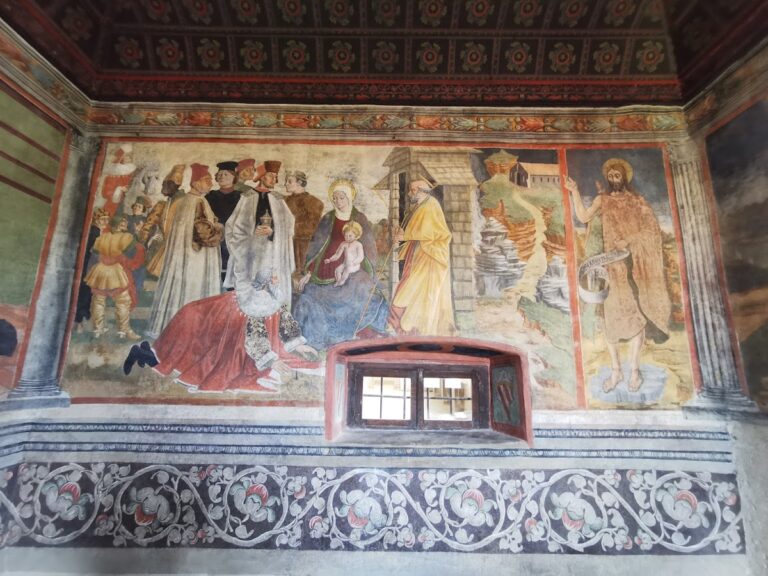
Numerous frescoes decorate the sanctuary, many dating from the second half of the fifteenth century. They are attributed to Jacopo di Arsoli, Desiderio da Subiaco, and Petrus. Their subjects include the Crucifixion, the Descent of the Holy Spirit, the Resurrection, the Burial of Jesus, the prophet Daniel, Saint Joachim, the Virgin and Child, and Saint Elizabeth. On the wall beside the sacristy are scenes of the Annunciation, the Nativity, the Adoration of the Magi, and the Visitation.
Chapel in the original core
A chapel belonging to the church’s original core was restored in 1488. Its paintings show two images of the Madonna with the Child, each surrounded by four angels, together with the Presentation in the Temple and the arrival of Fausto of Seville at the mountain, where he meets his son Procopio.
The Apocalypse fresco
The fresco known as the Apocalypse dates from 1488 and is attributed to an anonymous artist from Abruzzo. It presents the Last Judgment, the Christian belief that Christ will judge the dead at the end of time, through a vision of Paradise and Hell. The image served as a religious and educational program for the largely rural population around the sanctuary, while also warning and instructing pilgrims.
Christ appears at the centre as supreme judge, with a lily and a sword emerging from him as signs of mercy and justice. Mary and John stand among angels carrying the Instruments of the Passion, objects associated with Jesus’s suffering and crucifixion. The upper spheres contain evangelists, apostles, patriarchs, prophets, and martyrs, including Saint Sebastian as standard-bearer. Doctors of the Church, monks, holy women such as Saint Clare, popes, cardinals, bishops, and abbots also appear. Saint Michael, the archangel associated with defending the faith and defeating evil, and the prophets Enoch and Elijah guide the saved, while bodies rise from their tombs for judgment.
The infernal section is dominated by a gigantic chained Lucifer with three heads and two throats that devour the condemned. Hell is arranged around four principal groups: people associated with the seven deadly sins; peoples presented as enemies of the faith, including Turks, Tatars, Jews, and Maccabees; individual sinners such as hypocrites, a murderer, a blasphemer, a despairing person, and a prostitute; and dishonest tradespeople, including a butcher, carpenter, blacksmith, shoemaker, and innkeeper. Their punishments follow contrapasso, a medieval idea in which the penalty symbolically reflects or reverses the earthly sin.