St. Olaf’s Church: A Medieval Fieldstone Church in Ulvila, Finland


Site at a Glance
- Rating
- 4.5
- Popularity
- Low
- Country
- Finland
- Primary era
- Medieval
- External website
- Open
- Eras represented
- Medieval, Early Modern, Modern
- Civilizations
- Russian, Swedish
- Site type
- Religious
- Remains
- Church
On this page14 sections
History
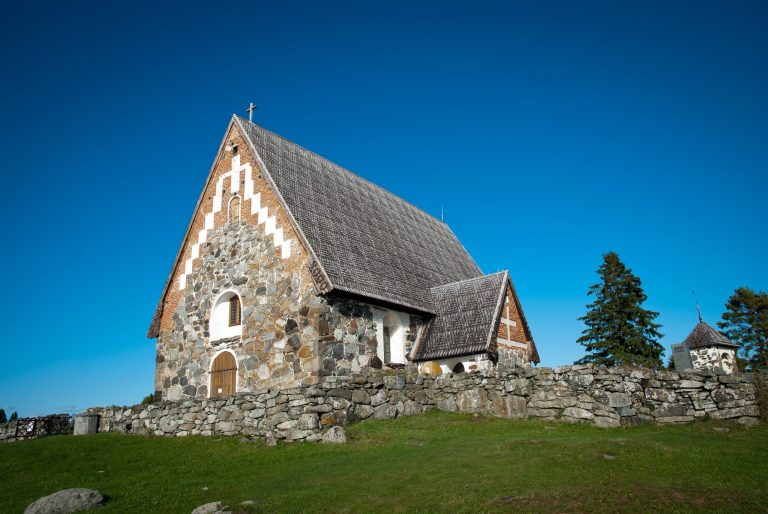
St. Olaf’s Church, also known as Ulvila Church, is a late-medieval fieldstone church in Ulvila, Finland, built between about 1495 and 1510. Formerly Roman Catholic and now Evangelical Lutheran, it is dedicated to Olaf II of Norway, commonly known as Saint Olaf, a medieval Norwegian king who became a major Christian saint and the patron of many churches in Scandinavia. Saint Olaf has been the church’s patron saint since before 1429.
Ulvila’s medieval parish and market
The church developed within the medieval settlement of Ulvila beside the estuary of the Kokemäenjoki. Its access to the sea helped make Ulvila one of the region’s two most important trading markets. The settlement received town rights in 1365, but post-glacial rebound later changed the shoreline and harbor. In 1558, the town rights were transferred to Pori.
An earlier ecclesiastical and trading center stood at Liikistö, about 1.5 kilometers southeast of the later medieval settlement. Liikistö belonged to Kokemäki Parish until the independent Ulvila Parish had been established by 1344 at the latest. The Liikistö congregation was later united with the congregation at Ulvila.
Early churches at Ulvila and Liikistö
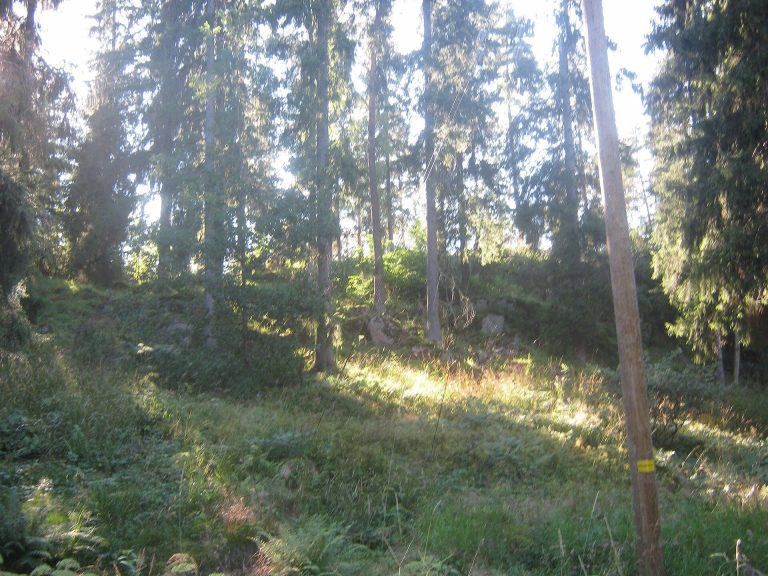
A church may have stood at Liikistö by the early thirteenth century. In 1311, Ragvald II, Bishop of Åbo, issued an order concerning plans for a stone church there. Work began on its stone foundations but stopped before the building was completed. The foundations and a memorial cross remain visible at Liikistö.
A wooden church served Ulvila’s central population from the late thirteenth century. It may have operated in connection with the Guild of Saint Gertrude, a German merchants’ guild founded in Stockholm during the fourteenth century. In 1332, Benedictus II Gregor, Bishop of Åbo, ordered a new church to be built on the site of the existing Ulvila church. The building appears to have been completed before Bishop Hemming of Turku visited in 1346, and the cemetery was consecrated in 1347. This church replaced Liikistö as the area’s main ecclesiastical center.
The wooden church completed in the 1340s was destroyed by fire in 1429. A replacement was finished around 1430 with support from the bishops of Roskilde and Liepāja and the Archbishop of Lund. The archbishop granted a 40-day absolution, a remission of religious penance, to people who took part in the building project. The replacement stood for more than sixty years before being demolished for the present stone church.
The late-medieval stone church
Construction of the present church began around 1495 and continued for approximately fifteen years according to a unified plan. The sacristy, the room used to store worship materials, was completed first, around 1495. The congregation hall followed around 1500, and the porch, an entrance structure attached to the church, was completed in 1510.
The design is attributed to the Master of Ulvila, a Swedish builder from Dalarna whose personal name is not known. He was hired by Olof Drake, owner of the nearby Isokartano homestead. This is the only church in Finland attributed to the Master of Ulvila. His influence continued in Satakunta through an apprentice later identified by scholars as the Master of Huittinen.
A belfry was completed in 1757. Its original onion dome was replaced in 1862 by a steeple designed by the Swedish architect Georg Theodor Chiewitz. Colonel Axel Kurck and stadtholder Gödik Fincke, a senior territorial governor and commander during the Cudgel War, are buried at the church. The Cudgel War was a late-sixteenth-century peasant uprising in Finland against local authorities and military burdens.
St. Olaf’s Church is regarded as one of Finland’s best-preserved medieval fieldstone churches and is the only surviving structure from the medieval town of Ulvila. Archaeological supervision during renovation in 2005 led to the discovery of Finland’s largest medieval coin hoard. The church is an active Evangelical Lutheran place of worship and is recognized as a nationally significant built cultural environment and a cultural heritage site of national significance. It is also protected under Finland’s Church Act.
Remains
The church stands beside Kirkkojuopa, a minor branch of the Kokemäenjoki, in Vanha-Ulvila, about two kilometers from the modern town center and eight kilometers from Pori. The late-medieval building forms a unified architectural complex of fieldstone masonry, using naturally occurring stones fitted together rather than regularly shaped ashlar blocks. It has retained its medieval appearance with relatively little alteration, and its architecture influenced the churches of Lempäälä and Holy Cross in Rauma.
Church building and belfry
Stone church
The nave measures approximately 37 by 15 meters. The sacristy stands on the north side, while the armory, or weapons room, occupies the south side. The principal entrance is at the west end. Additional access is provided by entrances to the sacristy and armory, together with another door on the south side. A wine cellar of unknown date lies beneath the sacristy.
Belfry
The belfry stands southwest of the church. It retains the steeple installed in 1862, when it replaced the original onion dome. The belfry is therefore a later element within the setting of the medieval stone church.
Liikistö cemetery and earlier remains
Cemetery
Excavations at Liikistö during the 1930s revealed numerous grave markers and carved stone paving slabs in the church cemetery. The cemetery contains 298 identified graves and was used from the first half of the thirteenth century through the fourteenth century. A formerly standing stone monument was also found. Its shape resembled a scythe-stick monument at St. Peter’s Church in Untamala.
Earlier church remains
Excavations in 2002 and 2003 uncovered the remains of a burned wooden wall at the presumed church location within the Liikistö cemetery. Radiocarbon dating places the building in the fourteenth century. Colored glass in grave fill beneath the wall line indicates that an earlier building with colored-glass windows may have stood there, possibly as early as the thirteenth century.
Medieval sculptures and coin hoard
Wooden sculptures
The church has twelve wooden sculptures. Three remain in the church, while the others are preserved at the Satakunta Museum in Pori. They were originally made for the wooden church built after the fire of 1429. The group includes a crucifix, a statue of Saint Olaf carved in Mecklenburg during the 1430s or 1440s, and a mid-fifteenth-century statue of Saint Anne. The Saint Anne sculpture, known as Saint Anne Trinity, shows Saint Anne with Christ and the Virgin Mary.
The medieval sculptures preserved at the Satakunta Museum represent Saint Martin, Saint Vitus, Saint Erasmus, Saint Anthony, and Saint Birgitta. The Saint Birgitta figure dates from approximately 1500.
Medieval coin hoard
The coin hoard found during the 2005 renovation was buried beneath the sacristy wall in the late fourteenth century. It contained 1,476 silver coins, providing archaeological evidence connected with the church’s medieval setting.