Ziwiye: A Mannaean Fortress in Iran
Site at a Glance
- Popularity
- High
- Country
- Iran
- Primary era
- Iron Age
- Eras represented
- Iron Age
- Civilizations
- Unclassified
- Site type
- Military
- Remains
- Fort
On this page16 sections
History
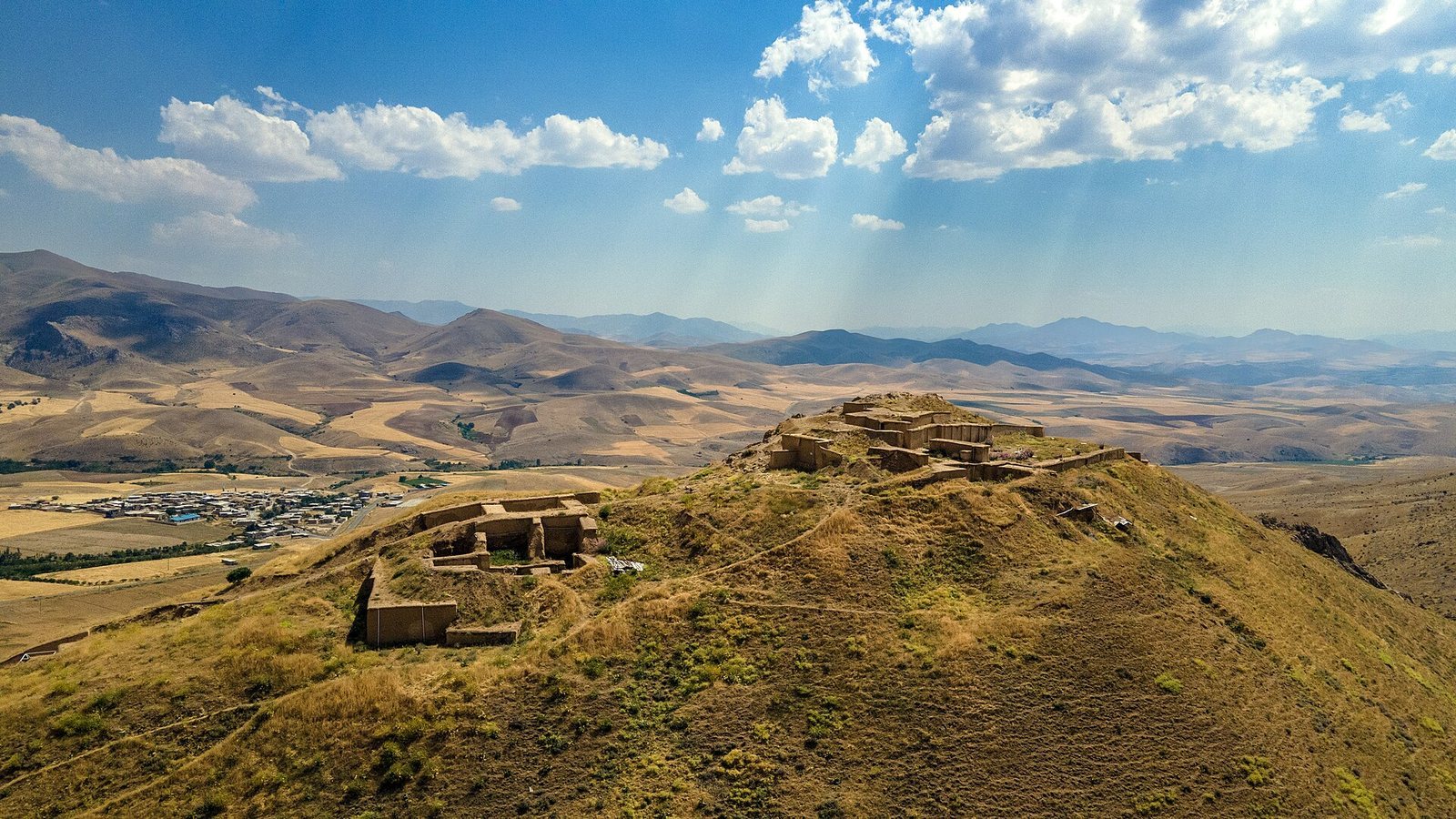
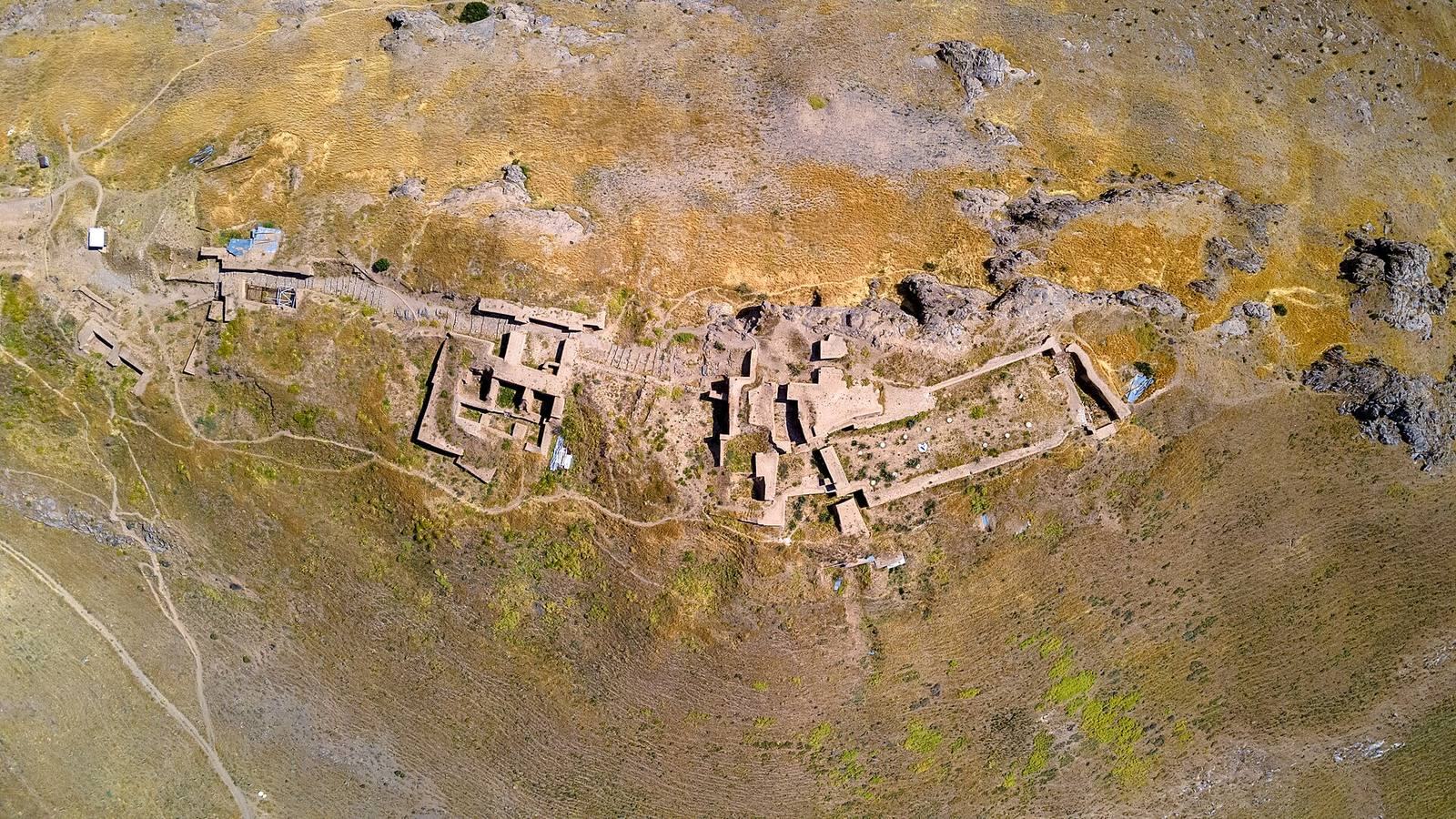
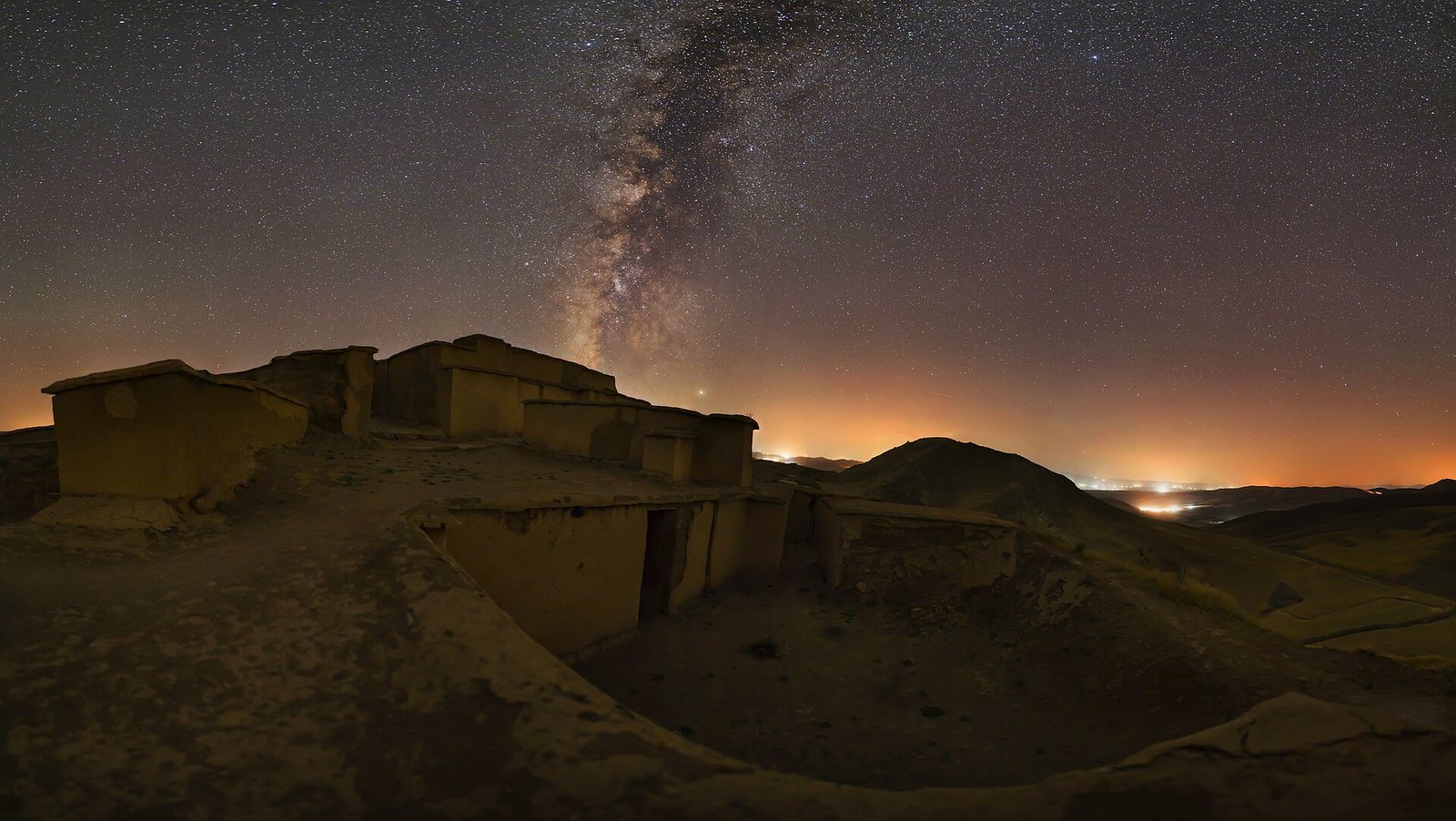
Ziwiye is a Mannaean fortress on a mountain summit in western Iran, about 42 kilometres east of Saqqez. Its three building phases are associated with Iron Age III, especially the second half of the seventh century BC. The stronghold served as a Mannaean political centre before Scythian occupation.
Mannaean and Scythian rule
The territory around Ziwiye belonged to the Mannaean kingdom in the seventh century BC, and perhaps as early as the ninth. Mannai was subordinate to Assyria, a powerful ancient Near Eastern state, during the reign of Sargon II, who ruled from 721 to 705 BC. Ziwiye has been tentatively identified with Zibia, a place near Izirtu, the Mannaean capital. Similar place-names occur in inscriptions associated with Sargon II and the later Assyrian king Ashurbanipal.
Before the Scythians arrived, Ziwiye had served as a Mannaean capital. Around 700 BC, Scythians, mobile peoples of the Eurasian steppe, occupied the fortress and used it as a command centre and a base for governing Median lands. The Medes were an ancient Iranian people. Assyrian and Scythian attacks made Ziwiye a focus of conflict; after the Mannaeans were defeated, the victorious powers established themselves at the site. Ziwiye may also have served as an early judicial centre in ancient Iran.
A three-storey building at the fortress has been tentatively linked to a structure that the Greek historian Herodotus said the Medes built willingly for Deioces, a figure in his account of early Median history. This identification remains uncertain. Only part of Ziwiye has been excavated, and the presence of a palace there is itself conjectural.
The attributed hoard and its interpretations
A group of valuable objects known as the Ziwiye hoard is attributed to an area outside the fortress, but how it was found is unclear. One account places its discovery in a grave near the castle walls, where a shepherd boy may have encountered it. The objects entered the antiquities trade rather than being recovered in a securely recorded excavation. From the 1960s onward, other comparable objects sold through the trade were also assigned to Ziwiye.
Oscar White Muscarella challenged both the proposed findspots and the idea that the objects formed a single ancient group. He accepted that some pieces were genuine and skillfully made, but rejected the assemblage as reliable archaeological evidence and later identified several objects attributed to it as modern forgeries. Interpretations of the group have consequently varied. Tadeusz Sulimirski regarded it as the burial wealth of a Scythian prince, possibly including plunder. André Godard and Winfried Orthmann instead proposed that it belonged to a Mannaean prince and included inherited valuables. Roman Ghirshman suggested a royal Scythian workshop where eastern craftsmen worked, while Richard Barnett proposed ownership by an Assyrian governor of Mannai.
Ghirshman also suggested that some objects might have been a dowry for a daughter of Esarhaddon, an Assyrian king, on her marriage to the Scythian ruler Bartatua. The marriage itself is uncertain, and the proposed connection has chronological problems. Godard argued that Scythians adopted Mannaean artistic practices and that their combination helped shape the Scythian animal style, an artistic mode using stylized animal forms. Some objects have also been viewed as forerunners of Achaemenid imperial art. Comparisons include finds from Hasanlu and Marlik in Iran, royal graves at Salamis on Cyprus, and drinking vessels from Kaflant. The group has been interpreted as evidence for cultural exchange across the Iranian plateau, including routes associated with the Silk Road, but its uncertain origins limit conclusions about the collection as a whole.
Excavation and protection
Archaeological work at Ziwiye began in 1945. An individual excavator spent eight years exposing more than 80 percent of the mound, with the work aimed at recovering antiquities for sale. Nasrollah Motamedi later carried out excavation and study in two phases. Simin Lakpour led work lasting about 11 seasons. A brief excavation by V. E. Crawford and Robert H. Dyson Jr. took place in 1964. Roman Ghirshman, Charles K. Wilkinson, Richard Barnett, Edith Porada, Kantor and Boehmer also undertook research or excavation at Ziwiye. The site is registered as an Iranian national heritage site.
Remains
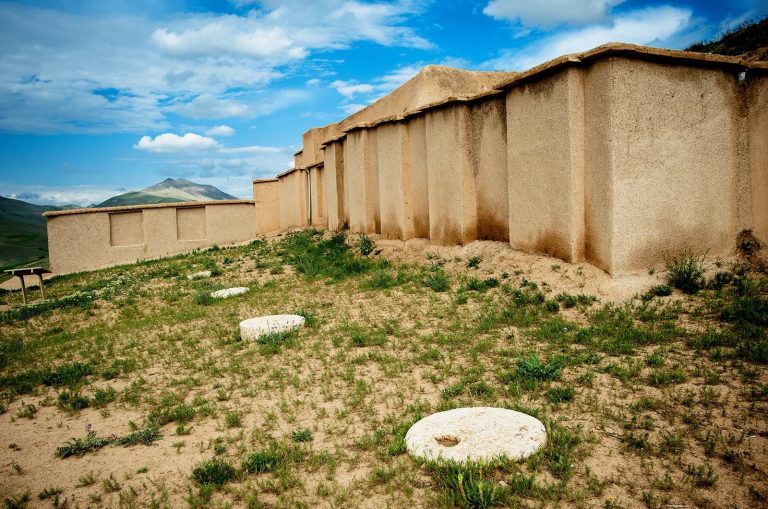
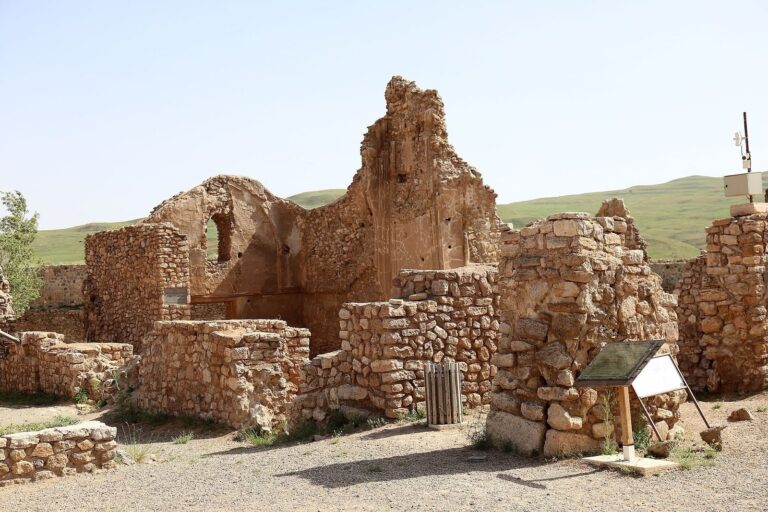
The fortress occupies a summit about 1,850 metres above sea level. Its complex includes halls, a courtyard, rooms, a granary and a main entrance. Stone foundations supported upper walls of mudbrick, joining substantial stonework with earthen construction.
Fortress architecture
Walls and enclosure
The walls were laid out with geometric precision. Their foundations were made from cut stone, with mudbrick rising above; their thickness exceeded two metres and reached as much as 7.5 metres in places. Treasure hunters have heavily disturbed the partly excavated site.
Three-storey building
The three-storey structure had large windows, corridors and a feature described either as an iwan, a vaulted space open on one side, or as a balcony. Its remains include twelve carved stone column tops, several stone columns and two very large, carved stone gates.
Pillared hall and stairways
The pillared hall had sixteen columns arranged in two rows of eight. The columns had stone bases and mudbrick shafts. Excavations also revealed stone stairways and adjoining spaces.
Objects attributed to the hoard
About 340 objects have been assigned to the hoard, including 103 pieces of ivory, 71 of silver and 43 of gold, alongside bronze and bone items. The group is generally dated to around 700 BC, although some attributed objects are older.
Bronze container
A large bronze tub-like container survives in fragments and is said to have held some of the objects. Its date is uncertain. A procession of tribute-bearers on its rim is shown with drinking horns, wineskins, vessels and a model of a city. The decoration also includes a goat standing on a rosette. Assyrian-style figures appear on the vessel, alongside elements of gold, silver and ivory.
Ivory plaques
Many of the attributed ivory plaques may have served as furniture inlays. Some have been assigned to Assyrian or Urartian workshops of the time of Tiglath-Pileser III; others have been connected with workshops at Hasanlu. Burn marks on some pieces have prompted suggestions that they were war booty or came from Ziwiye’s citadel.
Vessels and animal imagery
The attributed gold and silver vessels have been linked to Assyrian, north Syrian, Urartian-Scythian and Mannaean workshops. One gilded silver plate depicts a hare, a cat-like predator and a bird of prey, and is often considered Scythian work. Gold rhyta, or drinking vessels, include examples ending in the heads of wild sheep or gazelles. Some have broad undecorated areas on their bodies, a feature interpreted as anticipating Achaemenid imperial style.
Gold ornaments and reliefs
An attributed gold chest ornament shows winged composite beings moving toward a central tree of life topped with palm-leaf motifs. Among them are winged bulls, protective beings with bull legs, griffins with human legs and winged rams. A separate gold plaque has two bands of raised animal figures: mountain goats above and winged bulls below, facing a tree of life. It also shows composite human, bird and bull figures, hares at the corners, raised plant forms resembling pine cones around the edge, and a spiral band between the two registers.
Other attributed ornaments include necklaces, bracelets decorated with lions, rigid neck rings, chains, earrings and a gold diadem with rosettes. Two gold belt fragments considered Mannaean have holes for attachment to leather backing and engraved figures taking part in a ceremonial procession.
Weapons and horse equipment
The attributed weapons include two iron swords, arrowheads, spearheads and bronze arms. These are generally thought to have come from the fortress. Gold sword fittings and elaborate hilt ornaments are more often associated with a ruler’s collection; one fitting bears a panther. Other attributed pieces include a sword with a gold hilt and scabbard, and an iron axe with a gold handle. Bronze bit bars and silver fittings for horse harness are also assigned to the group.
Purported inscription and collections
A silver vessel attributed to the hoard bears a purported inscription. János Harmatta read it as Luwian hieroglyphs, a writing system used for the Luwian language in ancient Anatolia. His proposed translation describes a silver vessel valued at 40 calves and 30 units of silver, presented to King Partitava, called “ruler of the lands.” Harmatta connected that name with the Scythian ruler Partatua, also known as Protothyes. The reading, language and origin of the inscription have all been questioned.
Objects attributed to the hoard are now divided among public and private collections. Examples are held by the National Museum of Iran, the Louvre, the Metropolitan Museum of Art and the British Museum; most finds from Ziwiye hill are in Tehran.