Uparkot Fort: A Historic Citadel in Junagadh, India
Site at a Glance
- Rating
- 4.3
- Popularity
- High
- Country
- India
- Primary era
- Medieval
- External website
- Open
- Eras represented
- Classical, Medieval, Early Modern
- Civilizations
- Mughal
- Site type
- Military
- Remains
- Fort
On this page13 sections
History
Uparkot Fort is a historic citadel in Junagadh, India, established at the foot of Mount Girnar during the Maurya period. The fort and settlement continued in use during the Gupta period, two major imperial eras in the history of the Indian subcontinent. The site later declined in importance after the Maitraka rulers, who governed much of Saurashtra from approximately the fifth to the eighth century, moved their capital from Junagadh to Vallabhi.
Chudasama revival
Chudasama groups settled around Junagadh from about 875 CE after acquiring Vamansthali from a Chavda ruler. The dynasty later turned its attention toward the western part of the region and ordered the clearance of vegetation from the old fortification. Abhira Graharipu, a Chudasama ruler who reigned approximately from 940 to 982, cleared the ancient citadel of forest. Evidence associated with Hemchandra’s Dvyashraya, a historical literary work by the Jain scholar Hemchandra, has been interpreted as indicating that Graharipu established the citadel in its present form.
A local tradition tells of a woodcutter who found stone walls and a gateway in the forest. A holy man identified the place as “Juna,” meaning old, after which the forest was cleared on the ruler’s orders and the settlement became known as Junagadh. The story may describe the rediscovery of an older stronghold or the recovery of a fort that had been built and later abandoned. Another version attributes the transfer of the Chudasama capital from Vamansthali to Junagadh to the later ruler Navaghana.
Sultanate, Mughal, and modern phases
In 1472, the forces of Mahmud Begada, Sultan of Gujarat from 1458 to 1511, conquered the fort and the nearby settlement. The Mughals incorporated Uparkot in 1573 and subsequently strengthened its defenses. Haridas Viharidas, Dewan of Junagadh State, restored the fort in 1893–1894. The Government of Gujarat began another restoration of the fort and its internal structures in July 2020. Uparkot is now described as being in ruins and remains under the control of the Government of Gujarat.
Remains
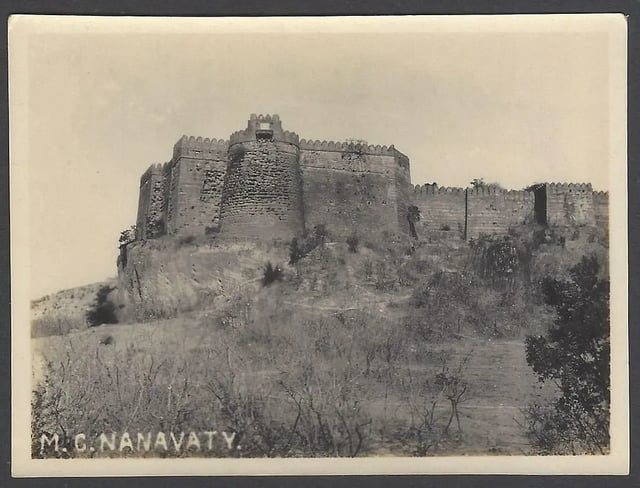
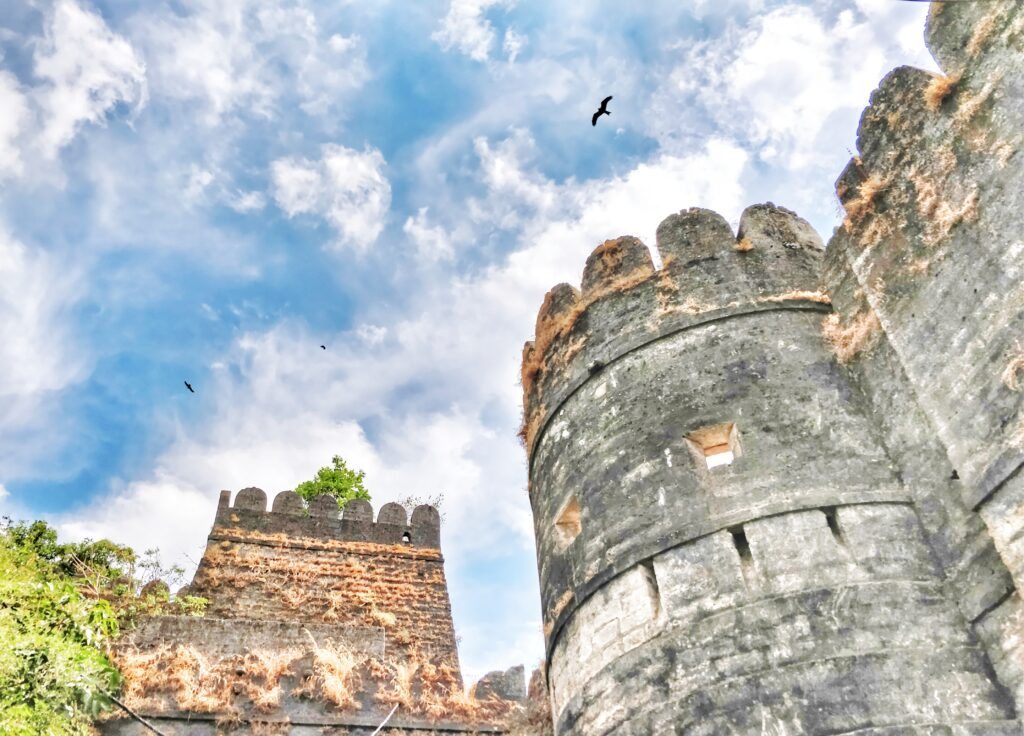
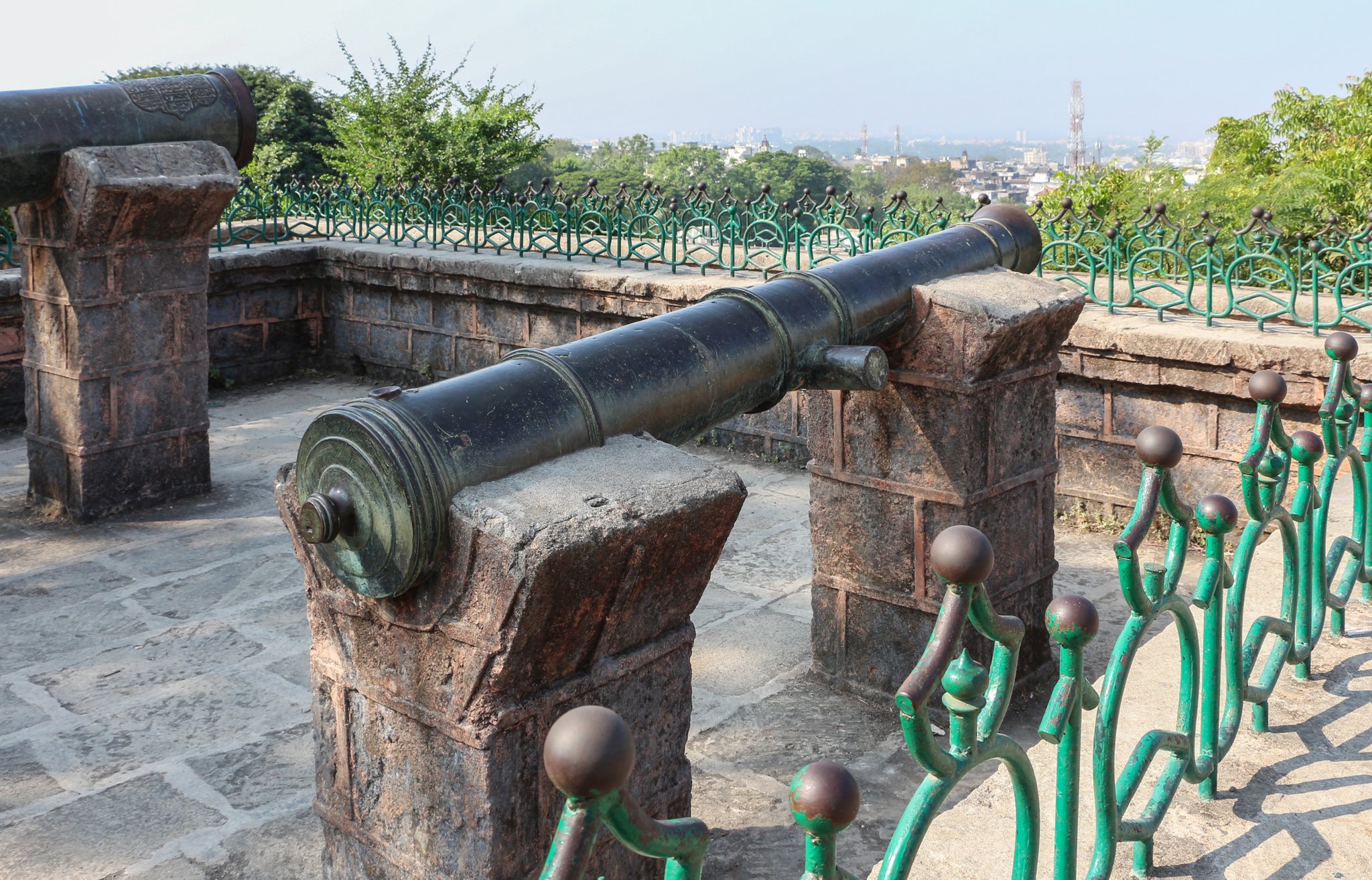
Uparkot Fort occupies eastern Junagadh at the foot of Mount Girnar, a prominent mountain rising to approximately 1,100 metres. Granite stone and lime mortar form the principal materials of the fort. Its walls rise about 60–70 feet and enclose a dense group of structures, while the outer defenses include battlements and towers built from carefully dressed stone.
Walls and entrance
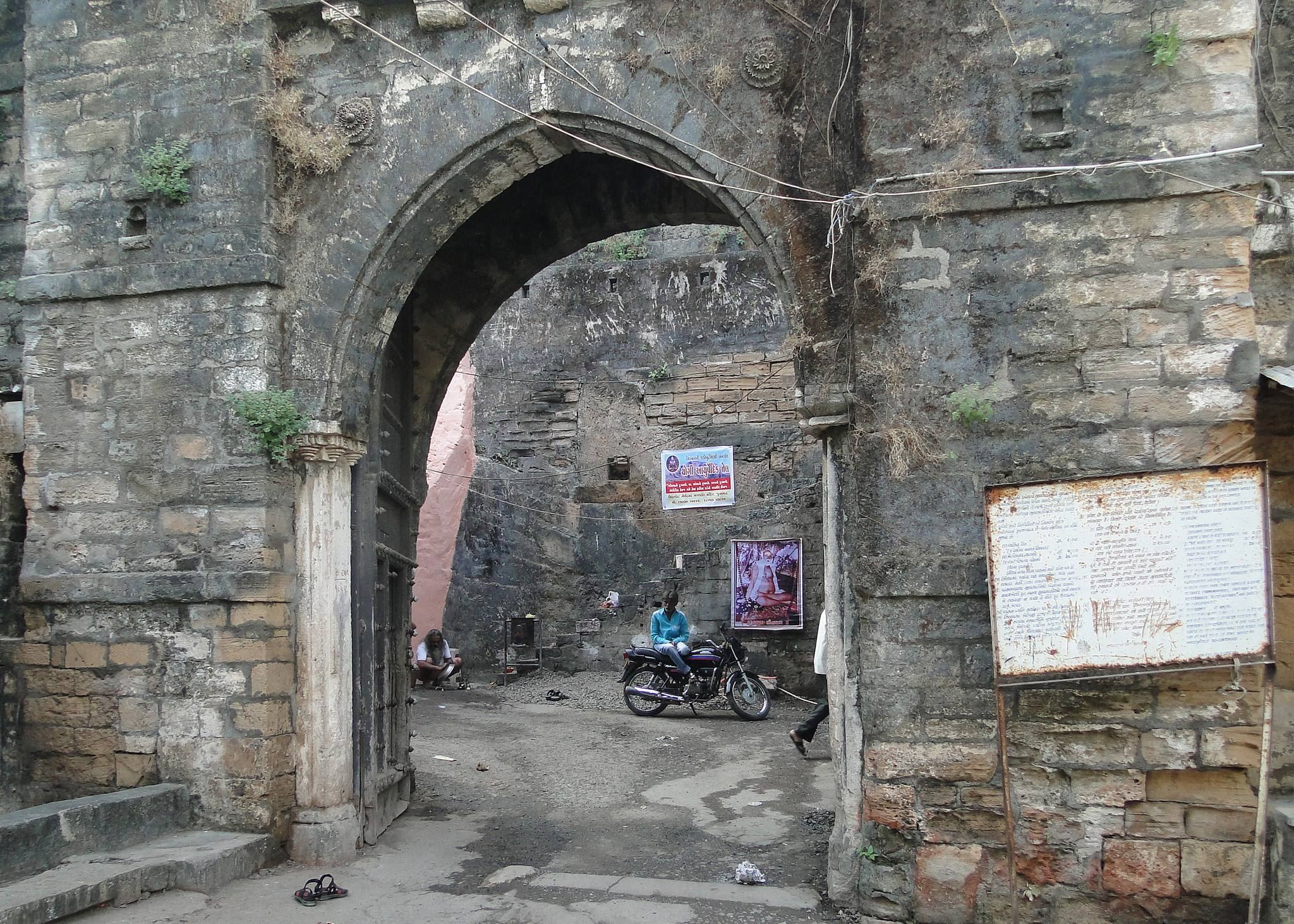
The eastern parapets were raised at least three times because the fort’s higher ground exposed them to increasingly long-range projectiles. The entrance is set in the eastern wall beyond the town and consists of three gateways placed one inside another. The innermost gateway is a torana, an ornamental gateway arch, later surmounted by additions in the Indo-Saracenic style, which combines Indian architectural forms with elements associated with Islamic and European design. An inscription dated 1450 and associated with Mandalika III is positioned on the rampart above the gate.
Religious and water structures
Jumma Masjid
The Jumma Masjid stands near the inscription above the entrance. It was built by Mahmud Begada after the Gujarat Sultanate conquest of the fort.
Tomb of Nuri Shah
The nearby Tomb of Nuri Shah has fluted cupolas and an unusual carved feature above its doorway.
Adi Kadi Vav
Adi Kadi Vav is a stepwell, a well reached by descending a long flight of steps. It is traditionally said to have been constructed in ancient times by maids of the Chudasama rulers. Like other older structures at the fort, it was cut into the natural bedrock.
Navghan Kuvo
Navghan Kuvo was cut deeply into soft rock and is reached by a circular staircase. Its form reflects the use of the underlying rock in the construction of the fort’s water installations.
Buddhist caves and lake
Uparkot Caves
The Uparkot Caves are a two-storey complex of Buddhist caves dated to the second or third century. Chambers cut into the rock provided religious space for Buddhist monks.
Nawabi Lake
Nawabi Lake is a square artificial lake within the fort. Together with the rock-cut wells, it forms part of the site’s surviving water infrastructure.