Tsodilo: A Rock-Art and Archaeological Landscape in Botswana
Site at a Glance
- Country
- Botswana
- Primary era
- Stone Age
- Eras represented
- Stone Age, Modern
- Civilizations
- San
- Site type
- Religious
- Remains
- Sanctuary
On this page13 sections
History
Human occupation over millennia
Tsodilo is a cultural landscape in Tsodilo Hills, Botswana, where people have painted, performed rituals, and lived for thousands of years. Its hills preserve evidence of human occupation across many millennia, and some paintings have been dated to as early as about 24,000 years before present. Local hunter-gatherers made the rock art: some works are attributed to ancestors of the San, diverse Indigenous peoples of southern Africa, while others are linked to Bantu-speaking communities, a broad linguistic grouping rather than a single people.
San traditions and continuing use
For San peoples of the Kalahari, Tsodilo remains culturally and spiritually important. Traditions describe the hills as a resting place for the spirits of the dead and warn that hunting or causing death nearby can bring misfortune. Other accounts connect the hills with the beginning of life and associate the paintings with descendants of the first people.
Oral traditions describe the Zhu, a local San group, using rock shelters for refuge from the weather and for rituals. In one story, hunters ask their ancestors for help after a failed hunt, then return to cook for them after a successful one. Rain-making prayers are still performed at the hills. Some older residents recall sheltering there as children; the White Paintings Rock Shelter may have served as a rainy-season camp about 70 to 80 years ago.
World Heritage recognition and archaeological debate
Tsodilo joined the UNESCO World Heritage List in 2001 for its spiritual importance to local communities and its long record of human settlement. Its inscription used criteria i, iii, and iv, concerning creative achievement, cultural traditions, and landscapes illustrating stages of human history.
In 2006, University of Oslo archaeologist Sheila Coulson argued that artifacts from Rhino Cave were 70,000 years old and that a rock resembling a python’s head related to early human ritual. She also interpreted animal images in the cave as important to San ritual. Archaeologists who investigated the site in 1995 and 1996 challenged these conclusions. Radiocarbon and heat-based dating of Middle Stone Age material, from an African period identified through stone-tool traditions, does not support the proposed 70,000-year date. The ground depressions could have formed at different times, and similar marks at more than 20 nearby sites need not represent animals.
Those investigators identified the supposed elephant image as a rhinoceros. They dated the red giraffe painting to no earlier than about AD 400 and considered the white rhinoceros image more recent, with the paintings made by different groups. They also pointed to red geometric paintings and burned Middle Stone Age points, and argued that non-local materials were not unusual. Scrapers at the cave were ordinary tools, they noted, and other evidence showed that tools were made there. They found no evidence that San shamans used the proposed cave chamber.
Remains
Hills, paintings, and shelters
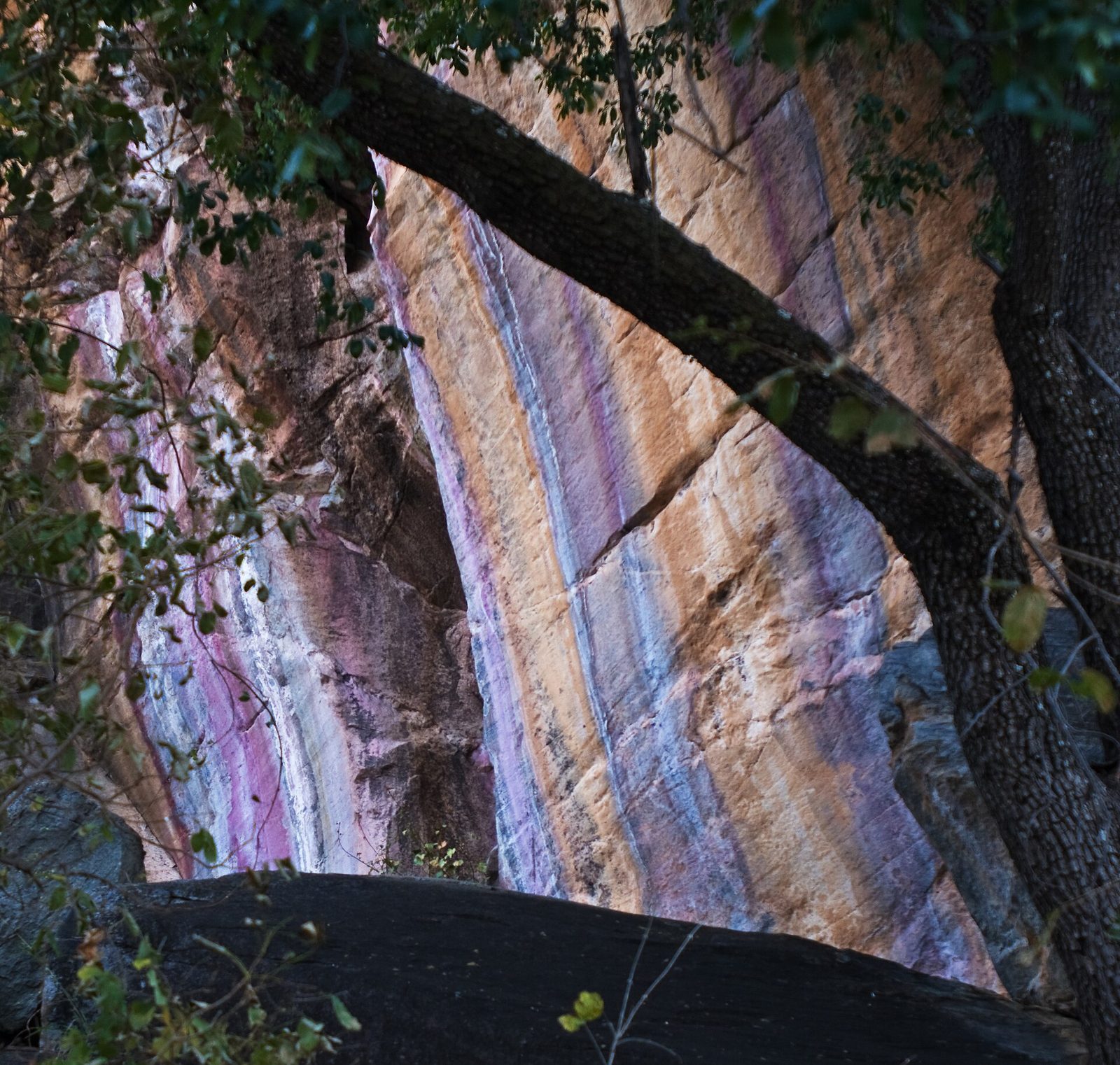
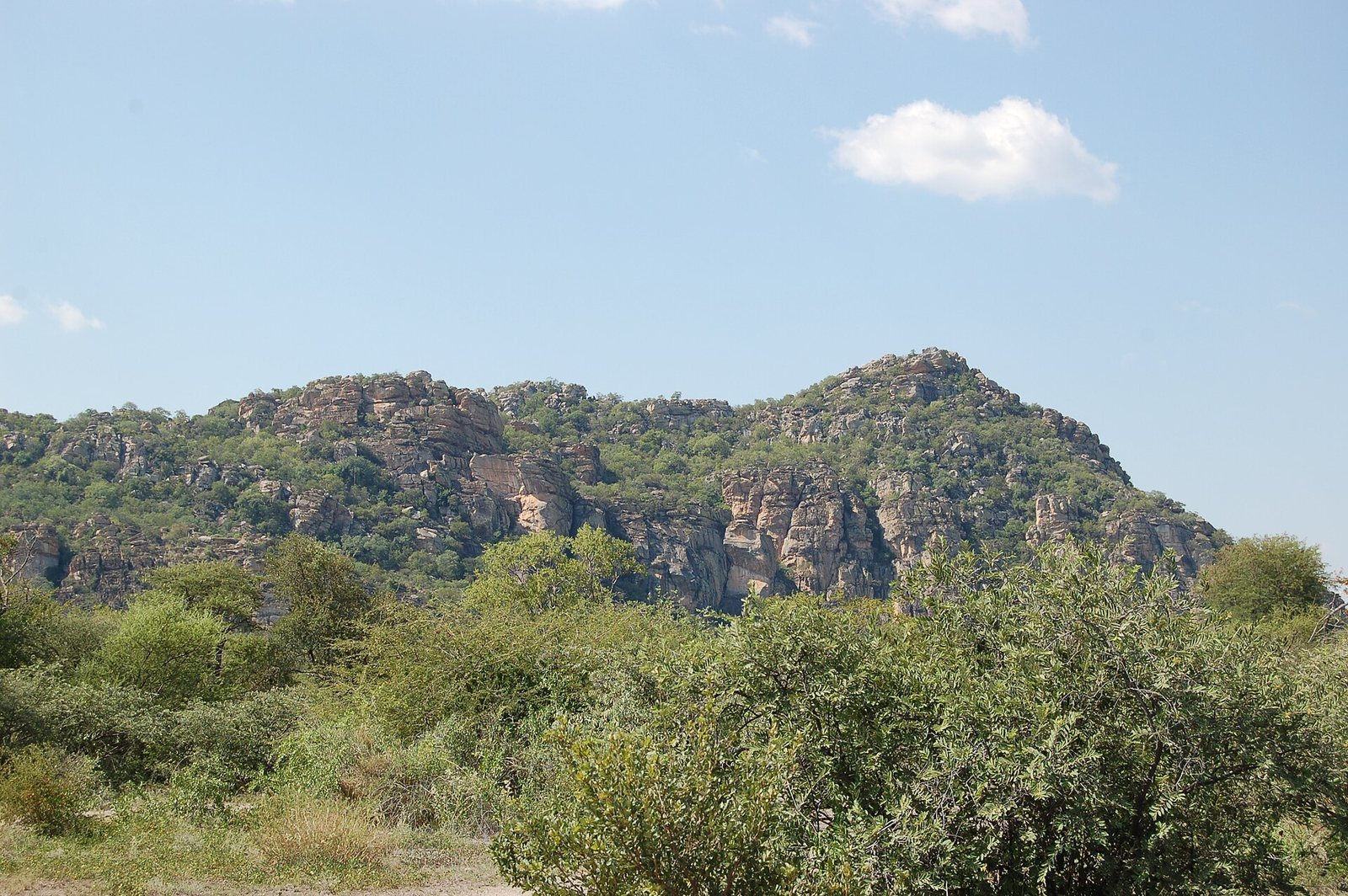
Tsodilo comprises four principal hills: Male Hill, the highest, Female Hill, Child Hill, and an unnamed knoll. Male Hill rises about 1,400 metres above sea level, among Botswana’s highest points. The listed site covers 4,800 hectares, with a 70,400-hectare buffer zone. Its landscape includes paintings, rock shelters, caves, and ground depressions. UNESCO estimates that the area contains more than 4,500 rock paintings and about 500 archaeological sites. A prominent San rock-art panel is known as the Laurens van der Post panel, after the South African writer who described the paintings in his 1958 book The Lost World of the Kalahari.
Painted caves and rock shelters
Rhino Cave
Rhino Cave lies at the northern end of Female Hill and has two principal painted walls. On the north wall, a white rhinoceros image, which gives the cave its name, is divided by a giraffe image. Most of the cave’s paintings are on this wall and use red or red-orange pigment; geometric designs appear nearby. Grooves and depressions on the opposite wall may have been ground with hammerstones or grindstones, examples of which have been found at Tsodilo.
Excavations of the cave floor recovered stone material and charcoal from the African Iron Age, a period associated with iron technology, as well as the Later Stone Age, a later African stone-tool period, and the Middle Stone Age. Later Stone Age tools were mainly made from local quartz and jasper. Middle Stone Age finds include prepared projectile points, some unfinished and others complete. A few fragments of mongongo shells came from Later Stone Age deposits.
White Paintings Rock Shelter
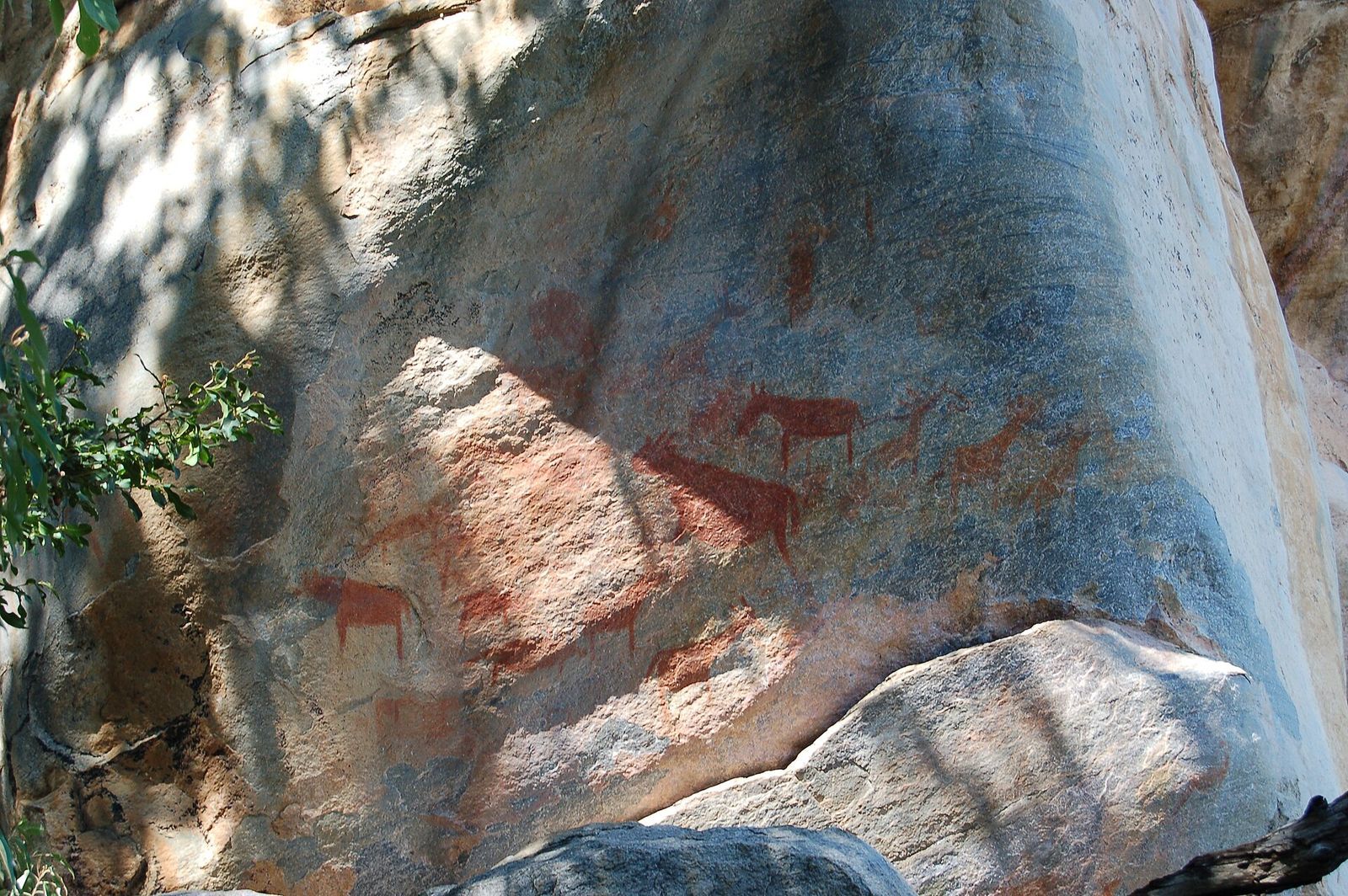
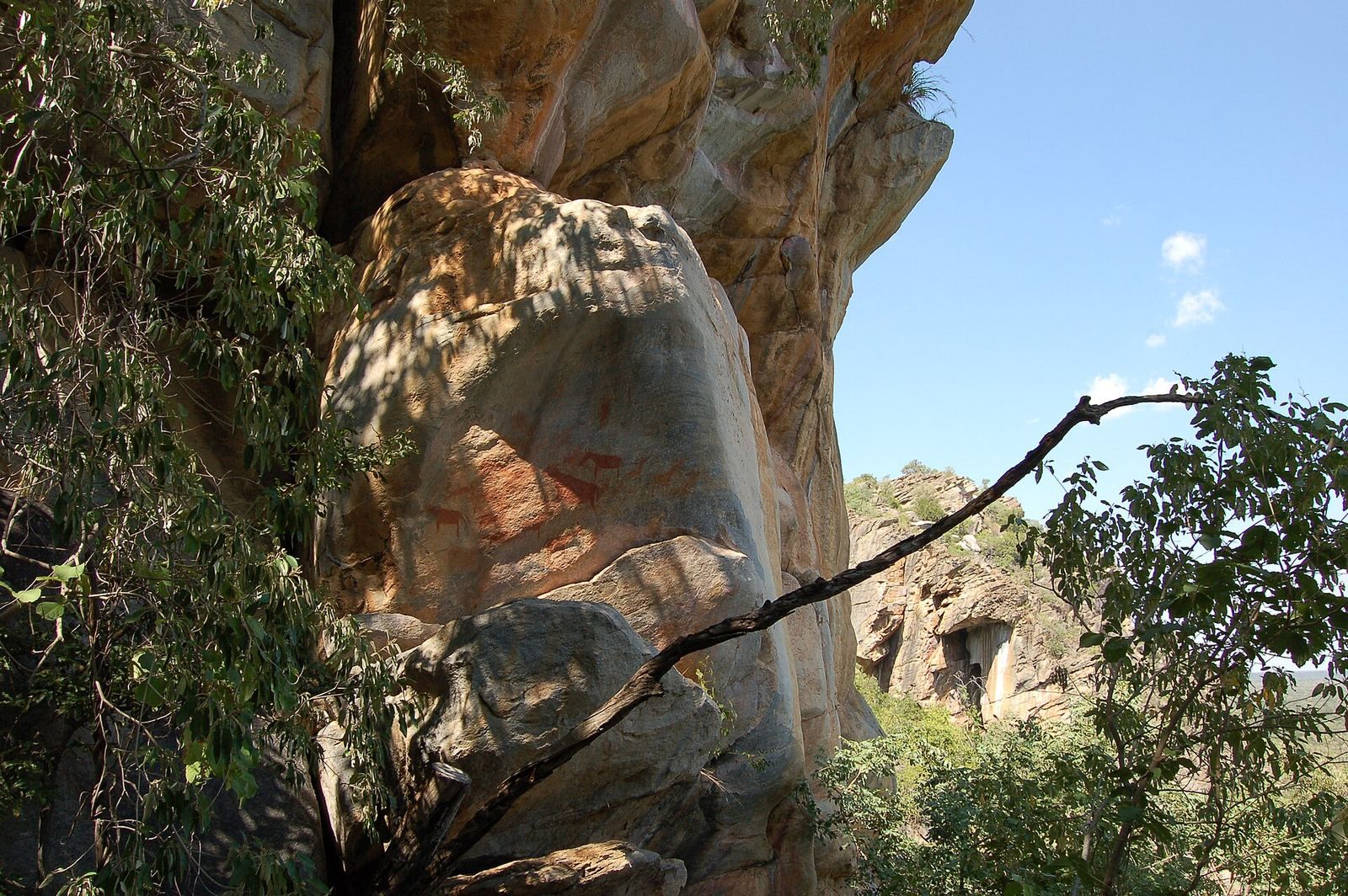
On Male Hill, the White Paintings Rock Shelter contains red and white images of domestic and wild animals, as well as human-like figures usually shown with their hands on their hips. Some figures ride horses, suggesting that those images date no earlier than the mid-nineteenth century, when horses were introduced to the area.
Charcoal, ostrich eggshell, bone, and other deposits from the shelter span the Middle and Later Stone Ages. Finds include Later Stone Age hammerstones, grindstones, bone artifacts, and microliths, meaning small stone tools. Pottery fragments, ostrich-eggshell beads, and mongongo shells also came from the shelter, alongside Middle Stone Age blades and other stone tools. A nylon button and European glass beads were recovered from upper excavation layers.
Depression Rock Shelter
Depression Rock Shelter is on the northwest side of Female Hill. Its walls bear ground depressions, red paintings that appear to show cattle, and geometric designs. Charcoal dating indicates occupation at least 30,000 years ago. Excavations recovered Later Stone Age tools and Iron Age artifacts. Pottery from the deepest layers dates to the first century, with the era unspecified, and is associated with the oldest stone artifacts found in this area. Mongongo shells occur even in the deepest deposits, making them the oldest found in an archaeological context.
Metalworking sites and sacred landscape
Divuyu and Nqoma
The archaeological sites of Divuyu and Nqoma contain Early Iron Age metal objects. Finds include iron or copper jewelry such as bangles, beads, chains, earrings, rings, and pendants, as well as tools including chisels, projectiles, arrowheads, and blades. The sites share manufacturing techniques but have distinct metalworking styles. Slag and air pipes used to direct air into furnaces suggest that both may have been iron-smelting areas, making them among the few Early Iron Age sites in southern Africa with evidence of metalworking.
Spring near Female Hill
A natural spring near Female Hill serves as a water-collection point and a ritual place. It is regarded as sacred and used for cleansing, healing, and protection. Local traditions interpret features of the landscape, including trails and grooves, as paths and footprints left by the first animals on their way to the first watering hole.