Tower of Giovanni di Scafa: A Genoese Fortification in Feodosia
Site at a Glance
- Popularity
- Very Low
- Country
- Ukraine
- Primary era
- Medieval
- Eras represented
- Medieval
- Civilizations
- Genoese, Golden Horde
- Site type
- Military
- Remains
- Tower
On this page4 sections
History
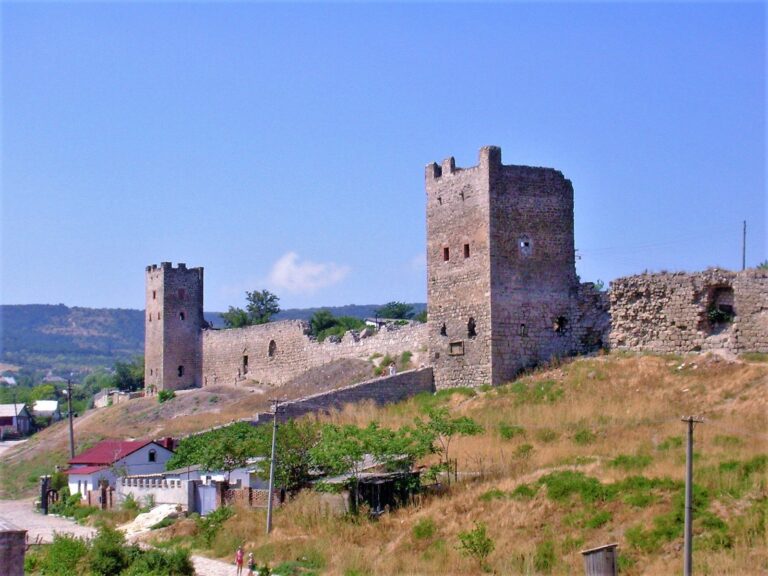
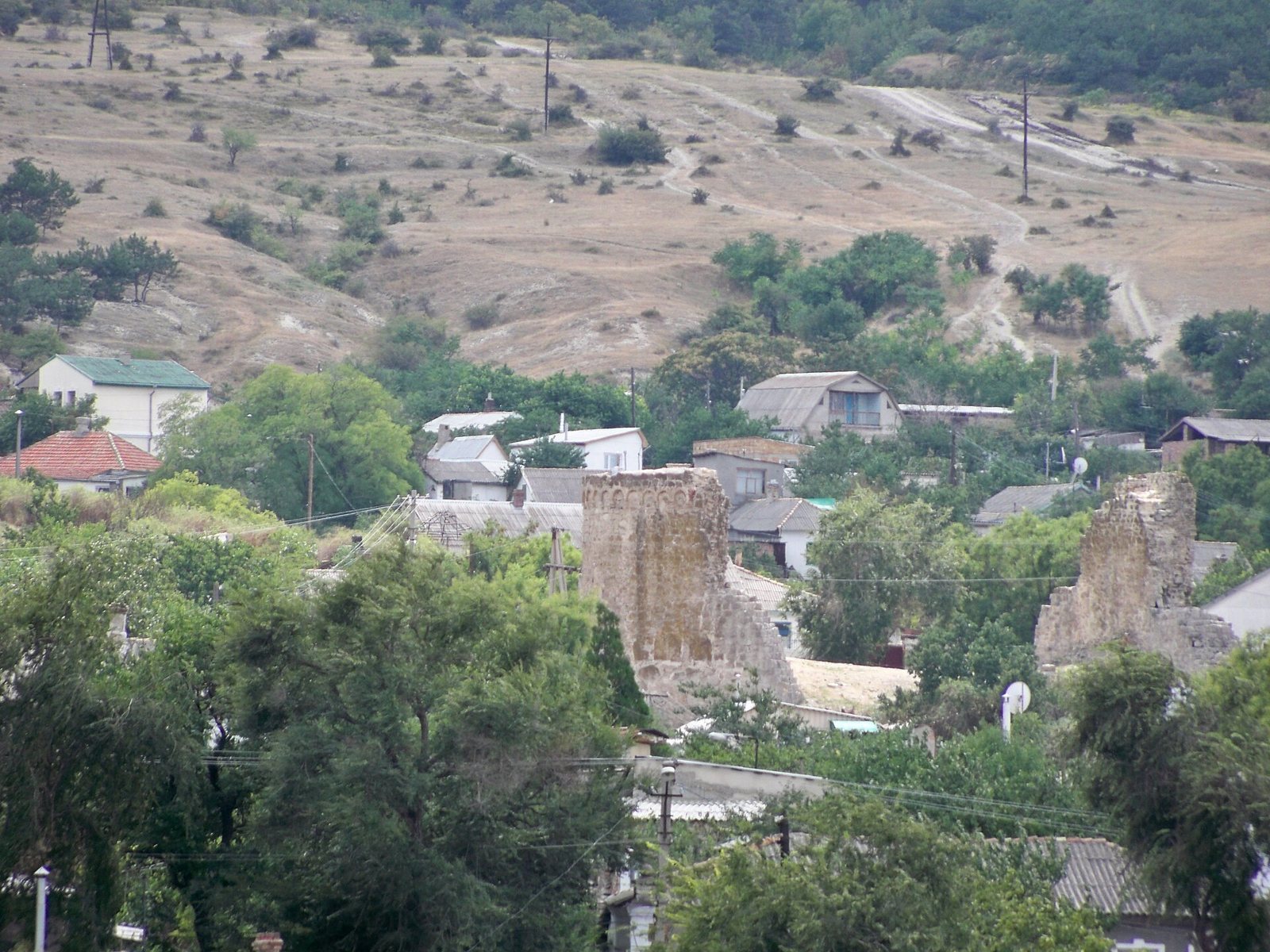
The Tower of Giovanni di Scafa is a Genoese defensive tower in Feodosia, Ukraine, built in 1342 as part of Kaffa’s outer defenses to guard the city’s southeastern side. Kaffa, the medieval name of Feodosia, was an important Genoese settlement on the Black Sea. The tower’s name may refer to Giovanni di Scafa, a Genoese consul, or senior civic official, who may have governed Kaffa when it was built.
Legends associate the tower with two dramatic episodes. One says that Mamai, a powerful Mongol military leader linked to the Golden Horde, hid treasure in a passage beneath it after his defeat at the Battle of Kulikovo in 1380. The battle was fought between forces associated with Mamai and those of the Grand Principality of Moscow. According to the tale, Mamai fled first to Azov and then to Kaffa. Another tradition claims that Janibek, a khan of the Golden Horde, had plague victims catapulted into the tower, an act said to have brought plague to Europe.
Excavation at the tower was halted after a collapse, and archaeological study has remained limited. The site is listed in Ukraine’s State Register of Immovable Monuments as an architectural monument of national importance and is also classified as a cultural heritage site of federal significance in Russia.
Remains
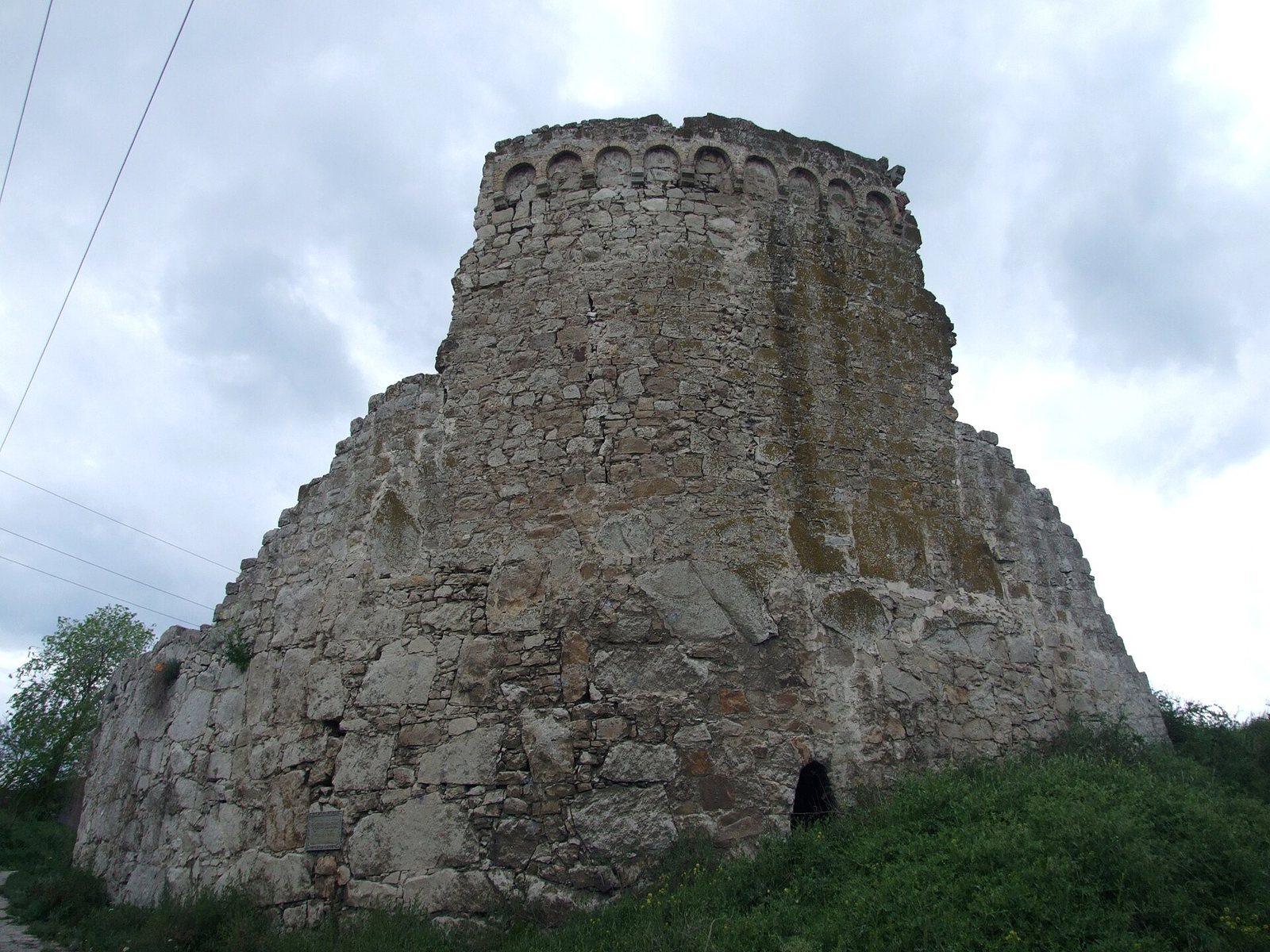
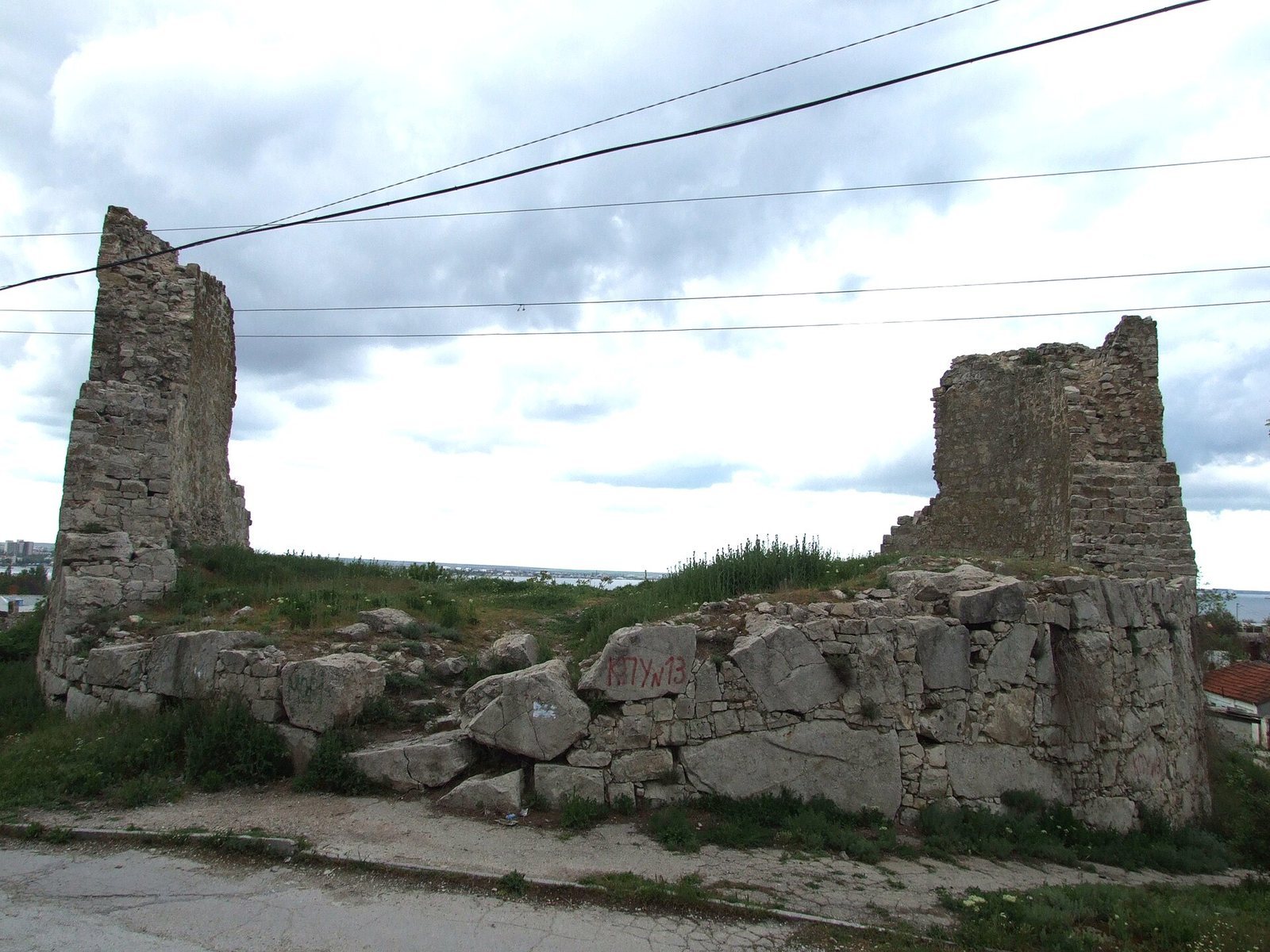
The tower was a self-contained strongpoint within Kaffa’s wider defenses. Two semicircular wall sections survive. Its original layout also included a deep moat and an embankment beside it, with defensive walls extending toward the citadel, about 400 metres away.
Tower structure
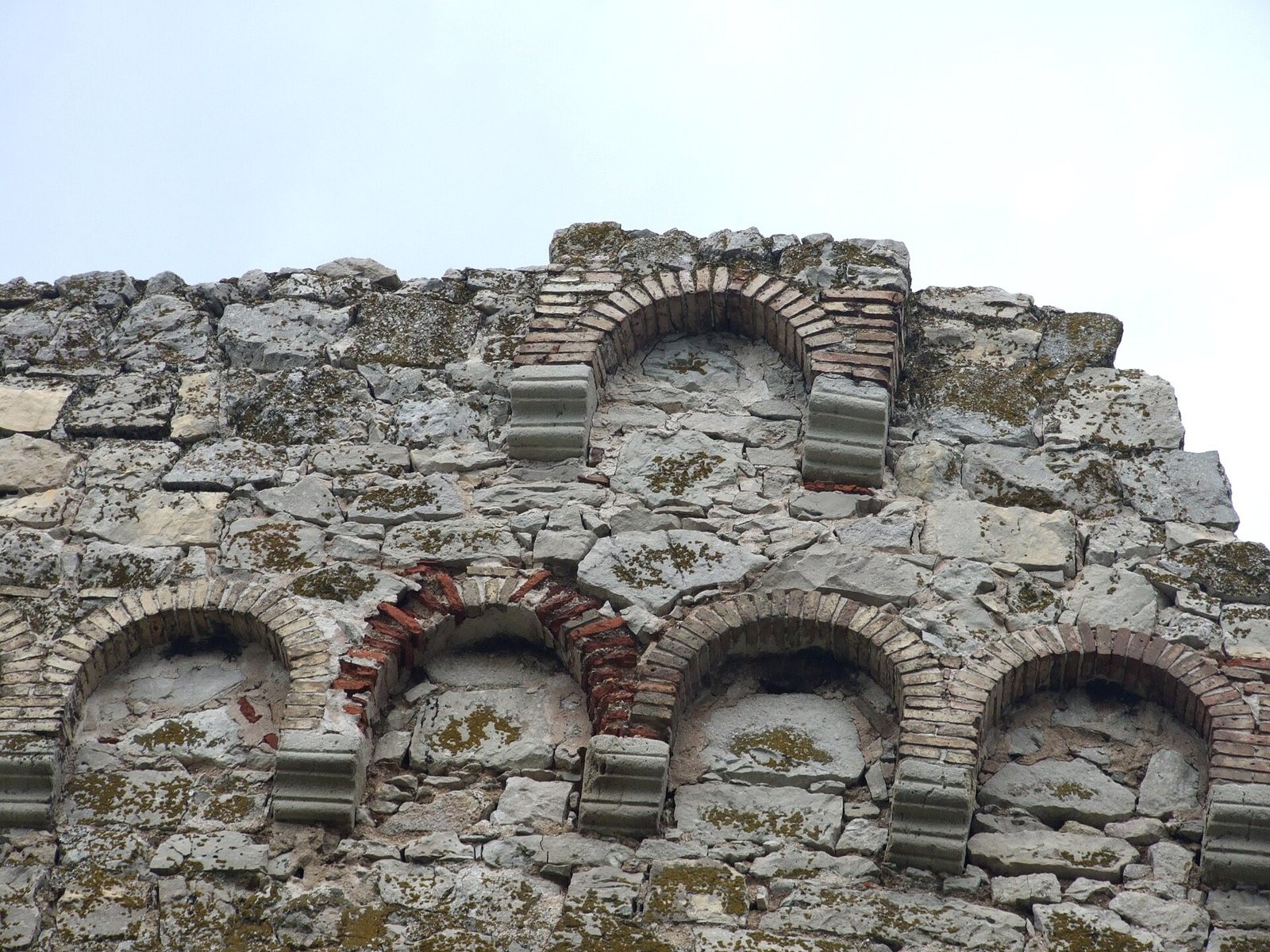
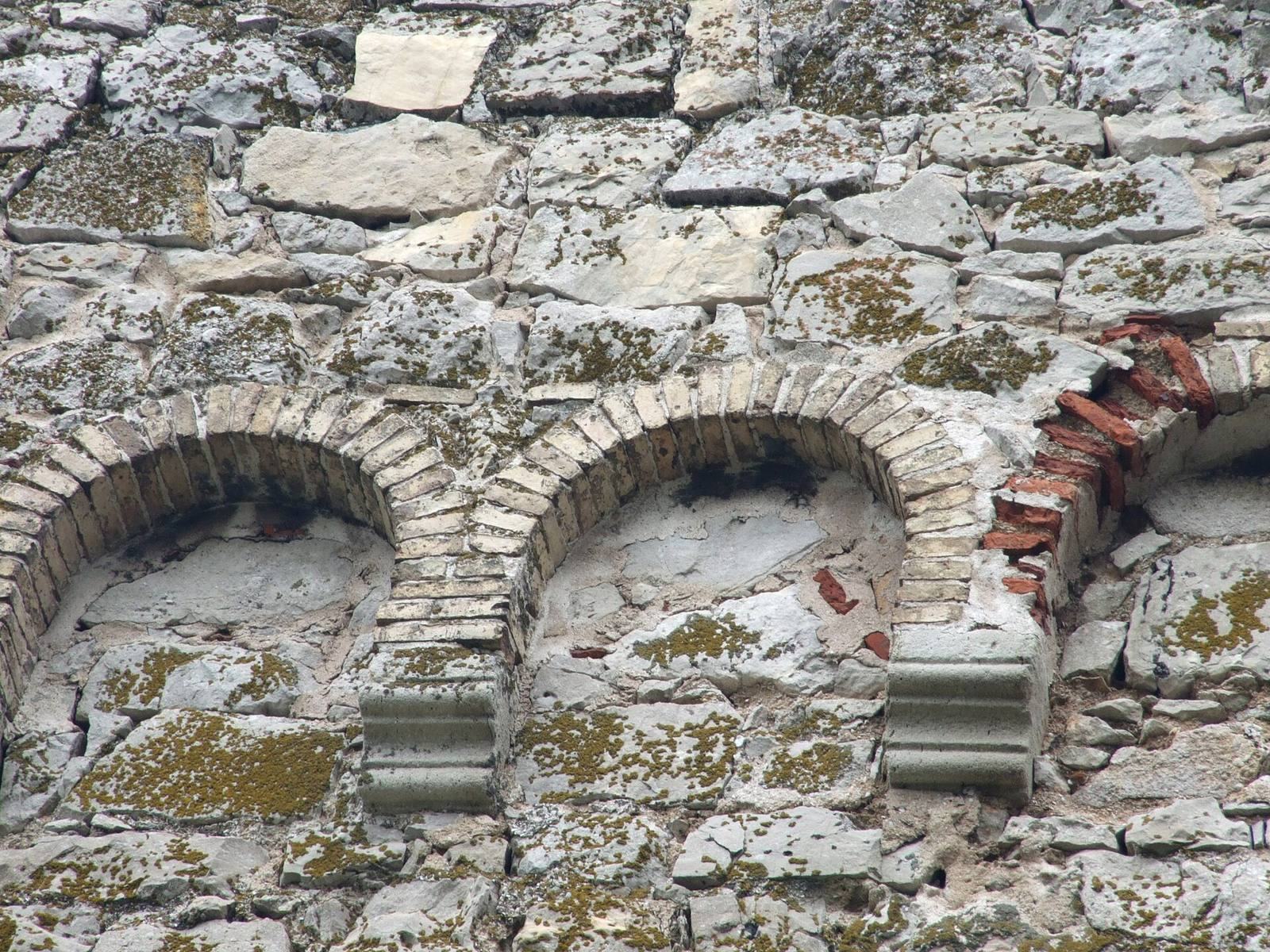
The tower originally had three levels and a rounded base 26 metres in diameter. Its walls were built from local limestone blocks, with those at the lowest level reaching up to two metres thick. Described as a self-contained fortified keep set forward of the main defenses, it had its own well, food stores, and heating. A narrow entrance passage cut at an angle through the wall was intended to make an assault more difficult. A pierced band of Romanesque-style decoration encircled the tower.
Defensive works and foundation plaques
An underground passage connecting the tower to the citadel is considered possible. The tower’s foundation plaques are held at the Feodosia Museum of Antiquities. One bears the arms of the consul associated with the tower’s proposed name, while others display the arms of Kaffa and Genoa.