Torre Astura: A Medieval Fortified Coastal Tower in Italy
Site at a Glance
- Rating
- 4.5
- Popularity
- Medium
- Country
- Italy
- Primary era
- Medieval
- Eras represented
- Classical, Medieval, Early Modern
- Civilizations
- Papal States, Roman
- Site type
- Military
- Remains
- Castle
On this page8 sections
History
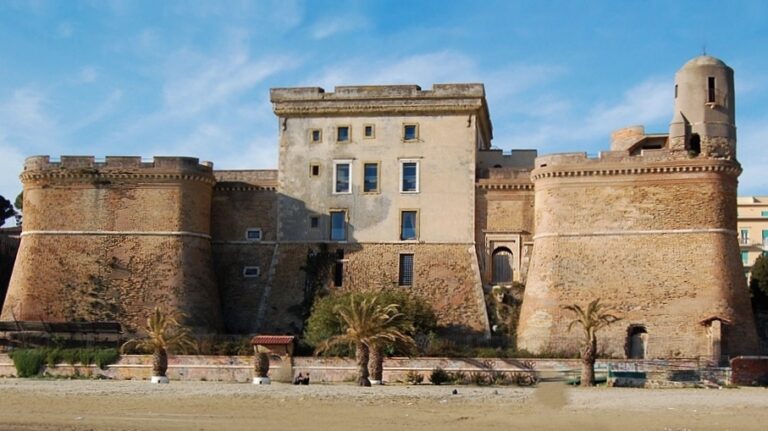
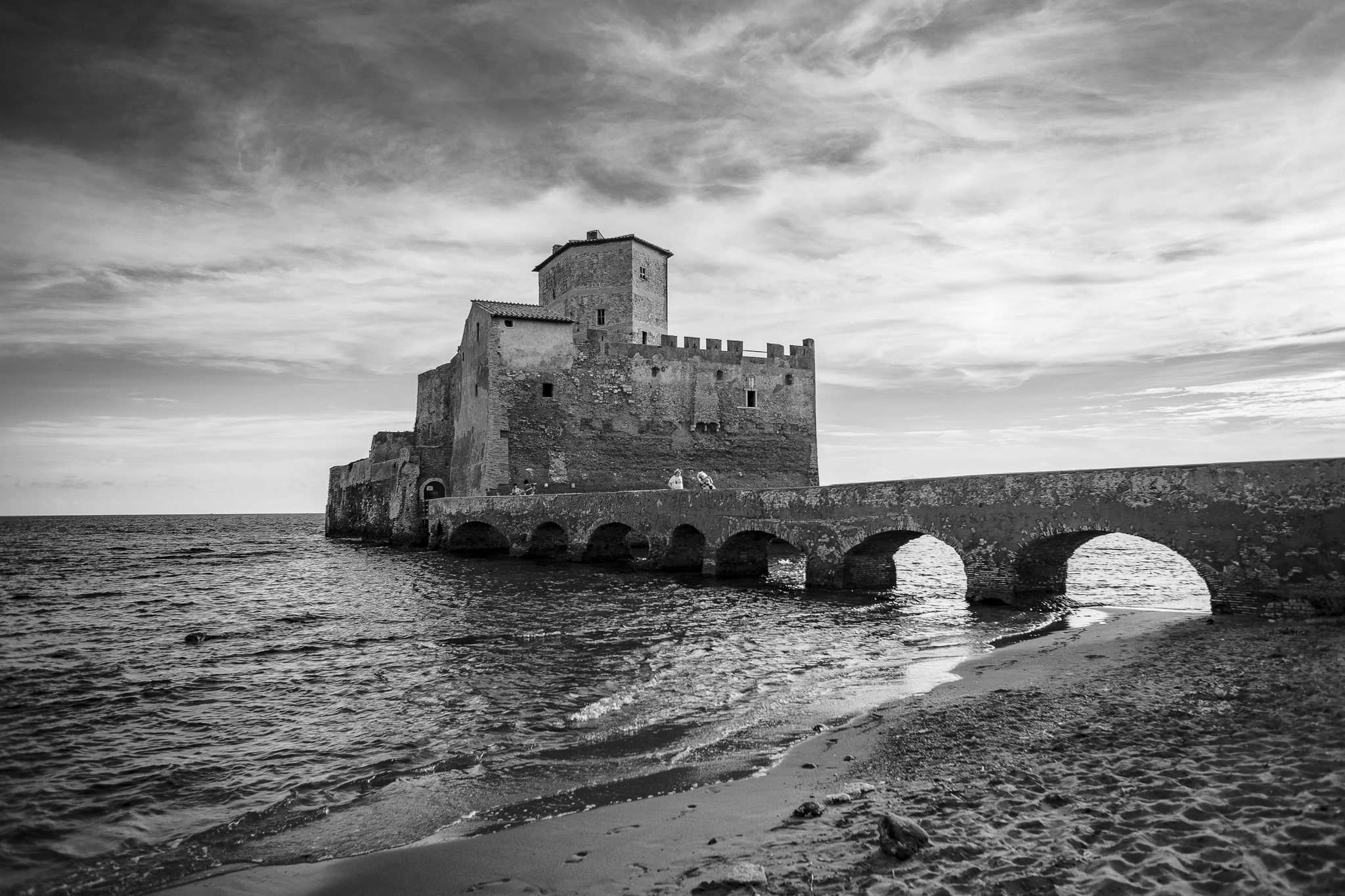
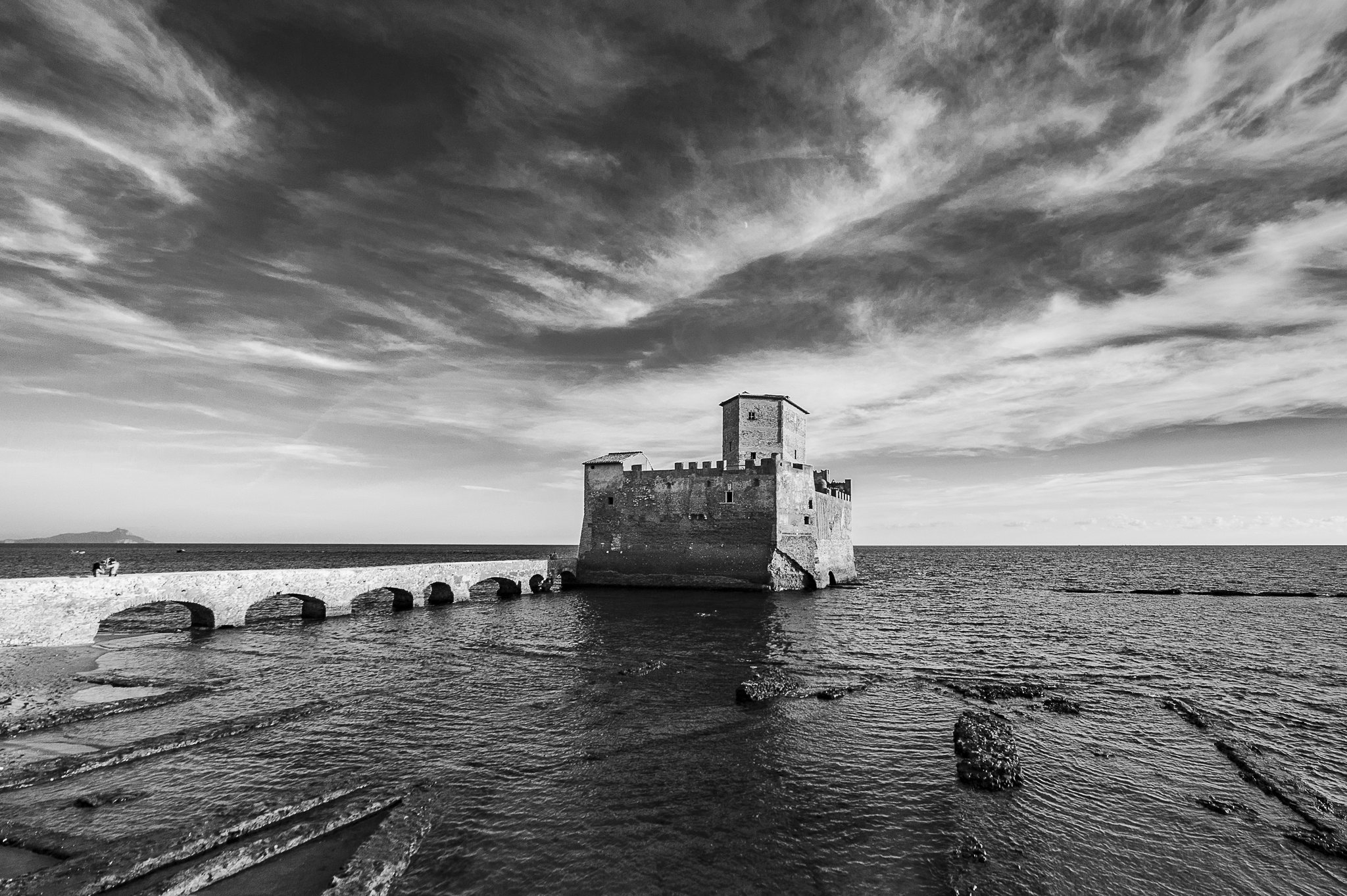
Torre Astura is a medieval fortified coastal tower and castle in Italy, on the territory of Nettuno about ten kilometres southeast of the town. Built over a large Roman villa, the fortress took shape during the medieval period, with its construction broadly dated from 1193 to 1496. It stands at the mouth of the Astura River, near the ancient coastal road known as the Via Severiana and at the eastern boundary of Antium, the ancient city associated with modern Anzio and the surrounding coast.
Ancient Astura
Astura began as a landing place beside the river. In 338 BC, its banks saw a major battle between Rome and the allied forces of Antium, Lanuvium, Aricia, and Velitrae. From the late Republican or early imperial period, Roman villas occupied the area, which became a retreat for members of the Roman elite. Cicero owned one of these villas and used Astura during his attempted flight after the triumvirs proscribed him. Augustus, the first Roman emperor, and his successor Tiberius also visited the area. The existence of a separate Roman town called Astura remains debated.
The principal Roman villa extended partly across the mainland and partly onto an artificial island. It included a large fishpond, while a harbor associated with the complex probably remained in use into the Middle Ages. The villa’s structures later supplied the foundations for the medieval fortress.
Medieval fortress
Astura appears in written records in 987, when Benedict of Tusculum donated its territory to the monastery of Sant’Alessio in Rome. By about 1140 or 1141, control had passed to Tolomeo of the Counts of Tusculum and then to the Frangipane family. In 1193, the Frangipane established a maritime fortress there to defend against attacks by Saracen forces.
The fortress became involved in the fate of Conradin of Hohenstaufen, the last Hohenstaufen claimant to the kingdoms of Sicily and southern Italy. After his defeat at Tagliacozzo in 1268, Conradin tried to escape by sea from Astura. Giovanni Frangipane captured him and handed him to Charles of Anjou, the Angevin ruler who had defeated him. Conradin was executed in Naples on 29 October 1268.
Later ownership and preservation
After the Frangipane, the site passed successively to the Caetani and Orsini families. In 1426 it came into the possession of the Colonna, who rebuilt the fortress and gave it its present overall appearance during the sixteenth century. The Colonna sold Astura in 1594 to Pope Clement VIII Aldobrandini. After the Aldobrandini line became extinct, the property passed to the Borghese family and was transferred to the municipality of Nettuno in the 1970s.
Torre Astura is now within an area administered by the Italian Ministry of Defence, formerly known as the Nettuno military range. This military use restricted development along the coast and helped preserve the surrounding landscape. During its medieval and early-modern life as a fortress, the coastal area formed part of the Papal States.
Remains
Roman villa and harbor
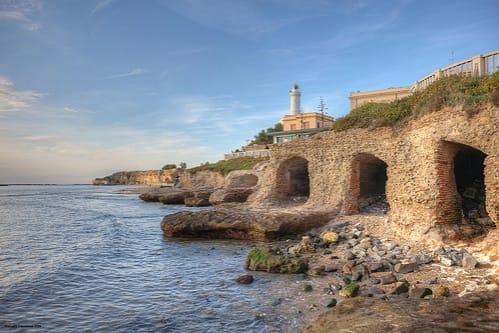
The surviving Roman complex occupies a low, sandy projection into the Tyrrhenian Sea and combines mainland structures with remains associated with the former island. Its masonry includes opus reticulatum, a Roman technique using small diamond-shaped blocks in a net-like arrangement, together with later brickwork. The villa included a large fishpond, and a small harbor lay on its southeastern side. Masonry piers from the ancient harbor remain visible in the sea, while the villa’s remains form the structural base of the later fortress.
Fortress and former island
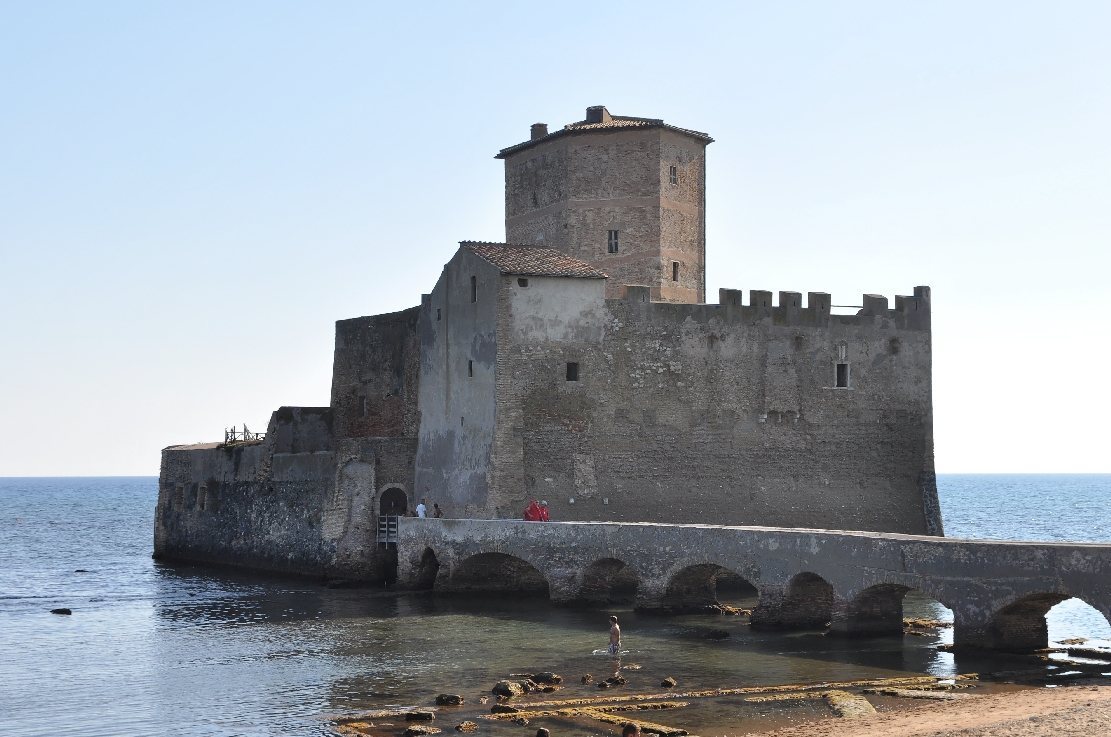
The medieval stronghold is associated with a pentagonal tower surrounded by water and linked to the mainland by a bridge of brick arches. Astura was formerly an island, but a bridge or causeway eventually connected it to the mainland, creating the peninsula seen today. It appears to have remained an island in the time of Pope Honorius III. Behind the coastal dunes, surviving traces may mark the former channel between the island and mainland and may have belonged to a post station on the Via Severiana.
Coastal landscape and underwater remains
The fortress stands against a low, sandy coast bordered by the Astura River, a pine grove, coastal dunes, Mediterranean vegetation, and mixed and evergreen woodland farther inland. Archaeological remains also lie in the surrounding coastal waters. These underwater remains were subjected to uncontrolled looting until the 1970s.